
Theart Press
Theart Press is a South African publisher specialisingin inspirational books - including poetry, children's books and biography.
View Rights Portal
Theart Press is a South African publisher specialisingin inspirational books - including poetry, children's books and biography.
View Rights Portal
Phoenix Publishing House has been working in the market for more than 34 years,200 million copies of books have been released over the years for readers of all ages.
View Rights Portal
This book offers the first extended study of Queen Henrietta's Men, one of Caroline London's most important professional playing companies. The drama that the company performed at the Cockpit between 1626 and 1636 includes many underexplored and neglected plays from the period alongside more celebrated works by dramatists including James Shirley and John Ford, and a number of Elizabethan and Jacobean revivals. Queen Henrietta's Men and the Cockpit Repertory explores the material and cultural conditions under which the company operated, and offers an account of the dynamics that held between new drama written for the company and the revivals staged alongside that fare. In doing so, this account illuminates the ways in which an appreciation of the work of Queen Henrietta's Men can offer new perspectives on theatre history and the categories of company and repertory that have shaped it.
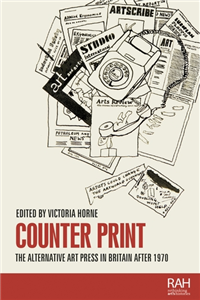
The history of contemporary art is also a history of its newsletters, manifestos, magazines, pamphlets, and journals. Those periodical publications do not simply communicate or record ideas but have worked in exciting ways to shape art's practices, histories and communities. As a new generation of artists, activists and scholars seek to uncover the histories of alternative publishing and artistic networks, this book gathers original archival discoveries while offering methodologies for studying and thinking with those artefacts. As the first essay collection to focus on the periodical art press and the ways we study it, Counter print offers readers an alternative route into the past fifty years of contemporary art, one that is defiantly collaborative, border crossing and disruptive.
 Trusted Partner
An Idea for a Theatre Ecology is the first book in the discipline of Theatre and Performance Studies to provide a rigorous and coherent theory of the ecology that is immanent to the theatrical medium. Over six clearly written chapters, the book provides a genealogy, outlines a method, provides a lexicon and demonstrates an alternative practice of ecoperformance analysis grounded in the figure of the archipelago. Focusing on Antonin Artaud's theatre of cruelty, the book argues that theatre has no need to provide ecological messages nor to transform itself into a platform for the narration of ecological stories. Instead, more is to be gained, environmentally and politically, by concentrating on the power of images, gestures and voices to create corporeal affects and sensations that implicate the spectators in a terrestrial event.
Trusted Partner
Trusted Partner
Trusted Partner
Trusted Partner
Trusted Partner
Trusted Partner

Death in modern theatre offers a unique account of modern Western theatre, focusing on the ways in which dramatists and theatre-makers have explored historically informed ideas about death and dying in their work. It investigates the opportunities theatre affords to reflect on the end of life in a compelling and socially meaningful fashion. In a series of interrelated, mostly chronological, micronarratives beginning in the late nineteenth century and ending in the early twenty-first century, this book considers how and why death and dying are represented at certain historical moments using dramaturgy and aesthetics that challenge audiences' conceptions, sensibilities, and sense-making faculties. It includes a mix of well-known and lesser-known plays from an international range of dramatists and theatre-makers, and offers original interpretations through close reading and performance analysis.
Trusted Partner

This important collection of essays focuses on the place of Roman Catholicism in early modern England, bringing new perspectives to bear on whether Shakespeare himself was Catholic. In the Introduction, Richard Wilson reviews the history of the debate over Shakespeare's religion, while Arthur Marotti and Peter Milward offer current perspectives on the subject. Eamon Duffy offers a historian's view of the nature of Elizabethan Catholicism, complemented by Frank Brownlow's study of Elizabeth's most brutal enforcer of religious policy, Richard Topcliffe. Two key Catholic controversialists are addressed by Donna Hamilton (Richard Vestegan) and Jean-Christophe Mayer (Robert Parsons). Robert Miola opens up the neglected field of Jesuit drama in the period, whilst Sonia Fielitz specifically proposes a new, Jesuit source-text for Timon of Athens. Carol Enos (As You Like It), Margaret Jones-Davies (Cymbeline), Gerard Kilroy (Hamlet) and Randall Martin (Henry VI 3) read individual plays in the light of these questions, while Gary Taylor's essay fittingly investigates the possible influence of religious conflicts on the publication of the Shakespeare First Folio. Theatre and religion: Lancastrian Shakespeare as a whole represents a major intervention in this fiercely contested current debate. ;
Trusted Partner

This is the first book to appear in English about theatre from the entire Nazi period (1933-45). It is based on detailed statistical analysis, contemporary press reports, research in German archives and interviews with surviving playwrights, actors and musicians. The volume has an extensive bibliography and is fully illustrated. It forms a much needed guide to this neglected area of European culture and will be of interest to historians, Germanists and theatre specialists. The international contributors are William J. Niven, Glen Gadberry, Erik Levi, Rebecca Rovit, William Abbey and Katharina Havekamp. ;
Trusted Partner

 Trusted Partner
 Trusted Partner
Trusted Partner
Trusted Partner

This electronic version has been made available under a Creative Commons (BY-NC-ND) open access license. This book is about science in theatre and performance. It explores how theatre and performance engage with emerging scientific themes from artificial intelligence to genetics and climate change. The book covers a wide range of performance forms from Broadway musicals to educational theatre, from Somali drama to grime videos. It features work by pioneering companies including Gob Squad, Headlong Theatre and Theatre of Debate as well as offering fresh analysis of global blockbusters such as Wicked and Urinetown. The book offers detailed description and analysis of theatre and performance practices as well as broader commentary on the politics of theatre as public engagement with science. Science in performance is essential reading for researchers, students and practitioners working between science and the arts within fields such as theatre and performance studies, science communication, interdisciplinary arts and health humanities.
Trusted Partner
A wide-ranging look at the state of contemporary theatre practice, economics, and issues related to identity, politics, and technology. Contains a snapshot dissection of where theatre is, where it has been and where it might be going through the voices of established and emerging theatre artists and scholars from the UK, US and elsewhere. Offers an examination of how to make theatre in a time of crisis and why it is a vital form of communication are at the heart of the book's mission. Asks questions such as: where is theatre now taking place?; what is the relationship between play and performance?; how does funding work?; what states does theatre flourish under?; and if there is a current 'crisis of theatre' should it not be seen as a welcome opportunity to develop a vigorous 'theatre of crisis'?. The international list of contributors includes Jim Carmody, Phyllis Nagy, Michael Billington, Max Stafford-Clark, Peter Sellars, Dragan Klaic, Goat Island, Erik Ehn and many others, making up a vast array of practising artists, thinkers, and scholars. ;
Trusted Partner
 Trusted Partner
 Trusted Partner
 Trusted Partner
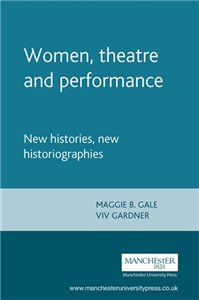
The first in a new annual series, Women, Theatre and Performance that will consist of themed volumes on diverse aspects of women's engagement with theatre and performance. Ranging across three hundred years the essays in this volume address key questions in women's theatre history and retrieve a number of hitherto 'hidden' histories of women performers. Resituates women's, largely neglected, creative contribution within theatre and cultural history and seeks to challenge orthodox readings of both history and text. Topics include: Susanna Centlivre and the notion of intertheatricality; gender and theatrical space; the repositioning of women performers such as Wagner's Muse, Willhelmina Schröder-Devrient, the Comédie Français' 'Mademoiselle Mars', Mme Arnould-Plessey, and the actresses of the Russian serf theatre. ;



