
La Pollera Ediciones
La Pollera's catalog includes narrative, essay, and chronicle of contemporary and classic authors.
View Rights Portal
La Pollera's catalog includes narrative, essay, and chronicle of contemporary and classic authors.
View Rights Portal
Polperro Heritage Press is an independent British publisher, established in 1995. Recent titles from Polperro Press have included biographies, guides and a growing list of Cornish local history titles.
View Rights Portal


In solidarity, under suspicion is the successor volume to Against the grain (2014) and Waiting for the revolution (2017), complementing analysis of the far left in Britain from 1956 until the present. In addition to new scholarship on hitherto under-researched groups and movements, the volume explores recent findings from the Undercover Policing Inquiry and provides historical context for developments in the British left during and after 'Corbynism'. Chapters consider the far left's relationship to the state as well as to the Labour Party, and highlights attempts by far-left groups and activists both to intervene internationally and to transform themselves. With a range of different perspectives - activist and academic - In solidarity, under suspicion draws out the distinct ways that different far left groups and movements have responded to problems which remain salient today.
 Trusted Partner
Trusted Partner
Trusted Partner
Trusted Partner
Trusted Partner
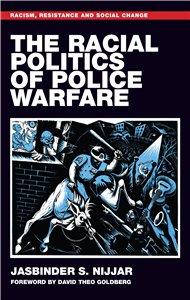
Amid renewed anti-racist resistance to violent policing, The racial politics of police warfare unpacks the racisms that rationalise militarised policing in contemporary Britain. Jasbinder S. Nijjar shatters prevailing myths about British police as an impartial public service, by revealing it as an institution where racism and war reinforce one another. In examining flagship anti-gang and counter-terrorism policies and practices, the book offers a unique analysis of the relationship between anti-black and anti-Muslim racisms, to demonstrate how racialised populations are institutionalised as common enemies of modernity. Combining perspectives from sociology, history, criminology and social policy, Nijjar illustrates how British policing defends law and order and national security from the perceived threat of race through hyper-intrusive, pre-emptive and deathly measures. Accordingly, he gives a fresh take on resisting racial police warfare, calling for strategies that are at once political, collective, anti-militaristic and abolitionist.


In The Path of the Law, Holmes discusses his personal philosophy on legal practice. The Common Law is a series of lectures that established Holmes's reputation as a witty and articulate writer.
Trusted Partner
 Trusted Partner

 Trusted Partner
Law across imperial borders offers new perspectives on the complex legal connections between Britain's presence in Western China in the western frontier regions of Yunnan and Xinjiang, and the British colonies of Burma and India. Bringing together a transnational methodology with a social-legal focus, it demonstrates how inter-Asian mobility across frontiers shaped British authority in contested frontier regions of China. It examines the role of a range of actors who helped create, constitute and contest legal practice on the frontier-including consuls, indigenous elites and cultural mediators. The book will be of interest to historians of China, the British Empire in Asia and legal history.
Trusted Partner
Trusted Partner
Latin America has been a complex laboratory for the development of international investment law. While some governments and non-state actors have remained true to the Latin American tradition of resistance towards the international investment law regime, other governments and actors have sought to accommodate said regime in the region. Consequently, a profusion of theories and doctrines, too often embedded in clashing narratives, has emerged. In Latin America, the practice of international investment law is the vivid amalgamation of the practice of governments sometimes resisting and sometimes welcoming mainstream approaches; the practice of lawyers assisting foreign investors from outside and within the region; and the practice of civil society, indigenous peoples and other actors in their struggle for human rights and sustainable development. Latin America and international investment law describes the complex roles that governments have played vis-à-vis foreign investors and investments; the refreshing but clashing forces that international organizations, corporations, civil society, and indigenous peoples have brought to the field; and the contribution that Latin America has made to the development of the theory and practice of international investment law, notably in fields in which the Latin American experience has been traumatic: human rights and sustainable development. Latin American scholars have been contributing to the theory of international investment law for over a century; resting on the shoulders of true giants, this volume aims at pushing this contribution a little further.
Trusted Partner

This book provides an accessible collection of translated legal sources through which the exploits of criminals and developments in the English criminal justice system (c.1215-1485) can be studied. Drawing on the wealth of archival material and an array of contemporary literary texts, it guides readers towards an understanding of prevailing notions of law and justice and expectations of the law and legal institutions. Tensions are shown emerging between theoretical ideals of justice and the practical realities of administering the law during an era profoundly affected by periodic bouts of war, political in-fighting, social dislocation and economic disaster. Introductions and notes provide both the specific and wider legal, social and political contexts in addition to offering an overview of the existing secondary literature and historiographical trends. This collection affords a valuable insight into the character of medieval governance as well as revealing the complex nexus of interests, attitudes and relationships prevailing in society during the later Middle Ages.
Trusted Partner
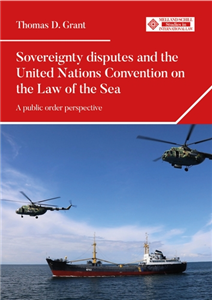
Because maritime questions are often admixed with territorial sovereignty questions, parties sometimes seek to settle them together. Jurisdiction under the United Nations Convention on the Law of the Sea-UNCLOS-according to the received view does not encompass disputes concerning territorial sovereignty. In this book, international law scholar and practitioner Thomas D. Grant argues that the received view overstates the exclusion of sovereignty disputes. In Coastal State Rights, UNCLOS Annex VII arbitrators overstated the scope of the term 'sovereignty dispute' as well, an error of definition compounded when they ignored evidence probative as to whether a sovereignty dispute exists. Examining UNCLOS, its drafting history, and decades of decided cases, Sovereignty Disputes and the United Nations Convention on the Law of the Sea relates an important problem of international dispute settlement to the public order of which UNCLOS forms part.
Trusted Partner

In 1660 Charles II was restored to the thrones of England, Scotland and Ireland, but his hold on power was precarious. In particular, Ireland was fundamentally unstable - Catholics formed the majority of the population in a country where Protestantism was the established religion, a state of affairs unique in Europe. It was through the law that the restored Stuart monarchy governed its subjects and its colonial dependencies, and this book examines how Catholics engaged with and experienced English common law primarily through the eyes of Catholic clerics and Gaelic poets. It also examines how Catholics engaged with the Courts and the particular challenges they faced as lawyers. The book draws on an extensive body of primary source materials, including Irish-language poetry and little-used archival material relating to elite Catholic families.
Trusted Partner

This timely and controversial book shows how crime, and the authorities' response to crime, became central to the peace process in Northern Ireland. At times, paramilitary activity threatened to destabilise the peace in Northern Ireland after 1998, but crime was central to maintaining capacity should the groups return to war. Over time, the reduction of crime was central to these groups' own attempts to reform and official judgements as to whether they were genuinely demobilising. The state's response to crime added controversy. Police reform produced the Police Service of Northern Ireland (PSNI) and the new Organised Crime Task Force signalled the importance of crime control, but the Assets Recovery Agency, supposedly the 'magic bullet' for organised crime, misfired. Law enforcement was also deeply affected by the British state's response to paramilitary crime. By 2007, peace was apparently secure and paramilitaries were 'de-criminalising', but this often chaotic process was marked with questions about the British state's adherence to the rule of law. Incorporating first-hand research in the PSNI, the book will be of interest to general readers and scholars of Irish Studies, criminology, and British and comparative politics. ;
Trusted Partner

For thirty years, the British economy has repeated the same old experiment of subjecting everything to competition and market because that is what works in the imagination of central government. This book demonstrates the repeated failure of that experiment by detailed examination of three sectors: broadband, food supply and retail banking. The book argues for a new experiment in social licensing whereby the right to trade in foundational activities would be dependent on the discharge of social obligations in the form of sourcing, training and living wages. Written by a team of researchers and policy advocates based at the Centre for Research on Socio Cultural Change, this book combines rigour and readability, and will be relevant to practitioners, policy makers, academics and engaged citizens.
Trusted Partner
Tattoos in crime and detective narratives examines representations of the tattoo and tattooing in literature, television and film, from two periods of tattoo renaissance (1851-1914, and c1955 to present). It makes an original contribution to understandings of crime and detective genre and the ways in which tattoos act as a mimetic device that marks and remarks these narratives in complex ways. With a focus on tattooing as a bodily narrative, the book incorporates the critical perspectives of posthumanism, spatiality, postcolonialism, embodiment and gender studies. The grouped essays examine the first tattoo renaissance, the rebirth of the tattoo in contemporary culture through literature, children's literature, film and television. The collection has a broad appeal, and will be of interest to all literature and media scholars, but in particular those with an interest in crime and detective narratives and skin studies.
Trusted Partner
Trusted Partner
Trusted Partner



