
Your Search Results
-

-

La Pollera Ediciones
La Pollera's catalog includes narrative, essay, and chronicle of contemporary and classic authors.
View Rights Portal
-
Promoted Content

 Business, Economics & LawJanuary 2023
What a waste
Outsourcing and how it goes wrong
by Andrew Bowman, Ismail Ertürk, Peter Folkman, Julie Froud, Colin Haslam, Sukhdev Johal, Adam Leaver, Mick Moran, Nick Tsitsianis, Karel Williams
This is the first ever book to analyse outsourcing - contracting out public services to private business interests. It is an unacknowledged revolution in the British economy, and it has happened quietly, but it is creating powerful new corporate interests, transforming the organisation of government at all levels, and is simultaneously enriching a new business elite and creating numerous fiascos in the delivery of public services. What links the brutal treatment of asylum-seeking detainees, the disciplining of welfare benefit claimants, the profits effortlessly earned by the privatised rail companies, and the fiasco of the management of security at the 2012 Olympics? In a word: outsourcing. This book, by the renowned research team at the Centre for Research on Socio-Cultural Change in Manchester, is the first to combine 'follow the money' research with accessibility for the engaged citizen, and the first to balance critique with practical suggestions for policy reform.
-
Promoted Content
 Business, Economics & LawJuly 2024
Act now
by Common Sense Policy Group, Kate Pickett, Danny Dorling, Richard Wilkinson
-
 Trusted Partner
 Humanities & Social SciencesJuly 2025
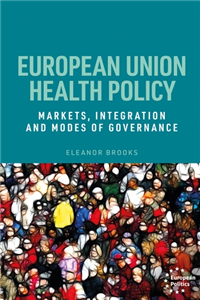
European Union health policy
Markets, integration and modes of governance
by Eleanor Brooks
The first book-length analysis of EU health policy since the COVID-19 pandemic, encompassing the creation of the European Health Union and the Recovery and Resilience Facility, this volume offers a timely and accessible analysis of the EU's health policy, institutions and governance. Focusing on the EU's health objectives and how they are pursued, it offers a detailed overview of the development of EU health policy, and five in-depth case studies of specific policy fields. The book will appeal to academic and policy audiences interested in the EU's health objectives and how it pursues them.
-
Trusted Partner
 Humanities & Social SciencesJanuary 2026
Migration and social policy in a changing world
Histories, challenges and dilemmas
by Bryan Fanning
Migration and social policy in a changing world bridges the generally separate fields of social policy and migration studies. This book traces social policy responses to migration from the Industrial Revolution to today's era of globalisation and large-scale migration. Through case studies from across the globe, the book explores key themes including rural-urban migration, social citizenship, welfare internationalism and diasporic care systems. It examines how migrants are included in or excluded from social citizenship in host societies, and how they become providers of welfare services such as health and social care. Moving beyond a methodological nationalist focus, the book investigates migrant incorporation into welfare states through family networks, faith communities, and other informal welfare structures. It combines migrants' experiences with host societies' immigration politics, institutional perspectives and policies to present a comprehensive analysis of the migration-welfare relationship. This volume fills a gap in academic literature and offers policymakers, practitioners and scholars a framework for understanding the interplay between migration and social policy in our changing world.
-
Trusted Partner
 Humanities & Social SciencesJanuary 2025
Crisis and change in European Union foreign policy
by Nikki Ikani
-
Trusted Partner
 Humanities & Social SciencesJune 2022
Foreign policy as public policy?
by Klaus Brummer, Sebastian Harnisch, Kai Oppermann, Diana Panke
-
Trusted Partner
 Humanities & Social SciencesSeptember 2008
Agricultural policy in Europe
by Alan Greer, Dimitris Papadimitriou, Simon Bulmer, Andrew Geddes, Peter Humphreys
'Agricultural policy in Europe', available for the first time in paperback, provides a unique comparative analysis of the UK, France, Poland, the Netherlands, Greece and Ireland, using up-to-date material on CAP reform, world trade liberalisation, animal disease, rural development and the environment. In its core argument that Europe has a Common Agricultural Policy in name only, the study offers a distinctive interpretation of contemporary policies for agriculture and rural development. Policy is considerably more diverse than usually recognised, and also varies across different policy stages such as agenda setting, formulation and implementation. This diversity is the result of a multilevel policy process in which global, regional and local actors play a key role alongside the institutions of the EU. Yet nation states are central. Despite the existence of the CAP, substantial policy variations reflect different national economies, cultures, priorities and interests, usually mediated through different types of policy networks. Far from greater policy integration, the pressures for diversity have increased in recent years, notably through world trade liberalisation, environmental concern and EU enlargement. With continuing controversy about the future direction and powers of the EU, this groundbreaking book sheds new light on the extent to which agricultural policy in Europe is common. It goes beyond formal legal structures and the rhetoric of popular debate to look at what actually happens in a complex policy process that is both multilevel and multi stage. The result is a very different picture in which agricultural policy is considerably more diverse and fragmented than usually assumed. ;
-
Trusted Partner
-
Trusted Partner
 Humanities & Social SciencesJune 2023
Soft power and the future of US foreign policy
by Hendrik W. Ohnesorge
-
Trusted Partner
 Humanities & Social SciencesJuly 2015
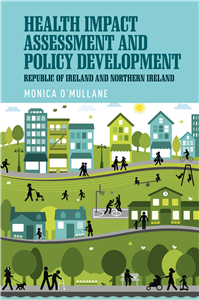
Health Impact Assessment and policy development
The Republic of Ireland and Northern Ireland
by Monica O'Mullane
It is an accepted convention that non-health sector policies and strategies impact on population health. An instrument and approach, Health Impact Assessment (HIA), seeks to assess the health impacts of projects, programmes and policies in a systematic way. The ultimate goal of HIA is to inform public policy processes of these impacts. This book provides for the first time an analysis of how and why HIAs informed local policy development in both jurisdictions on the island of Ireland. An original theoretical framework was used as the analytical lens for this exploration, drawing from the fields of political and social sciences, and public health. The HIA projects were conducted on traffic and transport, Traveller accommodation, urban redevelopment and air quality. This conceptually-grounded guide draws from the disciplines of the political and social sciences and public health, and will appeal to academics, students and practitioners in these fields as well as policy-makers and planners at local and national government levels. ;
-
Trusted Partner
 Politics & governmentFebruary 2017
The European Union's policy towards Mercosur
Responsive not strategic
by Series edited by Dimitris Papadimitriou, Simon Bulmer, Andrew Geddes, Peter Humphreys, Arantza Gomez Arana
This book examines the motivations for the European Union's (EU) policy towards the Common Market of the South (Mercosur), the EU's most important relationship with another regional economic integration organisation. It argues that the dominant explanations in the literature - balancing the US, global aspirations, being an external federator, long-standing economic and cultural ties, economic interdependence, and the Europeanization of Spanish and Portuguese national foreign policies - fail to adequately explain the EU's policy. In particular, these accounts tend to infer the EU's motives from its activity. Drawing extensive primary documents, this book argues that the major developments in the relationship - the 1992 Inter-institutional Agreement and the 1995 Europe Mercosur Inter-regional Framework Cooperation Agreement - were initiated by Mercosur and supported mainly by Spain. This means that rather than pursuing a strategy, as implied by most of the existing literature, the EU was largely responsive.
-
Trusted Partner
 Humanities & Social SciencesApril 2009
Territorial politics and health policy
UK health policy in comparative perspective
by Scott L. Greer
This study is the first large-scale comparison of policy and divergence in the UK since devolution. Based on extensive original research, it argues that we see substantial divergence in policies and social citizenship among the four parts of the UK as its autonomous political systems try to solve the unpredictable and difficult puzzles of health policy-making. ;
-
Trusted Partner
 Humanities & Social SciencesMay 2017
Reframing health and health policy in Ireland
A governmental analysis
by Edited by Claire Edwards, Eluska Fernandez
This edited collection is the first to apply the theoretical lens of post-Foucauldian governmentality to an analysis of health problems, practices, and policy in Ireland. Drawing on empirical examples related to childhood, obesity, mental health, smoking, ageing and others, the collection explores how specific health issues have been constructed as problematic and in need of intervention in the Irish State, and considers the strategies, discourses and technologies involved in the art of governing health in advanced liberal democracies. Bringing together academics from social policy, sociology, political science and public health, the text seeks to develop a dialogue about both the nature of health and health policy in the Ireland, but also how governmentality, as a theoretical approach, can contribute to the development of critical health policy analysis.
-
Trusted Partner
 Humanities & Social SciencesNovember 2009
Re-evaluating Irish national security policy
Affordable threats?
by Michael Mulqueen
On the afternoon of September 11 2001 the Irish Prime Minister (Taoiseach), Bertie Ahern ordered the 'heads of the security services of key government departments' to undertake a complete re-evaluation of measures to protect the state from attack. Hence, underway within hours of the 9/11 outrage in the United States was potentially the most far-reaching review of Irish national security in decades. This book, the first major academic investigation of Irish national security policy as it has operated since 9/11, provides a theoretically informed analysis of that re-evaluation and the decisions which have been taken as a consequence of it up until September 2008. In so doing it draws on unprecedented access to Ireland's police, security and intelligence agencies; over twenty senior personnel agreed to be interviewed. Theoretically the author demonstrates the utility to the analysis of national security policy of three conceptual models of historical institutionalism, governmental politics and threat evaluation. The text is of interest to scholars of Security Studies, International Relations and Politics, as well as state and NGO personnel, journalists and general readers. ;
-
Trusted Partner
 Humanities & Social SciencesJuly 2013
EU foreign and security policy in Bosnia
The politics of coherence and effectiveness
by Ana Juncos, Emil Kirchner, Thomas Christiansen
This book represents the first ever comprehensive study of the EU's foreign and security policy in Bosnia. Drawing on a wealth of fresh empirical material, it demonstrates that institutions are a key variable in explaining levels of common foreign security policy (CFSP) coherence and effectiveness over time. In doing so, it also sheds new light on the role that intergovernmental, bureaucratic and local political contestation have played in the formulation and implementation of a European foreign policy. The study concludes that the EU's involvement in Bosnia has not only had a significant impact on this Balkan country in its path from stabilisation to integration, but has also transformed the EU, its foreign and security policy and shaped the development of the EU's international identity along the way. The book will be of great interest to researchers and students of EU politics, International Relations and Bosnian politics. ;
-
Trusted Partner
 Humanities & Social SciencesMay 2005
Negotiated governance and public policy in Ireland
by George Taylor
Over the past ten years the Irish polity has experienced profound change. The pessimism that had engulfed Irish society during the 1980s has given way to a new found confidence, one that befits its status as an emerging, confident and cosmopolitan European state. This book provides a theoretical examination of this startling turnaround in the fortunes of the Irish polity and details the developments that have taken place in key areas of public policy over the last decade: civil service reform, the welfare state, environmental policy abd rural development. ;
-
Trusted Partner
 Social issues (Children's/YA)June 2014
Youth policy, civil society and the modern Irish state
by Fred Powell, Martin Geoghegan, Margaret Scanlon, Katharina Swirak
This book, now available in paperback, explores the development of youth policy and youth work in Ireland from the mid-nineeenth century to the present day. Based on original research, funded by the Irish Research Council for the Humanities and Social Sciences (IRCHSS), it looks at the social construction of youth, the emergence of the early youth movements and the nature and scope of contemporary youth work. Key issues include: the shift from mainstream to targeted provision, the professionalisation of the sector and the increased partnership between the state and voluntary sector. A second major theme is the treatment of young people in industrial and reformatory schools, with particular reference to the findings of the Ryan Report on child abuse (2009). This is the only book which combines an exploration of the history and current scope of youth work and youth policy, and which is based on comprehensive original research. It will be essential reading for lecturers and students in youth work, social sciences, social history and related fields.
-
Trusted Partner
 Humanities & Social SciencesApril 2006
Environmental policy-making in Britain, Germany and the European Union
The Europeanisation of air and water pollution control
by Rüdiger K. W. Wurzel, Mikael Anderssen, Duncan Liefferink, Martin Hargreaves
Environmental policy has become an increasingly important area of European Union (EU) policy-making and the source of political conflict between Britain and Germany. This book explains why national conflicts have arisen and how they are resolved at EU level by focusing on the Europeanisation of air and water pollution control in particular. Wurzel argues that Anglo-German divergences are best explained in terms of ecological vulnerability, economic cost and capacity, political salience and environmental regulatory styles. Focusing on two very important and media-exploitable issues - car emissions and bathing water regulation - this book challenges the conventional wisdom that Britain has shown a clear preference for environmental quality objectives while Germany championed uniform emission limits. Acceptance of the concept of ecological modernisation plays a vital role in the adoption of more progressive environmental standards. ;
-
Trusted Partner
-
Trusted Partner
 Humanities & Social SciencesJuly 2024
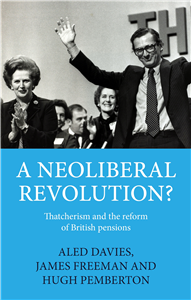
A neoliberal revolution?
Thatcherism and the reform of British pensions
by Hugh Pemberton, James Freeman, Aled Davies
This book examines the Thatcher government's attempt to revolutionise Britain's pensions system in the 1980s and create a nation of risk-taking savers with an individual stake in capitalism. Drawing upon recently-released archival records, it shows how the ideas motivating these reforms journeyed from the writings of neoliberal intellectuals into government and became the centrepiece of a plan to abolish significant parts of the UK's welfare state and replace these with privatised personal pensions. Revealing a government that veered between political caution and radicalism, the book explains why this revolution failed and charts the malign legacy left by the evolutionary changes that ministers salvaged from the wreckage of their reforms. The book contributes to understanding of policy change, Thatcherism, and international neoliberalism by showing how major reforms to social security could reflect neoliberal thought and yet profoundly disappoint their architects.


