
Rabea Blue - Fantasyautorin
Rabea Blue is an author, writing fantasy, science-fiction and romance. She alreasy published short stories & novels.
View Rights Portal
Rabea Blue is an author, writing fantasy, science-fiction and romance. She alreasy published short stories & novels.
View Rights Portal


On 25 January 1474, Charles the Bold, duke of Burgundy, appeared before his subjects in Dijon. Robed in silk, gold and precious jewels and wearing a headpiece that gave the illusion of a crown, he made a speech in which he cryptically expressed his desire to become a king. Three years later, Charles was killed at the battle of Nancy, an event that plunged the Great Principality of Burgundy into chaos. This book, innovative and essential, not only explores Burgundian history and historiography but offers a complete synthesis about the nature of politics in this region, considered both from the north and the south. Focusing on political ideologies, a number of important issues are raised relating to the medieval state, the signification of the nation under the 'Ancien Regime', the role of warfare in the creation of political power and the impact of political loyalties in the exercise of government. In doing so, the book challenges a number of existing ideas about the Burgundian state.

Conducting a Lacanian-inspired psychoanalysis of some of the most candid interview materials ever gathered from former IRA members and loyalists, the author demonstrates through a careful examination of their slips of the tongue, jokes, rationalisations and contradictions, that it is the unconscious dynamics of socio-ideological fantasy, i.e. the unconscious pleasure people find in suffering, domination, submission, ignorance, failure and rivalry over jouissance, that lead to the reproduction of antagonism between the Catholic and Protestant communities in Northern Ireland. In the light of this, he concludes that traditional approaches to conflict resolution which overlook the unconscious are doomed to failure and that a Lacanian psychoanalytic understanding of socio-ideological fantasy has great potential for informing the way we understand and study all inter-religious and ethnic conflicts. Whether you find yourself agreeing with the arguments in this book or not, you are sure to find it a welcome change from both the existing, mainly conservative, analyses of the Northern Ireland conflict and traditional approaches to conflict resolution.
 Trusted Partner
 Trusted Partner
Trusted Partner
Trusted Partner
Trusted Partner
Trusted Partner
Trusted Partner
Trusted Partner
 Trusted Partner
Trusted Partner
Trusted Partner

Political marketing has become a global phenomenon as parties try to copy the market-oriented approach employed by Tony Blair to win power for New Labour in 1997. Increasingly voters choose parties like consumers choose products, and this study looks at how some political parties, such as Sinn Fein, have been able to capitalise on this to gain support. It raises fresh perspectives on the more established political marketing practices in the UK and US, such as how to incorporate political leadership within the market-oriented framework and the democratic implications when faced with the actually business of governing. This book also highlights how the market-oriented party approach has spread around the world, including Europe and the new democracies of Brazil and Peru. The chapters, in demonstrating this convergence in practices, also question whether this strategy is appropriate for political systems based on proportional representation and coalition governments such as those in Austria, Germany, New Zealand, Canada, and devolved systems in Northern Ireland and Scotland. The collection also introduces the debate on whether such practices enhance or undermine democracy, raising important questions on the future of political marketing. This book should become an established essential text for students and academics of political science and marketing. ;
Trusted Partner

Political marketing has become a global phenomenon as parties try to copy the market-oriented approach employed by Tony Blair to win power for New Labour in 1997. Increasingly voters choose parties like consumers choose products, and this study looks at how some political parties, such as Sinn Fein, have been able to capitalise on this to gain support. It raises fresh perspectives on the more established political marketing practices in the UK and US, such as how to incorporate political leadership within the market-oriented framework and the democratic implications when faced with the actually business of governing. This book also highlights how the market-oriented party approach has spread around the world, including Europe and the new democracies of Brazil and Peru. The chapters, in demonstrating this convergence in practices, also question whether this strategy is appropriate for political systems based on proportional representation and coalition governments such as those in Austria, Germany, New Zealand, Canada, and devolved systems in Northern Ireland and Scotland. The collection also introduces the debate on whether such practices enhance or undermine democracy, raising important questions on the future of political marketing. This book should become an established essential text for students and academics of political science and marketing.
Trusted Partner
This is the first major study of Britain's pioneering graphic satirist, Sir Francis Carruthers Gould (1844-1925), the first staff political cartoonist on a daily newspaper in Britain, and the first of his kind to be knighted. Written by the distinguished media historian, Colin Seymour-Ure, it is essential reading for anyone interested in cartoons, caricature and illustration and will also be welcomed by students of history, politics and the media. It examines Gould's career in Fleet Street until his retirement after the First World War. It also discusses his illustrations for magazines and books and there is an analysis of his use of symbolism and literary allusion to lampoon such eminent politicians as Gladstone and Joseph Chamberlain. As Lord Baker says in his Foreword, this book is 'a major contribution to our knowledge of British cartooning.'
Trusted Partner
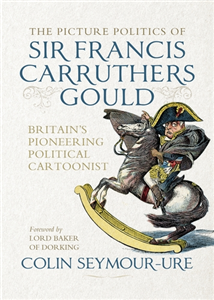
This is the first major study of Britain's pioneering graphic satirist, Sir Francis Carruthers Gould (1844-1925), the first staff political cartoonist on a daily newspaper in Britain, and the first of his kind to be knighted. Written by the distinguished media historian, Colin Seymour-Ure, it is essential reading for anyone interested in cartoons, caricature and illustration and will also be welcomed by students of history, politics and the media. It examines Gould's career in Fleet Street until his retirement after the First World War. It also discusses his illustrations for magazines and books and there is an analysis of his use of symbolism and literary allusion to lampoon such eminent politicians as Gladstone and Joseph Chamberlain. As Lord Baker says in his Foreword, this book is 'a major contribution to our knowledge of British cartooning.'
Trusted Partner
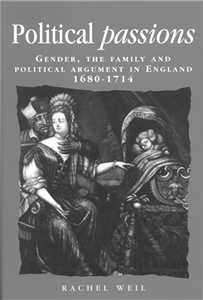
Ideas about marriage, gender and the family were central to political debate in late Stuart England. Newly available in paperback, this book shows how political argument became an arena in which the proper relations between men and women, parents and children, public and private were defined and contested. Using sources that range from high political theory to scurrilous lampoons, she considers public debates about succession, resistance and divorce. Weil examines the allegedly fraudulent birth of the Prince of Wales in 1688, the uses to which Williamite propagandists put the image of the paradoxically sovereign but obedient Mary II, anxieties about the influence of bedchamber women on Queen Anne, the political self-image of the notorious Duchess of Marlborough, the relationship of feminism and Tory ideology in the polemical writings of Mary Astell and the scandal novels of Delariviere Manley. Solidly grounded in current historical scholarship, but written in an engaging manner accessible to non-specialists, this book will interest students of literature, gender studies, political culture and political theory as well as historians. ;
Trusted Partner

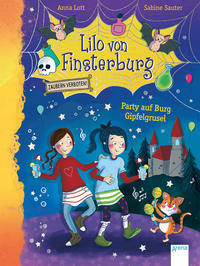
The Dark Castle family receives an invitation to a party at Highhorror Castle. Lilo and Miss Rüdiger are immediately eager to go. And of course Luisa should go with them. But humans are strictly forbidden to set foot in Castle Highhorror. “Who cares?”, say Lilo and Luisa, and at first everything seems fine: Luisa gets in as a perfect witch. But then the girls learn about a protective magic spell which covers the whole of the castle: unauthorized beings will be turned for ever into stone… Only a secret book of magic spells can save Luisa now!
Trusted Partner

The most magical adventure since the discovery of chocolate! Do you believe in magic and miracles? Everyone in the little town of Belony takes magic and miracles for granted – everyone except Elina, who thinks it’s all a load of nonsense. That is, until her nervous neighbour Charlie happens to get hold of a bar of chocolate that has a very strange effect on her. Suddenly Elina is convinced that Charlie has fallen under a spell. Of all people, it’s shy Robin who comes to the girl’s rescue. He is a member of a Candy Guild family – people who have the ability to create magic sweets that will help others. This is how he knows that only the mysterious Candy Guild can lift the curse on Charlie. With a suitcase full of magic sweets, the three of them set out on a dangerous quest. Because not everyone keeps to the pact that magic sweets should only be used to do good… The Candy Guild. The Magic Pact is the first in a new series of magic-fantasy books for children of 9+ - as enchanting as chocolate and as wild as a Christmas cracker!
Trusted Partner
 Trusted Partner

This book addresses the question of political legitimacy in the European Union from the much neglected angle of political responsibility. It develops an original communitarian approach to legitimacy based on Alasdair MacIntyre's ethics of virtues and practices, that can be contrasted with prevalent liberal-egalitarian and neo-republican approaches. Tsakatika argues that a 'responsibility deficit', quite distinct from the often discussed 'democratic deficit', can be diagnosed in the European Union. This is documented in chapters that provide in-depth analysis of accountability, transparency and the difficulties associated with identifying responsibility in European governance. Closing this gap requires going beyond institutional engineering. It calls for gradual convergence towards certain core social and political practices and for the flourishing of the virtues of political responsibility in Europe's nascent political community. Throughout the book, normative political theory is brought to bear on concrete dilemmas of institutional choice faced by the EU during the recent constitutional debates. 'Political responsibility and the European Union' will be of interest to specialists and postgraduate students of political theory, constitutional law and European Union Studies. ;
Trusted Partner

Clive Barker: Dark imaginer explores the diverse literary, film and visionary creations of the polymathic and influential British artist Clive Barker. In this necessary and timely collection, innovative essays by leading scholars in the fields of literature, film and popular culture explore Barker's contribution to gothic, fantasy and horror studies, interrogating his creative legacy. The volume consists of an extensive introduction and twelve groundbreaking essays that critically reevaluate Barker's oeuvre. These include in-depth analyses of his celebrated and lesser known novels, short stories, theme park designs, screen and comic book adaptations, film direction and production, sketches and book illustrations, as well as responses to his material from critics and fan communities. Clive Barker: Dark imaginer reveals the breadth and depth of Barker's distinctive dark vision, which continues to fascinate and flourish.
Trusted Partner
 Trusted Partner



