
Hotel de las Ideas
Hotel de las ideas is a cooperative, with 10 co-founders.
View Rights Portal

La Pollera's catalog includes narrative, essay, and chronicle of contemporary and classic authors.
View Rights Portal
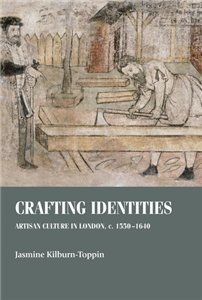
Crafting identities explores artisanal identity and culture in early modern London. It demonstrates that the social, intellectual and political status of London's crafts and craftsmen were embedded in particular material and spatial contexts. Through examination of a wide range of manuscript, visual and material culture sources, the book investigates for the first time how London's artisans physically shaped the built environment of the city and how the experience of negotiating urban spaces impacted directly on their distinctive individual and collective identities. Applying an innovative and interdisciplinary methodology to the examination of artisanal cultures, the book engages with the fields of social and cultural history and the histories of art, design and architecture. It will appeal to scholars of early modern social, cultural and urban history, as well as those interested in design and architectural history.

Considers how notions of Britishness were constructed and promoted through architecture, landscape, painting, sculpture and literature. Maps important moments in the self-conscious evolution of the idea of 'nation' against a broad cultural historical framework. An important addition to the field of postcolonial studies as it looks at how British identity creation affected those living in England - most study in this area has thus far focused on the effect of such identity creation upon the colonial subject. Broad appeal due to wide subject matter covered. Examines just how 'constructed' a national identity is - past and present.
 Trusted Partner

This book examines the distinctive aspects that insiders and outsiders perceived as characteristic of Irish and Scottish ethnic identities in New Zealand. When, how, and why did Irish and Scots identify themselves and others in ethnic terms? What characteristics did the Irish and the Scots attribute to themselves and what traits did others assign to them? Did these traits change over time and if so how? Contemporary interest surrounding issues of ethnic identities is vibrant. In countries such as New Zealand, descendants of European settlers are seeking their ethnic origins, spurred on in part by factors such as an ongoing interest in indigenous genealogies, the burgeoning appeal of family history societies, and the booming financial benefits of marketing ethnicities abroad. This fascinating book will appeal to scholars and students of the history of empire and the construction of identity in settler communities, as well as those interested in the history of New Zealand.
Trusted Partner

This study compares the making and remaking of the political identities of the miners' movements in Britain and Germany. Taking the south Wales and Ruhr coalfields as case studies, it focuses on the public discourse of the trade unions and political parties as it was disseminated in local newspapers, trade union publications, pamphlets and election leaflets. It reveals how the miners' movements used ideas such as class, religion, the 'people' or Volk, socialization and nationalization to construct organizational identities during the turbulent period between 1890 and 1926. These concepts were crucial not only in the formation and self-identity of the miners' trade unions, but also in the way they interacted with employers and the state. They adapted and changed over time as the miners' movements reacted to war, economic depression and increasing industrial conflict. The book contends that these identities were not simply the result of structural factors, but were formed at the juncture where cultural, political and sociological forces intersect. Examining this intersection through discourse analysis and the concept of the 'lifeworld', the book brings together the social world of the miners and the realm of organized politics to advance historical understanding of two of the most important elements in the most powerful labour movements in Europe. ;
Trusted Partner
Insanity, identity and empire examines the formation of colonial social identities inside the institutions for the insane in Australia and New Zealand. Taking a large sample of patient records, it pays particular attention to gender, ethnicity and class as categories of analysis, reminding us of the varied journeys of immigrants to the colonies and of how and where they stopped, for different reasons, inside the social institutions of the period. It is about their stories of mobility, how these were told and produced inside institutions for the insane, and how, in the telling, colonial identities were asserted and formed. Having engaged with the structural imperatives of empire and with the varied imperial meanings of gender, sexuality and medicine, historians have considered the movements of travellers, migrants, military bodies and medical personnel, and 'transnational lives'. This book examines an empire-wide discourse of 'madness' as part of this inquiry.
Trusted Partner

This book of essays on British social and cultural history since the eighteenth century draws attention to relatively neglected topics including personal and collective identities, the meanings of place, especially locality, and the significance of cultures of association. Themes range from rural England in the eighteenth century to the urbanizing society of the nineteenth century; from the Home Front in the First World War to voluntary action in the welfare state; from post 1945 civic culture to the advice columns of teenage magazines and the national press. Various aspects of civil society connect these themes notably: the different identities of place, locality and association that emerged with the growth of an urban environment during the nineteenth century and the shifting landscape of twentieth-century public discourse on social welfare and personal morality. It is of interest that several of the essays take Manchester or Lancashire as their focus.
Trusted Partner
Trusted Partner

For the first time, this volume explores the identities of leprosy sufferers and other people affected by the disease in medieval Europe. The chapters, including contributions by leading voices such as Luke Demaitre, Carole Rawcliffe and Charlotte Roberts, challenge the view that people with leprosy were uniformly excluded and stigmatised. Instead, they reveal the complexity of responses to this disease and the fine line between segregation and integration. Ranging across disciplines, from history to bioarchaeology, Leprosy and identity in the Middle Ages encompasses post-medieval perspectives as well as the attitudes and responses of contemporaries. Subjects include hospital care, diet, sanctity, miraculous healing, diagnosis, iconography and public health regulation. This richly illustrated collection presents previously unpublished archival and material sources from England to the Mediterranean.
Trusted Partner

On 25 January 1474, Charles the Bold, duke of Burgundy, appeared before his subjects in Dijon. Robed in silk, gold and precious jewels and wearing a headpiece that gave the illusion of a crown, he made a speech in which he cryptically expressed his desire to become a king. Three years later, Charles was killed at the battle of Nancy, an event that plunged the Great Principality of Burgundy into chaos. This book, innovative and essential, not only explores Burgundian history and historiography but offers a complete synthesis about the nature of politics in this region, considered both from the north and the south. Focusing on political ideologies, a number of important issues are raised relating to the medieval state, the signification of the nation under the 'Ancien Regime', the role of warfare in the creation of political power and the impact of political loyalties in the exercise of government. In doing so, the book challenges a number of existing ideas about the Burgundian state.
Trusted Partner


Questions of identity trigger controversial and highly emotional discussions in the political and social debate. The positions range from radically emancipatory perspectives to authoritarian and restorative efforts on the far right wing of politics. Liberal democracies are now opening up – slowly – as identity- and gender-sensitive forums. Opposite them are the 'new ethics' of illiberal democracies and totalitarian states that are aimed at ethnic homogeneity and gender uniformity. But that's not to say that there is unity in the liberal settings on the necessary degree of identity politics. Both language and gender politics are deeply controversial. Do we need an 'identity' and, if so, which one or how many? Can the identity debate be extended by means of other concepts?
Trusted Partner
 Trusted Partner
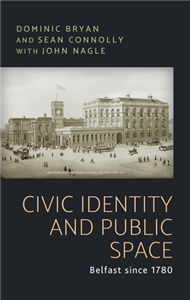
Civic identity and public space, focussing on Belfast, and bringing together the work of a historian and two social scientists, offers a new perspective on the sometimes lethal conflicts over parades, flags and other issues that continue to disrupt political life in Northern Ireland. It examines the emergence during the nineteenth century of the concept of public space and the development of new strategies for its regulation, the establishment, the new conditions created by the emergence in 1920 of a Northern Ireland state, of a near monopoly of public space enjoyed by Protestants and unionists, and the break down of that monopoly in more recent decades. Today policy makers and politicians struggle to devise a strategy for the management of public space in a divided city, while endeavouring to promote a new sense of civic identity that will transcend long-standing sectarian and political divisions.
Trusted Partner

This book focuses on British efforts to suppress the traffic in female slaves destined for Egyptian harems during the late-nineteenth century. It considers this campaign in relation to gender debates in England, and examines the ways in which the assumptions and dominant imperialist discourses of these abolitionists were challenged by the newly-established Muslim communities in England, as well as by English people who converted to or were sympathetic with Islam. While previous scholars have treated antislavery activity in Egypt first and foremost as an extension of earlier efforts to abolish plantation slavery in the New World, this book considers it in terms of encounters with Islam during a period which it argues marked a new departure in Anglo-Muslim relations. This approach illuminates the role of Islam in the creation of English national identities within the global cultural system of the British Empire. This book would appeal to those with an interest in British imperial history; Islam; gender, feminism, and women's studies; slavery and race; the formation of national identities; global processes; Orientalism; and Middle Eastern studies.
Trusted Partner
Trusted Partner

This book probes the causes of and conditions for the preference of the members of the British-Bangladeshi community for a religion-based identity vis-à-vis ethnicity-based identity, and the influence of Islamists in shaping the discourse. The first book-length study to examine identity politics among the Bangladeshi diaspora delves into the micro-level dynamics, the internal and external factors and the role of the state and locates these within the broad framework of Muslim identity and Islamism, citizenship and the future of multiculturalism in Europe. Empirically grounded but enriched with in-depth analysis, and written in an accessible language this study is an invaluable reference for academics, policy makers and community activists. Students and researchers of British politics, ethnic/migration/diaspora studies, cultural studies, and political Islam will find the book extremely useful. ;
Trusted Partner
Trusted Partner
 Trusted Partner
Trusted Partner
Trusted Partner
Trusted Partner
Trusted Partner

This book examines Turkey's integration with Europe within structural dynamics of globalisation from a critical political economy perspective. Critical approaches have been sidelined within European Studies. Turkish enlargement is not an exemption. The analyses are based on original data generated by 109 interviews conducted in 2010, 2017 and 2023 with five categories of actors: representatives of capital and labour, political parties, state officials, and struggles around ecology, patriarchy and migration. It argues that the pro-membership was hegemonic in the 2000s which was contested by two rival class strategies, Ha-vet and neo-mercantilism. In the 2010s, pro-membership is no longer hegemonic within rising critical tone of social forces supporting rival class strategies. Unevenness of Turkey's trajectory of integration to Europe is likely to be consolidated through market integration and management of migration through transactional approach.



