
Straits Times Press
In our pursuit of books of uncompromising quality and appeal, we have in the past two decades helped Singapore earn a place on the world map for publishing.
View Rights Portal
In our pursuit of books of uncompromising quality and appeal, we have in the past two decades helped Singapore earn a place on the world map for publishing.
View Rights Portal

This book offers the first sustained investigation into non-elite understandings of radicalisation and counter-radicalisation policy. Drawing on original focus group research with students from universities across England and Wales, the book explores how 'ordinary' citizens understand radicalisation, how they make sense of counter-radicalisation initiatives like the UK Prevent Strategy, and how they evaluate its functioning and effects across society. Radicalisation, counter-radicalisation and Prevent demonstrates that these non-elite insights often contradict and diverge from traditional (elite) security knowledge and thus shed new light on wider questions around the politics of security. This has vitally important implications not only for counter-radicalisation and counter-terrorism policy but for the very study and practice of security.

 Trusted Partner
 Trusted Partner


"Rescue” has two fundamentally different “existential” dimensions. One is aimed at “saving” individual lives that are in danger. Firefighters, for instance, rescue people from fires, while the sea rescue services rescue shipwrecked people from the Mediterranean. The second dimension of “rescue”, on the other hand, concerns systems – think of the bailing out of banks, the euro or the climate disaster – and so points to a larger context that creates the conditions for “life” to even be possible, or at least to be preserved. The complex subject of this stringent essay is just to what extent politics enable or prevent “rescue attempts”, to what extent it understands its actions as “rescue actions”, and how decisively the “narrative”, i.e. the “talk of rescue”, ultimately dominates our entire understanding of politics.
Trusted Partner
 Trusted Partner
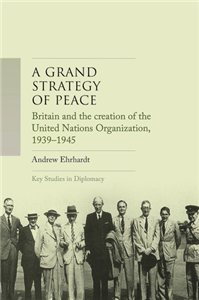
A grand strategy of peace is the first detailed account of Britain's role in the creation of the United Nations Organization during the Second World War. As a work of traditional diplomatic history that brings in elements of intellectual history, the book describes how British officials, diplomats, politicians, and writers - previously seen to be secondary actors to the United States in this period - thought about, planned for, and helped to establish a future international order. While in the present day, many scholars and analysts have returned to the origins of the post- 1945 international system, this book offers an exhaustive account of how the statesmen and more importantly, the officials working below the statesmen, actually conceived of and worked to establish a post-war world order.
Trusted Partner


From a psychological perspective, there are many aspects to negotiating. Given the right knowledge of backgrounds and mechanisms, it is an art form possible to get to grips with and put into practice. In an entertaining and informative way, this book introduces the reader to the basics of communication and body language, cooperative negotiation, strategic negotiation, the different personalities of negotiators, and negotiating. Using practical exercises and valuable practical tips, this book takes the reader through the main psychological strategies and methods so he can negotiate in a flexible, goal-oriented, and successful manner. Target Group: For people who want to improve their negotiating skills.
Trusted Partner
Critical theory and Independent Living explores intersections between contemporary critical theory and disabled people's struggle for self-determination. The book highlights the affinities between the Independent Living movement and studies of epistemic injustice, biopower, and psychopower. It discusses in depth the activists' critical engagement with welfare-state paternalism, neoliberal marketisation, and familialism. This helps develop a pioneering comparison between various welfare regimes grounded in Independent Living advocacy. The book draws on the activism of disabled people from the European Network on Independent Living (ENIL) by developing case studies of the ENIL's campaigning for deinstitutionalisation and personal assistance. It is argued that this work helps rethink independence as a form of interdependence, and that this reframing is pivotal for critical theorising in the twenty-first century.
Trusted Partner
 Trusted Partner
Trusted Partner
Trusted Partner

In this book Tatjana van Strien, the author of the Dutch Eating Behavior Questionnaire (DEBQ), presents a scientific alternative for all the ‘miracle solutions’ to lose weight. Based on more than 25 years of scientific research, she offers a self-test-method which enables readers to explore what is the cause of their eating problem, what they can do about it, and ultimately lose weight and keep it off. Target Group: people who want to lose weight, dieticians, doctors, psychologists.
Trusted Partner
Trusted Partner
Air policing was used in many colonial possessions, but its most effective incidence occurred in the crescent of territory from north-eastern Africa, through South-West Arabia, to North West Frontier of India. This book talks about air policing and its role in offering a cheaper means of 'pacification' in the inter-war years. It illuminates the potentialities and limitations of the new aerial technology, and makes important contributions to the history of colonial resistance and its suppression. Air policing was employed in the campaign against Mohammed bin Abdulla Hassan and his Dervish following in Somaliland in early 1920. The book discusses the relationships between air control and the survival of Royal Air Force in Iraq and between air power and indirect imperialism in the Hashemite kingdoms. It discusses Hugh Trenchard's plans to substitute air for naval or coastal forces, and assesses the extent to which barriers of climate and geography continued to limit the exercise of air power. Indigenous responses include being terrified at the mere sight of aircraft to the successful adaptation to air power, which was hardly foreseen by either the opponents or the supporters of air policing. The book examines the ethical debates which were a continuous undercurrent to the stream of argument about repressive air power methods from a political and operational perspective. It compares air policing as practised by other European powers by highlighting the Rif war in Morocco, the Druze revolt in Syria, and Italy's war of reconquest in Libya.
Trusted Partner

Schema therapy is an important further development of cognitive behavioral therapy (CBT) for patients with personality disorders and other chronic mental health problems. In studies, work with the schema mode approach in particular has been shown to be highly effective. In the updated edition of this book, which in particular also reports current findings on the evidence, treatment with the mode model is presented in a practical manner. Numerous case examples illustrate the therapeutic approach. After an introduction to the core concepts of schema therapy, diagnostic and case conceptualization are addressed. Subsequently, the therapeutic procedure for each mode type is explained. Important emphasis is placed on the therapeutic relationship, which is conceptualized as a limited reparenting, and emotion-focusing techniques, such as chair dialogues and imaginative techniques. In these two respects, schema therapy differs particularly from classical CBT. Typical pitfalls and problems in schema therapy as well as possible variations of the approach are also described. Thus, the book offers a compact presentation of work with the schema approach to personality disorders. For:• psychotherapists• psychiatrists• clinical psychologists• students and teachers in psychotherapeutictraining, furthertraining, and continuing education
Trusted Partner
Islamophobia is one of the most misunderstood and pernicious forms of racism in Britain. But how do those committed to challenging Islamophobia understand it? And what does this mean for their practices 'on the ground'? Islamophobia, anti-racism and the British left combines first-hand accounts from activists and community workers across two British cities with sociological theory, critically interrogating Islamophobia's relationship to 'race', racial capitalism and other modalities of racism. Setting this discussion against some of the most pertinent political shifts in Britain in recent years - from the resurgence of left nationalism to Black Lives Matter - the book assesses the limits of recent attempts to think about and tackle Islamophobia, and considers the possibilities of an alternative approach from and for the anti-racist left.
Trusted Partner

Between 1983 and 1987, mercenaries adopting the pseudonym GAL (Grupos Antiterroristas de Liberación, Antiterrorist Liberation Group) paid by the Spanish treasury and relying upon national intelligence support were at war with the Basque militant group ETA (Euskadi (e)Ta Askatasuna, Basque Country and Freedom). Over four years, their campaign of extrajudicial assassinations spanned the French-Spanish border. Nearly thirty people were killed in a campaign comprised of torture, kidnapping, bombing and the assassination of suspected ETA activists and Basque refugees. This establishment of unofficial counterterrorist squads by a Spanish Government was a blatant detour from legality. It was also a rare case in Europe where no less than fourteen high-ranking Spanish police officers and senior government officials, including the Minister of Interior himself, were eventually arrested and condemned for counter-terrorism wrongdoings and illiberal practices. Thirty years later, this campaign of intimidation, coercion and targeted killings continues to grip Spain. The GAL affair was not only a serious example of a major departure from accepted liberal democratic constitutional principles of law and order, but also a brutal campaign that postponed by decades the possibility of a political solution for the Basque conflict. Counter-terror by proxy uncovers why and how a democratic government in a liberal society turned to a 'dirty war' and went down the route of illegal and extrajudicial killing actions. It offers a fuller examination of the long-term implications of the use of unorthodox counter-terrorist strategies in a liberal democracy.
Trusted Partner


Many patients are confused in the coronavirus crisis and ask what they can do to prevent themselves and their family from contracting the SARS-Cov-2 virus. There are now several studies that prove the influence of micronutrients such as zinc, selenium and various vitamins on the immune system and specifically on the course of viral diseases. In this brochure, successful author Uwe Gröber, pharmacist and head of the Academy for Micronutrient Medicine in Essen, has compiled his recommendations for strengthening the immune system. Here you can learn -why micronutrients may be considered for combatting the coronavirus, -how the micronutrients are dosed and applied, and -what effects micronutrients have on the immune system. This strengthens the immune system in the fight against the coronavirus!
Trusted Partner
Recent years have seen a rennaissance of scholarly interest in the fin-de-siecle fiction of the New Woman. New Woman Strategies offers a new approach to the subject by focusing on the discursive strategies and revisionist aesthetics of the genre in the writings of three of its key exponents: Sarah Grand, Olive Schreiner and Mona Caird. ;
Trusted Partner
Research on soldier settlement has to be set within the wider history of emigration and immigration. This book examines two parallel but complementary themes: the settlement of British soldiers in the overseas or 'white' dominions, Australia, Canada, New Zealand and South Africa, between 1915 and 1930. One must place soldier settlement within the larger context of imperial migration prior to 1914 in order to elicit the changes in attitude and policy which occurred after the armistice. The book discusses the changes to Anglo-dominion relations that were consequent upon the incorporation of British ex-service personnel into several overseas soldier settlement programmes, and unravels the responses of the dominion governments to such programmes. For instance, Canadians and Australians complained about the number of ex-imperials who arrived physically unfit and unable to undertake employment of any kind. The First World War made the British government to commit itself to a free passage scheme for its ex-service personnel between 1914 and 1922. The efforts of men such as L. S. Amery who attempted to establish a landed imperial yeomanry overseas is described. Anglicisation was revived in South Africa after the second Anglo-Boer War, and politicisation of the country's soldier settlement was an integral part of the larger debate on British immigration to South Africa. The Australian experience of resettling ex-servicemen on the land after World War I came at a great social and financial cost, and New Zealand's disappointing results demonstrated the nation's vulnerability to outside economic factors.
Trusted Partner
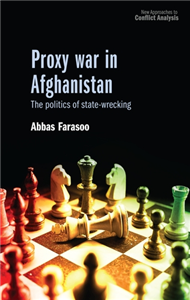
This book provides a compelling analysis of proxy warfare and its far-reaching implications for statehood, focusing on the conflict in Afghanistan. Introducing the innovative concept of "state-wrecking," it bridges theory and practice to unravel how external support for insurgent actors fuels violence, undermines territorial control and sovereignty, intensifies violence, and dismantles political legitimacy. The work shifts the discourse on proxy wars from the strategies of global powers to the procedural and structural impacts within target states. Grounded in rigorous empirical research, including interviews, archival data, and conflict analysis, the book critically examines the Pakistan-Taliban nexus and the limitations of US-led interventions. By blending a robust theoretical framework with in-depth case studies, it reveals how proxy dynamics shape conflicts, disrupt governance, and challenge international security. This is an essential resource for those seeking to understand the entanglements of modern warfare and the fragility of states under external influence.



