
Your Search Results
-

-

MIS Publishing Co., Ltd.
MIS Publishing Co., Ltd. is one of the creators of best-selling educational books and materials in Thailand. Our mission is to create high-quality books at a reasonable price everyone can afford. . Our company produces high-quality content and hi-tech learning multimedia with care in every detail for people of all ages, especially young learners. We have a strong team of creative writers in different specific fields, and native speakers with perfect accents to ensure that all products will be pleased and accurate. . From small beginnings, MIS has been growing at a rapid pace. We never stop developing new products for all book lovers. We have sold book rights to many foreign publishing houses in Taiwan, Vietnam, Malaysia, Singapore, and still counting.
View Rights Portal
-
Promoted Content

 Humanities & Social SciencesJanuary 2026
Protestant missionary children's lives, c.1870-1950
by Hugh Morrison
-
Promoted Content
 Humanities & Social SciencesAugust 2010
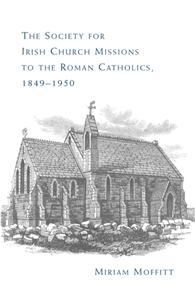
The Society for Irish Church Missions to the Roman Catholics, 1849–1950
by Miriam Moffitt
This work details traces the origins, development and impact of the proselytizing organization, the Society for Irish Church Missions to the Roman Catholics, from its Protestant foundation during the famine of 1845-47 to the early decades of Irish Free State. It argues that the foundation of this ostensibly religious society was also underpinned by social, political, and economic factors and demonstrates that by the mid 1850s the mission operated on a very substantial scale. Moffitt examines the mission's role in the shifting political realities of the late nineteenth and early twentieth centuries. The impact of this inter-faith power struggle and its legacy to the present day are explored by examining contemporary sources, folklore evidence, and the depiction of proselytizing missions in both Catholic and Protestant denomination literature and fictional writings. ;
-
 Trusted Partner
 Humanities & Social SciencesApril 2026
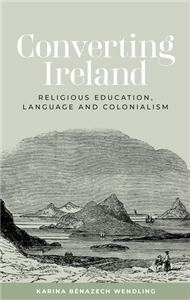
Converting Ireland
Religious education, language and colonialism
by Karina Bénazech Wendling
Karina Bénazech Wendling offers a re-assessment of 'souperism'-the long-debated claim that food was used to convert Irish Catholics to Protestantism during the Great Famine. Focusing on the Irish Society for Promoting the Education of the Native Irish through their Own Language, the first group labeled 'soupers' in 1841, she uncovers a more complex picture. Rather than a mere tool of British cultural imperialism, the Society had a deep engagement with the Irish language and Bible translation, while also encouraging religious conversions in the West. The book explores the Society's role in Ireland's religious and political landscape, the rise of Catholic counter-missions, and nationalist resistance. Offering fresh insights into Ireland's religious history and global missionary movements, this book is essential for scholars of Irish studies, interdenominational relations, and education in Ireland.
-
Trusted Partner
 Humanities & Social SciencesDecember 2014
The Protestant Orphan Society and its social significance in Ireland 1828–1940
by June Cooper
The Protestant Orphan Society, founded in Dublin in 1828, managed a carefully-regulated boarding-out and apprenticeship scheme. This book examines its origins, its forward-thinking policies, and particularly its investment in children's health, the part women played in the charity, opposition to its work and the development of local Protestant Orphan Societies. It argues that by the 1860s the parent body in Dublin had become one of the most well-respected nineteenth-century Protestant charities and an authority in the field of boarding out. The author uses individual case histories to explore the ways in which the charity shaped the orphans' lives and assisted widows, including the sister of Sean O'Casey, the renowned playwright, and identifies the prominent figures who supported its work such as Douglas Hyde, the first President of Ireland. This book makes valuable contributions to the history of child welfare, foster care, the family and the study of Irish Protestantism. ;
-
Trusted Partner
 Humanities & Social SciencesApril 2024
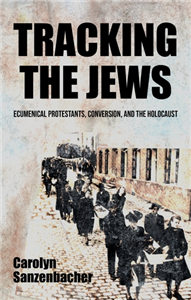
Tracking the Jews
Ecumenical Protestants, conversion, and the Holocaust
by Carolyn Sanzenbacher
This book sheds light on an unprecedented Protestant conversion initiative for the global evangelisation of Jews. Founded in 1929, the International Committee on the Christian Approach to the Jews (ICCAJ) aimed to bring Jewish people to their 'spiritual destiny', a task it saw as both benevolent and essential for a harmonious society. By the time of Hitler's rise to power it was active in thirty-two countries, educating Protestant churches on the right Christian attitude towards Jews and antisemitism. Reconstructing the activities of the ICCAJ in the years before, during and immediately after the Holocaust, Tracking the Jews reveals how ideas disseminated through the organisation's discourse - 'Jewish problem', 'Jewish influence', 'Judaising threat', 'eternal Jew' - were used to rationalise, justify, explain or advance a number of deeply troubling policies. They were, for vastly different reasons, consciously used elements of argumentation in both Protestant conversionary discourse and Nazi antisemitic ideology.
-
Trusted Partner
 Literature & Literary StudiesJanuary 2013
Popular protest in late-medieval Europe
Italy, France and Flanders
by Samuel Kline Cohn
The documents in this stimulating volume span from 1245 to 1424 but focus on the 'contagion of rebellion' from 1355 to 1382 that followed in the wake of the plague. They comprise a diversity of sources and cover a variety of forms of popular protest in different social, political and economic settings. Their authors range across a wide political and intellectual horizon and include revolutionaries, the artistocracy, merchants and representatives from the church. They tell gripping and often gruesome stories of personal and collective violence, anguish, anger, terror, bravery, and foolishness. Of over 200 documents presented here, most have been translated into English for the first time, providing students and scholars with a new opportunity to compare social movements across Europe over two centuries, allowing a re-evaluation of pre-industrial revolts, the Black Death and its consequences for political culture and action. This book will be essential reading for those seeking to better understand popular attitudes and protest in medieval Europe.
-
Trusted Partner
 Colonialism & imperialismAugust 2004
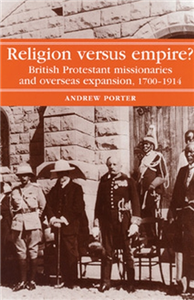
Religion Versus Empire?
British Protestant missionaries and overseas expansion, 1700–1914
by Andrew Porter
This is the only book that addresses the relations between religion, Protestant missions, and empire building, linking together all three fields of studyby taking as its starting point the early eighteenth century Anglican initiatives in colonial North America and the Caribbean. It considers how the early societies of the 1790s built on this inheritance, and extended their own interests to the Pacific, India, the Far East, and Africa. Fluctuations in the vigour and commitment of the missions, changing missionary theologies, and the emergence of alternative missionary strategies, are all examined for their impact on imperial expansion. Other themes include the international character of the missionary movement, Christianity's encounter with Islam, and major figures such as David Livingstone, the state and politics, and humanitarianism, all of which are viewed in a fresh light. This monumental study shows that the missionary movement had a far more complex and ambiguous relationship with the Empire than has previously been thought, and will be widely welcomed by students and scholars of imperial history and the history of religion.
-
Trusted Partner
 Humanities & Social SciencesJuly 2002
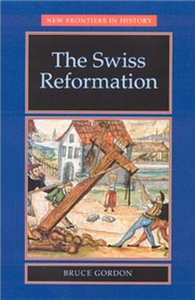
The Swiss Reformation
The Swiss Reformation
by Bruce Gordon, Mark Greengrass
The Swiss Reformation was a seminal event of the sixteenth century which created a Protestant culture whose influence spread across Europe from Transylvania to Scotland. Offers the first comprehensive study of the Swiss Reformation and argues that the movement must be understood in terms of the historical evolution of the Swiss Confederation, its unique and fluid structures, the legacy of the mercenary trade, the distinctive character of Swiss theology, the powerful influence of Renaissance humanism, and, most decisively, the roles played by the dominant figures, Huldrych Zwingli and Heinrich Bullinger. Marked by astounding creative energy, incendiary preaching, burning political passions, peasant revolts, and breath-taking scholarship, as well as by painful divisions, civil war, executions and dashed hopes, the story of the Swiss Reformation is told with extensive use of primary sources. Explores the narrative of events before turning to consider themes such as the radical opposition, church and community, daily life in the Confederation, cultural achievements and the Swiss place in the wider European Reformation world. ;
-
Trusted Partner
 Humanities & Social SciencesMarch 2012
Irish Protestant identities
by Edited by Mervyn Busteed, Frank Neal and Jonathan Tonge
-
Trusted Partner
-
Trusted Partner
Literature & Literary StudiesJanuary 2025
People and piety
Protestant devotional identities in early modern England
by Elizabeth Clarke, Robert W. Daniel
This international and interdisciplinary volume investigates Protestant devotional identities in sixteenth- and seventeenth-century England. Divided into two sections, the book examines the 'sites' where these identities were forged - the academy, printing house, household, theatre and prison - and the 'types' of texts that expressed them - spiritual autobiographies, religious poetry and writings tied to the ars moriendi - providing a broad analysis of social, material and literary forms of devotion during England's Long Reformation. Through archival and cutting-edge research, a detailed picture of 'lived religion' emerges, which re-evaluates the pietistic acts and attitudes of well-known and recently discovered figures. To those studying and teaching religion and identity in early modern England, and anyone interested in the history of religious self-expression, these chapters offer a rich and rewarding read.
-
Trusted Partner
 Humanities & Social SciencesFebruary 2009
Catholic communities in Protestant states
by Benjamin Kaplan, Joseph Bergin, Bob Moore, Penny Roberts, Henk Van Nierop, Bill Naphy, Judith Pollmann
-
Trusted Partner
Humanities & Social SciencesFebruary 2009
Catholic communities in Protestant states
by Benjamin Kaplan, Joseph Bergin, Bob Moore, Penny Roberts, Henk Van Nierop, Bill Naphy, Judith Pollmann, Rebecca Mortimer
-
Trusted Partner
-
Trusted Partner
 Humanities & Social SciencesFebruary 2017
Conflict, Politics and Proselytism
Methodist missionaries in colonial and postcolonial Burma, 1887–1966
by Andrew Thompson, Michael D. Leigh, John M. MacKenzie
This book is a study of the ambitions, activities and achievements of Methodist missionaries in northern Burma from 1887-1966 and the expulsion of the last missionaries by Ne Win. The story is told through painstaking original research in archives which contain thousands of hitherto unpublished documents and eyewitness accounts meticulously recorded by the Methodist missionaries. This accessible study constitutes a significant contribution to a very little-known area of missionary history. Leigh pulls together the themes of conflict, politics and proselytisation in to a fascinating study of great breadth. The historical nuances of the relationship between religion and governance in Burma are traced in an accessible style. This book will appeal to those teaching or studying colonial and postcolonial history, Burmese politics, and the history of missionary work.
-
Trusted Partner
 Literature & Literary StudiesDecember 2004
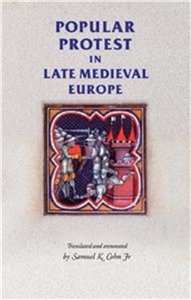
Popular protest in late-medieval Europe
Italy, France and Flanders
by Samuel Kline Cohn Jr, Rosemary Horrox, Simon Maclean
The documents in this stimulating volume span from 1245 to 1424 but focus on the 'contagion of rebellion' from 1355 to 1382 that followed in the wake of the plague. They comprise a diversity of sources and cover a variety of forms of popular protest in different social, political and economic settings. Their authors range across a wide political and intellectual horizon and include revolutionaries, the artistocracy, merchants and representatives from the church. They tell gripping and often gruesome stories of personal and collective violence, anguish, anger, terror, bravery, and foolishness. Of over 200 documents presented here, most have been translated into English for the first time, providing students and scholars with a new opportunity to compare social movements across Europe over two centuries, allowing a re-evaluation of pre-industrial revolts, the Black Death and its consequences for political culture and action. This book will be essential reading for those seeking to better understand popular attitudes and protest in medieval Europe. ;
-
Trusted Partner
 Humanities & Social SciencesJanuary 2013
The Jews in western Europe, 1400–1600
by John Edwards
As European politics, society, economy and religion underwent epoch-making changes between 1400 and 1600, the treatment of Europe's Jews by the non-Jewish majority was, then as in later periods, a symptom of social problems and tensions in the Continent as a whole. Through a broad-ranging collection of documents, John Edwards sets out to present a vivid picture of the Jewish presence in European life during this vital and turbulent period. Subjects covered include the Jews' own economic presence and culture, social relations between Jews and Christians, the policies and actions of Christian authorities in Church and State. He also draws upon original source material to convey ordinary people's prejudices about Jews, including myths about Jewish 'devilishness', money-grabbing, and 'ritual murder' of Christian children. Full introductory and explanatory material makes accessible the historical context of the subject and highlights the insights offered by the documents as well as the pitfalls to be avoided in this area of historical enquiry. This volume aims to provide a coherent working collection of texts for lecturers, teachers and students who wish to understand the experience of Jewish Europeans in this period.
-
Trusted Partner

 Humanities & Social Sciences
Mission Flake
by Mazen Abdalli, Mira Rzany, Annika Hildebrandt, Lara Neudert
Sophie is teased by her classmates because of her condition: her skin looks different; she has flaky, red patches. That’s why her classmates only call her “Flake”. Sophie is often sad and doesn’t feel like she belongs. She is afraid to tell her classmates about her illness. One day, Lennart makes friends with her after his mom, a doctor, tells him about neurodermatitis. Sophie realizes how important it is that other people know about her illness and has an idea: together with Lennart she wants to talk about it to the children in her class during a school lesson (“Mission Flake”). This book helps children who suffer from atopic dermatitis (neurodermatitis) to learn more about the condition and the best way for them to cope with it. For:• children of elementary school age(between 6 and 12 years) who sufferfrom atopic dermatitis (neurodermatitis)• parents and relatives• teachers• therapists
-
Trusted Partner
 Literature & Literary StudiesMarch 2025
The Catholicism of literature in the age of the Book of Common Prayer
Poetry, plays, works, 1558-1689
by Thomas Rist
Offering a complete reading of English Literature throughout 1558-1689, this book demonstrates the continuity of Roman Catholicism in English Literature from the accession of Elizabeth I to the deposing of James II. Rist shows that poetry and plays promoted Roman Catholic ideas in a Biblicist age which established the Church of England through the Book of Common Prayer. From the very idea of literary works to chapters on the Eucharist, Purgatory, Christian worship and the Virgin Mary, Rist joins together major and minor authors of the era to present English Literature afresh. Important literary figures include William Shakespeare, Ben Jonson, Thomas Middleton, Queen Henrietta Maria, John Donne, John Dryden, Robert Herrick, Margaret Cavendish and Aphra Behn.
-
Trusted Partner
 European historyJanuary 2003
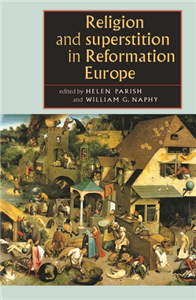
Religion and superstition in Reformation Europe
by Edited by Christopher Durston and Judith Maltby
What, in the sixteenth and seventeenth centuries, was 'superstition'? Where might it be found, and how might it be countered? How was the term used, and how effective a weapon was it in the assault on traditional religion?. The ease with which accusations of 'superstition' slipped into the language of Reformation debate has ensured that one of the most fought over terms in the history of early modern popular culture, especially religious culture, is also one of the most difficult to define. Offers a novel approach to the issue, based upon national and regional studies, and examinations of attitudes to prophets, ghosts, saints and demonology, alongside an analysis of Catholic responses to the Reformation and the apparent presence of 'superstition' in the reformed churches. Challenges the assumptions that Catholic piety was innately superstitious, while Protestantism was rational, and suggests that the early modern concept of 'superstition' needs more careful treatment by historians. Demands that the terminology and presuppositions of historical discourse on the Reformation be altered to remove lingering sectarian polemic.



