
The Royal College of Psychiatrists
Royal College of Psychiatrists publish a wide range of books on mental health for both psychiatrists and the general public, along withtheir flagship journal the British Journal of Psychiatry.
View Rights Portal
Royal College of Psychiatrists publish a wide range of books on mental health for both psychiatrists and the general public, along withtheir flagship journal the British Journal of Psychiatry.
View Rights Portal

Psychotropic drugs have established their place in mental illnesses and form an important element of treatment. This textbook guides the selection of pharmacotherapy for a variety of psychological disorders such as depression, schizophrenia or dementia. The reader will learn, - How to use the various drugs in a targeted manner - The mechanisms of action on which they are based - Why side effects occur and how they can be dealt with. This book corresponds to the curriculum for the training of medical specialists in psychiatry and psychotherapy. It is an indispensable aid to anyone who uses psychotropic drugs!
 Trusted Partner
Trusted Partner
Trusted Partner

 Trusted Partner


This book takes the reader on a fascinating journey, demonstrating in an understandable and entertaining way how the brain affects our thoughts, actions, and feelings - and that this sometimes only peripherally involves reason. It shows, that the subconscious actually exists and how it affects us, how we arrive at both right and wrong decisions, how our memory works, how fragile it can be, and yet also how robust. Using insightful experiments and the latest research results, including many examples, this book presents the reader what an incredibly impressive thinking organ the brain actually is – even if it is not a purely “rational machine”. Target Group: For people interested in the results of research into the workings of the brain in the areas of decision-making, memory, and consciousness.
Trusted Partner


— An exciting and entertaining explanation of neuroscience — In the diverting and humorous style for which the author is known – learning has never been this much fun What processes in the brain are responsible for intelligence, free will, empathy or reason? Can memories be falsified? And what does actually happen in the brain when we reach puberty? Monika Niehaus and Martin Osterloh answer these and many other neuroscientific questions in their book – a fundamental work on brain research, and easy to understand, exciting and entertaining.
Trusted Partner
Trusted Partner
Trusted Partner

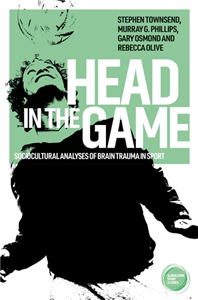
Head in the game brings together international scholars from multiple humanities, social science, and scientific disciplines to critically examine one of the most vexing issues in global sport: concussion. It argues that science and medicine alone cannot solve the concussion crisis: sociocultural factors must also be considered. This edited collection draws attention to the ways that social, cultural, historical, political, literary, philosophical, and legal factors have shaped the concussion crisis in sport. Head in the game is essential reading for those who want to understand how the concussion crisis came to be, and provides guidance for developing ethical and evidence-based solutions in the future.
Trusted Partner

When is the use of force for humanitarian purposes legitimate? The book examines this question through one of the most controversial examples of humanitarian intervention in the post Cold War period: the 1999 NATO intervention in Kosovo. Justifying Violence applies a critical theoretical approach to an interrogation of the communicative practices which underpin claims to legitimacy for the use of force by actors in international politics. Drawing on the theory of communicative ethics, the book develops an innovative conceptual framework which contributes a critical communicative dimension to the question of legitimacy that extends beyond the moral and legal approaches so often applied to the intervention in Kosovo. The empirical application of communicative ethics offers a provocative and nuanced account which contests conventional interpretations of the legitimacy of NATO's intervention. ;
Trusted Partner
 Trusted Partner

 Trusted Partner
Trusted Partner
Trusted Partner
Trusted Partner
Trusted Partner
Trusted Partner
Trusted Partner


Fast nichts ist uns Menschen so wichtig wie unser subjektives, bewußtes Innenleben – und doch wissen wir relativ wenig über seine Genese.Benjamin Libet gehört zu den Pionieren auf dem Gebiet der Bewußtseinsforschung und hat zahlreiche Experimente durchgeführt, die gezeigt haben, wie das Gehirn Bewußtsein produziert. In seinem 2004 erschienenen und jetzt auf deutsch vorliegenden Buch Mind Time präsentiert er erstmals eine eigene Deutung seiner berühmten »Libet-Experimente«, die die aktuelle Debatte über die Bedeutung der Hirnforschung für unser Menschenbild überhaupt erst angestoßen haben.Im Zentrum der Experimente steht der Nachweis, daß jedem bewußten Prozeß ein unbewußter, jedoch meßbarer Prozeß zeitlich vorausgeht. Diese zeitliche Differenz – die Mind Time – läßt den Schluß zu, daß unbewußte Prozesse in unserem Gehirn unser Bewußtsein steuern und nicht umgekehrt das Bewußtsein »Herr im Haus« ist. Die vermeintlichen freien Willensakte etwa sind längst initiiert, bevor uns ein Handlungswunsch überhaupt gegenwärtig ist. Libet behandelt die weitreichenden Folgen seiner Entdeckung nicht nur für die Willensfreiheit, sondern auch für die Identität der Person und die Beziehung zwischen Geist und Gehirn. Klar und verständlich dargestellt, ermöglichen Libets Experimente und Theorien es sowohl Spezialisten als auch interessierten Laien, an einem der spannendsten Forschungsprogramme dieser Tage teilzuhaben – der Erforschung des menschlichen Bewußtseins.
Trusted Partner

The human brain is a wondrous thing, highly complex and highly functional. However, the control centre of our feelings, thoughts and actions can sometimes go out of sync. Some reasons for this are known, such as genetic factors, hormonal effects or trauma. In other cases, we are still in the dark. In an extreme case scenario, the brain may create bizarre delusions – masterful narrations that the people affected fi nd completely conclusive and reasonable. Monika Niehaus has compiled 36 such disorders ranging from love madness and the gourmand syndrome – where gourmet food becomes the purpose of life – to people who desire nothing more than to have their limbs amputated. She tells gripping tales of famous and not so famous cases. With sensitivity and a considerable dose of humour she takes us into the history of art and literature, and presents scientifi c explanations. This fascinating book shows that our brain is a genius – and madness is quite often NOT inexplicable.
Trusted Partner

The human brain is a highly complex and highly functional structure consisting of almost 90 billion nerve cells. But it can go out of sync, due to genetic factors, hormonal effects, trauma or other causes. In extreme cases, our control centre then creates bizarre delusions – brilliant narratives that are completely convincing to the person concerned. In her second book on such phenomena, Monika Niehaus has compiled 30 rare psychological disorders – from a conviction to have been abducted by aliens, to being sexually attracted to criminals, to the hyperthymestical syndrome where people can remember every detail of their past life. Narrated in an interesting, humorous and sensitive way, the author relates a variety of cases, some of them famous, others less so, while introducing us to the history of art and literature and presenting scientific explanations. This fascinating book shows the genius that resides in our brain – and how madness can often be explained.
Trusted Partner

Fast nichts ist uns Menschen so wichtig wie unser subjektives, bewußtes Innenleben – und doch wissen wir relativ wenig über seine Genese. Benjamin Libet gehört zu den Pionieren auf dem Gebiet der Bewußtseinsforschung und hat zahlreiche Experimente durchgeführt, die gezeigt haben, wie das Gehirn Bewußtsein produziert. In »Mind Time« präsentiert er erstmals eine eigene Deutung seiner berühmten »Libet-Experimente«, die die aktuelle Debatte über die Bedeutung der Neurowissenschaften für unser Menschenbild überhaupt erst angestoßen haben. Dieses Buch gehört zu den zentralen Arbeiten der modernen Hirnforschung.
Trusted Partner

Das Entstehen von Bewußtsein und Subjektivität ist nicht unabhängig zu denken von gesellschaftlichen Machtstrukturen. Denn, so Judith Butler, Subjekt zu werden (subjection) heißt auch, sich diesen zu unterwerfen. Identität, auch die geschlechtliche, beruht mithin auf der Verortung im Kraftfeld gesellschaftlicher Implikationen. Butler spürt diesem paradoxalen Zusammenhang zwischen dem Gesellschaftlichen und dem Psychischen nach, indem sie die Bewußtseinstheorien von Hegel, Nietzsche, Freud, Althusser und vor allem Foucault in einen – von ihren Verfechtern bislang vermiedenen – Dialog versetzt: Psyche der Macht kombiniert auf neuartige Weise Gesellschaftstheorie, Philosophie und Psychoanalyse und fundiert so die Theorie der Macht und des Subjekts, die implizit auch den Büchern Das Unbehagen der Geschlechter (es 1722) und Körper von Gewicht (es 1737) zugrunde liegt.



