
Rachel Amphlett
USA Today bestselling author Rachel Amphlett is the creator of over 25 crime thrillers. Rachel’s titles are available for consideration to all parties interested in licensing IP.
View Rights Portal
USA Today bestselling author Rachel Amphlett is the creator of over 25 crime thrillers. Rachel’s titles are available for consideration to all parties interested in licensing IP.
View Rights Portal
Islamophobia is one of the most misunderstood and pernicious forms of racism in Britain. But how do those committed to challenging Islamophobia understand it? And what does this mean for their practices 'on the ground'? Islamophobia, anti-racism and the British left combines first-hand accounts from activists and community workers across two British cities with sociological theory, critically interrogating Islamophobia's relationship to 'race', racial capitalism and other modalities of racism. Setting this discussion against some of the most pertinent political shifts in Britain in recent years - from the resurgence of left nationalism to Black Lives Matter - the book assesses the limits of recent attempts to think about and tackle Islamophobia, and considers the possibilities of an alternative approach from and for the anti-racist left.

This is the first book to situate the territories and collective identities of former Yugoslavia within the politics of race - not just ethnicity - and the history of how ideas of racialised difference have been translated globally. The book connects critical race scholarship, global historical sociologies of 'race in translation' and south-east European cultural critique to show that the Yugoslav region is deeply embedded in global formations of race. In doing this, it considers the everyday geopolitical imagination of popular culture; the history of ethnicity, nationhood and migration; transnational formations of race before and during state socialism, including the Non-Aligned Movement; and post-Yugoslav discourses of security, migration, terrorism and international intervention, including the War on Terror and the present refugee crisis.
 Trusted Partner
Amid renewed anti-racist resistance to violent policing, The racial politics of police warfare unpacks the racisms that rationalise militarised policing in contemporary Britain. Jasbinder S. Nijjar shatters prevailing myths about British police as an impartial public service, by revealing it as an institution where racism and war reinforce one another. In examining flagship anti-gang and counter-terrorism policies and practices, the book offers a unique analysis of the relationship between anti-black and anti-Muslim racisms, to demonstrate how racialised populations are institutionalised as common enemies of modernity. Combining perspectives from sociology, history, criminology and social policy, Nijjar illustrates how British policing defends law and order and national security from the perceived threat of race through hyper-intrusive, pre-emptive and deathly measures. Accordingly, he gives a fresh take on resisting racial police warfare, calling for strategies that are at once political, collective, anti-militaristic and abolitionist.
Trusted Partner
 Trusted Partner

This electronic version has been made available under a Creative Commons (BY-NC-ND) open access license. Race talk is about language use as an anti-racist practice in multicultural city spaces. The book contends that attention to talk reveals the relations of domination and subordination in heterogeneous, ethnically diverse and multilingual contexts, while also helping us to understand how transcultural solidarity might be expressed. Drawing on original ethnographic research conducted on licensed and unlicensed market stalls in in heterogeneous, ethnically diverse and multilingual contexts, this book examines the centrality of multilingual talk to everyday struggles about difference, positionality and entitlement. In these street markets, Neapolitan street vendors work alongside documented and undocumented migrants from Bangladesh, China, Guinea Conakry, Mali, Nigeria and Senegal as part of an ambivalent, cooperative and unequal quest to survive and prosper. As austerity, anti-immigration politics and urban regeneration projects encroached upon the possibilities of street vending, talk across linguistic, cultural, national and religious boundaries underpinned the collective action of street vendors struggling to keep their markets open. The edginess of their multilingual organisation offered useful insights into the kinds of imaginaries that will be needed to overcome the politics of borders, nationalism and radical incommunicability.
Trusted Partner
 Trusted Partner
Trusted Partner
Trusted Partner
Surplus lives under racial capitalism is a critical contribution to the study of racial capitalism. It theorises the link between political economy, anti-Roma racism and modern forms of white supremacy in East Central Europe. The book shows how the introduction of capitalism in the 1990s overlapped with the rise of racialised disposability of Roma workers. Since then, their surplusing recurrently comes into sharp relief during the time of crisis. Surplus lives under racial capitalism is built on an investigation of how race and class structure the Czech labour regime and how they form a single site of struggle. One which binds workers across racialised divisions as surplusing continuously expands.
Trusted Partner
 Trusted Partner

Now in its second edition, Racism and Social Change in the Republic of Ireland provides an original and challenging account of racism in twenty-first century Irish society and locates this in its historical, political, sociological and policy contexts. It includes specific case studies of the experiences of racism in twenty-first century Ireland alongside a number of historical case studies that examine how modern Ireland came to marginalize ethnic minorities. Various chapters examine responses by the Irish state to Jewish refugees before, during and after the Holocaust, asylum seekers and Travellers. Other chapters examine policy responses to and academic debates on racism in Ireland. A key focus of the various case studies is upon the mechanics of exclusion experienced by black and ethnic minorities within institutional processes and of the linked challenge of taking racism seriously in twenty-first century Ireland. ;
Trusted Partner
From author: This is a cutting-edge exploration of black urban politics in Parisian racialized working class and working poor districts, the formation of abolition geography, and the possibilities of new forms of political blackness. In Black Socialities. Urban resistance and the struggle beyond recognition in Paris, Vanessa E. Thompson argues that black urban politics in the French banlieues are multi-racial and spatially grounded towards abolition. Based on a close engagement with urban black activist practices against racial imagery in the city, policing and state racism, and housing insecurity, she shows how radical anti-racism goes beyond struggles for recognition and unfolds alongside new formations of political blackness that is based on urban conviviality. This form of black politics has much to teach us in this current conjuncture of liberal anti-racism and state recognition politics.
Trusted Partner

Knowing COVID-19 demonstrates how researchers in the humanities shone a light on some of the many hidden problems of COVID-19, in the very depths of the pandemic crisis. Drawing on eight COVID-19 research projects, the volume shows how humanities researchers, alongside colleagues in the clinical and life sciences, addressed some of the major critical unknowns about this new infectious disease - from the effects of racism to the risks of deploying shame; from how to design an effective instructional leaflet to how to communicate effectively to bus passengers. Across eight novel case studies, the book showcases how humanities research during a pandemic is not only about interpreting the crisis when it has safely passed, but how it can play a vital, collaborative and instrumental role as events are still unfolding.
Trusted Partner
 Trusted Partner
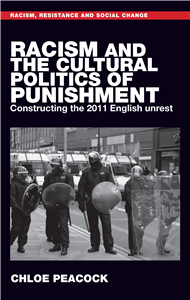
Justifying (in)justice reveals how processes of ignorance are vital to legitimising punitive and discriminatory criminal justice policy and practices. Focusing on the state's startlingly harsh response to the English 'riots' of 2011, the book draws together unique insights from interviews with prosecutors, sentencers, defence lawyers and policymakers at the heart of the response, alongside analysis of media and political debates. Peacock explores the forms of unknowing that were mobilised to justify and normalise the harsh and inequitable punishment of the 'rioters', from amnesia about police racism and Britain's long history of unrest, to widespread denial about the violence of the prison system. Looking to recent events in Britain and beyond, the book offers timely insight into the cultural processes underpinning the punitive systems that disproportionately harm marginalised and racially minoritised communities.
Trusted Partner
Who are expatriates? How do they differ from other migrants? And why should we care about such distinctions? Expatriate interrogates the contested category of 'the expatriate' to explore its history and politics, its making and lived experience. Drawing on ethnographic and archival research, the book offers a critical reading of International Human Resource Management literature, explores the work and history of the Expatriate Archive Centre in The Hague, and studies the usage and significance of the category in Kenyan history and present-day 'expat Nairobi'. Doing so, the book traces the figure of the expatriate from the mid-twentieth-century era of decolonisation to today's heated debates about migration.
Trusted Partner
 Trusted Partner
Trusted Partner
Trusted Partner

The Russian Revolution of 1917 was not just a world-historical event in its own right, but also struck powerful blows against racism and imperialism, and so inspired many black radicals internationally. This edited collection explores the implications of the creation of the Soviet Union and the Communist International for black and colonial liberation struggles across the African diaspora. It examines the critical intellectual influence of Marxism and Bolshevism on the current of revolutionary 'black internationalism' and analyses how 'Red October' was viewed within the contested articulations of different struggles against racism and colonialism. Challenging European-centred understandings of the Russian Revolution and the global left, The Red and the Black offers new insights on the relations between Communism, various lefts and anti-colonialisms across the Black Atlantic - including Garveyism and various other strands of Pan-Africanism. The volume makes a major and original intellectual contribution by making the relations between the Russian Revolution and the Black Atlantic central to debates on questions relating to racism, resistance and social change.
Trusted Partner
 Trusted Partner
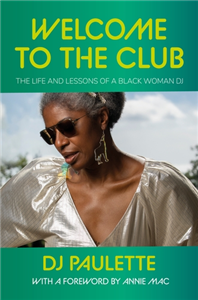
In Welcome to the club, Manchester legend DJ Paulette shares the highs, lows and lessons of a thirty-year music career, with help from some famous friends. One of the Haçienda's first female DJs, Paulette has scaled the heights of the music industry, playing to crowds of thousands all around the world, and descended to the lows of being unceremoniously benched by COVID-19, with no chance of furlough and little support from the government. Here she tells her story, offering a remarkable view of the music industry from a Black woman's perspective. Behind the core values of peace, love, unity and respect, dance music is a world of exclusion, misogyny, racism and classism. But, as Paulette reveals, it is also a space bursting at the seams with powerful women. Part personal account, part call to arms, Welcome to the club exposes the exclusivity of the music industry while seeking to do justice to the often invisible women who keep the beat going.



