
National Academies Press
The National Academies Press (NAP)publish the reports of the National Academies of Sciences, Engineering and Medicine. They published more than 200 books a year on a wide range of topics.
View Rights Portal
The National Academies Press (NAP)publish the reports of the National Academies of Sciences, Engineering and Medicine. They published more than 200 books a year on a wide range of topics.
View Rights Portal
In Yakutia, every winter day is a quest! Putting 10 layers of clothing on, before you go outside, says a lot. Well, that is the tip of the iceberg! The most difficult thing is to wait until a bus arrives when it is -50°C outdoors. Therefore, it is never boring here. Adults and children of the planet would be interested in such warm books from the Pole of Cold with funny facts about life in Yakutia, traditions, history, amazing people and their incredible adventures in the coldest place of the World. Every year, we publish more than 300 titles of various children’s, fiction, study and guidance, reference books, as well as digital and multimedia publications. Over the past 5 years, we won more than 20 international and Russian prizes wherein 14 are for children's book.
View Rights Portal
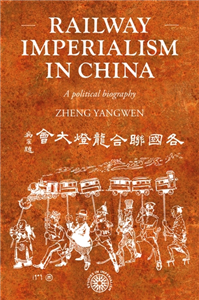
Railway Imperialism in China: a Political Biography is the first and most comprehensive book on history and politics of all major railways in China from the late Qing to the post-Mao era. It investigates the transformation of railways from a bête noire within discussions about reform to the emblematic "engines for empire" as foreign powers used it to carve outspheres of control and exploit the late Qing, and as an instrument of nation making for Chinese regimes. The book introduces new archival sources and a wide range of secondary materials. Boldly conceived, it situates the making of modern China in the context of British, Russian, German, Japanese, American expansion. It traces China's transformation from a victim of railway imperialism in the Age of Empireto a railway expansionist in the twenty-first century.
 Trusted Partner
Trusted Partner
Trusted Partner
In Straight Nation, Pavan Mano reveals the logic of straightness that sits at the heart of postcolonial nationalism in Singapore. Mano rejects the romantic notion of the nation as a haven of belonging, showing it to be a relentless force that is allied with heteronormativity to create a host of minoritized and xenologized figures. Through meticulous exploration and close reading of a swathe of texts, Mano unveils the instrumental role of sexuality in structuring the national imaginary. The book adroitly demonstrates how queerness is rendered foreign in postcolonial Singapore and functions alongside technologies of "race", gender, and class. A provocative critique of narrow contemporary identity politics and its concomitant stymying of a more ambitious political critique, Straight Nation sets out an argument that moves beyond the negativity of traditional critique into a space of (re)thinking, (re)building and (re)imagining.
Trusted Partner

This is the first book to examine the relationship between English nationalism, Brexit and 'the Anglosphere' - a politically-contested term used to denote English-speaking countries sharing cultural and historical roots with the UK. In the aftermath of the UK's EU referendum some pointed to a 'revolt' of those 'left behind' by globalisation. Ben Wellings argues instead that Brexit was and is an elite project, firmly situated within the tradition of an expansive English nationalism. Far from being parochial 'Little Englanders', elite Brexiteers sought to replace the European Union with trade and security alliances between 'true friends' and 'traditional allies' in the Anglosphere. Brexit was thus reassuringly presented as a giant leap into the known. As the UK's future relationship with the rest of the world is negotiated, the need to understand this 'English moment' has never been more pressing.
Trusted Partner

Makes available, for the first time in English translation, four of the principal narrative sources for the history of the Spanish kingdom of León-Castile during the eleventh and twelfth centuries. Three chronicles focus primarily upon the activities of the kings of León-Castile as leaders of the Reconquest of Spain from the forces of Islam, and especially upon Fernando I (1037-65), his son Alfonso VI (1065-1109) and the latter's grandson Alfonso VII (1126-57). The fourth chronicle is a biography of the hero Rodrigo Díaz, better remembered as El Cid, and is the main source of information about his extraordinary career as a mercenary soldier who fought for Christian and Muslim alike. Covers the fascinating interaction of the Muslim and Christian worlds, each at the height of their power. Each text is prefaced by its own introduction and accompanied by explanatory notes.
Trusted Partner
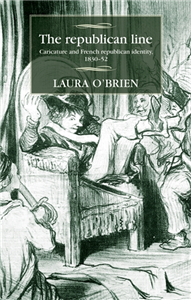
The years between 1830 and 1852 were turbulent ones in French politics - but were also a golden age for French political caricature. Caricature was wielded as a political weapon, so much so that in 1835 the French politician Adolphe Thiers claimed that 'nothing was more dangerous' than graphic satire. This book is the first full study of French political caricature during the critical years of the July Monarchy (1830-48) and the Second Republic (1848-52). Focusing on the crucial question of republicanism, it shows how caricature was used - by both republicans and anti-republicans - to discuss, define and articulate notions of republican identity during this highly significant period in modern French and European history. ;
Trusted Partner
 Trusted Partner

The book outlines the sociological arguments and political activities of the US pragmatist sociologist, Herbert Adolphus Miller (1875-1951). Miller was part of the milieu of Chicago sociology and involved in its studies of race and immigration. He took a distinctly more radical approach and developed a novel political sociology of domination in which he set out a critique of empires, the plight of subject minorities and the risks associated with the inevitable nationalist responses. Where others have identified with the 'internationalisation' of nationalism, Miller sought to make the nation 'international'. He was actively involved in movements for racial justice, Czechoslovakian independence, the formation of the Mid-European Union of subject peoples, as well as support for Korean and Indian independence. He was dismissed by Ohio State University for his activism in 1932.
Trusted Partner
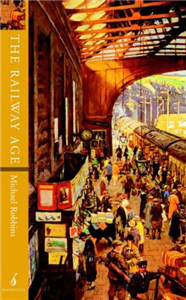
Covers the history and development of the railways and the transforming effect which they had on the world. A lively and readable account, peppered with fascinating facts. Written by an authoritative and important figure in the world of railways. ;
Trusted Partner
 Trusted Partner
Trusted Partner
Trusted Partner
Trusted Partner
Trusted Partner
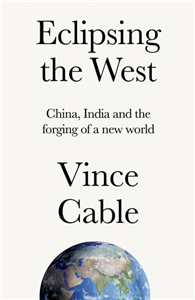
As the international order begins to crumble, this incisive book asks what the rise of the Asian superstates means for the future. The Western-dominated world we have known for the past three hundred years is coming to an end. As America withdraws from its role as enforcer of the international order, other countries are moving in to fill the void. Among them are two rising Asian 'superstates'. Accounting for almost half of the world's population, China and India have the potential to wield enormous economic and political power. China is already vying with the US for the top spot in the global economy, and on some measures has surpassed it. By the middle of the century India may be number two. How will these countries navigate their growing roles on the world stage? What are the implications for commerce, international law and the fight against climate change? Vince Cable has followed China and India for decades, first as a professional economist and later as a senior government minister. In Eclipsing the West he draws on the latest data and a lifetime of political and economic experience to offer a compelling account of what the rise of the Asian superstates means for the future.
Trusted Partner

By considering the distinctiveness of the inter-war years as a discrete period of colonial change, this book addresses several larger issues, such as tracing the origins of decolonization in the rise of colonial nationalism, and a re-assessment of the impact of inter-war colonial rebellions in Africa, Syria and Indochina. The book also connects French theories of colonial governance to the lived experience of colonial rule in a period scarred by war and economic dislocation.
Trusted Partner

If one had to identify one central, defining text from modern Mexican culture, it would be Octavio Paz´s famous essay, El laberinto de la soledad. This fully annotated edition includes the complete text in Spanish (with the author's final revisions), and notes and additional material in English. The editor's introduction contextualizes the essay and discusses central features: autobiographical and textual origins, intellectual sources, reception and canonization, generic ambiguity, structure, and governing symbols. The intellectual sources identified range from Marx, Nietzsche and Freud to the more contemporary ones of the French College of Sociology (Caillois), the Surrealist movement, the ideas of D. H. Lawrence, previous essays from writers in Mexico (such as Samuel Ramos) and Latin America. Several lines of interpretation are examined to show how the work can be read as a psycho-historical essay, an autobiographical construct or a modern literary myth. Transdisciplinary by nature, this literary essay is both an imaginative construction of personal and national identity, and also a critical deconstruction of dominant stereotypes. It seeks to redefine the complex relationships that exist between psychology, myth, history and Mexican culture. This edition also includes excerpts of the author's opinions on his essay, a time-line of Mexican history, a selected vocabulary, and themes for discussion and debate. Paz's first full-length prose work remains his most well-known and widely read text, and this edition will appeal to sixth-form and university students, teachers, researchers and general readers with a knowledge of Spanish. ;
Trusted Partner

In the changed political landscape of Northern Ireland, where all major political parties with a nationalist agenda are now reconciled to the use of peaceful and constitutional means to achieve their objectives, this book presents a timely analysis of the constitutional nationalist tradition in Northern Ireland in the period leading up to the outbreak of the Troubles. The first book on constitutional nationalism to appear in over a decade, this new and incisive work based on extensive primary sources and existing secondary literature, maps the history of the campaigns of nationalist parties and organisations to redress the grievances of Northern Ireland's Catholics and bring partition to an end. It offers a critical reappraisal of these campaigns and it assesses the outcomes and consequences of the political strategies pursued by an array of nationalist parties and groups. ;
Trusted Partner
Trusted Partner


The book introduces the psychology of disaster scenarios, taking into account national and international research. The title outlines different concepts, like anguish, stress, and resilience, and highlights the importance of psychosocial attention to minimize the consequences of disastrous situations and maintaining good mental health. The book consists of a foreword and four chapters, which include a technical note from the Federal Counsel of Psychology, the main concepts of risk and disaster management, and information on the official agencies and nonprofit organizations that work with disaster risks reduction. Target Group: clinical psychologists, mental health professionals, psychiatrists, students, and teachers
Trusted Partner

You're nicked is the first comprehensive study of television police series in the UK. It reveals how British television's most popular genre has developed stylistically, politically and philosophically from 1955 to the present. Each chapter focuses on a particular decade, investigating how the most-watched series represent the inner workings of the police station, the civilian life of criminals and the private lives of police officers. This new approach unearths the complex ideology underpinning each series and discerns the key insights the genre can provide into the breakdown of the post-war settlement. Offering insightful readings of police series from Dixon of Dock Green to Happy Valley via The Sweeney, The Bill and Cracker, the book is a must-read for crime-drama enthusiasts worldwide. This new paperback edition features an extensive epilogue on Line of Duty and other Jed Mercurio creations.






