
Your Search Results


-
Promoted Content

 August 2025
Flammensturm (Band 1) - Firebird
Alles verschlingende Dark Romantasy ab 16 Jahren - Historische Fantasy x epische Romance im antiken Rom - Mit exklusivem Lesezeichen und Farbschnitt in der 1. Auflage
by Juliette Cross, Kerstin Fricke
Ein Spiel zwischen Feuer und Leidenschaft Das erste Mal beobachtet der römische General Julianus die tanzende Malina auf einer Bühne, das zweite Mal entdeckt er sie auf einem verwüsteten Schlachtfeld. Und der Drache, der Julianus innewohnt, ist sich sofort sicher: Malina ist sein Schatz. Um sie vor seinen eigenen Soldaten zu retten, beansprucht Julianus sie für sich selbst und er bringt sie als seine Sklavin nach Rom. Dort angekommen, lernt Malina schnell, dass hinter dem brutalen Centurio mehr steckt, als auf den ersten Blick zu erkennen war. Und zwischen Geheimnissen und Intrigen entfacht ein Feuer aus Leidenschaft. Ein Feuer so heiß, dass es droht, sie beide ganz und gar zu verschlingen. Firebird ist der Auftakt einer feurigen Dark-Romantasy-Trilogie, die auf einer Neuerzählung der römischen Mythologie der Medusa basiert. Juliette Cross entführt ihre Leser*innen in die antike Welt des Römischen Reiches und begeistert mit Drachen, Gestaltwandlern, göttlichen Gaben und heißer Leidenschaft. Ein Muss für alle Fantasy-Liebhaber*innen!
-
Promoted Content

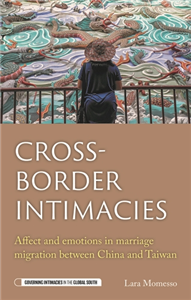 Humanities & Social SciencesJuly 2025
Cross-border intimacies
Affect and emotions in marriage migration
by Lara Momesso
Since the early 1990s, economic exchanges between China and Taiwan have paved the way to migration across a previously closed border and to social and cultural interactions between the two populations. Despite these broader changes, the unresolved issue of Taiwan sovereignty has tainted not only the relations between the two governments but also the everyday life of those who move across the Taiwan Strait. In this politicised environment, intimate and affective practices linked to cross-border marriage and family formation are never just private. Instead, they are deeply entangled with the emotional and affective processes generated at the macro and meso level of political and social life and revolving around national interests. Tracing the intimate, emotional and affective practices linked to family creation, identity formation and integration with the local and national communities, this ethnographic study offers a subjective, dynamic, and complex picture of what it means to be a mainland spouse in Taiwan.
-
 Trusted Partner
 Humanities & Social SciencesMay 2020
A history of humanitarianism, 1755–1989
In the name of others
by Silvia Salvatici
The book traces the history of international humanitarianism from the anti-slavery movement to the end of the cold war. It is based on an extensive survey of the international literature and is retold in an original narrative that relies on a close examination of the sources. The reconstruction of humanitarianism's long history unfolds around some crucial moments and events: the colonial expansion of European countries, the two world wars and their aftermaths, the emergence of a new postcolonial order. In terms of its contents, narrative style, interpretative approach the book is aimed at a large and diverse public including: scholars who are studying and teaching humanitarianism; students who need to learn about humanitarianism as part of their training or research; operators and volunteers who are engaged in the field; non-specialist readers who are interested in the topic because of its relevance to current events.
-
Trusted Partner
 Humanities & Social SciencesApril 2020
The Red Cross Movement
by Neville Wylie, Melanie Oppenheimer, James Crossland, Davide Rodogno, Jon Arrizabalaga, Julia Marzoner, Caroline Reeves, Branden Little, Margaret Tennant, Sarah Glassford, Rebecca Gill, Kerrie Holloway, Leo van Bergen, Richard Slade, Francisco Javier Martinez, Yoshiya Makita, Rosemary Wall, Eldrid Mageli, Bertrand Taithe
-
Trusted Partner
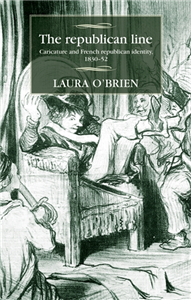 Humanities & Social SciencesJuly 2015
The republican line
Caricature and French republican identity, 1830–52
by Laura O'Brien, Maire Cross, David Hopkin
The years between 1830 and 1852 were turbulent ones in French politics - but were also a golden age for French political caricature. Caricature was wielded as a political weapon, so much so that in 1835 the French politician Adolphe Thiers claimed that 'nothing was more dangerous' than graphic satire. This book is the first full study of French political caricature during the critical years of the July Monarchy (1830-48) and the Second Republic (1848-52). Focusing on the crucial question of republicanism, it shows how caricature was used - by both republicans and anti-republicans - to discuss, define and articulate notions of republican identity during this highly significant period in modern French and European history. ;
-
Trusted Partner
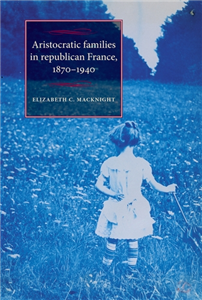 Humanities & Social SciencesJanuary 2017
Aristocratic families in republican France, 1870–1940
by Maire Cross, Elizabeth Chalmers MacKnight, David Hopkin
This is a study of the daily life, concerns, and dynamics of aristocratic families in the France of the Third Republic. Elizabeth Macknight draws on a vast range of material from private archives to contest assumptions about the irrelevancy of the nobility under the republican regime. Within a challenging political and economic environment nobles were determined to protect their interests and conserve the integrity of the aristocratic way of life. The convictions that underpinned nobles' responses to government initiatives emerge from the sources with freshness and clarity. Macknight interweaves male and female perspectives to provide a very full account of familial activities and decision-making with attention to all stages of the human lifecycle. Nobles' experiences of parenting and grandparenting, sibling and cousin relations, marriage, property negotiations, and interaction with servants are brought to light in a vivid and engaging narrative.
-
Trusted Partner
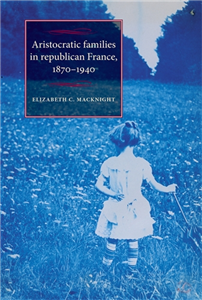 Humanities & Social SciencesJanuary 2012
Aristocratic families in republican France, 1870–1940
by Maire Cross, Elizabeth C. Macknight, David Hopkin
This is a study of the daily life, concerns, and dynamics of aristocratic families in the France of the Third Republic. Elizabeth Macknight draws on a vast range of material from private archives to contest assumptions about the irrelevancy of the nobility under the republican regime. Within a challenging political and economic environment nobles were determined to protect their interests and conserve the integrity of the aristocratic way of life. The convictions that underpinned nobles' responses to government initiatives emerge from the sources with freshness and clarity. Macknight interweaves male and female perspectives to provide a very full account of familial activities and decision-making with attention to all stages of the human lifecycle. Nobles' experiences of parenting and grandparenting, sibling and cousin relations, marriage, property negotiations, and interaction with servants are brought to light in a vivid and engaging narrative. ;
-
Trusted Partner

 September 2026
Red Star Down
Thriller
by D. B. John, Thomas Wörtche, Lutz-W. Wolff
Februar 2017. Ein Nordkoreaner wird am helllichten Tag am Flughafen von Kuala Lumpur Weise vergiftet. Ein hochrangiger russischer Geheimdienstoffizier stirbt unter mysteriösen Umständen in einem Hotel in Washington. Und ein Reality-TV-Star zieht ins Weiße Haus ein. Zufall? Oder Auftakt zu etwas Größerem? Während sich die Machtzentren der Welt gefährlich neu sortieren und bizarre Gipfeltreffen die Schlagzeilen beherrschen, geraten drei Menschen ins Fadenkreuz: Jenna, eine CIA-Agentin, gejagt vom russischen Geheimdienst und vom nordkoreanischen Regime. Ljoscha, ein Moskauer Student, der es wagt, Putin live im Fernsehen herauszufordern, und nun seine Rache fürchten muss. Und Eric, ein nordkoreanischer Spion im Herzen des Weißen Hauses, der fasziniert ist von dem Mann, den er zu untergraben versucht ... In einer Welt aus brüchigen Allianzen, Verrat und verdeckten Kriegen ist Red Star Down ein packender globaler Thriller über Macht, Manipulation und den Moment, in dem die Welt aus den Fugen zu geraten droht.
-
Trusted Partner
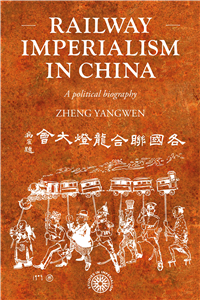 March 2026
Railway imperialism in China
A political biography
by Yangwen Zheng
Railway Imperialism in China: a Political Biography is the first and most comprehensive book on history and politics of all major railways in China from the late Qing to the post-Mao era. It investigates the transformation of railways from a bête noire within discussions about reform to the emblematic "engines for empire" as foreign powers used it to carve outspheres of control and exploit the late Qing, and as an instrument of nation making for Chinese regimes. The book introduces new archival sources and a wide range of secondary materials. Boldly conceived, it situates the making of modern China in the context of British, Russian, German, Japanese, American expansion. It traces China's transformation from a victim of railway imperialism in the Age of Empireto a railway expansionist in the twenty-first century.
-
Trusted Partner
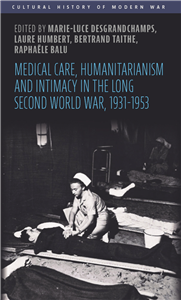 Business, Economics & LawJuly 2025
Medical care, humanitarianism and intimacy in the long Second World War, 1931-1953
by Marie-Luce Desgrandchamps, Laure Humbert, Bertrand Taithe, Raphaële Balu
This book offers a micro-global history of humanitarianism and medical care during the 'long' Second World War, which challenges the traditional and Eurocentric chronological boundaries of 1939/1945. It takes as its starting point the Japanese invasion of Manchuria in 1931, which led to the progressive dislocation of the League of Nations, with the Japanese, German and Soviet departures in the 1930s. It ends with the termination of the Korean War in 1953, and the subsequent dismantlement of the first United Coalition and UN Peace enforcement operation. It considers the slow, messy and ambivalent transformation of humanitarian actors' relations to the suffering of distant others through a study of humanitarian encounters, practices, spaces and affects. Paying close attention to a variety of actors, such as French colonial doctors, Swiss ICRC delegates, Egyptian relief workers, Chinese-style physicians, Peruvian and Ecuadorian nurses or American member of the Unitarian Service Committee, the book provides a more holistic story of humanitarianism.
-
Trusted Partner
Humanities & Social SciencesJune 2025
Humanitarianism and the Greater War, 1914–24
by Elisabeth Piller, Neville Wylie
-
Trusted Partner
Teaching, Language & ReferenceJanuary 2026
Conceptualising China through translation
by James St André
-
Trusted Partner
Humanities & Social SciencesJune 2025
Understanding baby loss
by Kate Reed, Julie Ellis, Elspeth Whitby
-
Trusted Partner
-
Trusted Partner
-
Trusted Partner
-
Trusted Partner
-
Trusted Partner
-
Trusted Partner
-
Trusted Partner



