Your Search Results

      • Residenz Verlag GmbH

        Residenz Verlag, founded in 1956 and located in Salzburg and Vienna, is one of the most renowned publishers in Austria. Residenz Verlag stands for an ambitious literature program and dedicated non-fiction books. In the area of non-fiction, Residenz Verlag publishes on the topics of politics, sustainability, contemporary history, and arts as well as biographies.In fiction, the focus is on new discoveries from the German-speaking world, the continuous support of renowned Austrian writers’ oeuvre, and selected translations from (South-)Eastern and Northern European languages as well as from English. The authors’ list includes Thomas Bernhard, Peter Henisch, Walter Kappacher, Christine Nöstlinger, Alek Popov, Clemens Setz, Tanja Maljartschuk.

        View Rights Portal
      • Arkan for Studies, Research and Publishing

        Arkan is an independent research center established in Egypt in February 2017, aiming to drive scientific research movement forward, promote its various tools in Social Science and Humanities, and support their active individuals and institutions.Arkan is one of the most promising emerging research centers and publishers in Egypt and the Middle East and has a staff of nearly 100 people. It cooperates with individuals, institutions and entities as a scientific, cultural, awareness-raising research center in a way that never exceeds the center's vision, mission, work fields and general objectives.Arkan entered into many interactions with eminent thinkers and academics not to mention international business partners. Further, it is a member of the Egyptian Publishers’ Association and Arab Publishers’ Association and it is to become one of the main actors in the various cultural and scientific forums and book fairs throughout the world in the years to come.To find out more, visit our website: https://www.arkan-srp.com/?lang=en

        View Rights Portal
      • Trusted Partner
        Literature & Literary Studies
        October 2023

        Shakespeare's resources

        by John Drakakis

      • Trusted Partner
        January 2018

        100 Cards for Coaching with Resource Activation

        by Deppe-Schmitz, Uta; Deubner-Böhme, Miriam

        This set of cards includes 70 color photos and 30 question cards. The combination of pictures and questions allows for the use in a wide range of activities in coaching, which are presented in the enclosed booklet. The card set is also the ideal complement to the book “Coaching with Resource Activation”, which explains the possibilities of using the cards in more detail. In addition, the card set can also be used for resource activation in the context of therapy. For:• coaches• therapists• counselors• trainers

      • Trusted Partner
        Humanities & Social Sciences

        Resource Activation in Psychotherapy, Coaching and Counseling

        by Miriam Deubner-Böhme, Uta Deppe-Schmitz

        People who have good access to their own resources and can thus meet their basic physical and psychological needs are satisfied and well equipped to get through even difficult times in a healthy way. Resource activation therefore plays a central role in therapy, coaching and counseling. It helps clients to rediscover buried resources and to use available resources for particular and everyday challenges. The fan contains 210 resource-activating questions that can directly be asked to clients and are formulated accordingly. The questions are related to strategies for strengthening physical and mental health, positive experiences, and the activation of resources in various areas of life, such as partnership, family, work, and leisure. The fan is ideal for preparing counseling and therapy sessions. For:• psychotherapists• coaches• counselors• psychiatrists• supervisors• trainers

      • Trusted Partner
        January 2015

        Resource Activation

        A Manual for Psychotherapy, Coaching, and Counseling

        by Christoph Flückiger, Günther Wüsten

        At the beginning of therapy or counselling, people seeking help often find themselves in a state of total hopelessness. The task of the therapist is to reactivate confidence in their own ability to act, trying to bring out and then utilizing the existing strengths and abilities of the clients. This manual, demonstrates specific ways in which personal resources can be taken into account during therapy and counselling and integrated into existing therapy concepts. The featured interventions, case studies, and worksheets are written in a way that is easy to understand and presented in a manner that makes them simple to put into practice. Target Group: For psychotherapists, psychologists, psychiatrists, social workers, and counsellors.

      • Trusted Partner
        Humanities & Social Sciences
        January 2025

        Expatriate

        Following a migration category

        by Sarah Kunz

        Who are expatriates? How do they differ from other migrants? And why should we care about such distinctions? Expatriate interrogates the contested category of 'the expatriate' to explore its history and politics, its making and lived experience. Drawing on ethnographic and archival research, the book offers a critical reading of International Human Resource Management literature, explores the work and history of the Expatriate Archive Centre in The Hague, and studies the usage and significance of the category in Kenyan history and present-day 'expat Nairobi'. Doing so, the book traces the figure of the expatriate from the mid-twentieth-century era of decolonisation to today's heated debates about migration.

      • Trusted Partner
        Psychology

        Resource Activating Coaching

        A Guide for Coaches, Counsellors, and Trainers

        by Miriam Deubner-Böhme, Uta Deppe-Schmitz

        This title offers coaches, counsellors, and trainers a variety of strategies that will allow them to enable their clients to find and use their resources, incorporate them into the coaching process, and use them to effect change.To use the full range of benefits resource activation brings along, this title shows a variety of methods to identify and work with clients’ resources. It contains exercises to break through entrenched patterns, enhance the mood, and pause. It enables clients to consciously make decisions and make optimal use of their existing resource potential and to use it in challenging situations. One chapter is also dedicated to the use of resource activating exercises in group settings.

      • Trusted Partner
        Psychiatry
        February 2016

        Making Resources Count

        Practical Application of Resource Activation

        by Utta Deppe-Schmitz, Miriam Deubner-Böhme

        This title shows how resource activation can take place in behavioral therapy to enhance the patient’s well-being and improve problem solving processes. In resource oriented therapy, patients learn to regain sight of their resources since, unfortunately, many patients have lost sight of their resources so these cannot aid in the patient’s recovery and remains unused potential. Resource activation, therefore, has a positive impact on therapy. This practical handbook offers different interventions for resources activation for each phase of therapy and uses practical examples to outline the procedure. It introduces interventions for resource oriented therapy planning, activation of already existing resources, resource activation at the end of therapy as well as resource oriented therapy sessions. The CD contains worksheets and other materials that can be used to aid the described interventions. Target Group: psychotherapists, specialists in psychiatry and psychotherapie, specialists in psychosomatic medicine, clinical psychologists, psychological counselors, students and teachers of psychology.

      • Trusted Partner
        Geography & the Environment
        May 2025

        Carbon colonialism

        by Laurie Parsons

      • Trusted Partner
        Fiction
        September 2017

        A Vision of Battlements

        by Anthony Burgess

        by Andrew Biswell, Paul Wake

        A Vision of Battlements is the first novel by the writer and composer Anthony Burgess, who was born in Manchester in 1917. Set in Gibraltar during the Second World War, the book follows the fortunes of Richard Ennis, an army sergeant and incipient composer who dreams of composing great music and building a new cultural world after the end of the war. Following the example of his literary hero, James Joyce, Burgess takes the structure of his book from Virgil's Aeneid. The result is, like Joyce's Ulysses, a comic rewriting of a classical epic, whose critique of the Army and the postwar settlement is sharp and assured. The Irwell Edition is the first publication of Burgess's forgotten masterpiece since 1965. This new edition includes an introduction and notes by Andrew Biswell, author of a prize-winning biography of Anthony Burgess.

      • Trusted Partner
        Humanities & Social Sciences
        February 2026

        Future perfect

        An imaginative ethnography of Mediterranean illegalised migration

        by Alexandra D'Onofrio

        The present volume emerges from a practice-based research that focuses on experiences of migration and border crossing during what are perceived as existential 'turning points' by the protagonists themselves. It recognizes the fundamental role that imagination plays in people's perceptions of reality, in their decisions and actions, and finally in the way they narrate their experiences. As a consequence, it makes a stance for ethnographic practice to include more creative and collaborative methodologies in order to explore such intangible and unstructured realms of existence. In particular, this ethnography developed theoretically and methodologically in close collaboration with a group of Egyptian men who crossed the Mediterranean Sea in search of better living opportunities in Italy, by engaging them through a range of the co-creative processes such as theatre improvisations, storytelling practices, collaborative filmmaking and participatory animation.

      • Trusted Partner
      • Trusted Partner
        Humanities & Social Sciences
        April 2023

        The fall and rise of the English upper class

        Houses, kinship and capital since 1945

        by Daniel R. Smith

        The fall and rise of the English upper class explores the role traditionalist worldviews, articulated by members of the historic upper-class, have played in British society in the shadow of her imperial and economic decline in the twentieth century. Situating these traditionalist visions alongside Britain's post-Brexit fantasies of global economic resurgence and a socio-cultural return to a green and pleasant land, Smith examines Britain's Establishment institutions, the estates of her landed gentry and aristocracy, through to an appetite for nostalgic products represented with pastoral or pre-modern symbolism. It is demonstrated that these institutions and pursuits play a central role in situating social, cultural and political belonging. Crucially these institutions and pursuits rely upon a form of membership which is grounded in a kinship idiom centred upon inheritance and descent: who inherits the houses of privilege, inherits England.

      • Trusted Partner
        Literature & Literary Studies
        March 2013

        Charles Darwin's The Origin of Species

        by David Amigoni, Jeff Wallace

        This volume marks a new approach to a seminal work of the modern scientific imagination: Charles Darwin's The Origin of Species (1859). Darwin's central theory of natural selection neither originated nor could be contained, with the parameters of the natural sciences, but continues to shape and challenge our most basic assumptions about human social and political life. Several new readings, crossing the fields of history, literature, sociology, anthropology and history of science, demonstrate the complex position of the text within cultural debates past and present. Contributors examine the reception and rhetoric of the Origin and its influence on systems of classification, the nineteenth-century women's movement, literary culture (criticism and practice) and Hinduism in India. At the same time, a re-reading of Darwin and Malthus offers a constructive critique of our attempts to map the hybrid origins and influences of the text. This volume will be the ideal companion to Darwin's work for all students of literature, social and cultural history and history of science. ;

      • Trusted Partner
        Humanities & Social Sciences
        January 2011

        The Unorthodox Imagination in Late Medieval Britain

        by Sophie Page, Julian Hoppit

        The unorthodox imagination in late medieval Britain explores how medieval people responded to images, stories, beliefs and practices which were at odds with the normative world view, from the heretical and subversive to the marvellous and exotic. The chapter by Jean-Claude Schmitt examines why some unorthodox images were viewed as provocative and threatening and explores how successfully ecclesiastical authorities contained their impact. The power of unorthodoxy to provoke wonder, scepticism or disapproval provides an opportunity to view medieval culture from fresh perspectives. The essays in this volume show that unorthodoxy was embedded in mainstream medieval culture, from stories of fairies and witches which promoted orthodox moral values to the social conformity of practitioners of ritual magic. This book provides a guide to understanding medieval unorthodoxy and the roles played by experience and imagination in medieval encounters with the unorthodox. It will be essential reading for anyone interested in the exotic, provocative and deviant in medieval culture. ;

      • Trusted Partner
        December 2015

        Environmental and Resource Costs under Article 9 of the Water Framework Directive.

        Challenges for the Implementation of the Principle of Cost Recovery for Water Services.

        by Gawel, Erik

      • Trusted Partner
        November 2021

        The Metropolitan Age

        The decisive force in the Anthropocene

        by German Environmental Foundation (Ed.)

        Three quarters of the world’s population live in cities. One in eight people lives in a metropolitan area. Megacities swallow up land, energy and resources – and at the same time are particularly hard hit by the current climate crisis that they fuel. However, in the metropolises of the overcrowded world plenty of committed people have heard the warning signals and establish networks to use the potential of cities to reorganize the participative and social-ecological activity that is urgently needed. The contributions to this Yearbook for Ecology focus on the present and future of cities from wide-ranging viewpoints and highlight perspectives for their creative transformation towards liveable sustainability.

      • Trusted Partner
        Humanities & Social Sciences
        May 2020

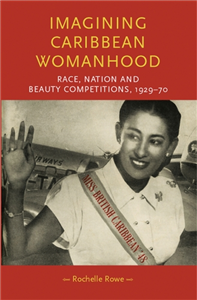
        Imagining Caribbean womanhood

        Race, nation and beauty competitions, 1929–70

        by Pamela Sharpe, Rochelle Rowe, Penny Summerfield, Lynn Abrams, Cordelia Beattie

        Over fifty years after Jamaican and Trinidadian independence, Imagining Caribbean womanhood examines the links between beauty and politics in the Anglophone Caribbean, providing a first cultural history of Caribbean beauty competitions, spanning from Kingston to London. It traces the origins and transformation of female beauty contests in the British Caribbean from 1929 to 1970, through the development of cultural nationalism, race-conscious politics and decolonisation. The beauty contest, a seemingly marginal phenomenon, is used to illuminate the persistence of racial supremacy, the advance of consumer culture and the negotiation of race and nation through the idealised performance of cultured, modern beauty. Modern Caribbean femininity was intended to be politically functional but also commercially viable and subtly eroticised.

      • Trusted Partner
        Humanities & Social Sciences
        April 2005

        Democracy, social resources and political power in the European Union

        by Niilo Kauppi

        In this book Kauppi develops a structural constructivist theory of the European Union and critically analyses, through French and Finnish empirical cases, the political practices that maintain the Union's 'democratic deficit'. Kauppi conceptualises the European Union as both an arena for political contention and a nascent political order. In this evolving, multi-levelled European political field, individuals and groups construct material and symbolic structures of political power, grounded in a variety of social resources such as nationality, culture, and gender. The author shows how the dominance of both executive political resources and domestic political cultures has prevented the development of European democracy. Supranational executive networks have become more autonomous, reinforcing the dominance of the resources they control. At the same time, national political cultures condition the political status of elected institutions such as the European parliament. The book is particularly suited for undergraduate and graduate students in the fields of European Politics, European Union Studies and International Relations. ;

      Subscribe to our

      newsletter