
Your Search Results
-

-

National Academies Press
The National Academies Press (NAP)publish the reports of the National Academies of Sciences, Engineering and Medicine. They published more than 200 books a year on a wide range of topics.
View Rights Portal
-
Promoted Content

 Humanities & Social SciencesFebruary 2017
Scottishness and Irishness in New Zealand since 1840
by Angela McCarthy, Andrew Thompson, John M. MacKenzie
This book examines the distinctive aspects that insiders and outsiders perceived as characteristic of Irish and Scottish ethnic identities in New Zealand. When, how, and why did Irish and Scots identify themselves and others in ethnic terms? What characteristics did the Irish and the Scots attribute to themselves and what traits did others assign to them? Did these traits change over time and if so how? Contemporary interest surrounding issues of ethnic identities is vibrant. In countries such as New Zealand, descendants of European settlers are seeking their ethnic origins, spurred on in part by factors such as an ongoing interest in indigenous genealogies, the burgeoning appeal of family history societies, and the booming financial benefits of marketing ethnicities abroad. This fascinating book will appeal to scholars and students of the history of empire and the construction of identity in settler communities, as well as those interested in the history of New Zealand.
-
Promoted Content
-
 Trusted Partner
 Humanities & Social SciencesJuly 2010
Voting for a Scottish government
The Scottish Parliament election of 2007
by Robert Johns, David Denver, James Mitchell, Charles Pattie
In 2007 Labour lost an election in Scotland for the first time in half a century and the SNP went on to form the Scottish Government. This book explains why. Based on a unique three-wave survey of the Scottish electorate, it can truly be described as the first full-scale Scottish national election study. As such, it is notable not only for its innovative methodology but also because theories and concepts are taken from the recent electoral studies literature and applied to Scotland. Other questions investigated include the impact of campaigning and of the party leaders (at both Scottish and British level) on the election outcome. In addition, for the first time in the UK context, a special study is made of the causes and consequences of rejected ballots - the large number of which at this election caused a media outcry. This book will be required reading for anyone interested in, involved in, teaching or studying Scottish politics. It will also be an important text for those concerned with UK politics in general and attract particular interest among students of elections, both in the UK and internationally. ;
-
Trusted Partner
 Economic historyJuly 2000
Scottish society 1707–1830
Beyond Jacobitism, t
by Christopher A. Whatley
Scottish Society, 1707-1830 challenges much conventional wisdom and provides readers with many new insights into Scottish social and economic history.. Argues that the Union of 1707 was vital for Scottish success, but in ways which have hitherto been overlooked.. Contests received wisdom on issues such as the role of the Kirk and other agencies for inculcating order, and argues that the eighteenth and early nineteenth centuries in Scotland were years of upheaval and deep social conflict in both the Highlands and Lowlands, where commercialism and later the market economy revolutionised social relationships.. The period surrounding the Radical War in 1820 is identified as a watershed in Scottish history, almost making but also breaking the Scottish working class.. Not only on an exhaustive reading of secondary material but also incorporates a wealth of new evidence from previously little-used or unused primary sources.
-
Trusted Partner
 Humanities & Social SciencesJune 2002
The Scottish witch-hunt in context
by Julian Goodare
A collection of essays on Scottish witchcraft and witch-hunting, which covers the whole period of the Scottish witch-hunt, from the mid-sixteenth century to the early eighteenth. Includes studies of particular witchcraft panics such as a reassessment of the role of King James VI. Covers a wide range of topics concerned with Scottish witch-hunting and places it in the context of other topics such as gender relations, folklore, magic and healing, and moral regulation by the church and state. Provides a comparative dimension of witch-hunting beyond Scotland - one on the global context, and one comparing Scotland with England. It is a showcase for the latest thinking on the subject and will be of interest to all scholars studying witchcraft in early modern Europe, as well as the general reader wanting to move beyond shallow and sensational accounts of a subject of compelling in. ;
-
Trusted Partner
 Humanities & Social SciencesApril 2025
Beyond the Pale and Highland Line
The Irish and Scottish Gaelic world
by Simon Egan
This book offers important new insights into the history and culture of the Gaelic-speaking world from the mid-fifteenth century through to the reign of James VI and I. Throughout this period, the reach of the English and Scottish crowns within these western regions was limited. The initiative lay with local communities and royal power was contingent upon negotiating with well-established and largely autonomous aristocratic lineages. Moreover, events within this western world could exert a powerful, often unpredictable, influence upon the affairs of the wider archipelago. Using a series of case studies, this collection examines the evolving relationship between Ireland and Scotland in rich detail. It demonstrates how this world interacted with the encroaching English and Scottish states and underlines the importance of paying closer attention to this neglected area of Irish and British history.
-
Trusted Partner
 Humanities & Social SciencesJune 2026
Territorial politics in Catalonia and Scotland
by Paul Anderson
-
Trusted Partner
 Literature & Literary StudiesApril 2022
The narrative grotesque in medieval Scottish poetry
by Caitlin Flynn
-
Trusted Partner
 Humanities & Social SciencesMay 2020
English nationalism, Brexit and the Anglosphere
Wider still and wider
by Ben Wellings
This is the first book to examine the relationship between English nationalism, Brexit and 'the Anglosphere' - a politically-contested term used to denote English-speaking countries sharing cultural and historical roots with the UK. In the aftermath of the UK's EU referendum some pointed to a 'revolt' of those 'left behind' by globalisation. Ben Wellings argues instead that Brexit was and is an elite project, firmly situated within the tradition of an expansive English nationalism. Far from being parochial 'Little Englanders', elite Brexiteers sought to replace the European Union with trade and security alliances between 'true friends' and 'traditional allies' in the Anglosphere. Brexit was thus reassuringly presented as a giant leap into the known. As the UK's future relationship with the rest of the world is negotiated, the need to understand this 'English moment' has never been more pressing.
-
Trusted Partner
 Business, Economics & LawMarch 2010
The rise and fall of the Scottish cotton industry, 1778–1914
'The secret spring'
by Anthony Cooke
This is the first full-length history of the Scottish cotton industry, from its beginnings in the late eighteenth century to its premature decline in the years leading up to the First World War. The book examines the industry chronologically and through themes such as precursors, technology, capital and employers, markets, labour and work, placed within their broader economic and scoial contexts. Its account of the cotton industry is set within important historiographical debates such as proto-industrialisation, the speed of industrial change, the diffusion of technology, the labour process, paternalism, workplace control, entrepreneurship and theories of industrial decline. Cotton was Scotland's premier industry during the Industrial Revolution and this book will be wlecomed by specialists, students and interested readers alike. ;
-
Trusted Partner
 Humanities & Social SciencesSeptember 2020
A global history of white nationalism
by Daniel Geary, Camilla Schofield, Jennifer Sutton, John Solomos, Satnam Virdee, Aaron Winter
-
Trusted Partner
-
Trusted Partner
-
Trusted Partner
-
Trusted Partner
 Humanities & Social SciencesMarch 2025
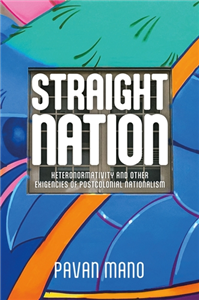
Straight nation
Heteronormativity and other exigencies of postcolonial nationalism
by Pavan Mano
In Straight Nation, Pavan Mano reveals the logic of straightness that sits at the heart of postcolonial nationalism in Singapore. Mano rejects the romantic notion of the nation as a haven of belonging, showing it to be a relentless force that is allied with heteronormativity to create a host of minoritized and xenologized figures. Through meticulous exploration and close reading of a swathe of texts, Mano unveils the instrumental role of sexuality in structuring the national imaginary. The book adroitly demonstrates how queerness is rendered foreign in postcolonial Singapore and functions alongside technologies of "race", gender, and class. A provocative critique of narrow contemporary identity politics and its concomitant stymying of a more ambitious political critique, Straight Nation sets out an argument that moves beyond the negativity of traditional critique into a space of (re)thinking, (re)building and (re)imagining.
-
Trusted Partner
 Humanities & Social SciencesMarch 2017
Child, nation, race and empire
Child rescue discourse, England, Canada and Australia, 1850–1915
by Margot Hillel, Shurlee Swain, Andrew Thompson, John M. MacKenzie
Child, nation, race and empire is an innovative, inter-disciplinary, cross cultural study that contributes to understandings of both contemporary child welfare practices and the complex dynamics of empire. It analyses the construction and transmission of nineteenth-century British child rescue ideology. Locating the origins of contemporary practice in the publications of the prominent English Child rescuers, Dr Barnardo, Thomas Bowman Stephenson, Benjamin Waugh, Edward de Montjoie Rudolf and their colonial disciples and literature written for children, it shows how the vulnerable body of the child at risk came to be reconstituted as central to the survival of nation, race and empire. Yet, as the shocking testimony before the many official enquiries into the past treatment of children in out-of-home 'care' held in Britain, Ireland, Australia and Canada make clear, there was no guarantee that the rescued child would be protected from further harm.
-
Trusted Partner
 The ArtsSeptember 2025
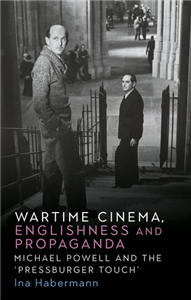
Wartime cinema, Englishness and propaganda
Michael Powell and the ‘Pressburger Touch’
by Ina Habermann
This book provides a fresh analysis of the wartime work of Michael Powell and Emeric Pressburger and their team 'the Archers'. It argues that in their earlier work, Powell and Pressburger should be seen as middlebrow storytellers whose stories explore national identity in times of war. Their wartime work is discussed in four phases: While the first phase covers their contributions to the 'phoney war', the second traces their engagement with the 'people's war'. The third phase sees the Archers move beyond propaganda, towards memodramas of Englishness, cross-cultural alliances and quests for spiritual modernity. The fourth phase dramatizes post-war preoccupations with an increasing focus on memory and trauma. Following up these thematic concerns, the conclusion is devoted to Pressburger's later work, including his two published novels Killing a Mouse on Sunday and The Glass Pearls.
-
Trusted Partner
-
Trusted Partner
 Humanities & Social SciencesMarch 2017
Martial races
The military, race and masculinity in British imperial culture, 1857–1914
by Heather Streets
This book explores how and why Scottish Highlanders, Punjabi Sikhs, and Nepalese Gurkhas became identified as the British Empire's fiercest, most manly soldiers in nineteenth century discourse. As 'martial races' these men were believed to possess a biological or cultural disposition to the racial and masculine qualities necessary for the arts of war. Because of this, they were used as icons to promote recruitment in British and Indian armies - a phenomenon with important social and political effects in India, in Britain, and in the armies of the Empire. Martial Races bridges regional studies of South Asia and Britain while straddling the fields of racial theory, masculinity, imperialism, identity politics, and military studies. Of particular importance is the way it exposes the historical instability of racial categories based on colour and its insistence that historically specific ideologies of masculinity helped form the logic of imperial defence, thus wedding gender theory with military studies in unique ways. Moreover, Martial Races challenges the marginalisation of the British Army in histories of Victorian popular culture, and demonstrates the army's enduring impact on the regional cultures of the Highlands, the Punjab and Nepal. This unique study will make fascinating reading for higher level students and experts in imperial history, military history and gender history.
-
Trusted Partner
 Humanities & Social SciencesMarch 2014
Devolution and the Scottish Conservatives
by Alexander Smith



