Your Search Results

      • Second Story Press

        Our books are sold around the world, have been translated into over 50 languages, won many awards, and have been adapted for film and stage.   We publish stories that feature strong female characters and explore themes of social justice, human rights, equality, and ability issues. Our list spans adult fiction and nonfiction; children’s fiction, nonfiction and picture books; and young adult fiction and nonfiction.

        View Rights Portal
      • GAPSK Language Promotion Council Limited

        GAPSK and YLPSK are the standardized test of Chinese language for children from 3 to 15. From the world- renowned Peking University, GAPSK and YLPSK are certified and approved by the Chinese Ministry of Education as language proficiency measuring tool for children . GAPSK, YLPSK could be conducted on site or completely online. Come join over 100,000 students who taken the tests, contact us at  info@gapsk.org.  Find out more at www.ylpsk.org

        View Rights Portal
      • Trusted Partner
      • Trusted Partner
        2024

        The second half of your life - a manual

        Tips and strategies for successful ageing

        by Dr. Petra Kiedaisch

        In the middle of our lives, the cards are reshuffled: marriages are divorced, careers are questioned, friendships are ended, questions of meaning are asked, bodies change - and not just hormonally. At the same time, children leave home and parents become carers. From the age of 45, the majority of our population is at the centre of a second upheaval that affects all facets of our lives and leaves us at a loss in many ways. Not only in our daily lives, but also when it comes to planning for our own old age. This guide is designed to help us find our way. It presents the most important information from all areas relevant to a good life after 45. Leading experts from the fields of medicine, nutrition, philosophy, theology, psychology, care, law and finance give recommendations on what to look out for and what tools are needed to get through these challenging years unscathed. Useful checklists round off the articles. The book shows us the unique opportunity to see these challenges not as a crisis but as a source of strength. Not only can we come through this period of our lives healthy and happy, but we can also shape it so that the next age threshold is no longer frightening. During the second phase of adolescence, we lay the foundations for whether and how we will grow older. Be it in terms of health or living together with family and friends. With contributions from: Prof. Dr. Martin Gessmann (philosophy), Dipl. Psych. Claudia Kühner (psychology), Dr Suso Lederle (medicine), Dr Petra Forster (nutrition), Christian Hald, Anja Heine (law), Prof Dr Philipp Schreiber (finance), Prof Dr Thomas Klie (nursing care insurance), Georg Eberhardt (religion).

      • Trusted Partner
        The Arts
        April 2025

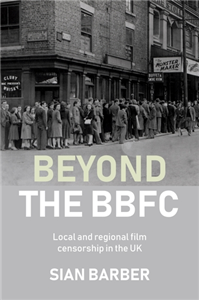
        Beyond the BBFC

        Local and regional film censorship in the UK

        by Sian Barber

        This work scrutinises British film censorship from a local perspective. Examining different regions and areas, the work of individual councils and their relations with one another and with the BBFC, it offers a broad historical exploration of the intricacies of film censorship in action. Drawing on local archival material and considering the activities of local government in enforcing Cinematograph legislation, this work considers the significance of film censorship apparatus and processes in shaping and informing responses to and control of film culture in different locations across the twentieth century.

      • Trusted Partner
        Humanities & Social Sciences
        July 2025

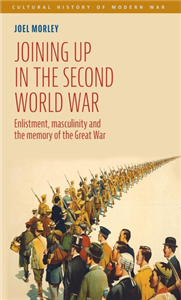
        Joining up in the Second World War

        Enlistment, masculinity and the memory of the Great War

        by Joel Morley

        This book connects the First and Second World Wars. It uses oral histories and Mass Observation material to explore men's attitudes to Second World War enlistment and the relationship they perceived between military service and masculinity, and how these were influenced by understandings of the First World War. Locating the cultural legacy of First World War in the subjectivities of men who participated in the Second World War demonstrates the breadth of sources that informed men's understandings of the First World War in interwar Britain. Its cultural legacy was omnipresent and diverse, and informed young men's attitudes and service preferences, but it reinforced Edwardian conceptions of wartime masculinity as often as it undermined them. Two decades after the First World War ended, they remained resilient in the subjective understandings of men who grew up in the Great War's shadow.

      • Trusted Partner
        Politics & government
        February 2017

        Sunningdale, the Ulster Workers' Council strike and the struggle for democracy in Northern Ireland

        by Edited by David McCann, Cillian McGrattan

        The 'Sunningdale experiment' of 1973-4 witnessed the first attempt to establish peace in Northern Ireland through power-sharing. However, its provisions, particularly the cross-border 'Council of Ireland', proved to be a step too far. The experiment floundered amid ongoing paramilitary-led violence, finally collapsing in May 1974 as a result of the Ulster Workers' Council strike. Drawing on new scholarship from some of the top political historians working on the period, this book presents a series of reflections on how key protagonists struggled with notions of power-sharing and the 'Irish dimension', and how those struggles inhibited a deepening of democracy and the ending of violence for so long.

      • Trusted Partner
      • Trusted Partner
        The Arts
        January 2019

        Popular cinema in Brazil, 1930–2001

        by Stephanie Dennison, Lisa Shaw

        Brazil has one of the most significant and productive film industries in Latin America. This ground-breaking study provides an entertaining insight into the Brazilian films that have most captured the imagination of domestic audiences over the years. The recent international success of films such as Central Station and City of God, has stimulated widespread interest in Brazilian film, but studies written in English focus on the 'auteur' cinema of the 1960s. This book focuses on individual films in their socio-historical context, drawing on extensive fieldwork in Brazil and Latin America. It argues that Brazilian cinema has almost always been grounded in intrinsically home-grown cultural forms, dating back to the nineteenth century, such as the Brazilian music-hall, the travelling circus, radio shows, carnival, and, later, comedy television. Combining a chronological structure with groundbreaking research and a lively approach, Popular cinema in Brazil is the ideal introduction to Brazilian cinema.

      • Trusted Partner
        The Arts
        January 2019

        Postcolonial African cinema

        Ten directors

        by David Murphy, Patrick Williams

        This is the first introduction of its kind to an important cross-section of postcolonial African filmmakers from the 1950s to the present. Building on previous critical work in the field, this volume will bring together ideas from a range of disciplines - film studies, African cultural studies, and, in particular, postcolonial studies - in order to combine the in-depth analysis of individual films and bodies of work by individual directors with a sustained interrogation of these films in relation to important theoretical concepts. Structurally, the book is straightforward, though the aim is to incorporate diversity and complexity of approach within the overall simplicity of format. Chapters provide both an overview of the director's output to date, and the necessary background - personal or national, cultural or political - to enable readers to achieve a better understanding of the director's choice of subject matter, aesthetic or formal strategies, or ideological stance. They also offer a particular reading of one or more films, in which the authors aim to situate African cinema in relation to important critical and theoretical debates. This book thus constitutes a new departure in African film studies, recognising the maturity of the field, and the need for complex yet accessible approaches to it, which move beyond the purely descriptive while refusing to get bogged down in theoretical jargon. Consequently, the volume should be of interest not only to specialists but also to the general reader.

      • Trusted Partner
        Literature & Literary Studies
        March 2013

        Simone de Beauvoir's The Second Sex

        by Jeff Wallace, Ruth Evans, John Whale

        Acknowledged by many feminists as the single most important theoretical work of the twentieth century, Simone de Beauvoir's The Second Sex (1949) nevertheless occupies an anomalous place in the feminist 'canon'. Yet it has had an undeniable impact, not only on the development of critiques of sexual politics but on twentieth-century western thinking about the concept of 'woman' in general. This collection of six new essays by scholars from the disciplines of French, English literature, history, cultural criticism, feminist theory and philosophy makes a valuable contribution to the task of re-reading and reassessing this enormously influential text for a new generation of feminist readers, and also for cultural theorists, for whom the question of 'the feminine' is at the centre of key debates in philosophy and postmodernity. The contributors provide a significantly new rethinking of the place of The Second Sex in cultural history and of women and representation, the role of 'fictions' and the problem of ethical agency in the work of the leading intellectual woman of this age. ;

      • Trusted Partner
        Literature & Literary Studies
        October 2012

        Art and Literature of the Second Empire

        by David Baguley

        This volume explores the characteristics of the art and literature of the Second Empire in France; it examines the attitudes and positioning of artists and writers of the period in relation to a regime of dubious legitimacy, and the ways in which that regime exploited to its advantage the artistic capital available to it. ;

      • Trusted Partner
        The Arts
        January 2019

        Spanish cinema 1973–2010

        Auteurism, politics, landscape and memory

        by Maria M. Delgado, Robin Fiddian

        This collection offers a new lens through which to examine Spain's cinema production following the isolation imposed by the Franco regime. The seventeen key films analysed in the volume span a period of 35 years that have been crucial in the development of Spain, Spanish democracy and Spanish cinema. They encompass different genres (horror, thriller, melodrama, social realism, documentary), both popular (Los abrazos rotos/Broken Embraces, Vicky Cristina Barcelona) and more select art house fare (En la ciudad de Sylvia/In the City of Sylvia, El espíritu de la colmena/Spirit of the Beehive) and are made in English (as both first and second language), Basque, Castilian, Catalan and French. Offering an expanded understanding of 'national' cinemas, the volume explores key works by Guillermo del Toro and Lucrecia Martel alongside an examination of the ways in which established auteurs (Almodóvar, José Garci, Carlos Saura) and younger generations of filmmakers (Cesc Gay, Amenábar, Bollaín) have harnessed cinematic language towards a commentary on the nation-state. The result is a bold new study of the ways in which film has created new prisms that have determined how Spain is positioned in the global marketplace.

      • Trusted Partner
        August 2007

        Mit dem Bus durch Second Life

        Die Welt der unbegrenzten Möglichkeiten

        by Nusch, Martin

      • Trusted Partner
        Literature & Literary Studies
        September 1995

        Edward the Second

        Christopher Marlowe

        by Charles Forker

        The introduction to this edition contains an analysis of the first quarto (including new evidence of its original dating) and a reconsideration of the play's complex relation to the Shakespearean histories that preceded and followed it. Charles R. Forker offers a discussion of Marlowe's use of sources, and presents a new argument for the drama's five-act structure. He delves into the conflicting and controversial opinions concerning the genre and sexual politics of the play, and also includes a full record of the stage history. Forker has collated some 46 editions (including the important, rare and usually ignored editions of Broughton and Oxberry in 1818). The appendices provide substantive variants from the Broughton and Oxberry texts as well as extracts from the sources. ;

      • Trusted Partner
        Children's & YA

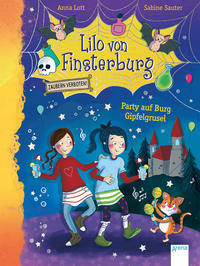
        Lilo of Dark Castle. No Magic Allowed! (3). Party at Highhorror Castle

        by Anna Lott/ Sabine Sauter

        The Dark Castle family receives an invitation to a party at Highhorror Castle. Lilo and Miss Rüdiger are immediately eager to go. And of course Luisa should go with them. But humans are strictly forbidden to set foot in Castle Highhorror. “Who cares?”, say Lilo and Luisa, and at first everything seems fine: Luisa gets in as a perfect witch. But then the girls learn about a protective magic spell which covers the whole of the castle: unauthorized beings will be turned for ever into stone… Only a secret book of magic spells can save Luisa now!

      • Trusted Partner
        Humanities & Social Sciences
        January 2012

        The Second Labour Government

        A reappraisal

        by John Shepherd

        This new edited collection of essays focuses on the history of Labour's second period in office during the 1929-1931 global financial crisis. Contributions by leading historians and younger academics bring fresh perspectives to Labour's domestic problems, electoral and party matters, relations with the Soviet Union and ideological questions. An important range of new historical research provides a much-needed reappraisal of Ramsay MacDonald's second Labour government, which impressed few with its conventional policies for tackling mass unemployment. Oswald Mosley, John Maynard Keynes and Ernest Bevin's alternative economic strategies are critically studied in key essays. A more positive side of the government's policies is also adeptly revealed on consumerism and agriculture. Significant new light is adroitly shed on the 1929 general election, the first fought on a universal franchise. The intricate politics of the Parliamentary Labour Party and the disaffiliation of the Independent Labour Party are convincingly explored. The influence of the Soviet Union on Labour's thoughts and actions is analysed in valuable accounts of Labour's foreign policy and Labour's turn to socialism after 1931. An important fresh account of opposition politics breaks new ground on the reaction of Tory politicians, including Harold Macmillan, to MacDonald's government. The volume concludes with an absorbing analysis of the myths surrounding '1931' in Labour history. This timely volume makes accessible a major reassessment of existing knowledge and new scholarship that will appeal to students and teachers of British political and social history. It is essential reading for sixth form and university courses on twentieth-century history. ;

      • Trusted Partner
        The Arts
        June 2021

        Algerian national cinema

        by Guy Austin

        This topical and innovative study is the first book on Algerian cinema to be published in English since the 1970s. At a time when North African and Islamic cultures are of increasing political significance, Algerian National Cinema presents a dynamic, detailed and up to date analysis of how film has represented this often misunderstood nation. Algerian National Cinema explores key films from The Battle of Algiers (1966) to Mascarades (2007). Introductions to Algerian history and to the national film industry are followed by chapters on the essential genres and themes of filmmaking in Algeria, including films of anti-colonial struggle, representations of gender, Berber cinema, and filming the 'black decade' of the 1990s. This thoughtful and timely book will appeal to all interested in world cinemas, in North African and Islamic cultures, and in the role of cinema as a vehicle for the expression of contested identities. By the author of the critically-acclaimed Contemporary French Cinema.

      • Trusted Partner
        The Arts
        January 2019

        Algerian national cinema

        by Guy Austin

        This topical and innovative study is the first book on Algerian cinema to be published in English since the 1970s. At a time when North African and Islamic cultures are of increasing political significance, Algerian National Cinema presents a dynamic, detailed and up to date analysis of how film has represented this often misunderstood nation. Algerian National Cinema explores key films from The Battle of Algiers (1966) to Mascarades (2007). Introductions to Algerian history and to the national film industry are followed by chapters on the essential genres and themes of filmmaking in Algeria, including films of anti-colonial struggle, representations of gender, Berber cinema, and filming the 'black decade' of the 1990s. This thoughtful and timely book will appeal to all interested in world cinemas, in North African and Islamic cultures, and in the role of cinema as a vehicle for the expression of contested identities. By the author of the critically-acclaimed Contemporary French Cinema.

      • Trusted Partner
        The Arts
        January 2019

        Cinema - Italy

        by Stefania Parigi, Des O'Rawe

        A journey to the Italian cinema that overturns established views and opens up new perspectives and interpretations. Its itinerary is organized in four stages. The first is an analysis of the theories of Cesare Zavattini on neorealism which overturns widely accepted positions both on Zavattini and on neorealism. The second confronts a key film of the post-war Italian cinema, Roberto Rossellini's Paisà, by examining the nature of its realism. The third is dedicated to Luchino Visconti: to questions of the use of language exemplified in his La terra trema, the use of settings, costume and light as agents of meaning in his Il Gattopardo and Vaghe stelle dell'Orsa. The final voyage of the film is to the physical and symbolic construction of heaven and earth in the work of Pasolini. Particular attention is given to the representation of the body in his last four films: the grotesque and mythical bodies in popular tradition in his Trilogia di vita and the tortured bodies destroyed by the mass media in Salò.

      Subscribe to our

      newsletter