Your Search Results

      • Second Story Press

        Our books are sold around the world, have been translated into over 50 languages, won many awards, and have been adapted for film and stage.   We publish stories that feature strong female characters and explore themes of social justice, human rights, equality, and ability issues. Our list spans adult fiction and nonfiction; children’s fiction, nonfiction and picture books; and young adult fiction and nonfiction.

        View Rights Portal
      • World for kids

        Our passion is to show kids, how colourful and fascinating the world is. There is not only one way to live but so many. We love curious children and we do the books they need to explore the world. So we do travel books for kids and novels for the journey in a hammock.

        View Rights Portal
      • Trusted Partner
        Humanities & Social Sciences
        July 2025

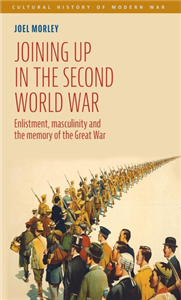
        Joining up in the Second World War

        Enlistment, masculinity and the memory of the Great War

        by Joel Morley

        This book connects the First and Second World Wars. It uses oral histories and Mass Observation material to explore men's attitudes to Second World War enlistment and the relationship they perceived between military service and masculinity, and how these were influenced by understandings of the First World War. Locating the cultural legacy of First World War in the subjectivities of men who participated in the Second World War demonstrates the breadth of sources that informed men's understandings of the First World War in interwar Britain. Its cultural legacy was omnipresent and diverse, and informed young men's attitudes and service preferences, but it reinforced Edwardian conceptions of wartime masculinity as often as it undermined them. Two decades after the First World War ended, they remained resilient in the subjective understandings of men who grew up in the Great War's shadow.

      • Trusted Partner
        Humanities & Social Sciences
        March 2017

        The French empire at War, 1940–1945

        by Martin Thomas

        The French empire at war draws on original research in France and Britain to investigate the history of the divided French empire - the Vichy and the Free French empires - during the Second World War. What emerges is a fascinating story. While it is clear that both the Vichy and Free French colonial authorities were only rarely masters of their own destiny during the war, preservation of limited imperial control served them both in different ways. The Vichy government exploited the empire in an effort to withstand German-Italian pressure for concessions in metropolitan France and it was key to its claim to be more than the mouthpiece of a defeated nation. For Free France too, the empire acquired a political and symbolic importance which far outweighed its material significance to the Gaullist war effort. As the war progressed, the Vichy empire lost ground to that of the Free French, something which has often been attributed to the attraction of the Gaullist mystique and the spirit of resistance in the colonies. In this radical new interpretation, Thomas argues that it was neither of these. The course of the war itself, and the initiatives of the major combatant powers, played the greatest part in the rise of the Gaullist empire and the demise of Vichy colonial control.

      • Trusted Partner
        Business, Economics & Law
        July 2025

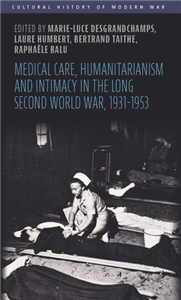
        Medical care, humanitarianism and intimacy in the long Second World War, 1931-1953

        by Marie-Luce Desgrandchamps, Laure Humbert, Bertrand Taithe, Raphaële Balu

        This book offers a micro-global history of humanitarianism and medical care during the 'long' Second World War, which challenges the traditional and Eurocentric chronological boundaries of 1939/1945. It takes as its starting point the Japanese invasion of Manchuria in 1931, which led to the progressive dislocation of the League of Nations, with the Japanese, German and Soviet departures in the 1930s. It ends with the termination of the Korean War in 1953, and the subsequent dismantlement of the first United Coalition and UN Peace enforcement operation. It considers the slow, messy and ambivalent transformation of humanitarian actors' relations to the suffering of distant others through a study of humanitarian encounters, practices, spaces and affects. Paying close attention to a variety of actors, such as French colonial doctors, Swiss ICRC delegates, Egyptian relief workers, Chinese-style physicians, Peruvian and Ecuadorian nurses or American member of the Unitarian Service Committee, the book provides a more holistic story of humanitarianism.

      • Trusted Partner
        The Arts
        March 2017

        Images of the army

        The military in British art, 1815-1914

        by J. W. M. Hichberger

        In an age when engraving and photography were making artistic images available to a much wider public, artists were able to influence public attitudes more powerfully than ever before. This book examines works of art on military themes in relation to ruling-class ideologies about the army, war and the empire. The first part of the book is devoted to a chronological survey of battle painting, integrated with a study of contemporary military and political history. The chapters link the debate over the status and importance of battle painting to contemporary debates over the role of the army and its function at home and abroad. The second part discusses the intersection of ideologies about the army and military art, but is concerned with an examination of genre representations of soldiers. Another important theme which runs through the book is the relation of English to French military art. During the first eighty years of the period under review France was the cynosure of military artists, the school against which British critics measured their own, and the place from which innovations were imported and modified. In every generation after Waterloo battle painters visited France and often trained there. The book shows that military art, or the 'absence' of it, was one of the ways in which nationalist commentators articulated Britain's moral superiority. The final theme which underlies much of the book is the shifts which took place in the perception of heroes and hero-worship.

      • Trusted Partner
        August 2003

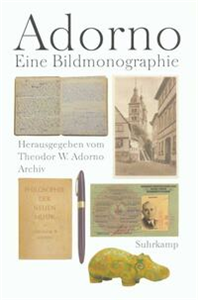
        Adorno

        Eine Bildmonographie

        by Theodor W. Adorno Archiv, Henri Lonitz, Christoph Gödde, Gabriele Lieselotte Ewenz, Michael Schwarz

        Eine Vielzahl von bisher unpublizierten Texten, Bildern und Dokumenten eröffnet eine neue und unerwartete Perspektive auf das Leben und Werk Theodor W. Adornos. Von den frühen Zeugnissen aus der Kindheit, wie etwa einem bisher unbekannten Jugendtagebuch, das transkribiert und z.T. faksimiliert vorgelegt wird, über Dokumente aus seinen Studien- und Exiljahren bis hin zur Rückkehr nach Frankfurt und seiner Arbeit am Institut für Sozialforschung und an der Frankfurter Universität verfolgt der Band das Leben Adornos am Leitfaden von überaus anschaulichen, prägnanten, im besten Sinne »sprechenden« Zeugnissen. Neben einem weiteren Tagebuch aus dem Jahr 1949 finden sich zahlreiche, hier erstmals veröffentlichte Briefe, Notizen, Kompositionen, Photographien und Skizzen aus seinem Nachlaß.

      • Trusted Partner
        Humanities & Social Sciences
        January 2025

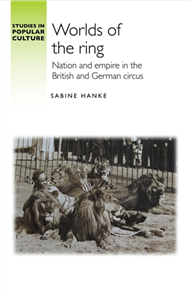
        Worlds of the ring

        Nation and empire in the British and German circus

        by Sabine Hanke

        Worlds of the Ring is a groundbreaking exploration of the interwar European circus scene, focusing on the German Sarrasani and British Bertram W. Mills' circuses. This study illuminates the correlation between the circus's evolution and imperialism/nationalism, revealing how these enterprises shaped national identities for popular audiences. Examining the years 1918-45, the book takes a transnational perspective, uncovering the interplay of international and national forces that influenced the modern circus. Through case studies, it delves into the lives of individuals in the industry, using diverse sources like newspapers, legal documents, and performer archives. The book introduces the concept of Orientalism to analyse how circuses depicted foreign worlds, and provides a fresh perspective on interwar popular culture, globalising forces, and the circus's ties to European imperialism in the early 20th century.

      • Trusted Partner
        Humanities & Social Sciences
        February 2026

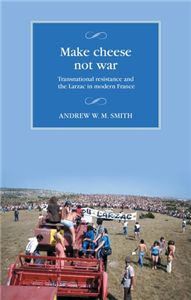
        Make cheese not war

        Transnational resistance and the Larzac in modern France

        by Andrew W. M. Smith

        In 1971, the French government announced a massive extension of its military base on the Larzac plateau in southern France. Land was to be expropriated from 107 farms around the small town of La Cavalerie. Limited resistance was expected, but what happened next exceeded all expectations. Local sheep farmers set up protest camps and occupied the land. They soon attracted an astonishing level of support, pioneering a form of regional radicalism with global implications. Drawing out the international dimensions of the protest, Make cheese not war explores a transnational resistance movement in the 1970s that challenged dominant visions of modernity and became a wellspring of radical alternatives. Exploring previously unconsulted archives in France and elsewhere, the book offers an in-depth analysis of the decade-long peasant movement and its aftermath. Repositioning the Larzac struggle within a wider network of French and international solidarities, from the US to the UK, Germany, Burkina Faso, New Caledonia and Japan, the book retraces political networks of pacifist activism, as well as environmental movements and anti-nuclear protest. It shows how this French peasant campaign became both a platform and a model for popular engagement.

      • Trusted Partner
        The Arts
        October 2025

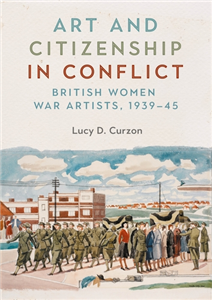
        Art and citizenship in conflict

        British women war artists, 1939–45

        by Lucy Curzon

        Art and Citizenship in Conflict examines the work of women war artists in order to highlight the complexity of citizenship and gender in Britain during the Second World War. Evelyn Dunbar, Mary Kessell, Ethel Gabain, Stella Schmolle, and Laura Knight, among others, were commissioned by the War Artists' Advisory Committee (WAAC) to document the millions of women who took up sometimes unconventional roles-in agriculture, the auxiliary services, and manufacturing, among others-to support the British war effort. Indeed, their prints, drawings, and paintings were part of a broader scheme to uphold morale and promote much-needed citizen involvement on the home front. While there is growing interest, the importance of their remit in the history of the Second World War and the quality of their artistry have nonetheless not yet secured them a significant place in scholarship. Art and Citizenship in Conflict seeks to amend this gap while also broadening approaches to the study of war itself.

      • Trusted Partner
        November 2026

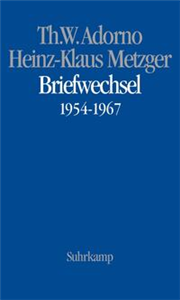
        Theodor W. Adorno, Heinz-Klaus Metzger, Briefwechsel 1926-1969

        Musikalische Briefwechsel III

        by Theodor W. Adorno, Heinz-Klaus Metzger, Clemens Nachtmann, Florian Neuner

        Im Jahr 1950 nahm Theodor W. Adorno, gerade aus der Emigration zurückgekehrt, erstmals an den legendären Internationalen Ferienkursen für Neue Musik in Darmstadt teil. Unter seinen Hörern war der damals achtzehnjährige Heinz-Klaus Metzger. Diese Begegnung war der Beginn einer Freundschaft, die erst mit dem Tod Adornos endete und anfangs ganz im Zeichen von Adornos Philosophie der neuen Musik stand – dem Paukenschlag in der Musikwissenschaft Nachkriegsdeutschlands. Der Briefwechsel selbst kam jedoch erst in Gang, als Metzger in Paris bei dem Schönberg-Schüler Max Deutsch Komposition studierte – und entzündete sich vollends an Adornos Essay Das Altern der neuen Musik, der als heftige Attacke auf die Nachkriegsavantgarde aufgenommen und alsbald ebenso heftig von Metzger öffentlich kritisiert wurde. Weitere Themen sind u.a. der Aufstieg und Niedergang der seriellen Musik und der »Komet« John Cage, dessen Kompositionen die internationale Musikszene polarisierten. Die Korrespondenz, die bis ins Jahr 1967 reicht, belegt nicht nur Adornos vitale Anteilnahme an den musikalischen Entwicklungen der 50er und 60er Jahre, sondern läßt auch ein Stück Musikgeschichte lebendig werden, das zu den spannendsten des vergangenen Jahrhunderts gehört.

      • Trusted Partner
      • Trusted Partner
        Humanities & Social Sciences
        January 2013

        Christian Dualist Heresies in the Byzantine World, c. 650-c. 1450

        by Janet Hamilton, Bernard Hamilton

        Christian dualism originated in the reign of Constans II (641-68). It was a popular religion, which shared with orthodoxy an acceptance of scriptual authority and apostolic tradition and held a sacramental doctrine of salvation, but understood all these in a radically different way to the Orthodox Church. One of the differences was the strong part demonology played in the belief system. This text traces, through original sources, the origins of dualist Christianity throughout the Byzantine Empire, focusing on the Paulician movement in Armenia and Bogomilism in Bulgaria. It presents not only the theological texts, but puts the movements into their social and political context.

      • Trusted Partner
        20th century history: c 1900 to c 2000
        October 2013

        Northern Ireland in the Second World War

        Politics, economic mobilisation and society, 1939–45

        by Philip Ollerenshaw

        This original and distinctive book surveys the political, economic and social history of Northern Ireland in the Second World War. Since its creation in 1920, Northern Ireland has been a deeply divided society and the book explores these divisions before and during the war. It examines rearmament, the relatively slow wartime mobilisation, the 1941 Blitz, labour and industrial relations, politics and social policy. Northern Ireland was the only part of the UK with a devolved government and no military conscription during the war. The absence of military conscription made the process of mobilisation, and the experience of men and women, very different from that in Britain. The book's conclusion considers how the government faced the domestic and international challenges of the postwar world. This study draws on a wide range of primary sources and will appeal to those interested in modern Irish and British history and in the Second World War.

      • Trusted Partner
        Humanities & Social Sciences

        Brazil in the world

        The international relations of a South American giant

        by Dr. Sean W. Burgess

        Brazil has suddenly become a country of interest to the West, playing a critical role in global economic talks at the G20 and WTO, brokering North-South relations through its new international economic geography, and stepping into regional and global security questions through its activities in Haiti, Paraguay and the nuclear question in Iran. This book explains why Brazil is taking an increasingly prominent international role, how it conducts and plans its regional and global interactions, and what the South American giant intends to do with its rising international influence. The book is written for the non-specialist, providing students and other interested readers with a well-organized, concise introduction to the fundamentals of the foreign policy of an emerging Twenty-First Century power.

      • Trusted Partner
        July 2021

        The World of the North

        Between Ragnarok and welfare utopia: A cultural-historical deconstruction

        by Bernd Henningsen

        — Analysis of how we view Europe's North and how this image emerged — An outsider's perspective on Nordic societies and their self image — Serves as an introduction into Northern European culture and society Our image of Northern Europe has been shaped by projections and desires in the long history of encounters: berserkers and war atrocities, bad weather, beautiful nature, stable political systems, social welfare, equality and prosperity, peacefulness, low corruption, hygge and Bullerby – all this is part of the Nordic narrative. But what about the religious, linguistic and ethnic homogeneity, what about the muchvaunted Nordic cooperation? How do politics "work" in the North? Why are Northern Europeans the happiest people?

      • Trusted Partner
      • Trusted Partner
        October 2022

        What Does the Ball Think?

        Why football is not just kicking

        by Johannes Schweikle, Oliver Lück

        A football is a moody thing, and the art of mastering it a highly challenging concern. Whether fan or philosopher, football is a fascination, and its various facets are revealed in this anthology with memorable, intelligent and curious contributions. How and with what (human rights-violating) methods did Qatar prepare for the World Cup? Actress Christiane Paul explains why she supports FC Bayern. Herman van Veen explains the difference between Dutch and German football fans, and the report 'Five balls for Angola' takes readers on a journey to football in Africa. A book for dedicated fans and critical football observers.

      • Trusted Partner
        August 2003

        Briefe und Briefwechsel

        Band 5: Briefe an die Eltern. 1939–1951

        by Theodor W. Adorno, Christoph Gödde, Henri Lonitz

        Als Adorno seine Eltern im Juni 1939 in Havanna wiedersah, waren sie erst wenige Wochen auf Kuba. Oscar und Maria Wiesengrund hatten sich in letzter Minute aus Nazideutschland retten können. Von Kuba zogen sie Ende 1939 zunächst nach Florida und dann nach New York, wo sie von August 1940 an bis zum Ende ihres Lebens blieben. Erst mit Adornos Übersiedlung nach Kalifornien Ende 1941 berichten seine Briefe wieder und fast regelmäßig alle vierzehn Tage von der Arbeit und den Lebensumständen sowie den Freunden, Bekannten und Größen des damaligen Hollywood. Erzählungen von der gemeinsamen Arbeit mit Max Horkheimer, Thomas Mann und Hanns Eisler stehen neben Partyberichten, Clownereien mit Charlie Chaplin und unglücklichen Liebesaffären. Die Briefe bergen aber auch die ungestillte Sehnsucht nach Europa: So beginnt Adorno schon bei Kriegseintritt Amerikas, sich Gedanken über die Rückkehr zu machen. Die »Briefe an die Eltern« - die wohl offensten und persönlichsten, die er je geschrieben hat - eröffnen nicht nur einen Blick auf die Erfahrungen, die am Anfang der berühmten ›Minima Moralia‹ standen, sondern zeigen Adorno von einer bisher unbekannten, überaus persönlichen Seite.

      • Trusted Partner
        2024

        The second half of your life - a manual

        Tips and strategies for successful ageing

        by Dr. Petra Kiedaisch

        In the middle of our lives, the cards are reshuffled: marriages are divorced, careers are questioned, friendships are ended, questions of meaning are asked, bodies change - and not just hormonally. At the same time, children leave home and parents become carers. From the age of 45, the majority of our population is at the centre of a second upheaval that affects all facets of our lives and leaves us at a loss in many ways. Not only in our daily lives, but also when it comes to planning for our own old age. This guide is designed to help us find our way. It presents the most important information from all areas relevant to a good life after 45. Leading experts from the fields of medicine, nutrition, philosophy, theology, psychology, care, law and finance give recommendations on what to look out for and what tools are needed to get through these challenging years unscathed. Useful checklists round off the articles. The book shows us the unique opportunity to see these challenges not as a crisis but as a source of strength. Not only can we come through this period of our lives healthy and happy, but we can also shape it so that the next age threshold is no longer frightening. During the second phase of adolescence, we lay the foundations for whether and how we will grow older. Be it in terms of health or living together with family and friends. With contributions from: Prof. Dr. Martin Gessmann (philosophy), Dipl. Psych. Claudia Kühner (psychology), Dr Suso Lederle (medicine), Dr Petra Forster (nutrition), Christian Hald, Anja Heine (law), Prof Dr Philipp Schreiber (finance), Prof Dr Thomas Klie (nursing care insurance), Georg Eberhardt (religion).

      Subscribe to our

      newsletter