Your Search Results

      • Sirkel Forlag

        Sirkel Forlag was set up in 2016 as an author´s cooperative enterprise. As of today, we represent six authors and have a catalogue of eight books, including poetry, non-fiction, an illustrated children’s book, a screenplay and four novels. Two of our novels have been supported by the Norwegian Arts Council.   While our main mission is to promote innovative and independent authorship in Norway, we also hope to reach readers abroad through high-quality translations.

        View Rights Portal
      • Trusted Partner
        The Arts
        December 2024

        The picture politics of Sir Francis Carruthers Gould

        Britain's pioneering political cartoonist

        by Mark Bryant

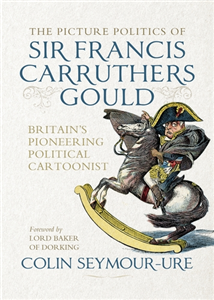
        This is the first major study of Britain's pioneering graphic satirist, Sir Francis Carruthers Gould (1844-1925), the first staff political cartoonist on a daily newspaper in Britain, and the first of his kind to be knighted. Written by the distinguished media historian, Colin Seymour-Ure, it is essential reading for anyone interested in cartoons, caricature and illustration and will also be welcomed by students of history, politics and the media. It examines Gould's career in Fleet Street until his retirement after the First World War. It also discusses his illustrations for magazines and books and there is an analysis of his use of symbolism and literary allusion to lampoon such eminent politicians as Gladstone and Joseph Chamberlain. As Lord Baker says in his Foreword, this book is 'a major contribution to our knowledge of British cartooning.'

      • Trusted Partner
      • Trusted Partner
        November 2004

        Sir Peters kleines Welttheater

        Staatsmänner, Stars und andere Kollegen

        by Ustinov, Peter / Englisch Kusterer, Hermann

      • Trusted Partner
        August 2004

        Die Reisen des Sir Peter

        Alle Geschichten von unterwegs

        by Ustinov, Peter

      • Trusted Partner
        Literature & Literary Studies
        January 2017

        Literary and visual Ralegh

        by J. B. Lethbridge, Christopher Armitage

      • Trusted Partner
      • Trusted Partner
        October 2023

        Post-Mortem

        Autopsy stories: the unusual experiences of a pathologist

        by Roland Sedivy

        — True crime stories from the morgue — Famous deaths and autopsy stories resolved, such as Antarctic explorer Sir Ernest Shackleton and the case of Anne Greene, who survived her execution by hanging The post-mortem examination. A glimpse inside the interior of the human being. Many find the idea fascinating; for others it is creepy or even repugnant. There are still numerous myths and horror stories surrounding the autopsy, many of them associated with primal human fears such as that of being buried alive, which have existed since Antiquity. It is precisely for this reason that it is important to carry out the post-mortem examination with the utmost conscientiousness. Pathologist Roland Sedivy provides an exciting insight into his profession. Profound and with tremendous humour, he tells us about the early days of the autopsy, and shares with us some macabre and some mysterious cases.

      • Trusted Partner
        July 2009

        Yes, Sir!

        Aus dem Blickwinkel eines englischen Gastarbeiters

        by Howland, Chris

      • Trusted Partner
        January 1988

        Sir Galahad

        Porträt einer Verschollenen

        by Mulot-Déri, Sibylle

      • Trusted Partner
        Literature & Literary Studies
        September 2020

        The early Spenser, 1554–80

        'Minde on honour fixed'

        by Jean R. Brink, Joshua Samuel Reid

        Brink's provocative biography shows that Spenser was not the would-be court poet whom Karl Marx's described as 'Elizabeth's arse-kissing poet'. In this readable and informative account, Spenser is depicted as the protégé of a circle of London clergymen, who expected him to take holy orders. Brink shows that the young Spenser was known to Alexander Nowell, author of Nowell's Catechism and Dean of St. Paul's. Significantly revising the received biography, Brink argues that that it was Harvey alone who orchestrated Familiar Letters (1580). He used this correspondence to further his career and invented the portrait of Spenser as his admiring disciple. Contextualising Spenser's life by comparisons with Shakespeare and Sir Walter Ralegh, Brink shows that Spenser shared with Sir Philip Sidney an allegiance to the early modern chivalric code. His departure for Ireland was a high point, not an exile.

      • Trusted Partner
      • Trusted Partner
        April 1993

        Das Bacon-Projekt

        Von der Erkenntnis, Nutzung und Schonung der Natur

        by Lothar Schäfer

        "Das »Bacon-Projekt« definiert einen Grundzug der Moderne; während in der Antike die Erkenntnis der Natur als Selbstzweck galt, betrachtet sie die Neuzeit als ein Mittel zur Mehrung des allgemeinen Menschenwohls. Die Naturforschung soll die Entwicklung einer Technik ins Werk setzen und damit dem Menschen Machtmittel zur Verfügung stellen, durch die er sich aus materieller Not und Naturabhängigkeit befreien kann. Francis Bacon (1551-1626) war der Propagandist der neuen Zielbestimmung der Naturforschung. Die in den modernen Industrieländern praktizierte technische Form der Naturnutzung ist infolge der jetzt offenkundig werdenden Schädigungen an der Natur zunehmend unter Kritik geraten. Mit den Befunden der »ökologischen Krise« wird nicht nur auf die Bedrohlichkeit der Technikfolgeschäden hingewiesen, sondern es wird zugleich die neuzeitliche Art der Naturforschung für die absehbare Katastrophe verantwortlich gemacht. Hans Jonas hat deshalb verlangt, daß wir das »Baconsche Ideal« aufgeben und uns dem Gedanken der Bewahrung der Natur verschreiben. Nicht länger sollten Ziele und Zwecke des Menschen die Grundlage unseres Handelns gegenüber der Natur sein; das »Prinzip Verantwortung« gebiete vielmehr, die in der westlichen Zivilisation dominant gewesene »Anthropozentrik« zu verabschieden und die Eigenrechte der Natur in unserem Handeln zu respektieren. Gegen diese pauschale Beschuldigung der Moderne ist die vorliegende Studie gerichtet. Schäfer sieht durch die ökologische Krise nicht die Aufkündigung des Baconschen Ideals geboten - wohl aber eine drastische Revision des »Baconschen Programms«, d.h. der Mittel und Methoden, mit denen das Ideal seither verfolgt wurde."

      • Trusted Partner
        The Arts
        March 2026

        Acting and performance in Hitchcock

        by Adrian Garvey, Victoria Lowe

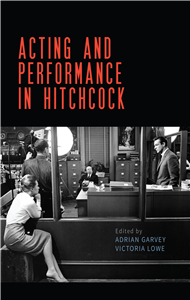
        Hitchcock's professed disdain for actors is belied by the extraordinary range and depth of performances featured in his films. It might even be argued that many stars gave their richest and most complex performances in his work. Hitchcock's films are also imbued with the theme of performance, as when his fugitive men and errant women assume fragile new identities and move between roles. Actors and other performers also often feature as characters. However, the exhaustive academic literature on Hitchcock has to date produced surprisingly little work about acting and performance in his films. The collection includes contributions from a range of leading scholars on Hitchcock, performance, stardom, and British Cinema, including Charles Barr, David Greven, Mark Glancy, Lucy Bolton, Lawrence Napper and Michael Williams, and an interview with leading composers/accompanists Neil Brand and Stephen Horne on scoring performance in Silent Hitchcock.

      • Trusted Partner
        Literature & Literary Studies
        September 1990

        Sir Thomas More

        By Anthony Munday and others

        by Vittorio Gabrieli, Giorgio Melchiori

        The best edition of the play in print. Gives a radical re-examination of the manuscript, and relates step by step to the process by which the play acquired its final form. Accounts for every single word and mark found in the manuscript - reproduces rejected or alternative passages at the end of the text. Includes a detailed discussion of the authorship and date of the original text and so-called additions. Particularly important now as the play feeds into the present speculation concerning Shakespeare's Catholic roots. ;

      • Trusted Partner
      • Trusted Partner
        Humanities & Social Sciences
        March 2017

        The Arctic in the British imagination 1818–1914

        by Andrew Thompson, John M. MacKenzie, Rob David

        The Arctic region has been the subject of much popular writing. This book considers nineteenth-century representations of the Arctic, and draws upon an extensive range of evidence that will allow the 'widest connections' to emerge from a 'cross-disciplinary analysis' using different methodologies and subject matter. It positions the Arctic alongside more thoroughly investigated theatres of Victorian enterprise. In the nineteenth century, most images were in the form of paintings, travel narratives, lectures given by the explorers themselves and photographs. The book explores key themes in Arctic images which impacted on subsequent representations through text, painting and photography. For much of the nineteenth century, national and regional geographical societies promoted exploration, and rewarded heroic endeavor. The book discusses images of the Arctic which originated in the activities of the geographical societies. The Times provided very low-key reporting of Arctic expeditions, as evidenced by its coverage of the missions of Sir John Franklin and James Clark Ross. However, the illustrated weekly became one of the main sources of popular representations of the Arctic. The book looks at the exhibitions of Arctic peoples, Arctic exploration and Arctic fauna in Britain. Late nineteenth-century exhibitions which featured the Arctic were essentially nostalgic in tone. The Golliwogg's Polar Adventures, published in 1900, drew on adult representations of the Arctic and will have confirmed and reinforced children's perceptions of the region. Text books, board games and novels helped to keep the subject alive among the young.

      • Trusted Partner
        Literature & Literary Studies
        January 2014

        Court and civic society in the Burgundian Low Countries c.1420–1530

        by Andrew Brown, Graeme Small

        This volume is the first ever attempt to unite and translate some of the key texts which informed Johan Huizinga's famous study of the Burgundian court, The Waning of the Middle Ages, a work which has never gone out of print. It combines these texts with sources that Huizinga did not consider, those that illuminate the wider civic world that the Burgundian court inhabited and the dynamic interaction between court and city. Through these sources, and an introduction offering new perspectives on recent historiography, the book tests whether Huizinga's controversial vision of the period still stands. Covering subjects including ceremonial events, such as the spectacles and gargantuan banquets that made the Burgundian dukes the talk of Europe, the workings of the court, and jousting, archery and rhetoric competitions, the book will appeal to students of late medieval and early modern Europe and to those with wider interests in court culture, ritual and ceremony.

      • Trusted Partner

      Subscribe to our

      newsletter