Your Search Results

      • Speedy Publishing LLC

        Speedy Publishing is a hybrid general interest trade publisher. One of the first of its kind Speedy publishes books, eBooks, mobile apps, pamphlets and free online resources that are meant to educate, edify and entertain readers regardless of demographic.

        View Rights Portal
      • Sri Senbaga Pathippakam

        Sri Senbaga Pathippakam is one of the best publishers in Tamil language. We have published more than 1000 titles including ancient Sangam Tamil literature, research books in Tamil literature and language, mythological books, historical fiction and non-fiction, short stories, cooking books, etc. We also specialize in books for children, bilingual and trilingual dictionaries for the reference of students and general public. We publish Sahitya Academy & Tamilnadu government award winning books. One of our renowned books, 'Thirukkural', a scripture common to every walk of human life irrespective of gender, race or community is a must read for everyone on this planet. It is published in various sizes and design. 'Oviyakkural (Thirukkural with paintings)' portrays Tamil tradition and culture through paintings. Our religious publication about Vainavam and Saivam is popular among scholars. 'Kambar Kavi Inbam' portrays the beauty of poetry as described in Kambar's Ramayanam in Tamil language.

        View Rights Portal
      • Trusted Partner
        Humanities & Social Sciences
        November 2020

        The free speech wars

        by Charlotte Lydia Riley

      • Trusted Partner
        February 2020

        Unfree Speech

        Nur wenn alle ihre Stimme erheben, retten wir die Demokratie

        by Wong, Joshua / Zusammen mit Ng, Jason Y.; Übersetzt von Gabler, Irmengard

      • Trusted Partner
        Humanities & Social Sciences
        April 2025

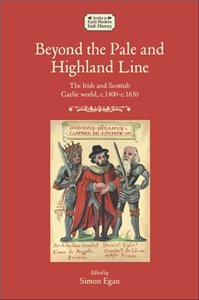
        Beyond the Pale and Highland Line

        The Irish and Scottish Gaelic world

        by Simon Egan

        This book offers important new insights into the history and culture of the Gaelic-speaking world from the mid-fifteenth century through to the reign of James VI and I. Throughout this period, the reach of the English and Scottish crowns within these western regions was limited. The initiative lay with local communities and royal power was contingent upon negotiating with well-established and largely autonomous aristocratic lineages. Moreover, events within this western world could exert a powerful, often unpredictable, influence upon the affairs of the wider archipelago. Using a series of case studies, this collection examines the evolving relationship between Ireland and Scotland in rich detail. It demonstrates how this world interacted with the encroaching English and Scottish states and underlines the importance of paying closer attention to this neglected area of Irish and British history.

      • Trusted Partner
        Humanities & Social Sciences
        January 2021

        Freedom of speech, 1500–1850

        by Robert Ingram, Jason Peacey, Alex W. Barber

        This collection brings together historians, political theorists and literary scholars to provide historical perspectives on the modern debate over freedom of speech, particularly the question of whether limitations might be necessary given religious pluralism and concerns about hate speech. It integrates religion into the history of free speech and rethinks what is sometimes regarded as a coherent tradition of more or less absolutist justifications for free expression. Contributors examine the aims and effectiveness of government policies, the sometimes contingent ways in which freedom of speech became a reality and a wide range of canonical and non-canonical texts in which contemporaries outlined their ideas and ideals. Overall, the book argues that while the period from 1500 to 1850 witnessed considerable change in terms of both ideas and practices, these were more or less distinct from those that characterise modern debates.

      • Trusted Partner
        Health & Personal Development

        General Pathology – Compact

        by Rudolf Meyer (Ed.)

        This bestseller on general pathology for the caring and healthcare profes­sions explains in clear, concise and compact language how illnesses occur and appear. Explained in a vivid and well­structured way, this compact text book helps with understanding compli­cated connections, so that situations can be assessed correctly, recognized and acted on appropriately in practice.

      • Trusted Partner
        January 1986

        Freedom of Speech: Basis and Limits

        Association for Legal and Social Philosophy. 12th Annual Conference at the University of Glasgow 29th–31th March 1985

        by Herausgegeben von Maher, Gerry

      • Trusted Partner
      • Trusted Partner
        Humanities & Social Sciences
        November 2022

        Critical theory and social pathology

        by Neal Harris

      • Trusted Partner
        April 2016

        The Dynamics of Language Obsolescence in a Divided Speech Community

        The Case of the German Wischau / Vyskov Enclave (Czech Republic)

        by Nereo, Filippo

      • Trusted Partner
        January 1996

        Untersuchungen zu Stimme und Sprache / Papers on Speech and Voice

        Eine Veröffentlichung in Verbindung mit dem Forschungsinstitut für Deutsche Sprache "Deutscher Sprachatlas" der Philipps-Universität Marburg/Lahn

        by Herausgegeben von Braun, Angelika

      • Trusted Partner
        Literature & Literary Studies
        July 2022

        Nordic Gothic

        by Maria Holmgren Troy, Johan Hõglund, Yvonne Leffler, Sofia Wijkmark

        Nordic Gothic traces Gothic fiction in the Nordic region from its beginnings in the nineteenth century, with a main focus on the development of Gothic from the 1990s onwards in literature, film, TV and new media. The volume gives an overview of Nordic Gothic fiction in relation to transnational developments and provides a number of case studies and in-depth analyses of individual narratives. It creates an understanding of this under-researched cultural phenomenon by showing how the narratives make visible cultural anxieties haunting the Nordic countries, their welfare systems, identities and ideologies. Nordic Gothic examines how figures from Nordic folklore function as metaphorical expressions of Gothic themes and Nordic settings are explored from perspectives such as ecocriticism and postcolonialism. The book will be of interest to researchers and post- and- undergraduate students in various fields within the Humanities.

      • Trusted Partner
        Literature & Literary Studies
        June 2025

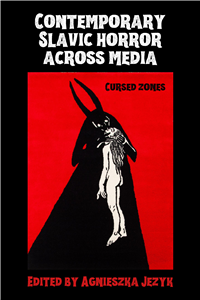
        Contemporary Slavic horror across media

        Cursed zones

        by Agnieszka Jezyk

        In the Western cultural production that puts individual or collective fear at its center, East/Central Europe has been portrayed as an othered space of horror - lawless, frightening zones where anything can happen. Incorporating articles on literature, film, visual arts, video games, music videos, and music festivals, Contemporary Slavic horror across media: Cursed zones is a pioneering anthology of academic essays devoted to Slavic horror fiction. The book focuses on works from the mid-20th century through the present, particularly the post-Soviet period. Assessing current trends in Czech, Polish, Russian, Slovak, Ukrainian, and East/Central European horror media, the book looks at similarities and idiosyncrasies of the genre in its Slavic variant. With this anthology we hope to tame 'the Easterner Other' and start exorcising 'monstrous' East/Central Europe.

      • Trusted Partner
        2020

        History of the German Language

        A textbook for German studies; Part 1: Introduction, prehistory and history; Part 2: Old High German, Middle High German and Early New High German

        by Wilhelm Schmidt, Edited by Dr. Elisabeth Berner and Prof. Dr. Dr. h.c. Dr. h.c. Norbert Richard Wolf

        The 12th revised and updated version of the History of the German language – long regarded as an indispensable standard work for German Studies, has just been published. From now on, this comprehensive textbook on the history of the language is divided into two volumes. In addition to introducing questions about historical linguistics, the first volume provides a detailed account of the prehistory and history of German right up to the present day. Based on extensive source analyses, the focus is on aspects of culture and social history; only the chapters on the Indo-Germanic and Germanic language include key information about structural history. The second part contains concise, but readily understandable accounts of Old, Middle and Early New High German in terms of phonology, graphemics, morphology and syntax. Not only are synchronous descriptions given of the particular language period, but also the development of German language construction at all structural levels is explained. The association of grammatical synchrony and structural diachrony is a particular characteristic of this second part of Schmidt’s work on the history of language.

      • Trusted Partner
        Humanities & Social Sciences
        March 2026

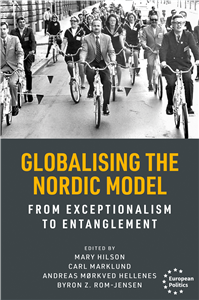
        Globalising the Nordic Model

        From exceptionalism to entanglement

        by Mary Hilson

        The five Nordic countries - Denmark, Finland, Iceland, Norway and Sweden - frequently attract attention as examples of a 'Nordic model'. The meanings of the term vary, but especially since the global financial crisis of 2008-9 the Nordic countries have often been portrayed positively, as examples of economic dynamism, innovation and social equality. Studies of these images of the Nordic countries and Nordic region and their international circulations are now a well-established field of research. This volume explores how the Nordic model has been shaped by global entanglements, in exchange not only with Western Europe and North America, but also with the Global South. Drawing on selected case studies, the volume offers new perspectives on the meanings of the Nordic model and Nordic exceptionalism in a global context during the half century since c. 1970.

      • Trusted Partner
        2023

        German for Pharmaceutical Practice

        Communicate, research, present

        by Nadine Yvonne Sprecher, Annette Thomas, Annegret Lehmann and Anke Schichte. In collaboration with Christiane Schneider

        In the pharmacy, the staff communicate with customers, colleagues, the medical profession, sales representatives and nursing home staff. Pharmacy employees produce written information based on well-chosen sources and represent the pharmacy to the outside world through presentations, on social media, or with the help of flyers, posters and other promotional materials. All this presupposes the confident use of language, and is best trained in advance. Part A of this work provides assistance for the most diverse communicative requirements in the pharmacy. A short theoretical explanation is always followed by several tasks so that you can immediately put what you have learned into practice and try it out. The „Brief overview of grammar and language knowledge“ boxes point out linguistic stumbling blocks. Those who are not yet sure of the technical terms can make themselves fit in Part B. Here one learns how to conduct a good counselling interview according to the BAC guideline. Extensive lists of technical terms and their explanations suitable for everyday use – all arranged according to organ systems – contain the most important vocabulary for everyday pharmacy work. A totally practical German lesson!

      • Trusted Partner
        Humanities & Social Sciences
        May 2016

        A matter of intelligence

        by Charmian Brinson, Richard Dove

      • Trusted Partner
        Humanities & Social Sciences
        July 2020

        Race talk

        Languages of racism and resistance in Neapolitan street markets

        by Antonia Lucia Dawes

        This electronic version has been made available under a Creative Commons (BY-NC-ND) open access license. Race talk is about language use as an anti-racist practice in multicultural city spaces. The book contends that attention to talk reveals the relations of domination and subordination in heterogeneous, ethnically diverse and multilingual contexts, while also helping us to understand how transcultural solidarity might be expressed. Drawing on original ethnographic research conducted on licensed and unlicensed market stalls in in heterogeneous, ethnically diverse and multilingual contexts, this book examines the centrality of multilingual talk to everyday struggles about difference, positionality and entitlement. In these street markets, Neapolitan street vendors work alongside documented and undocumented migrants from Bangladesh, China, Guinea Conakry, Mali, Nigeria and Senegal as part of an ambivalent, cooperative and unequal quest to survive and prosper. As austerity, anti-immigration politics and urban regeneration projects encroached upon the possibilities of street vending, talk across linguistic, cultural, national and religious boundaries underpinned the collective action of street vendors struggling to keep their markets open. The edginess of their multilingual organisation offered useful insights into the kinds of imaginaries that will be needed to overcome the politics of borders, nationalism and radical incommunicability.

      • Trusted Partner
        March 2020

        The German Channel

        A Mythology from the FRG

        by Frank Uekötter

        A historic big infrastructure project in the nexus of federal government policy planning From Berlin Airport to Stuttgart 21 – public building projects seem to get out of hand with growing frequency. Frank Uekötter follows the example of the Elbe Lateral Canal, which was opened in 1976, to show that institutional failure is not a new phenomenon. The virtually forgotten story of the Elbe Lateral Canal represents an inglorious episode of German federal policy planning. The benefit of the 115 km long waterway, which connects the Mittelland Canal with the River Elbe, was completely out of proportion to the level of investment. Despite this, the project was soon unstoppable in the nexus of corporate interests, political aims and the policy for growth. A dam ruptured at Lüneburg only weeks after its opening. Uekötter argues for a social rethink based on the clear chronology of these “organized irresponsibilities”.

      Subscribe to our

      newsletter