
Your Search Results
-

-

Spilbulu Verlag
Geschichten, die Dich in Deiner Identität bestärken und inspirieren, einfach Du zu sein! Spilbulu möchte Dich auf eine humorvolle, aber tiefe Reise zum Nachdenken mitnehmen. Eine Reise, die Dich ermutigt niemals vor Deinem Herzensziel zu kapitulieren! Es ist nur unmöglich, wenn Du aufgibst!
View Rights Portal
-
Promoted Content

 The ArtsMarch 1905
Concerning the Spiritual in Art
by Wassily Kandinsky
A pioneering work in the movement to free art from its traditional bonds to material reality, this book is one of the most important documents in the history of modern art. Written by the famous nonobjective painter Wassily Kandinsky (1866–1944), it explains Kandinsky's own theory of painting and crystallizes the ideas that were influencing many other modern artists of the period. Along with his own groundbreaking paintings, this book had a tremendous impact on the development of modern art. Kandinsky's ideas are presented in two parts. The first part, called "About General Aesthetic," issues a call for a spiritual revolution in painting that will let artists express their own inner lives in abstract, non-material terms. Just as musicians do not depend upon the material world for their music, so artists should not have to depend upon the material world for their art. In the second part, "About Painting," Kandinsky discusses the psychology of colors, the language of form and color, and the responsibilities of the artist. An Introduction by the translator, Michael T. H. Sadler, offers additional explanation of Kandinsky's art and theories, while a new Preface by Richard Stratton discusses Kandinsky's career as a whole and the impact of the book. Making the book even more valuable are nine woodcuts by Kandinsky himself that appear at the chapter headings. This English translation of Über das Geistige in der Kunst was a significant contribution to the understanding of nonobjectivism in art. It continues to be a stimulating and necessary reading experience for every artist, art student, and art patron concerned with the direction of 20th-century painting.
-
Promoted Content

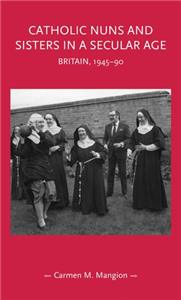 Humanities & Social SciencesApril 2021
Catholic nuns and sisters in a secular age
Britain, 1945–90
by Carmen M. Mangion
This is the first in-depth study of post-war female religious life. It draws on archival materials and a remarkable set of eighty interviews to place Catholic sisters and nuns at the heart of the turbulent 1960s, integrating their story of social change into a larger British and international one. Shedding new light on how religious bodies engaged in modernisation, it addresses themes such as the Modern Girl and youth culture, '1968', generational discourse, post-war modernity, the voluntary sector and the women's movement. Women religious were at the forefront of the Roman Catholic Church's movement of adaptation and renewal towards the world. This volume tells their stories in their own words.
-
 Trusted Partner
 Literature & Literary StudiesOctober 2023
Spectral Dickens
The uncanny forms of novelistic characterization
by Alexander Bove
Drawing on the recent ontological turn in critical theory, Spectral Dickens explores an aspect of literary character that is neither real nor fictional, but spectral. This work thus provides an in-depth study of the inimitable characters populating Dickens' illustrated novels using three hauntological concepts: the Freudian uncanny, Derridean spectrality, and the Lacanian real. Thus, while the current discourse on character studies, which revolves around values like realism, depth, and lifelikeness, tends to see characters as mimetic of persons, this book invents new critical concepts to account for non-mimetic forms of characterization. These spectral forms bring to light the important influence of developments in nineteenth-century visual culture, such as the lithography and caricature of Daumier and J.J. Grandville. The spectrality of novelistic characters developed here paves the way for a new understanding of fictional characters in general.
-
Trusted Partner
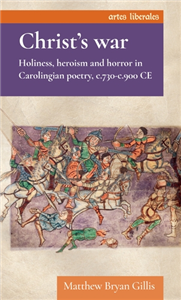 Humanities & Social SciencesApril 2026
Christ’s war
Holiness, heroism and horror in Carolingian poetry, c.730-c.900 CE
by Matthew Bryan Gillis
Christ's war examines Carolingian holy war from the forging of their empire in the eighth century to its dissolution in the late ninth century during the Northmen's attacks. It argues that the Franks understood their wars to be holy when their soldiers were without sin and, therefore, were holy themselves. God heard their prayers as they begged for divine aid, and he helped them overcome and slaughter their foes. Therefore, the Carolingian vision of holy war differed from the pious, apocalyptic military pilgrimages of the subsequent Crusades. Latin poetry serves as an important source in this study for understanding holy war, including how poets dramatized glorious victories or horrifying defeats for their audiences. The book offers important insights into the religious nature of Frankish warfare, while also contributing a fresh and innovative perspective on medieval holy war overall.
-
Trusted Partner
 Literature & Literary StudiesAugust 2021
The Massacre at Paris
By Christopher Marlowe
by Martin White, Mathew R. Martin
This volume presents a modernised edition of Christopher Marlowe's critical engagement with one of the bloodiest and traumatic episodes of the French Wars of Religion, the wholesale massacre of French Huguenots in Paris in August, 1572. Sensorily shocking and intellectually gripping, the play's dramatic action spans a tumultuous two decades in French history to unfold for its audience the tragic consequences of religious fanaticism, power politics, and dynastic rivalry. Comprehensively introduced and containing full commentary notes, this edition opens up this frequently neglected but historically significant and dramatically powerful play to student and scholar alike. The introduction examines such topics as the history of the massacre, the play's treatment of its sources, the play's dramatisation of trauma, and the play's exploration of notions of religious toleration.
-
Trusted Partner
 Literature & Literary StudiesFebruary 2025
The Massacre at Paris
By Christopher Marlowe
by Mathew R. Martin
This volume presents a modernised edition of Christopher Marlowe's critical engagement with one of the bloodiest and traumatic episodes of the French Wars of Religion, the wholesale massacre of French Huguenots in Paris in August, 1572. Sensorily shocking and intellectually gripping, the play's dramatic action spans a tumultuous two decades in French history to unfold for its audience the tragic consequences of religious fanaticism, power politics, and dynastic rivalry. Comprehensively introduced and containing full commentary notes, this edition opens up this frequently neglected but historically significant and dramatically powerful play to student and scholar alike. The introduction examines such topics as the history of the massacre, the play's treatment of its sources, the play's dramatisation of trauma, and the play's exploration of notions of religious toleration.
-
Trusted Partner
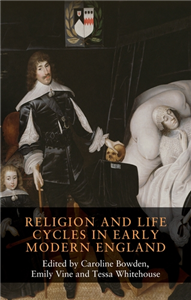 Humanities & Social SciencesOctober 2021
Religion and life cycles in early modern England
by Caroline Bowden, Emily Vine, Tessa Whitehouse
Religion and life cycles in early modern England assembles scholars working in the fields of history, English literature and art history to further our understanding of the intersection between religion and the life course in the period c. 1550-1800. Featuring chapters on Catholic, Protestant and Jewish communities, it encourages cross-confessional comparison between life stages and rites of passage that were of religious significance to all faiths in early modern England. The book considers biological processes such as birth and death, aspects of the social life cycle including schooling, coming of age and marriage and understandings of religious transition points such as spiritual awakenings and conversion. Through this inclusive and interdisciplinary approach, it seeks to show that the life cycle was not something fixed or predetermined and that early modern individuals experienced multiple, overlapping life cycles.
-
Trusted Partner

 May 2022
In the Shadow of War
Diary notes from Ukraine
by Christoph Brumme
"What can you learn in war? Do you become numb, do you get used to it at some point? Does war make you "hard", uncaring, above pain? No. These are just clichés. Every day brings new horrors. At best, one learns for some time to suppress strong feelings, because to give in to them would weaken one's life instinct." In a very stirring and shocking, but sometimes humorous language, Christoph Brumme tells of the situation in Ukraine, the everyday life of his family and friends, of fears, longings and political assessments. The diary entries of the war and the resistance of the Ukrainians, starting from the first signs of the impending war in mid-January 2022 until the printing of this book, 1st May 2022, impressively bear witness to the brutality of these events.
-
Trusted Partner
 Humanities & Social SciencesFebruary 2023
No masters but God
Portraits of anarcho-Judaism
by Hayyim Rothman
The forgotten legacy of religious Jewish anarchism, and the adventures and ideas of its key figures, finally comes to light in this book. Set in the decades surrounding both world wars, No masters but God identifies a loosely connected group of rabbis and traditionalist thinkers who explicitly appealed to anarchist ideas in articulating the meaning of the Torah, traditional practice, Jewish life and the mission of modern Jewry. Full of archival discoveries and first translations from Yiddish and Hebrew, it explores anarcho-Judaism in its variety through the works of Yaakov Meir Zalkind, Yitshak Nahman Steinberg, Yehudah Leyb Don-Yahiya, Avraham Yehudah Heyn, Natan Hofshi, Shmuel Alexandrov, Yehudah Ashlag and Aaron Shmuel Tamaret. With this ground-breaking account, Hayyim Rothman traces a complicated story about the modern entanglement of religion and anarchism, pacifism and Zionism, prophetic anti-authoritarianism and mystical antinomianism.
-
Trusted Partner
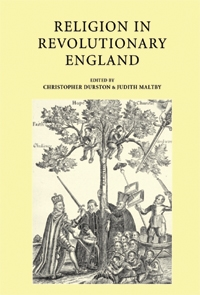 Humanities & Social SciencesJanuary 2007
Religion in Revolutionary England
by Christopher Durston, Judith Maltby
This book offers a collection of essays tightly focused around the issue of religion in England between 1640 and 1660, a time of upheaval and civil war in England. Edited by well-known scholars of the subject, topics include the toleration controversy, women's theological writing, observance of the Lord's Day and prayer books. To aid understanding, the essays are divided into three sections examining theology in revolutionary England, inside and outside the revolutionary National Church and local impacts of religious revolution. Carefully and thoughtfully presented, this book will be of great use for those seeking to better understand the practices and patterns of religious life in England in this important and fascinating period. ;
-
Trusted Partner
 2025
2025Why Be a Christian Today?
by Elisabeth Zoll / Thomas Seiterich (eds.)
The exciting texts and reports by professing Christians offer a fresh perspective for all those who have cultivated a Christian spirituality for many years. However, the book also provides easy access for those who are newly interested in the Christian faith. There are probably as many professions of Christian faith as there are believers in the world. But what do Christians think and how have they been moulded? Elisabeth Zoll and Thomas Seiterich have compiled very personal ideas about the Christian faith in this book. When selecting the contributors, the editors deliberately chose not to include people with church offices or specialised theologians. Irrespective of church policy issues and church scandals, the contributors have provided insights into their path to faith.
-
Trusted Partner
 Humanities & Social SciencesMay 2024
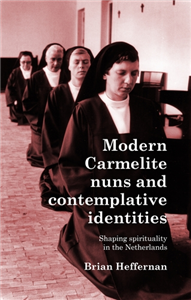
Modern Carmelite nuns and contemplative identities
Shaping spirituality in the Netherlands
by Brian Heffernan
Discalced Carmelite convents are among the most influential wellsprings of female spirituality in the Catholic tradition, as the names of Teresa of Avila, Therese of Lisieux and Edith Stein attest. Behind these 'great Carmelites' stood communities of women who developed discourses on their relationship with God and their identity as a spiritual elite in the church and society. This book looks at these discourses as formulated by Carmelites in the Netherlands, from their arrival there in 1872 up to the recent past, providing an in-depth case study of the spiritualities of modern women contemplatives. The female religious life was a transnational phenomenon, and the book draws on sources and scholarship in English, Dutch, French and German to provide insights on gendered spirituality, memory and the post-conciliar renewal of the religious life.
-
Trusted Partner
Humanities & Social SciencesJune 2025
Bulletin of the John Rylands Library 101/1
by Fred Schurink, Rachel Winchcombe, Huw Twiston Davies
The John Rylands Library houses one of the finest collections of rare books, manuscripts and archives in the world. The collections span five millennia, have a global reach and cover a wide range of subjects, including art and archaeology; economic, social, political, religious and military history; literature, drama and music; science and medicine; theology and philosophy; travel and exploration. For over a century, the Bulletin of the John Rylands Library has published research that complements the Library's special collections. An electronic edition of this issue is freely available under a Creative Commons (CC BY-NC-ND) licence.
-
Trusted Partner
 Humanities & Social SciencesApril 2022
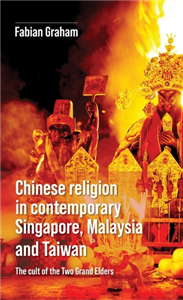
Chinese religion in contemporary Singapore, Malaysia and Taiwan
The cult of the Two Grand Elders
by Fabian Graham
In Singapore and Malaysia, the inversion of Chinese Underworld traditions has meant that Underworld demons are now amongst the most commonly venerated deities in statue form, channelled through their spirit mediums, tang-ki. The Chinese Underworld and its sub-hells are populated by a bureaucracy drawn from the Buddhist, Taoist and vernacular pantheons. Under the watchful eye of Hell's 'enforcers', the lower echelons of demon soldiers impose post-mortal punishments on the souls of the recently deceased for moral transgressions committed during their prior incarnations. Chinese religion in contemporary Singapore, Malaysia and Taiwan offers an ethnography of contemporary Chinese Underworld traditions, where night-time cemetery rituals assist the souls of the dead, exorcised spirits are imprisoned in Guinness bottles, and malicious foetus ghosts are enlisted to strengthen a temple's spirit army. Understanding the religious divergences between Singapore and Malaysia (and their counterparts in Taiwan) through an analysis of socio-political and historical events, Fabian Graham challenges common assumptions about the nature and scope of Chinese vernacular religious beliefs and practices. Graham's innovative approach to alterity allows the reader to listen to first-person dialogues between the author and channelled Underworld deities. Through its alternative methodological and narrative stance, the book intervenes in debates on the interrelation between sociocultural and spiritual worlds, and promotes the destigmatisation of spirit possession and discarnate phenomena in the future study of mystical and religious traditions.
-
Trusted Partner
 Humanities & Social SciencesJuly 2025
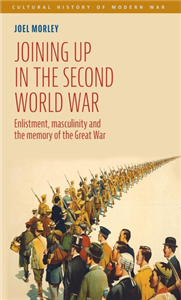
Joining up in the Second World War
Enlistment, masculinity and the memory of the Great War
by Joel Morley
This book connects the First and Second World Wars. It uses oral histories and Mass Observation material to explore men's attitudes to Second World War enlistment and the relationship they perceived between military service and masculinity, and how these were influenced by understandings of the First World War. Locating the cultural legacy of First World War in the subjectivities of men who participated in the Second World War demonstrates the breadth of sources that informed men's understandings of the First World War in interwar Britain. Its cultural legacy was omnipresent and diverse, and informed young men's attitudes and service preferences, but it reinforced Edwardian conceptions of wartime masculinity as often as it undermined them. Two decades after the First World War ended, they remained resilient in the subjective understandings of men who grew up in the Great War's shadow.
-
Trusted Partner
 Literature & Literary StudiesOctober 2025
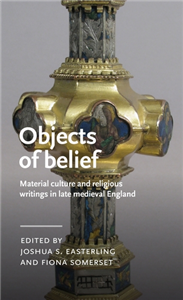
Objects of belief
Material culture and religious writings in late Medieval England
by Joshua Easterling, Fiona Somerset
Objects in late medieval Europe were a means for lay people and clergy to negotiate their access to powers beyond the everyday, in folk practice as well as religious observance. As has been noted by scholars, this period is marked by a profusion of objects granted special importance, imaginary as well as material. These objects prompt reconsideration of cultural and intellectual frameworks, for example of superstition, reform, and heresy, that never quite successfully contain them. Essays in this volume center attention on these things themselves, from puppets to rosaries, as indeed do the written accounts through which they are often mediated. With a focus on England, contributors re-evaluate our understanding of works and authors including Geoffrey Chaucer, Walter Hilton, Nicholas Love, Julian of Norwich, miracles of the Virgin, Edward Hall's Chronicle, the Wycliffite Glossed Gospels, and the Croxton Play of the Sacrament.
-
Trusted Partner
 Literature & Literary StudiesSeptember 2025
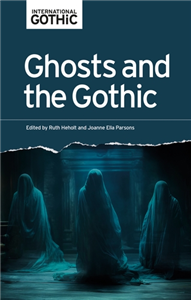
Ghosts and the Gothic
by Ruth Heholt, Joanne Ella Parsons
Ghosts have long been connected with the Gothic, but until now there has not been a book dedicated to the subject. This collection examines ghostly presences (and absences) in both classic and lesser-known Gothic texts from the beginning of the genre to the present in a global context. Arguing that the undead, in the form of ghosts, are intrinsic to the Gothic mode, essays in the collection question the place of manifested spirits. The Gothic has always been 'political', and essays in this collection examine some of the most relevant issues facing us today: from the destruction of the natural environment, to questions of 'freedom', to gender politics.
-
Trusted Partner
 Literature & Literary StudiesFebruary 2021
Spectral Dickens
by Alexander Bove, Anna Barton, Andrew Smith
-
Trusted Partner
 Humanities & Social SciencesMay 2026
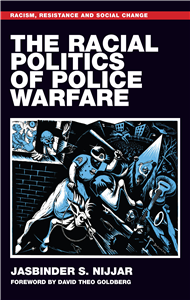
The racial politics of police warfare
by Jasbinder S. Nijjar
Amid renewed anti-racist resistance to violent policing, The racial politics of police warfare unpacks the racisms that rationalise militarised policing in contemporary Britain. Jasbinder S. Nijjar shatters prevailing myths about British police as an impartial public service, by revealing it as an institution where racism and war reinforce one another. In examining flagship anti-gang and counter-terrorism policies and practices, the book offers a unique analysis of the relationship between anti-black and anti-Muslim racisms, to demonstrate how racialised populations are institutionalised as common enemies of modernity. Combining perspectives from sociology, history, criminology and social policy, Nijjar illustrates how British policing defends law and order and national security from the perceived threat of race through hyper-intrusive, pre-emptive and deathly measures. Accordingly, he gives a fresh take on resisting racial police warfare, calling for strategies that are at once political, collective, anti-militaristic and abolitionist.
-
Trusted Partner
 Business, Economics & LawJuly 2025
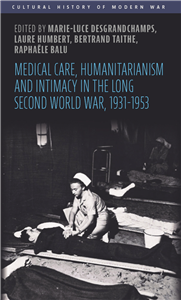
Medical care, humanitarianism and intimacy in the long Second World War, 1931-1953
by Marie-Luce Desgrandchamps, Laure Humbert, Bertrand Taithe, Raphaële Balu
This book offers a micro-global history of humanitarianism and medical care during the 'long' Second World War, which challenges the traditional and Eurocentric chronological boundaries of 1939/1945. It takes as its starting point the Japanese invasion of Manchuria in 1931, which led to the progressive dislocation of the League of Nations, with the Japanese, German and Soviet departures in the 1930s. It ends with the termination of the Korean War in 1953, and the subsequent dismantlement of the first United Coalition and UN Peace enforcement operation. It considers the slow, messy and ambivalent transformation of humanitarian actors' relations to the suffering of distant others through a study of humanitarian encounters, practices, spaces and affects. Paying close attention to a variety of actors, such as French colonial doctors, Swiss ICRC delegates, Egyptian relief workers, Chinese-style physicians, Peruvian and Ecuadorian nurses or American member of the Unitarian Service Committee, the book provides a more holistic story of humanitarianism.

