Your Search Results

      • Editions Stock (subsidiary of Hachette Livre SA)

        Founded in 1708, Stock is one of the oldest publishing houses in France and has been part of the Hachette Group since 1961. In the prestigious series LA BLEUE, Stock publishes the finest multi-award winning writers from Françoise Sagan to Philippe Claudel, and new voices such as Adrien Bosc.  Recently, it has expanded to include high-end women’s literary fiction. Its foreign fiction list (LA COSMOPOLITE series) includes great authors from Carson McCullers to Paolo Cognetti, from many languages.  On the non-fiction side, the list is quite eclectic from philosophy (Louis Althusser) to thought-provoking investigation (Garance Le Caisne), and health with our best-selling author, Michel Cymes.

        View Rights Portal
      • Trusted Partner
      • Trusted Partner
        Humanities & Social Sciences
        January 2021

        Picturing home

        by Hollie Price, Jeffrey Richards

      • Trusted Partner
        Photography & photographs
        June 2011

        The Peeps

        Ancoats: the presence of absence

        by Dan Dubowitz

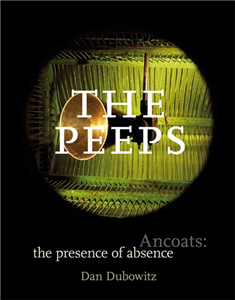
        Ancoats, in Manchester, was once unimaginably different. One of the world's earliest industrial suburbs, it was dark and dense, noisy, frenetic, violent and unhealthy. It was also vibrant and creative. It had a striking vapour, sound and feel. The area today has undergone a striking regeneration. New streets, pavements and civic spaces have been laid down. A series of installations, known as The Peeps, have been created for the area. Built into the fabric of the buildings, the brass peep holes offer a fleeting glimpse of a walled-in space, a tunnel, a disused toilet, a bell tower, a gauge. Dan Dubowitz, given the title of 'cultural masterplanner', records through photographs, interviews, commentary and contemporaneous texts, the recent past and the current regeneration of the suburb. It is a fascinating, beautifully illustrated and designed volume that eloquently depicts the common narrative of industrialisation, slow decay and rebirth.

      • Trusted Partner
        History of Art / Art & Design Styles
        February 2017

        After 1851

        The material and visual cultures of the Crystal Palace at Sydenham

        by Edited by Kate Nichols, Sarah Victoria Turner

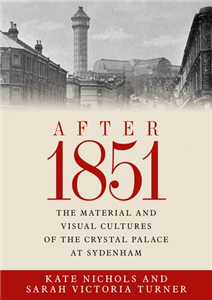
        Echoing Joseph Paxton's question at the close of the Great Exhibition, 'What is to become of the Crystal Palace?', this interdisciplinary essay collection argues that there is considerable potential in studying this unique architectural and art-historical document after 1851, when it was rebuilt in the South London suburb of Sydenham. It brings together research on objects, materials and subjects as diverse as those represented under the glass roof of the Sydenham Palace itself; from the Venus de Milo to Sheffield steel, souvenir 'peep eggs' to war memorials, portrait busts to imperial pageants, tropical plants to cartoons made by artists on the spot, copies of paintings from ancient caves in India to 1950s film. Essays do not simply catalogue and collect this eclectic congregation, but provide new ways for assessing the significance of the Sydenham Crystal Palace for both nineteenth- and twentieth-century studies. The volume will be of particular interest to researchers and students of British cultural history, museum studies, and art history.

      • Trusted Partner
        Modern history to 20th century: c 1700 to c 1900
        May 2017

        Inventing the cave man

        From Darwin to the Flintstones

        by Andrew Horrall. Series edited by Jeffrey Richards

        Fred Flintstone lived in a sunny Stone Age American suburb, but his ancestors were respectable, middle-class Victorians. They were very amused to think that prehistory was an archaic version of their own world because it suggested that British ideals were eternal. In the 1850s, our prehistoric ancestors were portrayed in satirical cartoons, songs, sketches and plays as ape-like, reflecting the threat posed by evolutionary ideas. By the end of the century, recognisably human cave men inhabited a Stone Age version of late-imperial Britain, sending-up its ideals and institutions. Cave men appeared constantly in parades, civic pageants and costume parties. In the early 1900s American cartoonists and early Hollywood stars like Charlie Chaplin and Buster Keaton adopted and reimagined this very British character, cementing it in global popular culture. Cave men are an appealing way to explore and understand Victorian and Edwardian Britain.

      • Trusted Partner
        Humanities & Social Sciences
        May 2017

        Inventing the cave man

        From Darwin to the Flintstones

        by Andrew Horrall, Jeffrey Richards

        Fred Flintstone lived in a sunny Stone Age American suburb, but his ancestors were respectable, middle-class Victorians. They were very amused to think that prehistory was an archaic version of their own world because it suggested that British ideals were eternal. In the 1850s, our prehistoric ancestors were portrayed in satirical cartoons, songs, sketches and plays as ape-like, reflecting the threat posed by evolutionary ideas. By the end of the century, recognisably human cave men inhabited a Stone Age version of late-imperial Britain, sending-up its ideals and institutions. Cave men appeared constantly in parades, civic pageants and costume parties. In the early 1900s American cartoonists and early Hollywood stars like Charlie Chaplin and Buster Keaton adopted and reimagined this very British character, cementing it in global popular culture. Cave men are an appealing way to explore and understand Victorian and Edwardian Britain.

      • Trusted Partner
        Literature & Literary Studies
        July 2003

        Dwelling places

        Postwar Black British Writing

        by James Procter

        Explores some of the key venues of black British literary and cultural production across the postwar period: bedsits and basements; streets and cafes; train stations and tourist landscapes; the suburbs and the city; the north and south. Pursues a 'devolving' landscape in order to consider what an analysis of 'dwelling' might contribute to the travelling theories of diaspora discourse and asks what happens when we 'situate' literatures of movement and migration. Offers fresh readings of work by some of the key literary figures of the postwar years, for example, Salman Rushdie, Hanif Kureishi, Meera Syal, Linton Kwesi Johnson. Contextualises writings alongside photography, painting, and film to consider their relationship to broader shifts in the politics of black representation over the past fifty years. Offers sustained anaysis of many of the texts reproduced in Procter's anthology Writing black Britain 1948-98 ( MUP, 2000) making an ideal companion to the earlier book. ;

      • Trusted Partner
        Humanities & Social Sciences
        June 2023

        Worrier state

        Risk, anxiety and moral panic in South Africa

        by Nicky Falkof

        Risk, anxiety and moral panic are endemic to contemporary societies and media forms. How do these phenomena manifest in a place like South Africa, which features heightened insecurity, deep inequality and accelerated social change? What happens when cultures of fear intersect with pervasive systems of gender, race and class? Worrier state investigates four case studies in which fear and anxiety appear in radically different ways: the far right myth of 'white genocide'; so-called 'Satanist' murders of young women; an urban legend about township crime; and social theories about safety and goodness in the suburbs. Falkof foregrounds the significance of emotion as a socio-political force, emphasising South Africa's imbrication within globalised conditions of anxiety and thus its fundamental and often-ignored hypermodernity. The book offers a bold and creative perspective on the social roles of fear and emotion in South Africa and thus on everyday life in this complex place.

      • Trusted Partner
        Children's & YA
        February 2022

        Nacht aus Rauch und Nebel

        by Mechthild Gläser

        Night of Smoke and Mist (Eisenheim Dilogy, Vol. 2) Welcome back to Eisenheim: A dreamy tale set in a lost cityEisenheim, the mysterious city of dreamers, is threatened by a power that defies understanding; a non-thing that is gathering in huge clouds over the suburbs. Flora is devastated when she learns that her soul has been living a double life at nighttime for quite a while, in a secret town called Eisenheim.Flora has gotten used to her new life: during the day she goes to school, at night her soul wanders to Eisenheim, the shadowy reflection of our world. But danger is always looming: more and more districts of Eisenheim are being destroyed by a sinister force. The deeper Flora delves into the mysteries of this world of dreamers, the more often she wonders if she herself is responsible for all this mess. Could it be that she must ally herself with her worst enemy to prevent the city's downfall?• SERAPH Fantasy Award: Best Debut• Refreshing genre mix of urban fantasy and romantic comedy• Published in 14 languages: Internationally successful author

      • Trusted Partner

        Last Paths to Freedom. French Girl Guides in resistance to Nazi Germany

        by Thomas Seiterich

        Summer 1940. Nazi Germany annexes Alsace, but not without resistance: in the Catholic parish of St. Jean, very close to the Great Synagogue, six French Girl Guides opened an underground border crossing for opponents of the regime, Jews, Communists and the military. They explored and found secret routes across the Vosges to the west, and south to Switzerland. By the time the Gestapo picked them up in 1942, they had brought around 500 people to safety. Freisler tried them in 1943 and sentenced six of them to death by guillotine. Pope Pius XII demanded that the women be spared. And Hitler did indeed pardon them – with the proviso that they were not allowed to know. They all survived.

      Subscribe to our

      newsletter