
February 2012
Your Search Results
-
Promoted Content


-
Promoted Content
 February 2012
Test d'aptitudes pour les études de médecine II
Adaptation francaise de la version originale II
by Herausgegeben von Centre pour le développement de tests et le diagnostic, Université de Fribourg, Suisse, en collaboration avec ITB Consulting
-
 Trusted Partner
 1996
1996Il test attitudinale per lo studio della medicina
Adattamento italiano di una versione originale completa
by Herausgegeben von Centre pour le développement de tests et le diagnostic, Université de Fribourg, Suisse, in Zus.-Arb. mit d. Institut f. Test- u. Begabungsforschung, Bonn, Deutschland
-
Trusted Partner
 1996
1996Le test d'aptitudes pour les études de médecine
Adaptation française de la version originale dans son intégralité
by Herausgegeben von Centre pour le développement de tests et le diagnostic, Université de Fribourg, Suisse, in Zus.-Arb. mit d. Institut f. Test- u. Begabungsforschung, Bonn, Deutschland
-
Trusted Partner

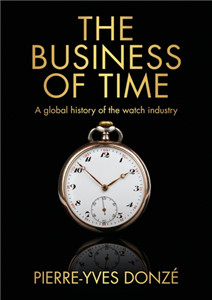 Business, Economics & LawJuly 2024
The business of time
A global history of the watch industry
by Pierre-Yves Donzé
The business of time presents a comprehensive history of the global watch industry from the mid-nineteenth century to the present. Watch production in the twenty-first century is concentrated in three countries: Switzerland, Japan and China. The industry is dominated by a dozen or so large companies, including the Swatch Group, Richemont, LVMH, Seiko and Fossil. But a hundred years ago the picture was dramatically different. Over the course of a century, Great Britain, France, the United States and Russia saw the manufacture of watches disappear from their territory. At the same time, Hong Kong went from being a subcontractor of watch components to an intermediary between Chinese factories and the world market. Revealing the conditions that drove the spread of watch production around the globe, The business of time explains how multinationals emerged to dominate the industry and highlights how Swiss companies were able to establish themselves as the undisputed leader in luxury watches.
-
Trusted Partner
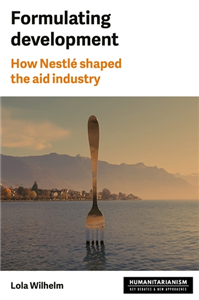 Humanities & Social SciencesJuly 2025
Formulating development
How Nestlé shaped the aid industry
by Lola Wilhelm
In the 1970s, Nestlé became a lightning rod for criticism against the food industry's negative impacts on humans and their environment, especially in the Global South. But what has so far eluded historical scrutiny is that the picture was more nuanced. This book tells the exclusive story of how the Swiss food giant, and more broadly corporate capitalism, have shaped the aid industry since the late nineteenth century. It follows Nestlé's bid for a share of the humanitarian market brokered by the Red Cross in wartime Europe, of its clinical trials in Swiss and Senegalese maternities, and of its agricultural modernisation schemes in Mexico, India, and the Ivory Coast. Based on extensive research in the firm's own historical archives and the records of national and international aid agencies, the volume interrogates the legacies of this long history for international development today.
-
Trusted Partner

 September 1998
Kleine Geschichte der Schweiz
Der Bundesstaat und seine Traditionen
by Manfred Hettling, Martin Schaffner, Mario König, Andreas Suter, Jakob Tanner
Dieser Band will helfen, sich von der Schweiz eine Vorstellung machen zu können. Er soll es einem Schweizer Leser ermöglichen, sich kritisch zu identifizieren und auseinanderzusetzen – mit einer Schweiz, die existiert. Dem Nichtschweizer Leser möge der Band helfen, sich ein Bild der Schweiz zu machen – jenseits der nur zu bekannten Klischees.
-
Trusted Partner
 August 1997
Des Schweizers Schweiz
Aufsätze
by Peter Bichsel
»Ich bin Schweizer. Wenn ich meiner Mutter sage: ›Ich gehe nach Deutschland‹ oder ›Ich gehe nach Frankreich‹ oder ›Ich gehe nach Schweden‹, dann sagt sie: ›Du gehst also ins Ausland.‹ Für die Schweizer gibt es zwei Welten: das Inland und das Ausland.« Neben seinen poetischen Texten hat Peter Bichsel schon immer von der Möglichkeit Gebrauch gemacht, zu schweizerischen Verhältnissen und Themen Stellung zu nehmen. Peter Bichsels 1967 geschrieener Text Des Schweizers Schweiz ist berühmt und von steter Aktualität. Er wurde für diese Taschenbuchausgabe um die Reden und Aufsätze Sitzen als Pflicht, Dem Bestehenden Schwierigkeiten machen, Der Virus Reichtum, Die Armee ist tödlich und die Notizen zur Misere ergänzt. Peter Bichsel liebt den konstruktiven Streit, haßt jeden geistigen und gesellschaftlichen Stillstand. Das Motto des streitbaren Intellektuellen Peter Bichsel, der auch als solcher immer ein Poet bleibt, könnte der Schlußsatz des Titelessays sein: »Eine Demokratie ohne Diskussion wäre museal. Der innere Feind der Schweiz heißt pervertierter Bürgersinn. Die Igelstellung –eingerollt und die Stacheln nach außen – ist zum Sinnbild unserer Unabhängigkeit geworden. Aber auch ein Igel muß sich zur Nahrungsaufnahme entrollen.«
-
Trusted Partner

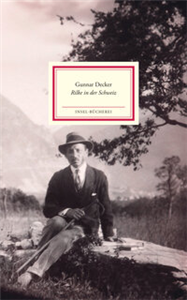 September 2025
Rilke in der Schweiz
Vom spannendsten und unbekanntesten Abschnitt in Rainer Maria Rilkes Leben
by Gunnar Decker
Rilke und die Schweiz – das war keine Liebe auf den ersten Blick. Im Gegenteil, die Alpenrepublik empfand der Dichter als ein »Vorzimmer der Freiheit, in dem man wartete, bis man gerufen wird«, und ihre Bewohner bezeichnete er als »merkwürdige Leute, dicht, hart, undurchdringlich«. Und doch nahm er hier auf Dauer Quartier und lebte sieben Jahre in diesem Refugium bis zu seinem Tod. Wichtiger noch: Hier vollendete er endlich die zehn Jahre zuvor begonnenen Duineser Elegien und schrieb in einem unerhörten Schaffensrausch im Februar 1922 die Sonette an Orpheus, welche beide zu den Höhepunkten seines Werkes zählen. Wie es Rilke gelang, sich der Schweiz doch noch etappenweise anzunähern und dort seine allzu lang verschütteten schöpferischen Energien wiederzuerwecken – das zeichnet der renommierte Rilke-Kenner Gunnar Decker in seinem aufschlussreichen und vergnüglichen biografischen Essay mit großem Einfühlungsvermögen nach.
-
Trusted Partner
 April 1997
Wenn Auschwitz in der Schweiz liegt
Fünf Reden eines Schweizers an seine und keine Nation
by Adolf Muschg
Er fragt, wie die Schweiz sich zu verändern hätte, wenn sie einsehen könnte, daß ihre Distanz zu Auschwitz nicht so groß ist, wie sie meint.
-
Trusted Partner
 March 2001
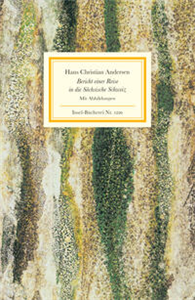
Bericht einer Reise in die Sächsische Schweiz
by Hans Christian Andersen, Ulrich Sonnenberg, Ludwig Richter, C. A. Richter
Hans Christian Andersen (1805 - 1875) war ein reisefreudiger Mann. Im Frühjahr 1831 fuhr er durch Deutschland und hielt seine Eindrücke in einem Reisebuch fest. Es sind die Schönheiten der Gegend um Dresden, die ihn besonders entzückten, es war die freundliche Aufnahme »vortrefflicher Menschen«, die ihm guttat, und es war die geheimnisvolle Melancholie, die über der Sächsischen Schweiz liegt, die seiner Herzensstimmung entgegenkam. Der Reisebericht, der in der ersten deutschen Gesamtausgabe von 1847 erschien, war um zahlreiche politische, religiöse und persönliche Passagen gekürzt worden, Kürzungen, die spätere Ausgaben beibehielten. Hier liegt Andersens Reisebericht erstmals mit dem ungekürzten Text vor: in der vollständigen Fassung in Deutschland ein bislang fast unbekanntes Werk.
-
Trusted Partner
 Humanities & Social SciencesJuly 2002
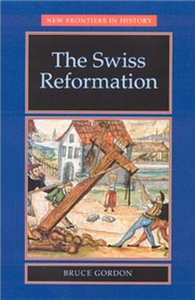
The Swiss Reformation
The Swiss Reformation
by Bruce Gordon, Mark Greengrass
The Swiss Reformation was a seminal event of the sixteenth century which created a Protestant culture whose influence spread across Europe from Transylvania to Scotland. Offers the first comprehensive study of the Swiss Reformation and argues that the movement must be understood in terms of the historical evolution of the Swiss Confederation, its unique and fluid structures, the legacy of the mercenary trade, the distinctive character of Swiss theology, the powerful influence of Renaissance humanism, and, most decisively, the roles played by the dominant figures, Huldrych Zwingli and Heinrich Bullinger. Marked by astounding creative energy, incendiary preaching, burning political passions, peasant revolts, and breath-taking scholarship, as well as by painful divisions, civil war, executions and dashed hopes, the story of the Swiss Reformation is told with extensive use of primary sources. Explores the narrative of events before turning to consider themes such as the radical opposition, church and community, daily life in the Confederation, cultural achievements and the Swiss place in the wider European Reformation world. ;
-
Trusted Partner
-
Trusted Partner
 Business, Economics & LawJune 2022
The business of time
by Pierre-Yves Donzé, Elizabeth Currie, James Ryan, Sally-Anne Huxtable
-
Trusted Partner
-
Trusted Partner
 Health & Personal DevelopmentJanuary 2017
The Memo Training Program
by Regula Everts, Barbara Ritter
Memo is a circus elephant who lives in Switzerland, but because it is too cold for him there, he wants to return to his home country of Botswana. Unfortunately, though, Memo is very forgetful. So it’s a good thing that he has lots of friends among the other circus animals who teach him memory techniques to help him on his adventurous journey. Target Group: parents; teachers; social workers specializing in education; school psychological and medical services; psychiatric services for children; student teachers The memory training program with Memo the elephant is based on neuroscientific principles and has been developed, used, and successfully tested at the University Children’s Hospital in Bern, Switzerland. The program focuses on teaching effective memory strategies and improves the working memory. Its six simple units have been shown to produce sustainable improvement in learning in children from the age of seven. Memo Training is the product of a major research project conducted at the Inselspital in Bern by the neuropsychologists PD Dr. Regula Everts and Dr. Barbara Ritter.
-
Trusted Partner
-
Trusted Partner

 2020
2020Anthroposophic Medicine
Medicinal therapy for 350 disease pictures
by Edited by Dr. Matthias Girke,Dr. Michaela Glöckler and Georg Soldner
100 years after it was founded in Switzerland, anthroposophic medicine is nowadays an approach to treatment that is used worldwide. In this jubilee edition, 39 general practitioners and specialists experienced in anthroposophic therapy describe 350 disease pictures and their medicinal treatment – including Covid-19 – in understandable therapeutic concepts.
-
Trusted Partner
-
Trusted Partner
 January 1995
Schweiz als Heimat?
Versuche über 50 Jahre
by Max Frisch, Walter Obschlager, Walter Obschlager



