
Serpentine Books
Independent publisher of crime, thrillers, sci-fi, mysteries, romantic comedies and mash-ups.
View Rights Portal
Independent publisher of crime, thrillers, sci-fi, mysteries, romantic comedies and mash-ups.
View Rights Portal
Seren Books is proud to be the leading independent publisher of English-language writing from Wales publishing fiction, non-fiction and poetry.
View Rights Portal

Looking at contemporary film and television, this book explores how popular genres frame our understanding of on-screen performance. Previous studies of screen performance have tended to fix upon star actors, directors, or programme makers, or they have concentrated upon particular training and acting styles. Moving outside of these confines, this book provides a truly interdisciplinary account of performance in film and television and examines a much neglected area in our understanding of how popular genres and performance intersect on screen. Each chapter concentrates upon a particular genre or draws upon generic case studies in examining the significance of screen performance. Individual chapters examine contemporary film noir, horror, the biopic, drama-documentary, the western, science fiction, comedy performance in 'spoof news' programmes and the television 'sit com' and popular Bollywood films.

Public issue television is a major contribution to understanding the relationship between television, politics and society. Based on full access to the archives, it offers a fascinating historical account of how one television series, Granada's World in Action, celebrated for its tough journalism, visual directness and public impact, functioned and developed over its run across 35 years between 1963 and 1998. In a succession of chapters looking at different periods in the series' development and at key dimensions of its distinctive identity, it gets deep inside the making of factual television and examines how a particular culture of production works within broader conditions of possibility and constraint. In particular, it charts the interwoven processes of change - technological, professional, aesthetic, institutional, economic, social and political. As well as discussing achievement and success, it examines the tensions, the debates and open conflicts that formed part of the context within which the series was made and transmitted across four decades. ;
 Trusted Partner

In A New Genre for Television?, filmmaker Justin Hardy argues the dramatised history documentaries broadcast by British public service channels in the 2000s constituted a distinct television genre. Offering a vital distinction between docudramas and drama documentaries, Hardy contributes to the field of television history through exclusive interviews with key figures from BBC and Channel 4 - many of whom have never been publicly interviewed before - and envisions a future model for the portrayal of national histories on screen.
Trusted Partner

You're nicked is the first comprehensive study of television police series in the UK. It reveals how British television's most popular genre has developed stylistically, politically and philosophically from 1955 to the present. Each chapter focuses on a particular decade, investigating how the most-watched series represent the inner workings of the police station, the civilian life of criminals and the private lives of police officers. This new approach unearths the complex ideology underpinning each series and discerns the key insights the genre can provide into the breakdown of the post-war settlement. Offering insightful readings of police series from Dixon of Dock Green to Happy Valley via The Sweeney, The Bill and Cracker, the book is a must-read for crime-drama enthusiasts worldwide. This new paperback edition features an extensive epilogue on Line of Duty and other Jed Mercurio creations.
Trusted Partner
Trusted Partner
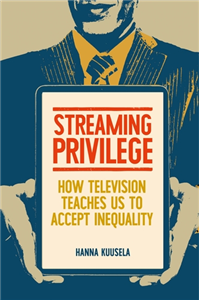
Streaming Privilege examines how today's serial television plays a powerful role in legitimating the 'new Gilded Age' of extreme inequality. Through a sharp cultural analysis, the book reveals popular culture's obsession with wealth and dynastic families - and how it helps to sustain economic divides. Focusing on four major series - Downton Abbey, The Crown, Succession and Yellowstone - the book explores what today's most-watched television dramas reveal about contemporary attitudes toward wealth. At the heart of the book is a concern with the intersection of family, wealth and morality. As dynastic structures once again dominate economy, stories of wealthy families offer a cultural lens through which audiences make sense of economic disparities. The book shows how television does not merely reflect inequality but actively shapes our understandings of it. Streaming Privilege is essential reading for scholars and students in media studies, cultural studies and economic sociology - as well as for general readers interested in how popular culture influences our perceptions of inequality.
Trusted Partner
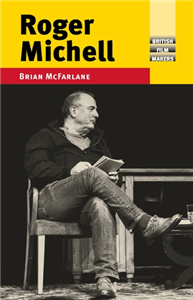
This book offers the first serious critical study of Roger Michell's career as a filmmaker. Best known for Notting Hill, Michell brought a distinctive sensitivity to his work in both the UK and the US, across genres ranging from romantic comedy to historical drama. While Michell had success in theatre and television, the focus here is on his twenty-year career in film and the particular qualities he brought to adaptation and character-driven storytelling. The book explores his handling of relationships and place, from the quiet emotional detail of Persuasion to the observational humour of The Duke, and highlights his ability to subvert narrative conventions through careful attention to mood, tone and performance. McFarlane's study positions Michell as a perceptive and underappreciated figure in contemporary British cinema, whose work continues to reward close viewing.
Trusted Partner

Popular television drama: critical perspectives' is a collection of essays examining landmark programmes of the last forty years, from 'Doctor Who' to 'The Office', and from 'The Demon Headmaster' to 'Queer As Folk'. Contributions from prominent academics focus on the full range of popular genres, from sitcoms to science fiction, gothic horror and children's drama, and challenge received wisdom by reconsidering how British television drama can be analysed. Each section is preceded by an introduction in which the editors discuss how the essays address existing problems in the field and also suggest new directions for study. The book is split into three sections, addressing the enduring appeal of popular genres, the notion of 'quality' in television drama, and analysing a range of programmes past and present. Popular television drama: critical perspectives will be of interest to students and researchers in many academic disciplines that study television drama. Its breadth and focus on popular programmes will also appeal to those interested in the shows themselves.
Trusted Partner

Gothic television is the first full length study of the Gothic released on British and US television. An historical account, the book combines detailed archival research with analyses of key programmes, from Mystery and Imagination and Dark Shadows, to The Woman in White and Twin Peaks, and uncovers an aspect of television drama history which has, until now, remained critically unexplored. While some have seen television as too literal or homely a medium to successfully present Gothic fictions, Gothic television argues that the genre, in its many guises, is, and has always been, well-suited to television as a domestic medium, given the genre's obsessions with haunted houses and troubled families. This book will be of interest to lecturers and students across a number of disciplines including television studies, Gothic studies, and adaptation studies, as well as to the general reader with an interest in the Gothic, and in the history of television drama.
Trusted Partner
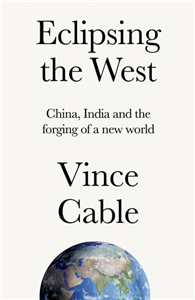
As the international order begins to crumble, this incisive book asks what the rise of the Asian superstates means for the future. The Western-dominated world we have known for the past three hundred years is coming to an end. As America withdraws from its role as enforcer of the international order, other countries are moving in to fill the void. Among them are two rising Asian 'superstates'. Accounting for almost half of the world's population, China and India have the potential to wield enormous economic and political power. China is already vying with the US for the top spot in the global economy, and on some measures has surpassed it. By the middle of the century India may be number two. How will these countries navigate their growing roles on the world stage? What are the implications for commerce, international law and the fight against climate change? Vince Cable has followed China and India for decades, first as a professional economist and later as a senior government minister. In Eclipsing the West he draws on the latest data and a lifetime of political and economic experience to offer a compelling account of what the rise of the Asian superstates means for the future.
Trusted Partner
Trusted Partner

This book examines the links between major contemporary public sector reforms and neoliberal thinking. The key contribution of the book is to enhance our understanding of contemporary neoliberalism as it plays out in the public administration and to provide a critical analysis of generally overlooked aspects of administrative power. The book examines the quest for accountability, credibility and evidence in the public sector. It asks whether this quest may be understood in terms of neoliberal thinking and, if so, how? The book makes the argument that while current administrative reforms are informed by several distinct political rationalities, they evolve above all around a particular form of neoliberalism: constructivist neoliberalism. The book analyses the dangers of the kinds of administrative power seeking to invoke the self-steering capacities of society and administration itself.
Trusted Partner

The first and only book length study of British screenwriter, director and producer Sally Wainwright. Authors Gorton and Johnson brings together Wainwright's key television series and television films with theoretical work on the concept of emotion and feminist television criticism, exploring Wainwright's contributions to British television through the heroic female characters she creates. The book covers a wide range of theoretical work on melodrama, genre and emotion to explore Wainwright's televisual texts, offering analysis of globally recognised television series such as Happy Valley, Last Tango in Halifax, and Gentleman Jack.
Trusted Partner
Trusted Partner

This book examines the television serials created by influential showrunner David Simon. The book argues that Simon's main theme is the state of the contemporary American city and that all of his serials (barring one about the Iraq War) explore different facets of the metropolis. Each series offers distinctly different visions of the American city, but taken together they represent a sustained and intricate exploration of urban problems in modern America. From deindustrialisation in The Wire and residential segregation in Show Me a Hero to post-Katrina New Orleans in Treme and the transformation of the urban core in The Deuce, David Simon's American city traces the urban through-line in Simon's body of work. Based on sustained analysis of these serials and their engagement with contemporary politics and culture, David Simon's American city offers a compelling examination of one of television's most arresting voices.
Trusted Partner

Throughout the 1990s, Médecins Sans Frontières (MSF) was forced to face the challenges posed by the genocide of Rwandan Tutsis and a succession of outbreaks of political violence in Rwanda and its neighbouring countries. Humanitarian workers were confronted with the execution of almost one million people, tens of thousands of casualties pouring into health centres, the flight of millions of people who had sought refuge in camps and a series of deadly epidemics. Drawing on various hitherto unpublished private and public archives, this book recounts the experiences of the MSF teams working in the field. It is intended for humanitarian aid practitioners, students, journalists and researchers with an interest in genocide and humanitarian studies and the political sociology of international organisations.
Trusted Partner

Mary Shelley's Frankenstein is one of the most popular novels in western literature. It has been adapted and re-assembled in countless forms, from Hammer Horror films to young-adult books and bandes dessinées. Beginning with the idea of the 'Frankenstein Complex', this edited collection provides a series of creative readings that explore the elaborate intertextual networks that make up the novel's remarkable afterlife. It broadens the scope of research on Frankenstein while deepening our understanding of a text that, 200 years after its original publication, continues to intrigue and terrify us in new and unexpected ways.
Trusted Partner

This volume in the Critical Theory and Contemporary Society series explores the arguments between critical theory and epistemology in the twentieth and twenty-first centuries. Focusing on the first and second generations of critical theorists and Luhmann's systems theory, the book examines how each approaches epistemology. It opens by looking at twentieth-century epistemology, particularly the concept of lifeworld (Lebenswelt). It then moves on to discuss structuralism, poststructuralism, critical realism, the epistemological problematics of Foucault's writings and the dialectics of systems theory. This unique work takes a comparative look at structuralism and post-structuralism's epistemological theory with special reference to scientific reason. It also investigates Luhmann's works in epistemology. The aim is to explore whether the focal point for epistemology and the sciences remain that social and political interests actually form a concrete point of concern for the sciences as well.
Trusted Partner
Trusted Partner



