Textofilia Ediciones
Literary publisher. It has received several awards. It has the stamp Libros del Marqués, dedicated to social relevant topics of this time.
View Rights Portal
Literary publisher. It has received several awards. It has the stamp Libros del Marqués, dedicated to social relevant topics of this time.
View Rights Portal Trusted Partner


This volume questions and qualifies commonly accepted assumptions about the early modern English sonnet: that it was a strictly codified form, most often organised in sequences, which only emerged at the very end of the sixteenth century and declined as fast as it had bloomed, and that minor poets merely participated in the sonnet fashion by replicating established conventions. Drawing from book history and relying on close reading and textual criticism, this collection offers a more nuanced account of the history of the sonnet. It discusses how sonnets were written, published and received in England as compared to mainland Europe, and explores the works of major (Shakespeare, Sidney, Spenser) and minor (Barnes, Harvey) poets alike. Reflecting on current editorial practices, it also provides the first modern edition of an early seventeenth-century Elizabethan miscellany including sonnets presumably by Sidney and Spenser.
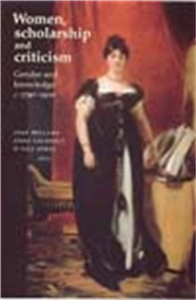
Brings together the varied artistic, critical and cultural productions by women scholars, critics and artists between 1790-1900, many of whom are little known in the canonical histories of the period. Questions the concepts of 'scholarship', 'criticism' and 'artist' across the different disciplines. Women discussed include authors (Mary Wollstonecraft Shelley, Sydney Morgan and Anna Jameson) actresses ( Elizabeth Siddons, Dorothy Jordan, and Mary Robinson) critics ( Margaret Oliphant and Mary Cowden Clarke) historians (Agnes Strickland, Lucy Aikin, Mary Anne Everett Green, Elizabeth Cooper and Lucy Toulmin Smith) as well as the writers and readers of Women's magazines, educationalists and translators. Makes a significant and original contribution to the development of gender studies by extending the frontiers of existing knowledge and research. ;
Trusted Partner
The book addresses what is political in critical theory and which aspects, arguments or notions of critical theory maintain political significance for the 20th and the 21st centuries. The collection of essays comprises itself of a series of clear and critical perspectives that analyze the extent to which critical theory relates political argument to modern societies and, thereby, exerts a critique of the multiple social and political phenomena of late modernity. The contributors focus on a multiplicity of universal phenomena such as globalization, multiple crises, late capitalism and the social role of the sciences, and posit some novel criticism of the contemporary social sphere, as it is situated within the wider system of global capitalism. They also present a plurivalent critique that links arguments in Marxism and Freud to all three generations of critical theory.
Trusted Partner

Populism is a powerful force today, but its full scope has eluded the analytical tools of both orthodox and heterodox 'populism studies'. This book provides a valuable alternative perspective. It reconstructs in detail for the first time the sociological analyses of US demagogues by members of the Frankfurt School and compares these with contemporary approaches. Modern demagogy emerges as a key under-researched feature of populism, since populist movements, whether 'left' or 'right', are highly susceptible to 'demagogic capture'. The book also details the culture industry's populist contradictions - including its role as an incubator of modern demagogues - from the 1930s through to today's social media and 'Trumpian psychotechnics'. Featuring a previously unpublished text by Adorno on modern demagogy as an appendix, it will be of interest to researchers and students in critical theory, sociology, politics, German studies, philosophy and history of ideas, as well as all those concerned about the rise of demagogic populism today.
Trusted Partner

This book offers a unique and timely reading of the early Frankfurt School in response to the recent 'affective turn' within the arts and humanities. Resisting the overly rationalist tendencies of political philosophy, it argues that critical theory actively cultivates a powerful connection between thinking and feeling, and rediscovers a range of often neglected concepts that were of vital importance to the first generation of critical theorists, including melancholia, hope, (un)happiness, objects and mimesis. In doing so, it brings the dynamic work of Walter Benjamin, Theodor Adorno, Ernst Bloch and Siegfried Kracauer into conversation with more recent debates around politics and affect. An important intervention in the fields of affect studies and social and political thought, Critical theory and feeling shows that sensuous experience is at the heart of the Frankfurt School's affective politics.
Trusted Partner


Make or break? Advertisements repeatedly praise „plant-based“ products or promise new mobility through ointments and dietary supplements. The tools of evidence-based pharmacy help to answer the question „Does this really help?“ This practical guide offers tips and explanations on how to be confident of finding the relevant scientific literature, critically evaluate clinical studies, and interpret therapeutic results. The book provides guidance on how to classify the quality of reviews and meta-analyses and assess the reliability of guidelines in everyday healthcare practice. Practical examples help to avoid pitfalls in evaluation and to understand the statistical details. An extensive appendix with technical terms, checklists, important institutions of evidence-based medicine and further sources completes the book.
Trusted Partner
 Trusted Partner
Critical theory and Independent Living explores intersections between contemporary critical theory and disabled people's struggle for self-determination. The book highlights the affinities between the Independent Living movement and studies of epistemic injustice, biopower, and psychopower. It discusses in depth the activists' critical engagement with welfare-state paternalism, neoliberal marketisation, and familialism. This helps develop a pioneering comparison between various welfare regimes grounded in Independent Living advocacy. The book draws on the activism of disabled people from the European Network on Independent Living (ENIL) by developing case studies of the ENIL's campaigning for deinstitutionalisation and personal assistance. It is argued that this work helps rethink independence as a form of interdependence, and that this reframing is pivotal for critical theorising in the twenty-first century.
Trusted Partner
Innovatively extending counterfactual thought experiments from history and the social sciences to literary historiography, criticism and theory, Counterfactual Romanticism reveals the ways in which the shapes of Romanticism are conditioned by that which did not come to pass. Exploring various modalities of counterfactual speculation and inquiry across a range of Romantic-period authors, genres and concerns, this collection offers a radical new purchase on literary history, on the relationship between history and fiction, and on our historicist methods to date - and thus on the Romanticisms we (think we) have inherited. Counterfactual Romanticism provides a ground-breaking method of re-reading literary pasts and our own reading presents; in the process, literary production, texts and reading practices are unfossilised and defamiliarised.
Trusted Partner

In the wake of 9/11, the Asian crisis and the 2004 tsunami, traditional analytical frameworks are increasingly unable to explain how individuals and communities are rendered insecure, or advance individual, global or environmental security. In the Asia-Pacific, the accepted wisdom of realism has meant that analyses rarely move beyond the statist, militarist and exclusionary assumptions that underpin traditional realpolitik. This innovative new book challenges these limitations and addresses the missing problems, people and vulnerabilities of the Asia-Pacific region. It also turns a critical eye on traditional interstate strategic dynamics. Critical security in the Asia-Pacific applies both a critical theoretical approach that interrogates the deeper assumptions underpinning security discourses, and a human-centred policy approach that focuses on the security, welfare and emancipation of individuals and communities. Leading Asia-Pacific researchers combine to apply these frameworks to the most pressing issues in the region, from the Korean peninsula to environmental change, Indonesian conflict, the 'war on terror' and the plight of refugees. The result is a sophisticated and accessible account of often-neglected realities of marginalization in the region, and a compelling argument for the empowerment and security of the most vulnerable.
Trusted Partner

Critical Games is about the games we play (whether we know it or not), the ways we play them (for fun, but also to win, and to gain approval from others), and what happens when they get out of hand. The book interrogates the theory of play and gaming, with a particular focus on the games played by literary authors and literary critics. Drawing on (often self-critical) autobiography, as well as readings in texts across a range of languages, Tim Beasley-Murray plays with academic conventions to highlight what is at stake in them, turning to the Game of Literature, from Kafka to Carrère, to seek models and warnings of the outcomes of taking games too seriously, or not taking them seriously enough.
Trusted Partner

Populism is a powerful force today, but its full scope has eluded the analytical tools of both orthodox and heterodox 'populism studies'. This book provides a valuable alternative perspective. It reconstructs in detail for the first time the sociological analyses of US demagogues by members of the Frankfurt School and compares these with contemporary approaches. Modern demagogy emerges as a key under-researched feature of populism, since populist movements, whether 'left' or 'right', are highly susceptible to 'demagogic capture'. The book also details the culture industry's populist contradictions - including its role as an incubator of modern demagogues - from the 1930s through to today's social media and 'Trumpian psychotechnics'. Featuring a previously unpublished text by Adorno on modern demagogy as an appendix, it will be of interest to everyone concerned about the rise of demagogic populism today.
Trusted Partner

Critical theory and dystopia offers a uniquely rich study of dystopian fiction, drawing on the insights of critical theory. Asking what ideological work these dark imaginings perform, the book reconstructs the historical emergence, consolidation and transformation of the genre across the twentieth century and into our own, ranging from Yevgeny Zamayatin's We (1924) and Aldous Huxley's Brave New World (1932) to Anthony Burgess's A Clockwork Orange (1963) and Suzanne Collins's Hunger Games series (2000s and 2010s). In doing so, it reveals the political logics opened up or neutered by the successive moments of this dystopian history.
Trusted Partner
 Trusted Partner

With its fantasy of magical travel and inexhaustible riches, Thomas Dekker's Old Fortunatus is the quintessential early modern journeying play. The adventures of Fortunatus and his sons, aided by a magical purse and wishing-hat, offers the period's most overt celebration of the pleasures of travel, as well as a sustained critique of the dangers of intemperance and prodigality. Written following a period of financial difficulty for Dekker, the play is also notable for its fascination with the symbolic, mercantile and ethical uses of gold. This Revels Plays edition is the first fully annotated, single-volume critical edition of Old Fortunatus. It offers scholarly discussion of the play's performance and textual history, including attention to the German version printed and performed in the early seventeenth century. It provides a long overdue critical reappraisal of this unjustly neglected play.
Trusted Partner
Trusted Partner
 Trusted Partner
Trusted Partner
Trusted Partner
Trusted Partner
Trusted Partner