
Your Search Results
-

-

Agriculture & International Development
Textbooks, research and professional titles in Agriculture and International Development
View Rights Portal
-
Promoted Content

 Humanities & Social SciencesJune 2021
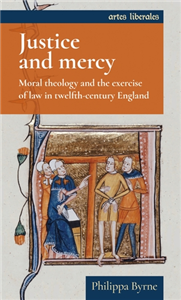
Justice and mercy
Moral theology and the exercise of law in twelfth-century England
by Philippa Byrne
This book examines one of the most fundamental issues in twelfth-century English politics: justice. It demonstrates that during the foundational period for the common law, the question of judgement and judicial ethics was a topic of heated debate - a common problem with multiple different answers. How to be a judge, and how to judge well, was a concern shared by humble and high, keeping both kings and parish priests awake at night. Using theological texts, sermons, legal treatises and letter collections, the book explores how moralists attempted to provide guidance for uncertain judges. It argues that mercy was always the most difficult challenge for a judge, fitting uncomfortably within the law and of disputed value. Shining a new light on English legal history, Justice and mercy reveals the moral dilemmas created by the establishment of the common law.
-
Promoted Content
 Humanities & Social SciencesJune 2025
Diaspora diplomacy
The politics of Turkish emigration to Europe
by Ayca Arkilic
Since the early 2000s, Turkey has shown an unprecedented interest in its diaspora. This book provides the first in-depth examination of the institutionalisation of Turkey's diaspora engagement policy since the Justice and Development Party's rise to power in 2002, the Turkish diaspora's new role as an agent of diplomatic goals, and how Turkey's growing sphere of influence affects intra-diaspora politics and diplomatic relations with Europe. The book is based on fieldwork in Turkey, France and Germany, and interviews conducted with diaspora organisation leaders and policymakers. Diasporas have become transformative for relations at the state-to-state level and blur the division between the domestic and the foreign. A case study of Turkey's diasporas is significant at a time when emigrants from Turkey form the largest Muslim community in Europe and when issues of diplomacy, migration and citizenship have become more salient than ever.
-
 Trusted Partner
 Humanities & Social SciencesDecember 2023
Transitional justice in process
Plans and politics in Tunisia
by Mariam Salehi
After the fall of the Ben Ali regime in 2011, Tunisia swiftly began dealing with its authoritarian past and initiated a comprehensive transitional justice process, with the Truth and Dignity Commission as its central institution. However, instead of bringing about peace and justice, transitional justice soon became an arena of contention. Through a process lens, the book explores why and how the process evolved, and explains how it relates to the country's political transition. Based on extensive field research in Tunisia and the US, and interviews with a broad range of international stakeholders and decision-makers, this is the first book to comprehensively study the Tunisian transitional justice process. It provides an in-depth analysis of a crucial period, examining the role of justice professionals in different stages, as well as the alliances and frictions between different actor groups that cut across the often-assumed local-international divide.
-
Trusted Partner
 Humanities & Social SciencesNovember 2018
Justice and mercy
by Philippa Byrne, T. J. H. McCarthy, Carrie Beneš, Stephen Mossman, Jochen Schenk
-
Trusted Partner
 Humanities & Social SciencesMarch 2026
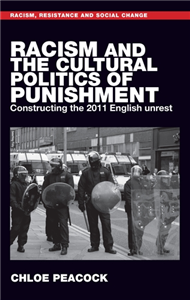
Justifying (in)justice
Discourses of crime and punishment in the wake of the 2011 English riots
by Chloe Peacock
Justifying (in)justice reveals how processes of ignorance are vital to legitimising punitive and discriminatory criminal justice policy and practices. Focusing on the state's startlingly harsh response to the English 'riots' of 2011, the book draws together unique insights from interviews with prosecutors, sentencers, defence lawyers and policymakers at the heart of the response, alongside analysis of media and political debates. Peacock explores the forms of unknowing that were mobilised to justify and normalise the harsh and inequitable punishment of the 'rioters', from amnesia about police racism and Britain's long history of unrest, to widespread denial about the violence of the prison system. Looking to recent events in Britain and beyond, the book offers timely insight into the cultural processes underpinning the punitive systems that disproportionately harm marginalised and racially minoritised communities.
-
Trusted Partner
 Humanities & Social SciencesJune 2026
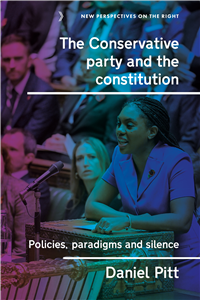
The Conservative Party and the Constitution
by Daniel Pitt
The Conservative Party and the Constitution examines the profound influence on Britain's constitutional framework over nearly two centuries. Through rigorous analysis, it traces how Tory leaders navigated parliamentary reform, devolution, and Brexit, balancing tradition with pragmatic adaptation. Drawing on exclusive interviews, archival records, and historical sources, the book reveals the Party's statecraft and offers fresh insights into the Conservatives' role in shaping modern governance. Essential for historians, political scientists, and those engaged with British politics, this study illuminates the dynamic interplay of power, ideology, and constitutional change, making it a vital contribution to understanding Britain's constitutional history.
-
Trusted Partner
 Humanities & Social SciencesOctober 2023
Towards a just Europe
A theory of distributive justice for the European Union
by João Labareda
This highly original book constitutes one of the first attempts to examine the problem of distributive justice in the European Union in a systematic manner. João Labareda argues that the set of shared political institutions at EU level, including the European Parliament and the Court of Justice of the EU, generate democratic duties of redistribution among EU citizens. Furthermore, the economic structure of the EU, comprising a common market, a common currency and a free-movement area, triggers duties of reciprocity among member states. The responsibilities to fulfil these duties, Labareda argues, should be shared by the local, national and supranational levels of government. Not only should the EU act as a safety net to the national welfare systems, applying the principle of subsidiarity, but common market and Eurozone regulations should balance their efficiency targets with fair cooperation terms. The concrete policy proposals presented in this book include a threshold of basic goods for all EU citizens, an EU labour code, a minimum EU corporate tax rate and an EU fund for competitiveness. Labarada argues that his proposals match the political culture of the member states, are economically feasible, can be translated into functioning institutions and policies and are consistent with the limited degree of social solidarity in Europe. This book is a major contribution to the understanding of what a just Europe would look like and what it might take to get us there. This book is relevant to United Nations Sustainable Development Goal 10, Reduced inequalities
-
Trusted Partner
Geography & the EnvironmentJune 2025
Urban gardening and the struggle for social and spatial justice
by Chiara Certomà, Susan Noori, Martin Sondermann
-
Trusted Partner
 Humanities & Social SciencesMay 2022
Diaspora diplomacy
by Ayca Arkilic, J. Simon Rofe, Giles Scott-Smith
-
Trusted Partner
 Humanities & Social SciencesApril 2012
The Labour party and citizenship education
Policy networks and the introduction of citizenship lessons in schools
by Ben Kisby
The Labour Party and citizenship education provides the definitive account of why and how Labour introduced citizenship education as a compulsory subject in the National Curriculum. Based on interviews with the key players, it contributes to our understanding of the role of ideas and policy networks in the policy process, to debates about the nature of New Labour as a political phenomenon, and addresses the significant and topical issues of political disaffection and community cohesion. This book is essential reading for academics and students of political science, public and social policy, education, contemporary history, and political theory. Written in an accessible style, it will also be of interest to the general reader concerned about issues of citizenship, political participation, disengagement and re-engagement. ;
-
Trusted Partner
 Humanities & Social SciencesJuly 2026
Citizens gone
How emigration transforms the European state
by Christof Roos, Anna Kyriazi
Emigration of scale challenges states at the European periphery at their core. The book documents these struggles along their effects for politics and policy within their economic and welfare dimensions. The politics of emigration describe changing voter attitudes and behaviour pointing towards more support for nationalist and right-wing parties. The policies of emigration show state and local level efforts for the return of emigrant citizens. The welfare and economic dimensions explore the context for emigration and its effects for growth models and systems of health and care within the European single market. The book observes two types of state transformations: the re-emergent nation-state that re-discovers its core resource, the citizenry, as well as states that functionally and socially adapt to population loss.
-
Trusted Partner
Business, Economics & LawJune 2024
The labour movement in Lebanon
Power on hold
by Lea Bou Khater
The labour movement in Lebanon: Power on hold narrates the history of the Lebanese labour movement from the early twentieth century to today. Bou Khater demonstrates that trade unionism in the country has largely been a failure, for reasons including state interference, tactical co-optation, and the strategic use of sectarianism by an oligarchic elite, together with the structural weakness of a service-based laissez-faire economy. Drawing on a vast body of Arabic-language primary sources and difficult-to-access archives, the book's conclusions are significant not only for trade unionism, but also for new forms of workers' organisations and social movements in Lebanon and beyond. The Lebanese case study presented here holds significant implications for the wider Arab world and for comparative studies of labour. This authoritative history of the labour movement in Lebanon is vital reading for scholars of trade unionism, Lebanese politics, and political economy.
-
Trusted Partner
 Humanities & Social SciencesFebruary 2022
Transitional justice in process
by Mariam Salehi, Simon Mabon
-
Trusted Partner
 Literature & Literary StudiesJanuary 2014
Court and civic society in the Burgundian Low Countries c.1420–1530
by Andrew Brown, Graeme Small
This volume is the first ever attempt to unite and translate some of the key texts which informed Johan Huizinga's famous study of the Burgundian court, The Waning of the Middle Ages, a work which has never gone out of print. It combines these texts with sources that Huizinga did not consider, those that illuminate the wider civic world that the Burgundian court inhabited and the dynamic interaction between court and city. Through these sources, and an introduction offering new perspectives on recent historiography, the book tests whether Huizinga's controversial vision of the period still stands. Covering subjects including ceremonial events, such as the spectacles and gargantuan banquets that made the Burgundian dukes the talk of Europe, the workings of the court, and jousting, archery and rhetoric competitions, the book will appeal to students of late medieval and early modern Europe and to those with wider interests in court culture, ritual and ceremony.
-
Trusted Partner
 Humanities & Social SciencesJanuary 2013
Crime, Law and Society in the Later Middle Ages
by Anthony Musson, Edward Powell
This book provides an accessible collection of translated legal sources through which the exploits of criminals and developments in the English criminal justice system (c.1215-1485) can be studied. Drawing on the wealth of archival material and an array of contemporary literary texts, it guides readers towards an understanding of prevailing notions of law and justice and expectations of the law and legal institutions. Tensions are shown emerging between theoretical ideals of justice and the practical realities of administering the law during an era profoundly affected by periodic bouts of war, political in-fighting, social dislocation and economic disaster. Introductions and notes provide both the specific and wider legal, social and political contexts in addition to offering an overview of the existing secondary literature and historiographical trends. This collection affords a valuable insight into the character of medieval governance as well as revealing the complex nexus of interests, attitudes and relationships prevailing in society during the later Middle Ages.
-
Trusted Partner
-
Trusted Partner
 Humanities & Social SciencesAugust 2024
Ireland and the Renaissance court
by David Edwards, Brendan Kane
Ireland and the Renaissance court is an interdisciplinary collection of essays exploring Irish and English courts, courtiers and politics in the early modern period, c. 1450-1650. Chapters are contributed by both established and emergent scholars working in the fields of history, literary studies, and philology. They focus on Gaelic cúirteanna, the indigenous centres of aristocratic life throughout the medieval period; on the regnal court of the emergent British empire based in London at Whitehall; and on Irish participation in the wider world of European elite life and letters. Collectively, they expand the chronological limits of 'early modern' Ireland to include the fifteenth century and recreate its multi-lingual character through exploration of its English, Irish and Latin archives. This volume is an innovative effort at moving beyond binary approaches to English-Irish history by demonstrating points of contact as well as contention.
-
Trusted Partner
 Humanities & Social SciencesFebruary 2026
New Labour, new Britain
How the Blair governments reshaped the country
by Glen O’Hara
A bold and balanced re-appraisal of New Labour in power. Rewriting the story of New Labour, Glen O'Hara challenges the prevailing narrative to present a more balanced and positive assessment. New Labour, new Britain is the first book to examine both the intentions behind New Labour's domestic policies and their real-world effects, moving beyond the entrenched left-right debates that have dominated the party's legacy. The period from 1997 to 2007 marked a pivotal moment in modern British history, as New Labour sought to reshape Britain into a more cohesive and forward-thinking society. It saw the rise of socially liberal attitudes and flourishing public services under a government committed to rebuilding and investing in them. Yet New Labour's track record was far from flawless and its legacy remains complicated and contested. Through interviews with key players and rigorous archival research, O'Hara offers a new perspective on Tony Blair's years in power. Painting a fuller picture of New Labour's successes and challenges, he highlights its lasting impact on Britain and offers a thoughtful reassessment of its place in history.
-
Trusted Partner
 Humanities & Social SciencesApril 2007
Labour, the state, social movements and the challenge of neo-liberal globalisation
by Andrew Gamble, Steven Fielding, Steve Ludlam, John Callaghan, Andrew Taylor, Steve Ludlam, Stephen Wood
With the emergence of neo-liberalism in the 1980s as the dominant domestic and international political-economic orthodoxy, labour as both a social category and political movement tended to be written off or ignored by academics, politicians and commentators. However, at a time when the world's working class is growing faster than at any previous time in history and neo-liberalism is widely challenged, this orthodoxy is clearly inadequate. The spread of global production means that to ignore labour, its organisations, interests and politics, is to ignore one of the key components of that process. Labour organisations have not gone away and neither has the state: their relationship remains as significant as ever. The strategic relationship between trade unions and social movements, nationally and internationally, has also developed markedly, especially in the south. New patterns of resistance are emerging to challenge global capital and those who assert that globalisation is irresistible. ;
-
Trusted Partner
Humanities & Social SciencesOctober 2023
The illusion of the Burgundian state
by Élodie Lecuppre-Desjardin, Christopher Fletcher
On 25 January 1474, Charles the Bold, duke of Burgundy, appeared before his subjects in Dijon. Robed in silk, gold and precious jewels and wearing a headpiece that gave the illusion of a crown, he made a speech in which he cryptically expressed his desire to become a king. Three years later, Charles was killed at the battle of Nancy, an event that plunged the Great Principality of Burgundy into chaos. This book, innovative and essential, not only explores Burgundian history and historiography but offers a complete synthesis about the nature of politics in this region, considered both from the north and the south. Focusing on political ideologies, a number of important issues are raised relating to the medieval state, the signification of the nation under the 'Ancien Regime', the role of warfare in the creation of political power and the impact of political loyalties in the exercise of government. In doing so, the book challenges a number of existing ideas about the Burgundian state.

