Roar Publishing Inc.
Welcome to Roar, sharing stories of the human spirit for 25 years. We believe storytelling connects generations, cultures, and hearts, reminding us of our shared humanity
View Rights Portal
Welcome to Roar, sharing stories of the human spirit for 25 years. We believe storytelling connects generations, cultures, and hearts, reminding us of our shared humanity
View Rights Portal

This is the first book-length study of the most prolific and most critically acclaimed director working in British cinema today. Michael Winterbottom has also established himself, and his company, Revolution Films, as a dynamic force in world cinema. No other British director can claim such an impressive body of work in such a variety of genres, from road movie to literary adaptation, from musical to sex film, to stories of contemporary political significance. The authors of this book use a range of critical approaches to analyse the filmmaker's eclectic interests in cinema and the world at large. With this in mind, the realist elements of such films as Welcome to Sarajevo are examined in the light of a long history of cinema's dealings with realism, as far back as post-war Italian neo-realist filmmaking; whereas Jude and The claim are approached as both literary adaptations (a continuing strand in British cinema history) and examples of other reworked genres (the road movie, the western). This lively study of his work, written in a wholly accessible style, will engage all those who have followed his career as well as those with a wide-ranging interest in British cinema.


Wieso fährt ein Mensch mit der eigenen Muskelkraft Berge hinauf – auch mit mäßigen Erfolgsaussichten und unter allergrößten Qualen? Und wieso setzt er sich am nächsten Tag aufs Rad und beginnt von vorn? Was ist das Geheimnis dieses Sports, der das größte Opfer und das größte Glück vereint? Rick Zabel kennt die Antwort. Als Sohn eines erfolgreichen Sprinters wurde er selbst Profi, fuhr alle großen Rennen – mit deutlich weniger Siegen, aber mit derselben Hingabe und Leidenschaft. Das Gefühl, sich für den Teamerfolg zu schinden, hat ihn in den letzten Jahren ebenso begleitet wie das tiefe Glück, fürs Radfahren bezahlt zu werden. Rick Zabel hat die Schattenseiten des Rennradfahrens kennengelernt – Druck, Konkurrenzkampf und körperliche Grenzerfahrungen –, und die Sonnenseiten: ›On the road‹ hat er einige der schönsten Orte der Welt gesehen, hat ganz allein die höchsten Pässe Europas bezwungen, auf der Abfahrt den kühlen Wind und die spektakuläre Aussicht genossen. Davon schreibt er klug, eindringlich und lustvoll – und so, dass man selbst sofort in die Pedale treten möchte.
 Trusted Partner
Trusted Partner
Trusted Partner
Trusted Partner
Trusted Partner
Trusted Partner
Trusted Partner
Trusted Partner
Trusted Partner


Ein klassischer Leonard: lakonisch, schnell, voll herrlicher Dialoge und überraschend bis zur letzten Seite. Große Unterhaltung mit Soul. Jack Foley ist Bankräuber aus Überzeugung und eine coole Sau. Cundo Rey ist ein schwerreicher kubanischer Gangster. Sie freunden sich im Knast an, und Cundo besorgt Foley eine supersmarte Anwältin, die es schafft, aus dreißig Jahren Haft dreißig Monate zu machen. Währenddessen sitzt Dawn Navarro, Cundos attraktive Frau, in einer Villa in Venice Beach und wartet auf die Chance, ihren Gatten um sein Geld zu erleichtern. Dazu würde sie Foley gern auf ihre Seite ziehen. Der muß sich überlegen, wem er trauen kann – und welche Ziele er eigentlich selbst verfolgt …
Trusted Partner
Trusted Partner

Beginning in the 1930s and moving into the post millennium, this book provides a historical analysis of the policies and practices established by the BBC as it attempted to assist white Britons in adjusting to the presence of African-Caribbeans. Among the themes the book explores are current representations of race, the future of British television and its impact on multi-ethnic audiences. The chapters include an extensive analysis of television programming, along with personal interviews that reveal the efforts of black Britons working for the BBC, whether as writers, producers or actors.
Trusted Partner
Trusted Partner

This book examines the two main dimensions of the European Union's enlargement to eight central and eastern European countries (CEECs) in 2004. Why did the EU agree to enlargement, despite the costs for some incumbents who have veto-power? How can we explain the (uneven) pattern of accommodation of the CEECs' preferences in concrete policies? Combining in-depth empirical analysis with an original theoretical framework, which draws on insights from constructivism and historical institutionalism, this book focuses on the EU's discursively constructed role-identity vis-à-vis the CEECs. This role-identity forged a group of policy advocates inside the European Commission, who promoted the CEECs' preferences inside the EU, and induced a path-dependence into the enlargement process. The impact of EU identity on concrete policies was less direct. Case studies on trade liberalisation, regulatory alignment, and foreign policy consultations demonstrate that sectoral policy paradigms are a key factor that mediates the influence of the policy advocates on specific policy areas. ;
Trusted Partner
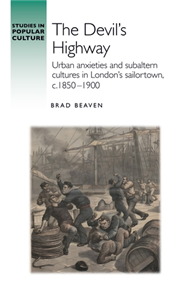
Between 1850 and 1900, Ratcliffe Highway was the pulse of maritime London. Sailors from every corner of the globe found solace, and sometimes trouble, in this bustling district. However, for social investigators, it was a place of fascination and fear as it harboured chaotic and dangerous 'exotic' communities. Sailortowns were transient, cosmopolitan and working class in character and provide us with an insight into class, race and gendered relations. They were contact zones of heightened interaction where multi-ethnic subaltern cultures met, sometimes negotiated and at other times clashed with one another. The book argues that despite these challenges sailortown was a distinctive and functional working-class community that was self-regulating and self-moderating. The book uncovers a robust sailortown community in which an urban-maritime culture shaped a sense of themselves and the traditions and conventions that governed subaltern behaviour in the district.


In The Path of the Law, Holmes discusses his personal philosophy on legal practice. The Common Law is a series of lectures that established Holmes's reputation as a witty and articulate writer.
Trusted Partner
Trusted Partner
Trusted Partner
Trusted Partner
Trusted Partner
Trusted Partner
Trusted Partner