Your Search Results
-

-

Sarigaga Books
Sarıgaga Books is an independent small publishing house founded on May 2011. Sarıgaga is specialized in children books and mainly picture books. Our aim is to contribute to the intellectual and emotional growth of children with beautifully illustrated books with good stories.
View Rights Portal
-
Promoted Content

 March 2026
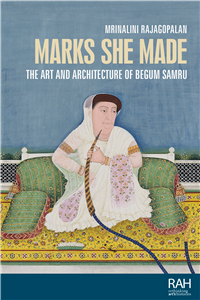
Marks she made
The art and architecture of Begum Samru
by Mrinalini Rajagopalan
Begum Samru (b. circa 1750-d. 1836) was a north Indian woman ruler who used art and architecture to facilitate her social, political, and financial station in early modern India. Rising from the ranks of courtesans in Mughal Delhi to become the commander of her own mercenary army, she later became the ruler of an independent territory of Sardhana (60 km northwest of Delhi). The begum (Urdu/ Hindustani title for noblewoman) was a trusted ally to the Mughal emperor and the English East India Company, two of the dominant political powers in north India at the time. As a sovereign ruler, she corresponded with two popes and King Louis Philippe of France, exchanging portraits, architectural drawings, and letters with these powerful men in addition to her Mughal counterparts in India. Art and architecture played a key role in establishing Begum Samru as a powerful but non-threatening ruler; as an upholder and patron of the Catholic faith in India; as a political ally to several European and Indian factions that were vying for power; and as ruling matriarch of a cosmopolitan household, court, and army. In narrating the story of a single woman in nineteenth-century India, this book offers a path to think of the creative ways in which women participated in public and political spheres. It also illustrates how women without pedigree, women who did not bear biological children or produce male heirs, and women who lived in contravention of gendered norms found alternative methods of recognition, dignity, power, and sometimes, as in the case of Begum Samru, global visibility.
-
Promoted Content
 Literature & Literary StudiesJanuary 2013
The English manor c.1200–c.1500
by Mark Bailey
Provides a comprehensive introduction and essential guide to one of the most important institutions in medieval England and to its substantial archive. This is the first book to offer a detailed explanation of the form, structure and evolution of the manor and its records. Offers translations of, and commentaries upon, each category of document to illustrate their main features. Examples of each category of record are provided in translation, followed by shorter extracts selected to illustrate interesting, commonly occurring, or complex features. A valuable source of reference for undergraduates wishing to understand the sources which underpin the majority of research on the medieval economy and society.
-
 Trusted Partner
 Humanities & Social SciencesApril 2021
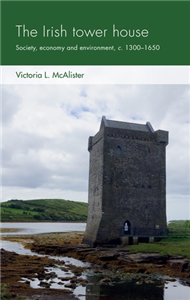
The Irish tower house
Society, economy and environment, c. 1300–1650
by Victoria L. McAlister
The Irish tower house examines the social role of castles in late-medieval and early modern Ireland. It uses a multidisciplinary methodology to uncover the lived experience of this historic culture, demonstrating the interconnectedness of society, economics and the environment. Of particular interest is the revelation of how concerned pre-modern people were with participation in the economy and the exploitation of the natural environment for economic gain. Material culture can shed light on how individuals shaped spaces around themselves, and tower houses, thanks to their pervasiveness in medieval and modern landscapes, represent a unique resource. Castles are the definitive building of the European Middle Ages, meaning that this book will be of great interest to scholars of both history and archaeology.
-
Trusted Partner
-
Trusted Partner
 Humanities & Social SciencesAugust 1998
Irish Home Rule
by Alan O'Day, Mark Greengrass
Irish Home Rule considers the pre-eminent issue in British politics during the late nineteenth and early twentieth-centuries. It is the first account to explain the various self-government plans, to place these in context and examine the motives for putting the schemes forward. The book distinguishes between moral and material home rulers, making the point that the first appealed especially to outsiders, some Protestants and the intelligentsia, who saw in self-government a means to reconcile Ireland's antagonistic traditions. In contrast, material home rulers viewed a Dublin Parliament as a forum of Catholic interests. This account appraises the home rule movement from a fresh angle, distinguishing it from the usual division drawn between physical force and constitutional nationalists It maintains that an ideological continuity runs from Young Ireland, the Fenians, the early home rulers including Isaac Butt and Charles Stewart Parnell, to the Gaelic Revivalists to the Men of 1916. These nationalists are distinguishable from material home rulers not on the basis of methods or strategy but by a fundamental ideological cleavage. ;
-
Trusted Partner
 The ArtsJanuary 2019
Spanish cinema 1973–2010
Auteurism, politics, landscape and memory
by Maria M. Delgado, Robin Fiddian
This collection offers a new lens through which to examine Spain's cinema production following the isolation imposed by the Franco regime. The seventeen key films analysed in the volume span a period of 35 years that have been crucial in the development of Spain, Spanish democracy and Spanish cinema. They encompass different genres (horror, thriller, melodrama, social realism, documentary), both popular (Los abrazos rotos/Broken Embraces, Vicky Cristina Barcelona) and more select art house fare (En la ciudad de Sylvia/In the City of Sylvia, El espíritu de la colmena/Spirit of the Beehive) and are made in English (as both first and second language), Basque, Castilian, Catalan and French. Offering an expanded understanding of 'national' cinemas, the volume explores key works by Guillermo del Toro and Lucrecia Martel alongside an examination of the ways in which established auteurs (Almodóvar, José Garci, Carlos Saura) and younger generations of filmmakers (Cesc Gay, Amenábar, Bollaín) have harnessed cinematic language towards a commentary on the nation-state. The result is a bold new study of the ways in which film has created new prisms that have determined how Spain is positioned in the global marketplace.
-
Trusted Partner
 Humanities & Social SciencesApril 2025
The return of the housewife
Why women are still cleaning up
by Emma Casey
An illuminating look at the world of cleanfluencers that asks why the burden of housework still falls on women. Housework is good for you. Housework sparks joy. Housework is beautiful. Housework is glamorous. Housework is key to a happy family. Housework shows that you care. Housework is women's work. Social media is flooded with images of the perfect home. TikTok and Instagram 'cleanfluencers' produce endless photos and videos of women cleaning, tidying and putting things right. Figures such as Marie Kondo and Mrs Hinch have placed housework, with its promise of a life of love and contentment, at the centre of self-care and positive thinking. And yet housework remains one of the world's most unequal institutions. Women, especially poorer women and women of colour, do most low-paid and unpaid domestic labour. In The return of the housewife, Emma Casey asks why these inequalities matter and why they persist after a century of dramatic advances in women's rights. She offers a powerful call to challenge the prevailing myths around housework and the 'naturally competent' woman homemaker.
-
Trusted Partner
-
Trusted Partner
-
Trusted Partner
-
Trusted Partner
 Geography & the EnvironmentMarch 2020
The spatial contract
by Alex Schafran, Matthew Noah Smith, Stephen Hall, Karel Williams, Mick Moran
-
Trusted Partner
 Humanities & Social SciencesJuly 2021
The bonds of family
Slavery, commerce and culture in the British Atlantic world
by Katie Donington
Moving between Britain and Jamaica The bonds of family reconstructs the world of commerce, consumption and cultivation sustained through an extended engagement with the business of slavery. Transatlantic slavery was both shaping of and shaped by the dynamic networks of family that established Britain's Caribbean empire. Tracing the activities of a single extended family - the Hibberts - this book explores how slavery impacted on the social, cultural, economic and political landscape of Britain. It is a history of trade, colonisation, enrichment and the tangled web of relations that gave meaning to the transatlantic world. The Hibberts's trans-generational story imbricates the personal and the political, the private and the public, the local and the global. It is both the intimate narrative of a family and an analytical frame through which to explore Britain's history and legacies of slavery.
-
Trusted Partner
 Literature & Literary StudiesJune 2002
The English manor c.1200–c.1500
by Rosemary Horrox, Simon Maclean, Mark Bailey
Provides a comprehensive introduction and essential guide to one of the most important institutions in medieval England and to its substantial archive. This is the first book to offer a detailed explanation of the form, structure and evolution of the manor and its records. Offers translations of, and commentaries upon, each category of document to illustrate their main features. Examples of each category of record are provided in translation, followed by shorter extracts selected to illustrate interesting, commonly occurring, or complex features. A valuable source of reference for undergraduates wishing to understand the sources which underpin the majority of research on the medieval economy and society. ;
-
Trusted Partner
 Humanities & Social SciencesDecember 2013
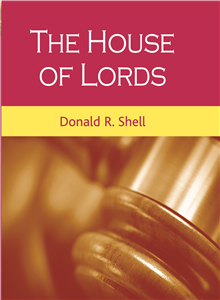
The House of Lords
by Donald Shell
The House of Lords has undergone significant change in recent years. The exclusion of the great majority of the hereditary peers in 1999 was intended as the first step in a two-stage reform process. But further reform has proved difficult to achieve and remains a matter of considerable controversy. Meanwhile, the present House has become more assertive, and is now widely recognised as making a substantial contribution to the overall work of parliament. This book, available in paperback for the first time, examines the role of the contemporary House. Who are the peers, and who among the total of over 700 are the active peers? How does the House work, and how effective is it in revising legislation and in scrutinising the work of government? Why has fundamental reform of the House been so long delayed, and what are the main arguments about reform today? These are among the questions discussed in this timely volume, which seeks to locate discussion about the House of Lords in the wider context of a clear understanding of the developing British constitution. This book will be of great value to students and academics in British politics, as well as to serious journalists and researchers. ;
-
Trusted Partner

 April 2026
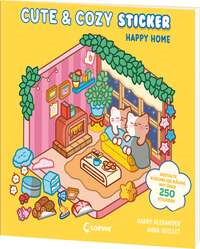
Cute & Cozy Sticker - Happy Home
by Harry Alexander, Anna Guillet, Svenja Pidde
Cozy Stickerspaß Sehnst du dich nach einer kreativen und gemütlichen Auszeit? Dann ist dieses Stickerbuch perfekt für dich! Hier kannst du mit Stickern kleine Räume gestalten: Füll die Buchhandlung mit zauberhaften Büchern, stell die schönsten Kleider im Modeladen zur Schau oder bring die Gärtnerei mit bunten Blumen zum Blühen. So kannst du dich wunderbar entspannen und dem Alltagsstress entfliehen. Der Social-Media-Trend „ 3D House Stickers ” jetzt als Buch! 10 niedliche Stickerbilder mit 3D-Effekt Beruhigende und kreative Auszeit Perfekt für alle Fans von Cozy Coloring
-
Trusted Partner
 Literature & Literary StudiesJuly 2021
Making home
Orphanhood, kinship and cultural memory in contemporary American novels
by Maria Holmgren Troy, Elizabeth Kella, Helena Wahlstrom, Maria Holmgren Troy
Making home explores the figure of the orphan child in a broad selection of contemporary US novels by popular and critically acclaimed authors Barbara Kingsolver, Linda Hogan, Leslie Marmon Silko, Marilynne Robinson, Michael Cunningham, Jonathan Safran Foer, John Irving, Kaye Gibbons, Octavia Butler, Jewelle Gomez and Toni Morrison. The orphan child is a continuous presence in US literature, not only in children's books and nineteenth-century texts, but also in a variety of genres of contemporary fiction for adults. Making home examines the meanings of this figure in the contexts of American literary history, social history and ideologies of family, race and nation. It argues that contemporary orphan characters function as links to literary history and national mythologies, even as they may also serve to critique the limits of literary history, as well as the limits of familial and national belonging.
-
Trusted Partner
 The ArtsDecember 2022
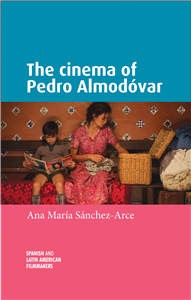
The cinema of Pedro Almodóvar
by Ana María Sanchez-Arce
This book offers a comprehensive film-by-film analysis of Spain's most famous living director, Pedro Almodóvar. It shows how Almodóvar's films draw on various national cinemas and genres, including Spanish cinema of the dictatorship, European art cinema, Hollywood melodrama and film noir. It also argues that Almodóvar's work is a form of social critique, his films consistently engaging with and challenging stereotypes about traditional and contemporary Spain in order to address Spain's traumatic historical past and how it continues to inform the present. Drawing on scholarship in both English and Spanish, the book will be of interest to undergraduate and postgraduate students of film studies and Hispanic studies, scholars of contemporary cinema and general readers with a passion for the films of Pedro Almodóvar.
-
Trusted Partner
 The ArtsJanuary 2019
Contemporary Spanish cinema
by Barry Jordan, Rikki Morgan-Tamosunas
Contemporary focus, right up to date with material from 1980s and 90s. Wide-ranging analyses of major directors, themes, genres and issues, including historical film, genre cinema, women in film and autonomies.
-
Trusted Partner
 Humanities & Social SciencesJune 2020
Reform of the House of Lords
by Philip Norton
This book is the only one of its kind, providing a clear and exhaustive analysis of the different approaches to the future of Britain's second chamber. The House of Lords has long been the subject of proposals for reform - some successful, others not - and calls for the existing membership to be replaced by elected members have been a staple of political debate. The debate has been characterised by heat rather than light, proponents and opponents of change often talking past one another. This work gives shape to the debate, drawing out the role of the House of Lords, previous attempts at reform, and the different approaches to the future of the House. It develops the argument for each and analyses the current state of the debate about the future of the upper house in Britain's political system.
-
Trusted Partner

 Family & health
A Family with Autism
When Autism is the Rule, not the Exception
by Joyce van Maaren
Four out of your five children have autism, and your husband too! This is what happened to Joyce van Maaren. Over the years four of her children and her husband are diagnosed with an autism spectrum disorder. In A Family With Autism she talks openly about how her life gets turned upside down over and over again, and how the family had to regain their balance. In this inspiring and lovable book, Joyce van Maaren takes the reader on a journey – one with many ups and downs. Readers can find support in her story and discover what autism means for daily life. But most of all, they will be inspired to make the most of every day, even if they or their family has to deal with autism (or other psychological disorders). Target Group: people with autism and their relatives, families of which some members have autism.