
Your Search Results
-

-

See Say Write
The world's only kindergarten workbooks with interactive videos that teach kids to read from the world's best, anytime, anywhere.
View Rights Portal
-
Promoted Content
-
Promoted Content

 February 1983
Kapital und Arbeit
»Das Kapital« in einer handlichen Zusammenfassung. Von Marx und Engels selbst revidiert und überarbeitet
by Johann Most, Hans Magnus Enzensberger
Hans Magnus Enzensberger wurde 1929 in Kaufbeuren geboren. Als Lyriker, Essayist, Biograph, Herausgeber und Übersetzer ist er einer der einflussreichsten und weltweit bekanntesten deutschen Intellektuellen.
-
 Trusted Partner
-
Trusted Partner

 The ArtsJanuary 2019
Spanish cinema 1973–2010
Auteurism, politics, landscape and memory
by Maria M. Delgado, Robin Fiddian
This collection offers a new lens through which to examine Spain's cinema production following the isolation imposed by the Franco regime. The seventeen key films analysed in the volume span a period of 35 years that have been crucial in the development of Spain, Spanish democracy and Spanish cinema. They encompass different genres (horror, thriller, melodrama, social realism, documentary), both popular (Los abrazos rotos/Broken Embraces, Vicky Cristina Barcelona) and more select art house fare (En la ciudad de Sylvia/In the City of Sylvia, El espíritu de la colmena/Spirit of the Beehive) and are made in English (as both first and second language), Basque, Castilian, Catalan and French. Offering an expanded understanding of 'national' cinemas, the volume explores key works by Guillermo del Toro and Lucrecia Martel alongside an examination of the ways in which established auteurs (Almodóvar, José Garci, Carlos Saura) and younger generations of filmmakers (Cesc Gay, Amenábar, Bollaín) have harnessed cinematic language towards a commentary on the nation-state. The result is a bold new study of the ways in which film has created new prisms that have determined how Spain is positioned in the global marketplace.
-
Trusted Partner
 The ArtsJune 2021
Contemporary Spanish cinema and genre
by Jay Beck, Vicente Rodríguez Ortega
This volume is the first English-language collection exclusively dedicated to the study of genre in relation to Spanish cinema. Providing a variety of critical perspectives, the collection gives the reader a thorough account of the relationship between Spanish cinema and genre, drawing on case studies of several of the most remarkable Spanish films in recent years. The book analyses the significant changes in the aesthetics, production and reception of Spanish film from 1990 onwards. It brings together European and North American scholars to establish a critical dialogue on the topics under discussion, while providing multiple perspectives on the concepts of national cinemas and genre theory. In recent years film scholarship has attempted to negotiate the tension between the nationally specific and the internationally ubiquitous, discussing how globalisation has influenced film making and surrounding cultural practice. These broader social concerns have prompted scholars to emphasise a redefinition of national cinemas beyond strict national boundaries and to pay attention to the transnational character of any national site of film production and reception. This collection provides a thorough investigation of contemporary Spanish cinema within a transnational framework, by positing cinematic genres as the meeting spaces between a variety of diverse forces that necessarily operate within but also across territorial spaces. Paying close attention to the specifics of the Spanish cinematic and social panorama, the essays investigate the transnational economic, cultural and aesthetic forces at play in shaping Spanish film genres today.
-
Trusted Partner
 The ArtsJanuary 2019
Contemporary Spanish cinema and genre
by Jay Beck, Vicente Rodríguez Ortega
This volume is the first English-language collection exclusively dedicated to the study of genre in relation to Spanish cinema. Providing a variety of critical perspectives, the collection gives the reader a thorough account of the relationship between Spanish cinema and genre, drawing on case studies of several of the most remarkable Spanish films in recent years. The book analyses the significant changes in the aesthetics, production and reception of Spanish film from 1990 onwards. It brings together European and North American scholars to establish a critical dialogue on the topics under discussion, while providing multiple perspectives on the concepts of national cinemas and genre theory. In recent years film scholarship has attempted to negotiate the tension between the nationally specific and the internationally ubiquitous, discussing how globalisation has influenced film making and surrounding cultural practice. These broader social concerns have prompted scholars to emphasise a redefinition of national cinemas beyond strict national boundaries and to pay attention to the transnational character of any national site of film production and reception. This collection provides a thorough investigation of contemporary Spanish cinema within a transnational framework, by positing cinematic genres as the meeting spaces between a variety of diverse forces that necessarily operate within but also across territorial spaces. Paying close attention to the specifics of the Spanish cinematic and social panorama, the essays investigate the transnational economic, cultural and aesthetic forces at play in shaping Spanish film genres today.
-
Trusted Partner
 Literature & Literary StudiesJuly 2022
Nordic Gothic
by Maria Holmgren Troy, Johan Hõglund, Yvonne Leffler, Sofia Wijkmark
Nordic Gothic traces Gothic fiction in the Nordic region from its beginnings in the nineteenth century, with a main focus on the development of Gothic from the 1990s onwards in literature, film, TV and new media. The volume gives an overview of Nordic Gothic fiction in relation to transnational developments and provides a number of case studies and in-depth analyses of individual narratives. It creates an understanding of this under-researched cultural phenomenon by showing how the narratives make visible cultural anxieties haunting the Nordic countries, their welfare systems, identities and ideologies. Nordic Gothic examines how figures from Nordic folklore function as metaphorical expressions of Gothic themes and Nordic settings are explored from perspectives such as ecocriticism and postcolonialism. The book will be of interest to researchers and post- and- undergraduate students in various fields within the Humanities.
-
Trusted Partner
 Humanities & Social SciencesSeptember 2013
The Spanish Socialist Party and the modernisation of Spain
by Paul Kennedy, Steven Fielding, John Callaghan, Steve Ludlam
This book considers the most electorally successful political party in Spain, the Spanish Socialist Workers' Party (PSOE), which was in government for two of the three decades since it won office under Felipe González in 1982. Providing rich historical background, the book's main focus is on the period since General Franco's death in 1975. It charts Spain's modernisation under the PSOE, with a particular focus on the role played by European integration in this process. Covering events including the 2011 general election, the book is one of the most up-to-date works available in English and will be of great interest to academics and undergraduate and postgraduate students in the field of Spanish and European studies. ;
-
Trusted Partner
 Humanities & Social SciencesMarch 2026
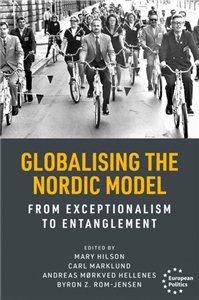
Globalising the Nordic Model
From exceptionalism to entanglement
by Mary Hilson
The five Nordic countries - Denmark, Finland, Iceland, Norway and Sweden - frequently attract attention as examples of a 'Nordic model'. The meanings of the term vary, but especially since the global financial crisis of 2008-9 the Nordic countries have often been portrayed positively, as examples of economic dynamism, innovation and social equality. Studies of these images of the Nordic countries and Nordic region and their international circulations are now a well-established field of research. This volume explores how the Nordic model has been shaped by global entanglements, in exchange not only with Western Europe and North America, but also with the Global South. Drawing on selected case studies, the volume offers new perspectives on the meanings of the Nordic model and Nordic exceptionalism in a global context during the half century since c. 1970.
-
Trusted Partner
 Literature & Literary StudiesFebruary 2009
Beyond The Spanish Tragedy
A study of the works of Thomas Kyd
by Lukas Erne, Paul Edmondson, Martin White
Kyd is arguably Shakespeare's most important tragic predecessor. Brilliantly fusing the drama of the academic and popular traditions, Thomas Kyd's plays are of central importance for understanding how the drama of Shakespeare and his contemporaries came about. Called 'an extraordinary dramatic . genius' by T.S. Eliot, Thomas Kyd invented the revenge tragedy genre that culminated in Shakespeare's Hamlet some twelve years later. In this study, The Spanish Tragedy - the most popular of all plays on the English Renaissance stage - receives the extensive scholarly and critical treatment it deserves, including a full reception and modern stage history. Yet as Erne shows, Thomas Kyd is much more than the author of a single masterpiece. Don Horatio (partly extant in The First Part of Hieronimo), the lost early Hamlet, Soliman and Perseda, and Cornelia all belong to what emerges in this work as a coherent dramatic oeuvre. This groundbreaking study is now in paperback. ;
-
Trusted Partner
 Literature & Literary StudiesJanuary 2013
The English manor c.1200–c.1500
by Mark Bailey
Provides a comprehensive introduction and essential guide to one of the most important institutions in medieval England and to its substantial archive. This is the first book to offer a detailed explanation of the form, structure and evolution of the manor and its records. Offers translations of, and commentaries upon, each category of document to illustrate their main features. Examples of each category of record are provided in translation, followed by shorter extracts selected to illustrate interesting, commonly occurring, or complex features. A valuable source of reference for undergraduates wishing to understand the sources which underpin the majority of research on the medieval economy and society.
-
Trusted Partner
 Humanities & Social SciencesFebruary 1999
The Irish and the Spanish Civil War, 1936–1939
by Robert Stradling
The outbreak of the Spanish Civil War threw Irish politics, north and south of the border, into turmoil. Tragic events in Spain aroused emotive responses across the spectrum of Irish society. In contrast to most other communities of the British Isles, citizens of the Irish Free State were mainly pro-Franco. But many on the left felt a strong identification with the plight of the Republic. Ireland sent large organized bodies of men to fight on opposite sides in the Spanish Civil War. The International Brigade volunteers were led by the IRA warrior, Frank Ryan. Their rivals, who became a battalion of Franco's Foreign Legion were mostly members of the semi-facist Blueshirts, and were commanded by the ex-leader of that movement, General Eoin O'Duffy. In late 1936, two enemy crusades - Communist and Catholic - left Ireland to fight it out in Spain. This book, illuminated by personal histories, tells the story of what happened to those two sides. Starting with their eventful journey to Spain, it follows their footsteps across the battlefields of Spain. ;
-
Trusted Partner
 Film, TV & radioNovember 2014
Spanish cinema 1973–2010
Auteurism, politics, landscape and memory
by Edited by Maria M. Delgado and Robin Fiddian
This collection offers a new lens through which to examine Spain's cinema production following the isolation imposed by the Franco regime. The seventeen key films analysed in the volume span a period of thirty-five years that have been crucial in the development of Spain, Spanish democracy and Spanish cinema. They encompass different genres (horror, thriller, melodrama, social realism, documentary), both popular (Los abrazos rotos/Broken Embraces, Vicky Cristina Barcelona) and more select art house fare (En la ciudad de Sylvia/In the City of Sylvia, El espíritu de la colmena/Spirit of the Beehive) and are made in English (as both first and second language), Basque, Castilian, Catalan and French. Offering an expanded understanding of 'national' cinemas, the volume explores key works by Guillermo del Toro and Lucrecia Martel alongside an examination of the ways in which established auteurs (Almodóvar, José Garci, Carlos Saura) and the younger generations of filmmakers (Cesc Gay, Amenábar, Bollaín) have harnessed cinematic language towards a commentary on the nation-state.
-
Trusted Partner
 Literature & Literary StudiesMay 1996
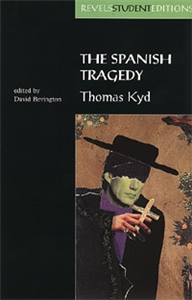
The Spanish Tragedy
Thomas Kyd
by David Bevington
The "revenge" play became the most durable and commercially successful type of drama on the Elizabethan stage. This example by Thomas Kyd, who was one of the originators of the genre, brings to life the intrigues of the Spanish court, dramatically juxtaposing romantic passion with sudden violent death and clandestine politics. The ghost of Dan Andrea and his guide Revenge observe the dark and bloody action throughout, provoking questions about the nature of the human condition. ;
-
Trusted Partner
 The ArtsDecember 2022
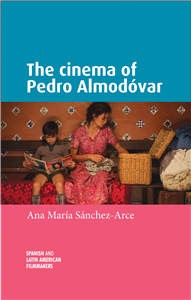
The cinema of Pedro Almodóvar
by Ana María Sanchez-Arce
This book offers a comprehensive film-by-film analysis of Spain's most famous living director, Pedro Almodóvar. It shows how Almodóvar's films draw on various national cinemas and genres, including Spanish cinema of the dictatorship, European art cinema, Hollywood melodrama and film noir. It also argues that Almodóvar's work is a form of social critique, his films consistently engaging with and challenging stereotypes about traditional and contemporary Spain in order to address Spain's traumatic historical past and how it continues to inform the present. Drawing on scholarship in both English and Spanish, the book will be of interest to undergraduate and postgraduate students of film studies and Hispanic studies, scholars of contemporary cinema and general readers with a passion for the films of Pedro Almodóvar.
-
Trusted Partner
Literature & Literary StudiesJune 2026
The politics of Middle English parables
Fiction, theology, and social practice
by Mary Raschko
The politics of Middle English parables examines the dynamic intersection of fiction, theology and social practice in late-medieval England. Parables occupy a prominent place in Middle English literature, appearing in dream visions and story collections as well as in lives of Christ and devotional treatises. While most scholarship approaches the translated stories as stable vehicles of Christian teaching, this book highlights the many variations and points of conflict across Middle English renditions of the same story. In parables related to labour, social inequality, charity and penance, the book locates a creative theological discourse through which writers attempted to re-construct Christian belief and practice. Analysis of these diverse retellings reveals not what a given parable meant in a definitive sense but rather how Middle English parables inscribe the ideologies, power structures and cultural debates of late-medieval Christianity.
-
Trusted Partner

 July 2021
The World of the North
Between Ragnarok and welfare utopia: A cultural-historical deconstruction
by Bernd Henningsen
— Analysis of how we view Europe's North and how this image emerged — An outsider's perspective on Nordic societies and their self image — Serves as an introduction into Northern European culture and society Our image of Northern Europe has been shaped by projections and desires in the long history of encounters: berserkers and war atrocities, bad weather, beautiful nature, stable political systems, social welfare, equality and prosperity, peacefulness, low corruption, hygge and Bullerby – all this is part of the Nordic narrative. But what about the religious, linguistic and ethnic homogeneity, what about the muchvaunted Nordic cooperation? How do politics "work" in the North? Why are Northern Europeans the happiest people?
-
Trusted Partner
 Literature & Literary StudiesFebruary 2020
Nordic Gothic
by Maria Holmgren Troy, Johan Hõglund, Yvonne Leffler, Sofia Wijkmark, Jerrold Hogle
-
Trusted Partner
 Literature & Literary StudiesAugust 2023
Poison on the early modern English stage
Plants, paints and potions
by Lisa Hopkins, Bill Angus
Many early modern plays use poison, most famously Hamlet, where the murder of Old Hamlet showcases the range of issues poison mobilises. Its orchard setting is one of a number of sinister uses of plants which comment on both the loss of horticultural knowledge resulting from the Dissolution of the Monasteries and also the many new arrivals in English gardens through travel, trade, and attempts at colonisation. The fact that Old Hamlet was asleep reflects unease about soporifics troubling the distinction between sleep and death; pouring poison into the ear smuggles in the contemporary fear of informers; and it is difficult to prove. This book explores poisoning in early modern plays, the legal and epistemological issues it raises, and the cultural work it performs, which includes questions related to race, religion, nationality, gender, and humans' relationship to the environment.
-
Trusted Partner
 The ArtsJanuary 2019
European Film Noir
by Andrew Spicer
European Film Noir is the first book to bring together specialist discussions of film noir in specific European national cinemas. Written by leading scholars, this groundbreaking study provides an authoritative understanding of an important aspect of European cinema and of film noir itself, for too long considered as a solely American form. The Introduction reviews the problems of defining film noir, its key characteristics and discusses its significance to the development of European film, the relationship of specific national films noirs to each other, to American noir and to historical and social change. Eight chapters then discuss film noir in France, Germany, Britain and Spain, analysing both earlier developments and the evolution of neo-noir through to the present. A further chapter explores film noir in Italian cinema where its presence is not so well defined. Each piece provides a critical overview of the most significant films in relation to their industrial and social contexts. European Film Noir is an important contribution to the study of European cinema that will have a broad appeal to undergraduates, cinéastes, film teachers and researchers.



