Textofilia Ediciones
Literary publisher. It has received several awards. It has the stamp Libros del Marqués, dedicated to social relevant topics of this time.
View Rights Portal
Literary publisher. It has received several awards. It has the stamp Libros del Marqués, dedicated to social relevant topics of this time.
View Rights Portal Trusted Partner

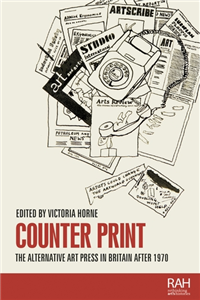
The history of contemporary art is also a history of its newsletters, manifestos, magazines, pamphlets, and journals. Those periodical publications do not simply communicate or record ideas but have worked in exciting ways to shape art's practices, histories and communities. As a new generation of artists, activists and scholars seek to uncover the histories of alternative publishing and artistic networks, this book gathers original archival discoveries while offering methodologies for studying and thinking with those artefacts. As the first essay collection to focus on the periodical art press and the ways we study it, Counter print offers readers an alternative route into the past fifty years of contemporary art, one that is defiantly collaborative, border crossing and disruptive.


Während neueste Untersuchungen im 15./16. Jahrhundert einen Wandel der Geschlechterbeziehungen erkannten und ihn durch sozial- und mentalitätsgeschichtliche Veränderungen zu erklären suchten, halten die Autoren der in diesem Band enthaltenen Texte in erster Linie nicht nach historischen Veränderungen und epochengeschichtlichen Zäsuren Ausschau, sondern erproben die Tragfähigkeit einer textwissenschaftlichen Analyse der Kategorie Geschlecht. Unterschiede in den Geschlechterprojektionen werden nicht vorschnell auf außertextuelle Erklärungsmomente zurückgeführt, sondern auf literarische Faktoren und rhetorische Strategien, auf wechselnde Kommunikationssituationen und Gebrauchsfunktionen.
Trusted Partner

»Meinecke baute einen Plattenspieler auf und legte zum Auftakt seiner Vorlesungsreihe den Song »False Start« von Bikini Kill auf. Anschließend zitierte er Texte über seinen Roman »Tomboy«. Konsequenter kann man die Erwartungen, die mit der Poetikdozentur verbunden sind, nicht enttäuschen. Ihre Spielregeln hat der Autor zwar mit der Annahme der Dozentur anerkannt. Allerdings steht er in der Tradition der Dekonstruktion: Es gilt, »mit« den Spielregeln »gegen« diese zu spielen. Meinecke macht sich in seiner Vorlesung zugleich zur erzählten Figur. Mit seiner Aneinanderreihung von Zitaten hat er eine brillante Performance zur Dekonstruktion des Autorbegriffs geliefert. Wer zwischen den Zeilen lesen kann, wird in den vorgetragenen Zitaten zugleich eine präzise Beschreibung von Meineckes Erzählweise erkannt haben.« Jesko Bender in der »Jungle World«
Trusted Partner
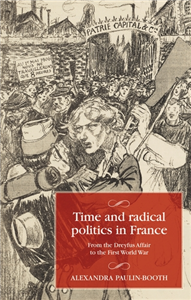
This book investigates how people have thought about and experienced time, and how their ideas about time have shaped their political views and actions. Using French thinkers and activists of the radical left and right between the Dreyfus Affair and the First World War as a case study, it argues that time provides an important means of exploring how concepts such as nationalism, revolution and social change were understood at the turn of the century. Attending to different experiences of time - the speed at which it was perceived to move, the extent to which the future was near and graspable, the ways in which the past was seen to impinge on the present - opens up exciting new possibilities for analysing politics, ideologies and worldviews.
Trusted Partner
Trusted Partner
 Trusted Partner


Franz Inauen was diagnosed with dementia in 2013. Since his diagnosis, he has worked through his fears, experiences, hopes, and anger by writing prose and poetry and by drawing. The result is a work consisting of 85 images and texts. They are accompanied by narratives explaining how the author produced them, an interview with Franz Inauen, and the views of his wife and employer. Target Group: People with dementia, their relatives, nurses, art therapists
Trusted Partner
Trusted Partner

Carol Reed is one of the truly outstanding directors of British cinema, and one whose work is long overdue for reconsideration. This major study ranges over Reed's entire career, combining observation of general trends and patterns with detailed analysis of twenty films, both acknowledged masterpieces and lesser-known works. Evans avoids a simplistic auteurist approach, placing the films in their autobiographical, socio-political and cultural contexts and relating these to the analysis of Reed's art. The critical approach combines psychoanalysis, gender theory, and the analysis of form. Archival research is also relied on to clarify Reed's relations with his creative team, financial backers and others. Films examined include Bank Holiday, A Girl Must Live, Odd Man Out, The Fallen Idol, The Third Man, Night Train to Munich, The Way Ahead, Outcast of the Islands, Trapeze and Oliver!.
Trusted Partner


Gerhard Richter, geboren 1932 in Dresden, ist einer der bedeutendsten bildenden Künstler der Gegenwart. Im Suhrkamp Verlag erschien Nachricht von ruhigen Momenten, zusammen mit Alexander Kluge (2013), und die Bilder zu den Bänden Mit meiner Vergangenheit lebe ich. Memoiren von Holocaust-Überlebenden, herausgegeben von Ivan Lefkovits (2016).
Trusted Partner

With a pinch of humor, the authors tell the story of Julia, her husband Peter, and their little whirlwind Alexander, who is starting elementary school. How do the three of them deal with this new stage in Alexander’s life? What problems do they encounter and what do they find stressful? The book sets out to help parents, uncles, aunts, and grandparents understand how children of elementary school age develop. Professionals who work with children of this age may also find it of interest. Petra Jansen and Stefanie Richter are both parents and psychologists. Through the fictional Julia they share their subjective experience as mothers, while also providing background information based on scientific studies. They demonstrate in a clear and entertaining way that some of the problems experienced by children of this age are not unexpected and are no cause for despair. Target Group: Parents of children in their early years at school.
Trusted Partner

 Trusted Partner
This electronic version has been made available under a Creative Commons () open access license. Beyond text? Critical practices and sensory anthropology is about the relationship between anthropological understandings of the world, sensory perception and aesthetic practices. It suggests that if different sensory experiences embody and facilitate different kinds of knowledge, then we need to develop new methods and more creative forms of representation that are not based solely around text or on correspondence theories of truth. The volume brings together leading figures in anthropology, visual and sound studies to explore how knowledge, sensation and embodied experiences can be researched and represented by combining different visual, aural and textual forms which it demonstrates through an accompanying DVD. The book and DVD make an argument for a necessary, critical development in anthropological ways of knowing that take place not merely at the level of theory and representation but also through innovative fieldwork methods and media practices.
Trusted Partner
Trusted Partner
Trusted Partner
 Trusted Partner

 Trusted Partner
Trusted Partner
Trusted Partner
 Trusted Partner

Martha Gellhorn was the doyenne of twentieth century war correspondence. Opinionated, honest and unafraid, she covered conflicts from the Spanish Civil War to Reagan's wars in Central America in the 1980s. Martha Gellhorn: the war writer in the field and in the text is the first critical study of her Second World War fiction and journalism. Often overlooked in accounts of war literature is the writer's precise position in relation to battle and his or her resultant standing in the text. Kate McLoughlin traces Gellhorn's daring attempts to access the war zone and her constructions of the woman war correspondent in her despatches, novels, short stories and play. Drawing on unpublished letters, close attention is given to Gellhorn's rivalry with Ernest Hemingway (the two were married from 1940 to 1945) over reaching the Normandy beaches on D-Day and its textual outcome in the pages of Collier's magazine. McLoughlin goes on to examine Gellhorn's increasingly negative portrayals of the glamorous female war reporter and to suggests why such disillusionment might have set in. ;