
Folklore Publishing
Livres Canada Books
View Rights Portal

The Ukrainian Book Institute is a government entity, part of the Ministry of Culture and Information Policy of Ukraine.
View Rights Portal
A gripping guide to the weird yet everyday world of British folklore. In this ground-breaking book, two leading experts provide the definitive guide to British folklore past and present. Owen Davies and Ceri Houlbrook explore folklore in all its remarkable variations, from village rituals and fairy tales to UFO legends and internet fanfiction. Travelling through a landscape of witches, wizards and wicker men, they reveal how folklore has been researched and written about in the past and show how it continues to be lived in the present. At the same time, they provide the reader with a valuable toolkit for understanding how to interpret the diverse examples given. The book's key message is that folklore is much more than the fossilised remains of a distant, rural past. Folklore is and always has been ubiquitous, dynamic and political. It is a living tradition that draws from many sources, including migrant communities, and is forever being renewed and updated.
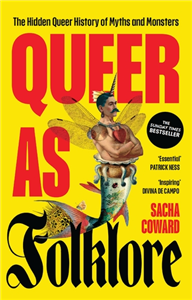
A celebration of queer history like you've never seen it before. Queer as folklore travels across centuries and continents to reveal the unsung heroes and villains of storytelling, magic and fantasy. Featuring images from archives, galleries and museums around the world, each chapter investigates the queer history of different mythic and folkloric characters, both old and new. Leaving no headstone unturned, Sacha Coward takes you on a wild ride through the night from ancient Greece to the main stage of RuPaul's Drag Race, visiting cross-dressing pirates, radical fairies and the graves of the 'queerly departed' along the way. Queer communities have often sought refuge in the shadows and created safe spaces in underworlds. But these forgotten narratives tell stories of resilience that deserve to be heard. Join any Pride march and you will see a glorious display of papier-mâché unicorn heads, drag queens in mermaid tails and more fairy wings than you can shake a trident at. These are not just accessories: they are queer symbols with historic roots. To truly understand who queer people are today, we must confront the twisted tales of the past.
 Trusted Partner

The Chronicon of Thietmar of Merseburg has long been recognised as one of the most important sources for the history of the tenth and early eleventh centuries, especially for the history of the Ottonian Empire. Thietmar's testimony also has special value because of his geographical location, in eastern Saxony, on the boundary between German and Slavic cultures. He is arguably the single most important witness to the early history of Poland, and his detailed descriptions of Slavic folklore are the earliest on record. This is a very important source in the medieval period, translated here in its entirety for the first time. It relates to an area of medieval studies generally dominated by German scholars, in which Anglo-phone scholars are beginning to make a substantial contribution.
Trusted Partner

Nordic Gothic traces Gothic fiction in the Nordic region from its beginnings in the nineteenth century, with a main focus on the development of Gothic from the 1990s onwards in literature, film, TV and new media. The volume gives an overview of Nordic Gothic fiction in relation to transnational developments and provides a number of case studies and in-depth analyses of individual narratives. It creates an understanding of this under-researched cultural phenomenon by showing how the narratives make visible cultural anxieties haunting the Nordic countries, their welfare systems, identities and ideologies. Nordic Gothic examines how figures from Nordic folklore function as metaphorical expressions of Gothic themes and Nordic settings are explored from perspectives such as ecocriticism and postcolonialism. The book will be of interest to researchers and post- and- undergraduate students in various fields within the Humanities.
Trusted Partner
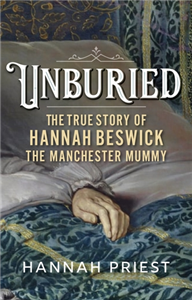
The macabre tale of an eighteenth-century woman immortalised in folklore as the 'Manchester Mummy'. In 1835, the Manchester Natural History Society opened the doors of its museum. Taking pride of place in its collection were three mummies: one was Egyptian, one was Peruvian and one was a woman from Cheetham Hill. This is the first time the true story of Hannah Beswick, the so-called 'Manchester Mummy', has been told. Over the years, explanations for the Manchester Mummy have ranged from the chilling - Hannah's fear of being buried alive - to the downright bizarre - the legend of her buried gold - but the truth is more complex. Exploring this fascinating episode from museum history, Unburied sheds light on the Victorian turn to the macabre and changing attitudes to the display of human remains. It debunks the legends and asks what Hannah Beswick can tell us about death and dying, mummies and museums.
Trusted Partner


— Comprehensive and detailled analysis of the Euromaidan and the ongoing war in Ukraine — Brussels versus Moscow, Russian aggression and geopolitical interests — China's role in a new East-West conflict The years between 2013 and 2019 were almost as significant for Ukraine as the attainment of independence in 1991, as this very independence was in danger of being lost again after the Euromaidan. The nationwide popular uprising against the regime of President Yanukovych had led to a change of power: the former parliamentary opposition formed a new government, resulting in a loss of influence for Russia. Russian agents therefore tried to bring about a "Crimea scenario", another secession in the eastern and southern parts of Ukraine. The resulting "Ukraine conflict", often called a civil war, is in fact a Russian war of attrition against Ukraine. President Putin intends to resolve it on his terms in the Minsk process: through a de facto "autonomous" part of the Donbass in the Ukrainian state, independent of Kiev, as a lever for Russian political influence. Winfried Schneider- Deters, a renowned expert on Ukraine, analyses narratively and in detail the events from 2013 to 2019 and places the Russian- Ukrainian conflict in the context of the dawning "Chinese century".
Trusted Partner

In the Western cultural production that puts individual or collective fear at its center, East/Central Europe has been portrayed as an othered space of horror - lawless, frightening zones where anything can happen. Incorporating articles on literature, film, visual arts, video games, music videos, and music festivals, Contemporary Slavic horror across media: Cursed zones is a pioneering anthology of academic essays devoted to Slavic horror fiction. The book focuses on works from the mid-20th century through the present, particularly the post-Soviet period. Assessing current trends in Czech, Polish, Russian, Slovak, Ukrainian, and East/Central European horror media, the book looks at similarities and idiosyncrasies of the genre in its Slavic variant. With this anthology we hope to tame 'the Easterner Other' and start exorcising 'monstrous' East/Central Europe.
Trusted Partner
The Chronicon of Thietmar of Merseburg has long been recognised as one of the most important sources for the history of the tenth and early eleventh centuries, especially for the history of the Ottonian Empire. Thietmar's testimony also has special value because of his geographical location, in eastern Saxony, on the boundary between German and Slavic cultures. He is arguably the single most important witness to the early history of Poland, and his detailed descriptions of Slavic folklore are the earliest on record. This is a very important source in the medieval period, translated here in its entirety for the first time. It relates to an area of medieval studies generally dominated by German scholars, in which Anglo-phone scholars are beginning to make a substantial contribution. ;
Trusted Partner
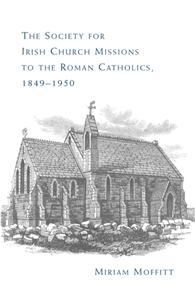
This work details traces the origins, development and impact of the proselytizing organization, the Society for Irish Church Missions to the Roman Catholics, from its Protestant foundation during the famine of 1845-47 to the early decades of Irish Free State. It argues that the foundation of this ostensibly religious society was also underpinned by social, political, and economic factors and demonstrates that by the mid 1850s the mission operated on a very substantial scale. Moffitt examines the mission's role in the shifting political realities of the late nineteenth and early twentieth centuries. The impact of this inter-faith power struggle and its legacy to the present day are explored by examining contemporary sources, folklore evidence, and the depiction of proselytizing missions in both Catholic and Protestant denomination literature and fictional writings. ;
Trusted Partner
 Trusted Partner
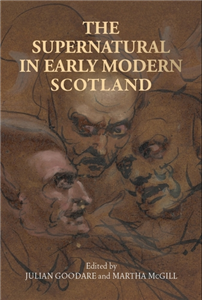
This book is about other worlds and the supernatural beings, from angels to fairies, that inhabited them. It is about divination, prophecy, visions and trances. And it is about the cultural, religious, political and social uses to which people in Scotland put these supernatural themes between 1500 and 1800. The supernatural consistently provided Scots with a way of understanding topics such as the natural environment, physical and emotional wellbeing, political events and visions of past and future. In exploring the early modern supernatural, the book has much to reveal about how men and women in this period thought about, debated and experienced the world around them. Comprising twelve chapters by an international range of scholars, The supernatural in early modern Scotland discusses both popular and elite understandings of the supernatural.
Trusted Partner

Odoyevsky's cycle of short stories, Pyostryye skazki (1833), is a transitional work between his writings of the 1820s (in particular his contributions to Mnemozina, 1824-5) and his mature period which culminated in Russkiye nochi (1844). Pyostryye skazki thus represents a romantic amalgam of elements drawn from fairy-tale and folklore, the fantastic and the society tale, serving didactic, satirical and whimsical purposes. The narration supposedly comes from an authorial alter ego, one Iriney Modestovich Gomozeyko, who occupies a place in Russian literature of the 1830s alongside Pushkin's Ivan Petrovich Belkin and Gogol's Rudyy Pan'ko. While individual stories from the cycle reappeared during the Soviet revival of interest in Odoyevsky, this edition, which includes an introduction, notes and a short bibliography, was the first integral (re)publication since 1833 of one of the basic texts of Russian Romanticism.
Trusted Partner
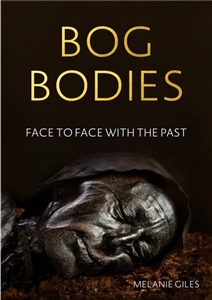
The 'bog bodies' of north-western Europe have captured the imaginations of poets and archaeologists alike, allowing us to come face-to-face with individuals from the past. Their exceptional preservation permits us to examine minute details of their lives and deaths, making us reflect poignantly on our own mortality. But, as this book argues, the bodies must be resituated within a turbulent world of endemic violence and change. Reinterpreting the latest continental research and new discoveries, and featuring a ground-breaking 'cold case' forensic study of Worsley Man, Manchester Museum's 'bog head', it brings the bogs to life through both natural history and folklore, revealing them as places that were rich and fertile yet dangerous. The book also argues that these remains do not just pose practical conservation problems but also philosophical dilemmas, compounded by the critical debate on if - and how - they should be displayed.
Trusted Partner
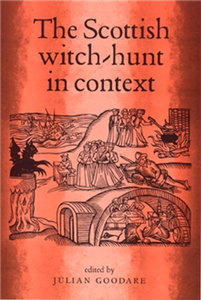
A collection of essays on Scottish witchcraft and witch-hunting, which covers the whole period of the Scottish witch-hunt, from the mid-sixteenth century to the early eighteenth. Includes studies of particular witchcraft panics such as a reassessment of the role of King James VI. Covers a wide range of topics concerned with Scottish witch-hunting and places it in the context of other topics such as gender relations, folklore, magic and healing, and moral regulation by the church and state. Provides a comparative dimension of witch-hunting beyond Scotland - one on the global context, and one comparing Scotland with England. It is a showcase for the latest thinking on the subject and will be of interest to all scholars studying witchcraft in early modern Europe, as well as the general reader wanting to move beyond shallow and sensational accounts of a subject of compelling in. ;
Trusted Partner

The fifteen groundbreaking essays contained in this book address the concept of adaptation in relation to horror cinema. Adaptation is not only a key cultural practice and strategy for filmmakers, but it is also a theme of major importance within horror cinema as a hole. The history of the genre is full of adaptations that have drawn from fiction or folklore, or that have assumed the shape of remakes of pre-existing films. The horror genre itself also abounds with its own myriad transformations and transmutations. The essays within this volume engage with an impressive range of horror texts, from the earliest silent horror films by Thomas Edison and Jean Epstein through to important contemporary phenomena, such as the western appropriation of Japanese horror motifs. Classic works by Alfred Hitchcock, David Cronenberg and Abel Ferrara receive cutting-edge re-examination, as do unjustly neglected works by Mario Bava, Guillermo del Toro and Stan Brakhage.
Trusted Partner

The fifteen groundbreaking essays contained in this book address the concept of adaptation in relation to horror cinema. Adaptation is not only a key cultural practice and strategy for filmmakers, but it is also a theme of major importance within horror cinema as a hole. The history of the genre is full of adaptations that have drawn from fiction or folklore, or that have assumed the shape of remakes of pre-existing films. The horror genre itself also abounds with its own myriad transformations and transmutations. The essays within this volume engage with an impressive range of horror texts, from the earliest silent horror films by Thomas Edison and Jean Epstein through to important contemporary phenomena, such as the western appropriation of Japanese horror motifs. Classic works by Alfred Hitchcock, David Cronenberg and Abel Ferrara receive cutting-edge re-examination, as do unjustly neglected works by Mario Bava, Guillermo del Toro and Stan Brakhage.
Trusted Partner
 Trusted Partner
 Trusted Partner
 Trusted Partner


