
Your Search Results

-
Promoted Content

 The ArtsJune 2026
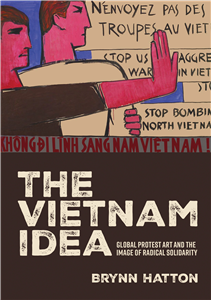
The Vietnam idea
Global protest art and the image of radical solidarity
by Brynn Hatton
The Vietnam idea examines how Vietnam became a potent symbol for global movements fighting colonialism, racism, and imperialism during the American War and its aftermath. Rather than focusing on Vietnam as a place, Brynn Hatton explores how artists and activists around the world used the idea of 'Vietnam' to express political identification and solidarity through posters, films, protest actions, exhibitions, and conceptual art. Drawing on international archives, the book reveals how diverse visual works helped shape the political imagination of the global left, and continue to influence how we see identity, conflict, and solidarity today.
-
Promoted Content
-
 Trusted Partner

 1984
1984Vietnam! Vietnam?
Die Entwicklung der sozialistischen Republik Vietnam nach dem Fall Saigons
by Andreas Buro, Karl Grobe
-
Trusted Partner
 Humanities & Social SciencesJune 2025
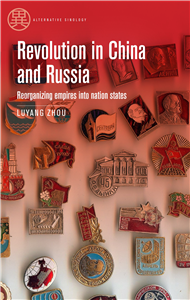
Revolution in China and Russia
Reorganizing empires into nation states
by Luyang Zhou
Most scholars believe that China's nationality policy, like that of other socialist states, imitated the Soviet nationality model, a system which has been termed an "affirmative action empire." This book offers two contributions to the literature which run counter to this convention. First, it argues that the People's Republic of China (PRC) and the Soviet Union (USSR) were different; while the PRC was aimed to build an ideal-typical nation-state, the USSR was an open union of nation-states that was only temporarily confined to a physical territory. Second, while scholars who have noted this difference attribute it to contextual factors, such as ethnic structure, geopolitical status, and Russia's intervention into the Chinese Revolution, this book contends that context shaped the Sino-Soviet difference, yet it did not determine it. Rather, there was significant leeway between the implications of the contextual factors, and what the policy-designers ultimately established. This book probes who held agency, and how these individuals bridged this gap.
-
Trusted Partner

 2024
2024Where is Russia Heading?
by Jens Siegert
Vladimir Putin has been ruling Russia for 25 years. There is no end in sight to his dictatorship. He relies on repression at home and is waging a war of destruction against a neighbouring country. The conflict with the West has long become a systemic conflict between an illiberal-autocratic ideology and liberal-democratic principles. Nothing will change as long as Putin remains in power. Nevertheless, as far as can be ascertained under unfree conditions, the majority of the population seems to be supporting Putin. Does this mean that too many people in Russia do not want democracy or peace? Will everything remain the same after Putin? Or is there a chance that Russia will eventually take a different, more democratic path? Whatever the outcome of the war in Ukraine, Russia is not going to disappear. We will still have to deal with our big neighbour in the east. This makes it all the more important to focus on longer-term developments. As a recognised expert on Russian history and society, the author outlines what the post-Putin era might look like. His in-depth analysis makes it clear that Russia is partly Putin, but Putin is not everything about Russia.
-
Trusted Partner
-
Trusted Partner
 Humanities & Social SciencesOctober 2022
Germany's Russia problem
The struggle for balance in Europe
by John Lough
The relationship between Germany and Russia is Europe's most important link with the largest country on the continent. But despite Germany's unparalleled knowledge and historical experience, its policymakers struggle to accept that Moscow's efforts to rebalance Europe at the cost of the cohesion of the EU and NATO are an attack on Germany's core interests. This book explains the scale of the challenge facing Germany in managing relations with a changing Russia. It analyses how successive German governments from 1991 to 2014 misread Russian intentions, until Angela Merkel sharply recalibrated German and EU policy towards Moscow. The book also examines what lies behind efforts to revise Merkel's bold policy shift, including attitudes inherited from the GDR and the role of Russian influence channels in Germany.
-
Trusted Partner
 Humanities & Social SciencesSeptember 2000
The Vietnam wars
by Kevin Ruane, Harry Bennett
This source book chronicles the history of the most controversial conflict of the 20th century, beginning with the birth of the Vietnamese communist party in 1930 and ending with the Vietnamese revolution in 1975. The text combines short essays with original documents to illustrate the debate. Alongside the dominating American intervention, the study also focuses on the international dimension of the conflict, particularly the role of the Soviet, Chinese and British; but it is the Vietnamese perspective that remains key. ;
-
Trusted Partner
-
Trusted Partner
-
Trusted Partner
 Humanities & Social SciencesFebruary 2026
AIDS in Soviet Russia
A story of deception, despair and hope
by Rustam Alexander
The first book to tell the shocking story of the AIDS crisis in Soviet Russia. Throughout the 1980s, as the world was grappling with the escalating crisis of AIDS, Soviet Russia continued to deny there was a problem. Arguing that the disease was limited to foreigners and 'immoral' groups, the government failed to take meaningful action, long past the point other countries had begun to recognise the full scale of the threat. In this ground-breaking book, Rustam Alexander tells the story of AIDS in Soviet Russia. Fixated on disinformation, censorship and the persecution of marginalised communities, the Soviet authorities wasted precious time, allowing the epidemic to strike at the very heart of the nation: its children. Yet, despite the government's failure, a number of brave journalists, doctors and nascent gay groups decided to take matters into their own hands and engage in full-fledged AIDS activism. Tracing the political and social response to AIDS in the final years of the Soviet era, Alexander sheds light on the devastating consequences of government inaction. He draws on personal stories, media reports and archival materials to provide a riveting account of the Russian people's fight against AIDS amid the tumultuous transformations of Gorbachev's perestroika.
-
Trusted Partner
 Humanities & Social SciencesApril 2018
Soldered states: nation-building in Germany and Vietnam
by Claire Sutherland
-
Trusted Partner
 Humanities & Social SciencesFebruary 2022
The unimagined community
by Duy Lap Nguyen, Bertrand Taithe
-
Trusted Partner
-
Trusted Partner
-
Trusted Partner
Humanities & Social SciencesNovember 2024
US public diplomacy in socialist Yugoslavia, 1950–70
Soft culture, cold partners
by Carla Konta
The first comprehensive account of the public and cultural diplomacy campaigns carried out by the US in Yugoslavia during the height of the Cold War, this book examines the political role of culture in US-Yugoslav bilateral relations and the fluid links between information and propaganda. Tito allowed the US Information Agency and the State Department's cultural programmes to enter Yugoslavia, liberated from Soviet control. The exchange of intellectual and political personnel helped foster the US-Yugoslav relationship, yet it posed severe ideological challenges for both sides. By providing new insights into porous borders between freedom and coercion in Tito's regime, this book shows how public diplomacy acted as an external input for Yugoslav liberalisation and dissident movements. Using extensive archival research and interviews, Konta analyses the links between information and propaganda, and the unintended effects of propaganda beyond the control of producers and receivers.
-
Trusted Partner
-
Trusted Partner
 Humanities & Social SciencesOctober 2020
Japan's new security partnerships
by Wilhelm Vosse, Paul Midford
-
Trusted Partner
 Humanities & Social SciencesJune 2004
President Lyndon Johnson and Soviet Communism
by John Dumbrell
This major new study fills a significant gap in the academic literature on the Cold War by considering President Lyndon Johnson's policy towards the Soviet Union. The author examines the attitudes of Johnson and his leading advisers toward the Soviet leadership, taking into account the effects of Moscow's growing splits with Beijing, the impact on US-Soviet relations of nuclear issues, the Vietnam War, and clashes over Cuba, the Middle East and Eastern Europe. The author's research is based on detailed scrutiny of archives in Britain and the United States, as well as recently published document collections. His study also examines the President's personal leadership qualities, his mistakes in Vietnam and his success as a peacemaker with Moscow. The book constitutes a major contribution to literature on President Johnson's foreign policy 'beyond Vietnam'. The book will be of interest to students of the Cold War, the Johnson Presidency and of US foreign relations. ;
-
Trusted Partner



