
Your Search Results
-

-

Ediciones Corregidor is an independent Argentine publisher with more than five decades publishing..
Corregidor is an independent Argentine publisher with more than five decades, dedicated to publishing and distributing a catalog focused in Latin American and Argentine literature.
View Rights Portal
-
Promoted Content

 The ArtsJune 2026
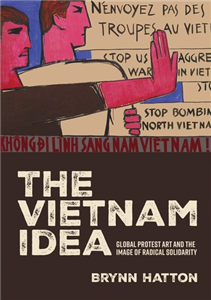
The Vietnam idea
Global protest art and the image of radical solidarity
by Brynn Hatton
The Vietnam idea examines how Vietnam became a potent symbol for global movements fighting colonialism, racism, and imperialism during the American War and its aftermath. Rather than focusing on Vietnam as a place, Brynn Hatton explores how artists and activists around the world used the idea of 'Vietnam' to express political identification and solidarity through posters, films, protest actions, exhibitions, and conceptual art. Drawing on international archives, the book reveals how diverse visual works helped shape the political imagination of the global left, and continue to influence how we see identity, conflict, and solidarity today.
-
Promoted Content
-
 Trusted Partner
 Business, Economics & LawJune 2024
The labour movement in Lebanon
Power on hold
by Lea Bou Khater
The labour movement in Lebanon: Power on hold narrates the history of the Lebanese labour movement from the early twentieth century to today. Bou Khater demonstrates that trade unionism in the country has largely been a failure, for reasons including state interference, tactical co-optation, and the strategic use of sectarianism by an oligarchic elite, together with the structural weakness of a service-based laissez-faire economy. Drawing on a vast body of Arabic-language primary sources and difficult-to-access archives, the book's conclusions are significant not only for trade unionism, but also for new forms of workers' organisations and social movements in Lebanon and beyond. The Lebanese case study presented here holds significant implications for the wider Arab world and for comparative studies of labour. This authoritative history of the labour movement in Lebanon is vital reading for scholars of trade unionism, Lebanese politics, and political economy.
-
Trusted Partner
 Business, Economics & LawFebruary 2022
The labour movement in Lebanon
by Lea Bou Khater, Simon Mabon
-
Trusted Partner
 Humanities & Social SciencesJune 2025
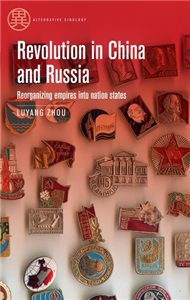
Revolution in China and Russia
Reorganizing empires into nation states
by Luyang Zhou
Most scholars believe that China's nationality policy, like that of other socialist states, imitated the Soviet nationality model, a system which has been termed an "affirmative action empire." This book offers two contributions to the literature which run counter to this convention. First, it argues that the People's Republic of China (PRC) and the Soviet Union (USSR) were different; while the PRC was aimed to build an ideal-typical nation-state, the USSR was an open union of nation-states that was only temporarily confined to a physical territory. Second, while scholars who have noted this difference attribute it to contextual factors, such as ethnic structure, geopolitical status, and Russia's intervention into the Chinese Revolution, this book contends that context shaped the Sino-Soviet difference, yet it did not determine it. Rather, there was significant leeway between the implications of the contextual factors, and what the policy-designers ultimately established. This book probes who held agency, and how these individuals bridged this gap.
-
Trusted Partner
 Humanities & Social SciencesMarch 2023
Socialist republic
Remaking the British left in 1980s Sheffield
by Daisy Payling
Socialist republic is a timely account of 1980s left-wing politics in South Yorkshire. It explores how Sheffield City Council set out to renew the British Left. Through careful analysis of the Council's agenda and how it interacted with trade unions, women's groups, lesbian and gay rights groups and acted on issues such as peace, environmentalism, anti-apartheid and anti-racism, the book draws out the complexities involved in building a broad-based politics which aimed unite class and identity politics. Running counter to 1980s narratives dominated by Thatcherism, the book examines the persistence of social democracy locally, demonstrating how grassroots local histories can enrich our understanding of political developments on a national and international level. The book is essential reading for students, scholars, and activists with an interest in left-wing politics and history.
-
Trusted Partner
 The ArtsDecember 2025
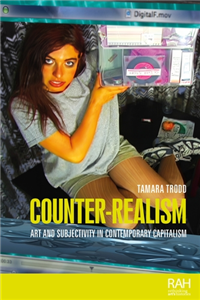
Counter-realism
Art and subjectivity in contemporary capitalism
by Tamara Trodd
Counter-Realism: Art and subjectivity in contemporary capitalism is an ambitious and original study of key works of film and video art made since 2008 by leading contemporary artists, including William Kentridge, Amalia Ulman, Melanie Gilligan, Lizzie Fitch/Ryan Trecartin and Elizabeth Price. It argues their work should be understood as a reconfigured form of 'realism', expressing economic forces and political pressures across contexts ranging from post-apartheid South Africa, through austerity-era Spain, to contemporary Britain and North America. Supported by original artist interviews and detailed visual analysis of individual works of art, as well as a wide-ranging research base, which synthesises arguments from a variety of disciplines including art history, literary, film and political studies, the book is clearly written, and makes legible the ways in which some of the most vivid and compelling works of contemporary moving-image art engage with historical and contemporary political debates.
-
Trusted Partner

 2024
2024Where is Russia Heading?
by Jens Siegert
Vladimir Putin has been ruling Russia for 25 years. There is no end in sight to his dictatorship. He relies on repression at home and is waging a war of destruction against a neighbouring country. The conflict with the West has long become a systemic conflict between an illiberal-autocratic ideology and liberal-democratic principles. Nothing will change as long as Putin remains in power. Nevertheless, as far as can be ascertained under unfree conditions, the majority of the population seems to be supporting Putin. Does this mean that too many people in Russia do not want democracy or peace? Will everything remain the same after Putin? Or is there a chance that Russia will eventually take a different, more democratic path? Whatever the outcome of the war in Ukraine, Russia is not going to disappear. We will still have to deal with our big neighbour in the east. This makes it all the more important to focus on longer-term developments. As a recognised expert on Russian history and society, the author outlines what the post-Putin era might look like. His in-depth analysis makes it clear that Russia is partly Putin, but Putin is not everything about Russia.
-
Trusted Partner
 Humanities & Social SciencesOctober 2022
Germany's Russia problem
The struggle for balance in Europe
by John Lough
The relationship between Germany and Russia is Europe's most important link with the largest country on the continent. But despite Germany's unparalleled knowledge and historical experience, its policymakers struggle to accept that Moscow's efforts to rebalance Europe at the cost of the cohesion of the EU and NATO are an attack on Germany's core interests. This book explains the scale of the challenge facing Germany in managing relations with a changing Russia. It analyses how successive German governments from 1991 to 2014 misread Russian intentions, until Angela Merkel sharply recalibrated German and EU policy towards Moscow. The book also examines what lies behind efforts to revise Merkel's bold policy shift, including attitudes inherited from the GDR and the role of Russian influence channels in Germany.
-
Trusted Partner
 Humanities & Social SciencesSeptember 2000
The Vietnam wars
by Kevin Ruane, Harry Bennett
This source book chronicles the history of the most controversial conflict of the 20th century, beginning with the birth of the Vietnamese communist party in 1930 and ending with the Vietnamese revolution in 1975. The text combines short essays with original documents to illustrate the debate. Alongside the dominating American intervention, the study also focuses on the international dimension of the conflict, particularly the role of the Soviet, Chinese and British; but it is the Vietnamese perspective that remains key. ;
-
Trusted Partner
 Humanities & Social SciencesFebruary 2026
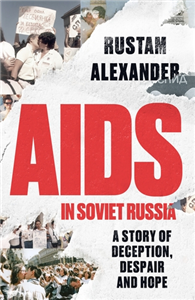
AIDS in Soviet Russia
A story of deception, despair and hope
by Rustam Alexander
The first book to tell the shocking story of the AIDS crisis in Soviet Russia. Throughout the 1980s, as the world was grappling with the escalating crisis of AIDS, Soviet Russia continued to deny there was a problem. Arguing that the disease was limited to foreigners and 'immoral' groups, the government failed to take meaningful action, long past the point other countries had begun to recognise the full scale of the threat. In this ground-breaking book, Rustam Alexander tells the story of AIDS in Soviet Russia. Fixated on disinformation, censorship and the persecution of marginalised communities, the Soviet authorities wasted precious time, allowing the epidemic to strike at the very heart of the nation: its children. Yet, despite the government's failure, a number of brave journalists, doctors and nascent gay groups decided to take matters into their own hands and engage in full-fledged AIDS activism. Tracing the political and social response to AIDS in the final years of the Soviet era, Alexander sheds light on the devastating consequences of government inaction. He draws on personal stories, media reports and archival materials to provide a riveting account of the Russian people's fight against AIDS amid the tumultuous transformations of Gorbachev's perestroika.
-
Trusted Partner
 Humanities & Social SciencesFebruary 2022
Women art workers and the Arts and Crafts movement
by Zoë Thomas, Lynn Abrams
-
Trusted Partner
 The ArtsFebruary 2022
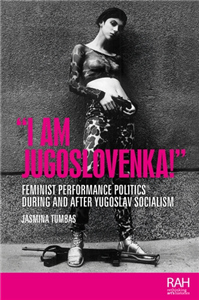
"I am Jugoslovenka!"
Feminist performance politics during and after Yugoslav Socialism
by Jasmina Tumbas, Amelia Jones, Marsha Meskimmon
"I am Jugoslovenka" argues that queer-feminist artistic and political resistance were paradoxically enabled by socialist Yugoslavia's unique history of patriarchy and women's emancipation. Spanning performance and conceptual art, video works, film and pop music, lesbian activism and press photos of female snipers in the Yugoslav wars, the book analyses feminist resistance in a range of performative actions that manifest the radical embodiment of Yugoslavia's anti-fascist, transnational and feminist legacies. It covers celebrated and lesser-known artists from the 1970s to today, including Marina Abramovic, Sanja Ivekovic, Vlasta Delimar, Tanja Ostojic, Selma Selman and Helena Janecic, along with music legends Lepa Brena and Esma Redzepova. "I am Jugoslovenka" tells a unique story of women's resistance through the intersection of feminism, socialism and nationalism in East European visual culture.
-
Trusted Partner
 Humanities & Social SciencesApril 2020
Anarchism, 1914–18
Internationalism, anti-militarism and war
by Ruth Kinna, Matthew S. Adams
Anarchism 1914-18 is the first systematic analysis of anarchist responses to the First World War. It examines the interventionist debate between Peter Kropotkin and Errico Malatesta which split the anarchist movement in 1914 and provides a historical and conceptual analysis of debates conducted in European and American movements about class, nationalism, internationalism, militarism, pacifism and cultural resistance. Contributions discuss the justness of war, non-violence and pacifism, anti-colonialism, pro-feminist perspectives on war and the potency of myths about the war and revolution for the reframing of radical politics in the 1920s and beyond. Divisions about the war and the experience of being caught on the wrong side of the Bolshevik Revolution encouraged anarchists to reaffirm their deeply-held rejection of vanguard socialism and develop new strategies that drew on a plethora of anti-war activities.
-
Trusted Partner
 1984
1984Vietnam! Vietnam?
Die Entwicklung der sozialistischen Republik Vietnam nach dem Fall Saigons
by Andreas Buro, Karl Grobe
-
Trusted Partner
 Business, Economics & LawMarch 2025
Tadeusz Kowalik and Poland’s return from socialism to capitalism
Full circle
by Gavin Rae
Tadeusz Kowalik lived through ten decades and three economic and political systems in Poland. He combined his academic study of economic ideas with his socialist ideals of building a fairer and more just society. This book covers the intellectual and political work of Kowalik, within the context of modern Polish history. Kowalik was part of a Polish School of critical left-wing political economists, that included Michal Kalecki and Oskar Lange. Kowalik contributed to the body of work produced by this group, which included his interpretation of their work. Kowalik participated in some of the most momentous events in post-war Polish history, helping to organise a group of intellectuals to advise the shipyard workers at the Gdansk shipyards in 1980. He became a vehement opponent of Poland's neoliberal form of capitalism and left a body of work that illuminates our understanding of capitalism and socialism today.
-
Trusted Partner
 Humanities & Social SciencesMay 2009
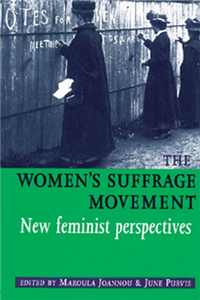
The Women's Suffrage movement
*New feminist perspectives*
by Maroula Joannou, June Purvis
Available in paperback for the first time, this important collection of essays illustrates the complexity, richness and diversity of the suffrage movement. Combining historical reappraisal with lively accounts of the culture of the women's suffrage movement, this volume offers a unique focus. It includes studies of the fascinating, but neglected groups that participated in the campaign: the Women's Franchise League; the Women's Freedom League; the Women's Tax Resistance League and the United Suffragists. This is accompanied by feminist research on the poetry, fiction and drama that emerged from women's struggle for the vote. In addition there are reappraisals of two leading figures in the Pankhursts' Women's Social and Political Union, an illuminating analysis of the relationship between suffrage and sexuality, and a discussion of what happened away from the metropolis, as well as of the little known campaign to extend the vote after 1918. ;
-
Trusted Partner


Does Movement Really Make Us Smart?
by Petra Jansen, Stefanie Richter
Media reports often praise movement as a cure-all. But apart from its undisputed positive effect on health, does movement really make us smarter? Consider a national football team, for example – are these excessively sports-driven players automatically the smartest people? Should we simply replace all school subjects with sports? The authors provide a detailed summary of the latest scientific findings on the influence of movement on cognitive ability. They describe the effects of movement, on old age, embodiment, emotion, school as well as other factors that influence cognition. Target Group: teachers, lecturers, psychologists, psychiatrists, neurologists, psychotherapists, movement therapists.
-
Trusted Partner
 The ArtsJanuary 2019
European Film Noir
by Andrew Spicer
European Film Noir is the first book to bring together specialist discussions of film noir in specific European national cinemas. Written by leading scholars, this groundbreaking study provides an authoritative understanding of an important aspect of European cinema and of film noir itself, for too long considered as a solely American form. The Introduction reviews the problems of defining film noir, its key characteristics and discusses its significance to the development of European film, the relationship of specific national films noirs to each other, to American noir and to historical and social change. Eight chapters then discuss film noir in France, Germany, Britain and Spain, analysing both earlier developments and the evolution of neo-noir through to the present. A further chapter explores film noir in Italian cinema where its presence is not so well defined. Each piece provides a critical overview of the most significant films in relation to their industrial and social contexts. European Film Noir is an important contribution to the study of European cinema that will have a broad appeal to undergraduates, cinéastes, film teachers and researchers.
-
Trusted Partner


