
All Things Women
Find your focus and strengths in times of crisis.
View Rights Portal

Armin Lear Press is home to award-winning editorial and design talent.
View Rights Portal
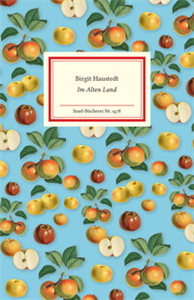
Apfelbäume, so weit das Auge reicht, idyllische Fachwerkdörfer hinter dem Deich und am Horizont die Elbe: Das Alte Land ist eine uralte Kulturlandschaft am Wasser, die ihren eigenen Charakter bewahrt hat. Prächtige Bauernhöfe und Backsteinkirchen mit kostbaren Barockorgeln zeugen noch heute vom frühen Wohlstand der Altländer. Birgit Haustedt erzählt von den Anfängen im Mittelalter, von Deichbau und Sturmfluten, vom Alltag der kleinen Leute und von großer Handwerkskunst, von stolzen Bauern und mutigen Schiffern. Dazu ein Exkurs, welche Rolle das Alte Land in Lessings Leben und Goethes Faust spielte.


»Osnos erzählt die bewegende Geschichte düsterer Zeiten mit einer Menschlichkeit, die Hoffnung auf etwas Besseres verspricht.« Michael J. Sandel Nach zehn Jahren als Korrespondent im Nahen Osten und in China zieht Evan Osnos 2013 zurück in die USA. Doch das Land, in das er heimkehrt, ist kaum wiederzuerkennen. Chancengleichheit, Rechtsstaatlichkeit, der Glaube an die Macht der Wahrheit – die fundamentalen Prinzipien der ältesten Demokratie der Welt scheinen ihre Selbstverständlichkeit eingebüßt zu haben. 2016 wird Donald Trump zum Präsidenten gewählt, vier Jahre später stürmen seine Unterstützer das Kapitol. Aus den vereinigten sind die gespaltenen Staaten von Amerika geworden. Evan Osnos hat diese Entwicklungen über Jahre beobachtet. Er versucht zu verstehen und zu erklären: warum im reichen Greenwich an der Ostküste, wo er aufgewachsen ist, aus gemäßigten Konservativen eingefleischte Trump-Anhänger wurden. Wie sich in Clarksburg, West Virginia, wo er seinen ersten Job bei einer Zeitung annahm, die Opioid-Krise zur nationalen Katastrophe ausweiten konnte. Und was die Ursachen sind für den Rassismus, die Waffengewalt und die Ungleichheit in Chicago, wo er selbst zu einem gefragten Journalisten aufstieg. Aus eindringlichen Porträts entsteht eine große Erzählung, die vom 11. September 2001 bis zum 6. Januar 2021 reicht. Der Pulitzer-Preisträger zeichnet nach, wie die USA den moralischen Kompass verloren, der einst aus einer Vereinigung von Staaten die Vereinigten Staaten machte.
 Trusted Partner

 Trusted Partner

In an age when engraving and photography were making artistic images available to a much wider public, artists were able to influence public attitudes more powerfully than ever before. This book examines works of art on military themes in relation to ruling-class ideologies about the army, war and the empire. The first part of the book is devoted to a chronological survey of battle painting, integrated with a study of contemporary military and political history. The chapters link the debate over the status and importance of battle painting to contemporary debates over the role of the army and its function at home and abroad. The second part discusses the intersection of ideologies about the army and military art, but is concerned with an examination of genre representations of soldiers. Another important theme which runs through the book is the relation of English to French military art. During the first eighty years of the period under review France was the cynosure of military artists, the school against which British critics measured their own, and the place from which innovations were imported and modified. In every generation after Waterloo battle painters visited France and often trained there. The book shows that military art, or the 'absence' of it, was one of the ways in which nationalist commentators articulated Britain's moral superiority. The final theme which underlies much of the book is the shifts which took place in the perception of heroes and hero-worship.
Trusted Partner
 Trusted Partner
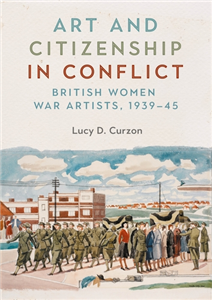
Art and Citizenship in Conflict examines the work of women war artists in order to highlight the complexity of citizenship and gender in Britain during the Second World War. Evelyn Dunbar, Mary Kessell, Ethel Gabain, Stella Schmolle, and Laura Knight, among others, were commissioned by the War Artists' Advisory Committee (WAAC) to document the millions of women who took up sometimes unconventional roles-in agriculture, the auxiliary services, and manufacturing, among others-to support the British war effort. Indeed, their prints, drawings, and paintings were part of a broader scheme to uphold morale and promote much-needed citizen involvement on the home front. While there is growing interest, the importance of their remit in the history of the Second World War and the quality of their artistry have nonetheless not yet secured them a significant place in scholarship. Art and Citizenship in Conflict seeks to amend this gap while also broadening approaches to the study of war itself.
Trusted Partner
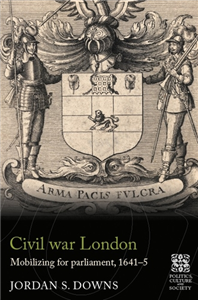
This book looks at London's provision of financial and military support for parliament's war against King Charles I. It explores for the first time a series of episodic, circumstantial and unique mobilisations that spanned from late 1641 to early 1645 and which ultimately led to the establishment of the New Model Army. Based on research from two-dozen archives, Civil war London charts the successes and failures of efforts to move London's vast resources and in the process poses a number of challenges to longstanding notions about the capital's 'parliamentarian' makeup. It reveals interactions between London's Corporation, parochial communities and livery companies, between preachers and parishioners and between agitators, propagandists and common people. Within these tangled webs of political engagement reside the untold stories of the movement of money and men, but also of parliament's eventual success in the English Civil War.
Trusted Partner

A considered investigation of a long-standing army base's impact on the British countryside. What is it like to live next door to a British Army base? Beyond the barracks provides an eye-opening account of the sprawling military presence on Salisbury Plain, drawing on a wide range of voices from both sides of the divide. Targeted for expansion under government plans to reorganise the UK's global defence estate, the Salisbury 'super garrison' offers a unique opportunity to explore the impact of the military footprint in a particular place. But this is no ordinary environment: as well as being the world-famous site of Stonehenge, the grasslands of Salisbury Plain are home to rare plants and wildlife. How does the army take responsibility for conserving this unique landscape as it trains young men and women to use lethal weapons? Are its claims that its presence is a positive for the environment anything more than propaganda? Beyond the barracks investigates these questions against the backdrop of a historic landscape inscribed with the legacy of perpetual war.
Trusted Partner
Trusted Partner

What is it like to live next door to a British Army base? England's military heartland provides an eye-opening account of the sprawling military presence on Salisbury Plain, drawing on a wide range of voices from both sides of the divide. Targeted for expansion under government plans to reorganise the UK's global defence estate, the Salisbury 'super garrison' offers a unique opportunity to explore the impact of the military footprint in a particular place. But this is no ordinary environment: as well as being the world-famous site of Stonehenge, the grasslands of Salisbury Plain are home to rare plants and wildlife. How does the army take responsibility for conserving this unique landscape as it trains young men and women to use lethal weapons? Are its claims that its presence is a positive for the environment anything more than propaganda? This book investigates these questions against the backdrop of a historic landscape inscribed with the legacy of perpetual war.
Trusted Partner
Trusted Partner

A Vision of Battlements is the first novel by the writer and composer Anthony Burgess, who was born in Manchester in 1917. Set in Gibraltar during the Second World War, the book follows the fortunes of Richard Ennis, an army sergeant and incipient composer who dreams of composing great music and building a new cultural world after the end of the war. Following the example of his literary hero, James Joyce, Burgess takes the structure of his book from Virgil's Aeneid. The result is, like Joyce's Ulysses, a comic rewriting of a classical epic, whose critique of the Army and the postwar settlement is sharp and assured. The Irwell Edition is the first publication of Burgess's forgotten masterpiece since 1965. This new edition includes an introduction and notes by Andrew Biswell, author of a prize-winning biography of Anthony Burgess.
Trusted Partner
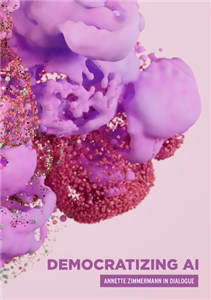
Democratizing AI offers a powerful rethinking of how artificial intelligence should be governed. Challenging the dominance of tech elites in shaping AI's future, Zimmermann argues that AI deployment is a political act-one that must be subject to democratic control. She proposes a practical "playbook" for reclaiming agenda-setting power through civic participation, public ownership, and institutional reform. Engaging with leading critics, Zimmermann defends a risk-sensitive proceduralist approach while acknowledging the deeper structural challenges posed by capitalism, inequality, and democratic fatigue. This book is a call to action: to resist learned helplessness, confront techno-authoritarianism, and shape AI's trajectory in line with democratic values. Thoughtful, urgent, and visionary, the book is essential reading for anyone concerned with the future of technology and democracy.
Trusted Partner
On 25 January 1474, Charles the Bold, duke of Burgundy, appeared before his subjects in Dijon. Robed in silk, gold and precious jewels and wearing a headpiece that gave the illusion of a crown, he made a speech in which he cryptically expressed his desire to become a king. Three years later, Charles was killed at the battle of Nancy, an event that plunged the Great Principality of Burgundy into chaos. This book, innovative and essential, not only explores Burgundian history and historiography but offers a complete synthesis about the nature of politics in this region, considered both from the north and the south. Focusing on political ideologies, a number of important issues are raised relating to the medieval state, the signification of the nation under the 'Ancien Regime', the role of warfare in the creation of political power and the impact of political loyalties in the exercise of government. In doing so, the book challenges a number of existing ideas about the Burgundian state.
Trusted Partner
 Trusted Partner
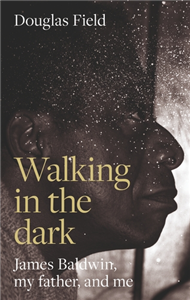
A moving exploration of the life and work of the celebrated American writer, blending biography and memoir with literary criticism. Since James Baldwin's death in 1987, his writing - including The Fire Next Time, one of the manifestoes of the Civil Rights Movement, and Giovanni's Room, a pioneering work of gay fiction - has only grown in relevance. Douglas Field was introduced to Baldwin's essays and novels by his father, who witnessed the writer's debate with William F. Buckley at Cambridge University in 1965. In Walking in the dark, he embarks on a journey to unravel his life-long fascination and to understand why Baldwin continues to enthral us decades after his death. Tracing Baldwin's footsteps in France, the US and Switzerland, and digging into archives, Field paints an intimate portrait of the writer's life and influence. At the same time, he offers a poignant account of coming to terms with his father's Alzheimer's disease. Interweaving Baldwin's writings on family, illness, memory and place, Walking in the dark is an eloquent testament to the enduring power of great literature to illuminate our paths.
Trusted Partner
Trusted Partner
Trusted Partner


Land in Sicht! Die „Hoppetosse“ von Kapitän Langstrumpf sticht in See – und mit an Bord sind Pippi und ihre Freunde. Das Ziel heißt natürlich Taka-Tuka-Land, wo alle gemeinsam viele tolle Sachen erleben. Kaum zurück, entschließt Pippi sich, niemals erwachsen zu werden. Wie sie das wohl anstellen will? Aufwendig produziertes Hörspiel mit hinreißender Musik von Dieter Faber und Frank Oberpichler. Entdecke Oetinger Kinder-Hörbücher zum Mitfiebern und Träumen! Mit unseren Hörspielen für Kinder von 4 bis 8 Jahren werden die schönsten Kinderbuch-Klassiker von Astrid Lindgren lebendig wie nie zuvor, von Michel aus Lönneberga bis hin zu Lotta aus der Krachmacherstraße. Ob als Hörspiel oder als musikalisch unterlegte Lesung, mit unseren Hör-CDs tauchen Kinder in die kunterbunte Welt der berühmten schwedischen Kinderbuch-Autorin ein. Renommierte Sprecher*innen und eine sorgfältige Komposition machen jede unserer Audio-CDs zum Erlebnis für junge und jung gebliebene Hörer*innen. Dabei regen Hörbücher für Kinder die Fantasie an, erweitern den Wortschatz und fördern ganz nebenbei die Konzentration. Vom ersten Sonnenstrahl bis zum Einschlafen – ob zu Hause oder als Kinderbeschäftigung auf Reisen: Astrid Lindgrens Hörspiel-Geschichten begleiten Kinder jeden Tag aufs Neue dabei, die Welt für sich zu erobern!
Trusted Partner



