
All Things Women
Find your focus and strengths in times of crisis.
View Rights Portal

LIBRA LIBROS PROYECTOS S.A.S es una empresa colombiana, fundada en el año 2015. Su Editorial LIBRA LIBROS cuenta con lineas temáticas en la historia, música y patrimonio del Caribe colombiano. Se presta servicios a otras empresas o entidades privadas y públicas en realizar proyectos editoriales propios.
View Rights Portal

How do feminist movements develop and organise in ethno-nationally divided societies? How does this challenge our understandings of contemporary fourth wave feminism? Women's Troubles sets out to answer these questions using rich empirical data and analysis in an examination of feminist activism after the Northern Irish peace agreement. Utilising feminist frameworks and debates on movement building, policymaking, abortion rights, gender-based violence and the UN women, peace and security agenda, Claire Pierson interrogates the opportunities and challenges in articulating a feminist voice and creating feminist spaces in the conflict transformational politics and society. Capturing the complexities of contemporary feminist movement building in a divided society, Women's Troubles contributes to ongoing analysis of contemporary global feminisms.
In solidarity, under suspicion is the successor volume to Against the grain (2014) and Waiting for the revolution (2017), complementing analysis of the far left in Britain from 1956 until the present. In addition to new scholarship on hitherto under-researched groups and movements, the volume explores recent findings from the Undercover Policing Inquiry and provides historical context for developments in the British left during and after 'Corbynism'. Chapters consider the far left's relationship to the state as well as to the Labour Party, and highlights attempts by far-left groups and activists both to intervene internationally and to transform themselves. With a range of different perspectives - activist and academic - In solidarity, under suspicion draws out the distinct ways that different far left groups and movements have responded to problems which remain salient today.
 Trusted Partner
Trusted Partner
Trusted Partner


Media reports often praise movement as a cure-all. But apart from its undisputed positive effect on health, does movement really make us smarter? Consider a national football team, for example – are these excessively sports-driven players automatically the smartest people? Should we simply replace all school subjects with sports? The authors provide a detailed summary of the latest scientific findings on the influence of movement on cognitive ability. They describe the effects of movement, on old age, embodiment, emotion, school as well as other factors that influence cognition. Target Group: teachers, lecturers, psychologists, psychiatrists, neurologists, psychotherapists, movement therapists.
Trusted Partner
Trusted Partner
 Trusted Partner
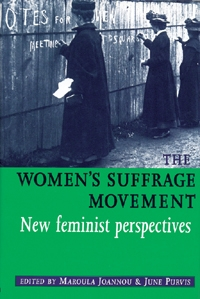
Available in paperback for the first time, this important collection of essays illustrates the complexity, richness and diversity of the suffrage movement. Combining historical reappraisal with lively accounts of the culture of the women's suffrage movement, this volume offers a unique focus. It includes studies of the fascinating, but neglected groups that participated in the campaign: the Women's Franchise League; the Women's Freedom League; the Women's Tax Resistance League and the United Suffragists. This is accompanied by feminist research on the poetry, fiction and drama that emerged from women's struggle for the vote. In addition there are reappraisals of two leading figures in the Pankhursts' Women's Social and Political Union, an illuminating analysis of the relationship between suffrage and sexuality, and a discussion of what happened away from the metropolis, as well as of the little known campaign to extend the vote after 1918. ;
Trusted Partner

The labour movement in Lebanon: Power on hold narrates the history of the Lebanese labour movement from the early twentieth century to today. Bou Khater demonstrates that trade unionism in the country has largely been a failure, for reasons including state interference, tactical co-optation, and the strategic use of sectarianism by an oligarchic elite, together with the structural weakness of a service-based laissez-faire economy. Drawing on a vast body of Arabic-language primary sources and difficult-to-access archives, the book's conclusions are significant not only for trade unionism, but also for new forms of workers' organisations and social movements in Lebanon and beyond. The Lebanese case study presented here holds significant implications for the wider Arab world and for comparative studies of labour. This authoritative history of the labour movement in Lebanon is vital reading for scholars of trade unionism, Lebanese politics, and political economy.
Trusted Partner

Lukácsian film theory and cinema explores Georg Lukács' writings on film. The Hungarian Marxist critic Georg Lukács is primarily known as a literary theorist, but he also wrote extensively on the cinema. These writings have remained little known in the English-speaking world because the great majority of them have never actually been translated into English - until now. Aitken has gathered together the most important essays and the translations appear here, often for the first time. This book thus makes a decisive contribution to understandings of Lukács within the field of film studies, and, in doing so, also challenges many existing preconceptions concerning his theoretical position. For example, whilst Lukács' literary theory is well known for its repudiation of naturalism, in his writings on film Lukács appears to advance a theory and practice of film that can best be described as naturalist. Lukácsian film theory and cinema is divided into two parts. In part one, Lukács' writings on film are explored, and placed within relevant historical and intellectual contexts, whilst part two consists of the essays themselves. This book will be of considerable interest to scholars and students working within the fields of film studies, literary studies, intellectual history, media and cultural studies. It is also intended to be the final volume in a trilogy of works on cinematic realism, which includes the author's earlier European film theory and cinema (2001), and Realist film theory and cinema (2006).
Trusted Partner

European Film Noir is the first book to bring together specialist discussions of film noir in specific European national cinemas. Written by leading scholars, this groundbreaking study provides an authoritative understanding of an important aspect of European cinema and of film noir itself, for too long considered as a solely American form. The Introduction reviews the problems of defining film noir, its key characteristics and discusses its significance to the development of European film, the relationship of specific national films noirs to each other, to American noir and to historical and social change. Eight chapters then discuss film noir in France, Germany, Britain and Spain, analysing both earlier developments and the evolution of neo-noir through to the present. A further chapter explores film noir in Italian cinema where its presence is not so well defined. Each piece provides a critical overview of the most significant films in relation to their industrial and social contexts. European Film Noir is an important contribution to the study of European cinema that will have a broad appeal to undergraduates, cinéastes, film teachers and researchers.
Trusted Partner
Trusted Partner

Medieval film explores theoretical questions about the ideological, artistic, emotional and financial investments inhering in cinematic renditions of the medieval period. What does it mean to create and watch a 'medieval film'? What is a medieval film and why are they successful? This is the first work that attempts to answer these questions, drawing, for instance, on film theory, postcolonial theory, cultural studies and the growing body of work on medievalism. Contributors investigate British, German, Italian, Australian, French, Swedish and American film, exploring topics such translation, temporality, film noir, framing and period film - and find the medieval lurking in inexpected corners. In addition it provides in-depth studies of individual films from different countries including The Birth of a Nation to Nosferatu, and Robin Hood: Prince of Thieves. Medieval Film will be of interest to medievalists working in disciplines including literature, history, to scholars working on film and in cultural studies. It will also be of interest to undergraduates, postgraduates and to an informed enthusiast in film or/and medieval culture.
Trusted Partner

Medieval film explores theoretical questions about the ideological, artistic, emotional and financial investments inhering in cinematic renditions of the medieval period. What does it mean to create and watch a 'medieval film'? What is a medieval film and why are they successful? This is the first work that attempts to answer these questions, drawing, for instance, on film theory, postcolonial theory, cultural studies and the growing body of work on medievalism. Contributors investigate British, German, Italian, Australian, French, Swedish and American film, exploring topics such translation, temporality, film noir, framing and period film - and find the medieval lurking in unexpected corners. In addition it provides in-depth studies of individual films from different countries including The Birth of a Nation to Nosferatu, and Robin Hood: Prince of Thieves. Medieval film will be of interest to medievalists working in disciplines including literature, history, art history, to scholars working on film and in cultural studies. It will also be of interest to undergraduates, postgraduates and to an informed enthusiast in film or/and medieval culture.
Trusted Partner
A moving exploration of the life and work of the celebrated American writer, blending biography and memoir with literary criticism. Since James Baldwin's death in 1987, his writing - including The Fire Next Time, one of the manifestoes of the Civil Rights Movement, and Giovanni's Room, a pioneering work of gay fiction - has only grown in relevance. Douglas Field was introduced to Baldwin's essays and novels by his father, who witnessed the writer's debate with William F. Buckley at Cambridge University in 1965. In Walking in the dark, he embarks on a journey to unravel his life-long fascination and to understand why Baldwin continues to enthral us decades after his death. Tracing Baldwin's footsteps in France, the US and Switzerland, and digging into archives, Field paints an intimate portrait of the writer's life and influence. At the same time, he offers a poignant account of coming to terms with his father's Alzheimer's disease. Interweaving Baldwin's writings on family, illness, memory and place, Walking in the dark is an eloquent testament to the enduring power of great literature to illuminate our paths.
Trusted Partner

'Realist film theory and cinema' embraces studies of cinematic realism and 19th century tradition, the realist film theories of Lukács, Grierson, Bazin and Kracauer, and the relationship of realist film theory to the general field of film theory and philosophy. This is the first book to attempt a rigorous and systematic application of realist film theory to the analysis of particular films. The book suggests new ways forward for a new series of studies in cinematic realism, and for a new form of film theory based on realism. It stresses the importance of the question of realism both in film studies and in contemporary life. Aitken's work will be of interest to scholars and advanced students of film studies, literary studies, media studies, cultural studies and philosophy.
Trusted Partner
Innovatively extending counterfactual thought experiments from history and the social sciences to literary historiography, criticism and theory, Counterfactual Romanticism reveals the ways in which the shapes of Romanticism are conditioned by that which did not come to pass. Exploring various modalities of counterfactual speculation and inquiry across a range of Romantic-period authors, genres and concerns, this collection offers a radical new purchase on literary history, on the relationship between history and fiction, and on our historicist methods to date - and thus on the Romanticisms we (think we) have inherited. Counterfactual Romanticism provides a ground-breaking method of re-reading literary pasts and our own reading presents; in the process, literary production, texts and reading practices are unfossilised and defamiliarised.
Trusted Partner

This book constitutes the first comprehensive history of the network of women who worked at the heart of the English Arts and Crafts movement from the 1870s to the 1930s. Challenging the long-standing assumption that the Arts and Crafts simply revolved around celebrated male designers like William Morris, it instead offers a new social and cultural account of the movement, which simultaneously reveals the breadth of the imprint of women art workers upon the making of modern society. Thomas provides unprecedented insight into how women navigated authoritative roles as 'art workers' by asserting expertise across a range of interconnected cultures: from the artistic to the professional, intellectual, entrepreneurial and domestic. Through examination of newly discovered institutional archives and private papers, Thomas elucidates the critical importance of the spaces around which women conceptualised alternative creative and professional lifestyles.
Trusted Partner

In one of the first monographs of its kind to focus on the aesthetic and emotional impact of lighting in cinema, Lara Thompson looks at the way light informs the cinematic experience, from constructing star identities, sculpting natural light and creating imaginary worlds, to the seductive power of darkness, fading representations of the past and arresting twilight encounters. This groundbreaking and accessible introductory study offers a unique insight into the way illumination has transcended its diffuse functional boundaries and been elevated to a position of narrative and emotional importance, transforming it from an unobtrusive element of film style to an expressive and essential component. It includes analyses of over fifty renowned international films, discussed in inventive and illuminating combinations, from cinema's earliest moments to its most recent digital manifestations, and is essential reading for all those who want to understand what film light means and how it makes us feel. ;
Trusted Partner
 Trusted Partner
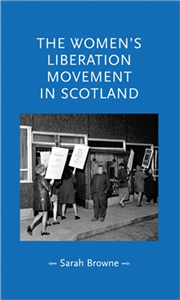
This is the first book-length account of the women's liberation movement in Scotland, which, using documentary evidence and oral testimony, charts the origins and development of this important social movement of the post-1945 period. In doing so, it reveals the inventiveness and fearlessness of feminist activism, while also pointing towards the importance of considering the movement from the local and grassroots perspectives, presenting a more optimistic account of the enduring legacy of women's liberation. Not only does this book uncover the reach of the WLM but it also considers what case studies of women's liberation can tell us about the ways in which the development of the movement has been portrayed. Previous accounts have tended to equate the fragmentation of the movement with weakness and decline. This book challenges this conclusion, arguing that fragmentation led to a diffusion of feminist ideas into wider society. In the Scottish context, it led to a lively and flourishing feminist culture where activists highlighted important issues such as abortion and violence against women. ;


