
Your Search Results
-

-

World for kids
Our passion is to show kids, how colourful and fascinating the world is. There is not only one way to live but so many. We love curious children and we do the books they need to explore the world. So we do travel books for kids and novels for the journey in a hammock.
View Rights Portal
-
Promoted Content

 Humanities & Social SciencesJuly 2025
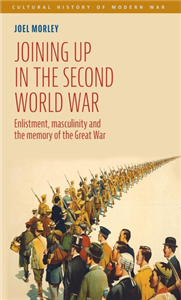
Joining up in the Second World War
Enlistment, masculinity and the memory of the Great War
by Joel Morley
This book connects the First and Second World Wars. It uses oral histories and Mass Observation material to explore men's attitudes to Second World War enlistment and the relationship they perceived between military service and masculinity, and how these were influenced by understandings of the First World War. Locating the cultural legacy of First World War in the subjectivities of men who participated in the Second World War demonstrates the breadth of sources that informed men's understandings of the First World War in interwar Britain. Its cultural legacy was omnipresent and diverse, and informed young men's attitudes and service preferences, but it reinforced Edwardian conceptions of wartime masculinity as often as it undermined them. Two decades after the First World War ended, they remained resilient in the subjective understandings of men who grew up in the Great War's shadow.
-
Promoted Content
 Business, Economics & LawJuly 2025
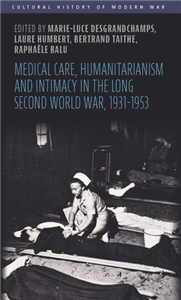
Medical care, humanitarianism and intimacy in the long Second World War, 1931-1953
by Marie-Luce Desgrandchamps, Laure Humbert, Bertrand Taithe, Raphaële Balu
This book offers a micro-global history of humanitarianism and medical care during the 'long' Second World War, which challenges the traditional and Eurocentric chronological boundaries of 1939/1945. It takes as its starting point the Japanese invasion of Manchuria in 1931, which led to the progressive dislocation of the League of Nations, with the Japanese, German and Soviet departures in the 1930s. It ends with the termination of the Korean War in 1953, and the subsequent dismantlement of the first United Coalition and UN Peace enforcement operation. It considers the slow, messy and ambivalent transformation of humanitarian actors' relations to the suffering of distant others through a study of humanitarian encounters, practices, spaces and affects. Paying close attention to a variety of actors, such as French colonial doctors, Swiss ICRC delegates, Egyptian relief workers, Chinese-style physicians, Peruvian and Ecuadorian nurses or American member of the Unitarian Service Committee, the book provides a more holistic story of humanitarianism.
-
 Trusted Partner
 Humanities & Social SciencesJanuary 2021
Brothers in the Great War
by Linda Maynard, Penny Summerfield
-
Trusted Partner
 Humanities & Social SciencesJanuary 2022
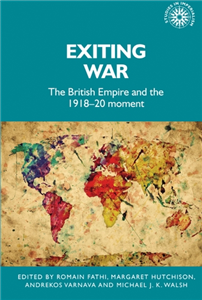
Exiting war
The British Empire and the 1918–20 moment
by Romain Fathi, Margaret Hutchison, Andrekos Varnava, Michael Walsh, Alan Lester
Exiting war explores a particular 1918-20 'moment' in the British Empire's history, between the First World War's armistices of 1918, and the peace treaties of 1919 and 1920. That moment, we argue, was a challenging and transformative time for the Empire. While British authorities successfully answered some of the post-war tests they faced, such as demobilisation, repatriation, and fighting the widespread effects of the Spanish flu, the racial, social, political and economic hallmarks of their imperialism set the scene for a wide range of expressions of loyalties and disloyalties, and anticolonial movements. The book documents and conceptualises this 1918-20 'moment' and its characteristics as a crucial three-year period of transformation for and within the Empire, examining these years for the significant shifts in the imperial relationship that occurred and as laying the foundation for later change in the imperial system.
-
Trusted Partner
 Humanities & Social SciencesJune 2025
Humanitarianism and the Greater War, 1914–24
by Elisabeth Piller, Neville Wylie
-
Trusted Partner
 Humanities & Social SciencesFebruary 2026
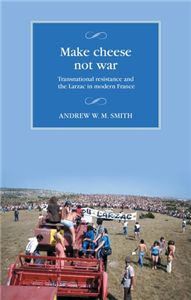
Make cheese not war
Transnational resistance and the Larzac in modern France
by Andrew W. M. Smith
In 1971, the French government announced a massive extension of its military base on the Larzac plateau in southern France. Land was to be expropriated from 107 farms around the small town of La Cavalerie. Limited resistance was expected, but what happened next exceeded all expectations. Local sheep farmers set up protest camps and occupied the land. They soon attracted an astonishing level of support, pioneering a form of regional radicalism with global implications. Drawing out the international dimensions of the protest, Make cheese not war explores a transnational resistance movement in the 1970s that challenged dominant visions of modernity and became a wellspring of radical alternatives. Exploring previously unconsulted archives in France and elsewhere, the book offers an in-depth analysis of the decade-long peasant movement and its aftermath. Repositioning the Larzac struggle within a wider network of French and international solidarities, from the US to the UK, Germany, Burkina Faso, New Caledonia and Japan, the book retraces political networks of pacifist activism, as well as environmental movements and anti-nuclear protest. It shows how this French peasant campaign became both a platform and a model for popular engagement.
-
Trusted Partner
 Literature & Literary StudiesMarch 2000
Women's writing of the First World War
an anthology
by Angela Smith
A fully-rounded anthology of women's writing from World War One containing the known and unknown biographers and fiction writers of the period.. Explores the impact of the war on ideology, gender, genre and society and is a perfect complimentary text to Trudi Tate's Women Men and the Great War.. Aims to re-read the First World War as a female experience by drawing on the public and private sources of a wide range of different women.. Uses diaries, letters, articles and essays many of which have not been published.. Invaluable source document for scholars in many disciplines. ;
-
Trusted Partner
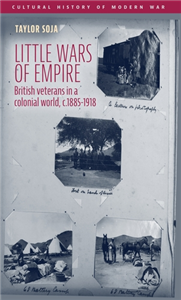 June 2026
Little wars of empire
British veterans in a colonial world, c.1885–1918
by Taylor Soja
Little Wars of Empire is a group biography of British veterans who experienced multiple wars across the British empire. Throughout the nineteenth century, Britain was constantly at war in its colonies, defending against anti-colonial resistance or trying to expand its influence. The veterans of these wars did not disappear once they were over, and many of them went on to later experience World War I. By using personal sources such as letters, diaries, and photograph albums, this book works to show how colonial violence and British military history depend upon one another, and argues that colonial war fundamentally shaped the British experience of empire. This was true for all kinds of British veterans, from British Army soldiers and officers to nurses and military families, whose experiences demonstrate the central place of colonial violence to British life.
-
Trusted Partner
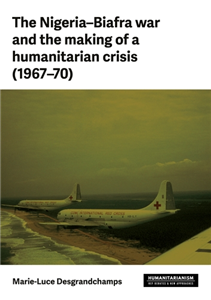 Business, Economics & LawMarch 2026
Humanitarianism in Civil War
The Biafra crisis, 1967-1970
by Marie-Luce Desgrandchamps
May 1967, in Nigeria, the Republic of Biafra declared its independence. Soon, civil war and famine ravaged the region and gradually entered the European and American media. Photographs of the conflict arouse considerable emotion in the West. The secessionist enclave and the areas taken over by the Nigerian army then became the scene of major relief operations, developed and financed by multiple organizations and governments. Part of a historiography of humanitarianism in full renewal, this book tells the story of the war, its metamorphosis into an international crisis and the responses that were provided. Based on a large body of sources from French, British, Swiss, Nigerian and American archives, it offers an insight into the world of humanitarian work at the end of the 1960s. It shows the reconfigurations taking place there. in the postcolonial era by proposing complementary scales of observation - international, national and local. The work also revisits some of the controversies which developed around the conflict regarding the instrumentalization of aid, its links with politics, the reception of relief operations on the ground or even the birth of borderlessness and testimony. It thus returns to the place occupied by the Biafran crisis in the history of humanitarian aid.
-
Trusted Partner
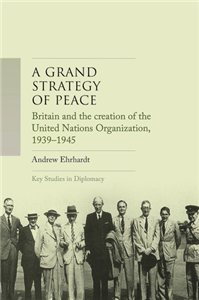 Humanities & Social SciencesJuly 2025
A grand strategy of peace
Britain and the creation of the United Nations Organization, 1939-1945
by Andrew Ehrhardt
A grand strategy of peace is the first detailed account of Britain's role in the creation of the United Nations Organization during the Second World War. As a work of traditional diplomatic history that brings in elements of intellectual history, the book describes how British officials, diplomats, politicians, and writers - previously seen to be secondary actors to the United States in this period - thought about, planned for, and helped to establish a future international order. While in the present day, many scholars and analysts have returned to the origins of the post- 1945 international system, this book offers an exhaustive account of how the statesmen and more importantly, the officials working below the statesmen, actually conceived of and worked to establish a post-war world order.
-
Trusted Partner
 Humanities & Social SciencesJune 2002
Ireland and the Great War
'A war to unite us all'?
by Adrian Gregory, Senia Paseta
As the twentieth century drew to a close, people in all parts of Ireland began to recover the memory of the First World War as the last great common experience of the island as a whole. Brings together research whilst re-evaluating older assumptions about the immediate and continuing impact of the war on Ireland. Explores some lesser-known aspects of Ireland's war years as well as including studies of more traditional areas: military, social, cultural, political and economic aspects. Analyses how the experience and memory of the War have contributed to identity formation and the legitimisation of political violence. ;
-
Trusted Partner
 Humanities & Social SciencesJune 2025
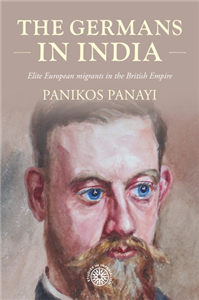
The Germans in India
Elite European migrants in the British Empire
by Panikos Panayi
Based on years of research in libraries and archives in England, Germany, India and Switzerland, this book offers a new interpretation of global migration from the early nineteenth until the early twentieth century. Rather than focusing upon the mass transatlantic migration or the movement of Britons towards British colonies, it examines the elite German migrants who progressed to India, especially missionaries, scholars and scientists, businessmen and travellers. The story told here questions, for the first time, the concept of Europeans in India. Previous scholarship has ignored any national variations in the presence of white people in India, viewing them either as part of a ruling elite or, more recently, white subalterns. The German elites undermine these conceptions. They developed into distinct groups before 1914, especially in the missionary compound, but faced marginalisation and expulsion during the First World War.
-
Trusted Partner
 Humanities & Social SciencesAugust 2012
French crime fiction and the Second World War
by Claire Gorrara, Bertrand Taithe, Penny Summerfield, Peter Gatrell, Max Jones, Ana Carden-Coyne
-
Trusted Partner
 Humanities & Social SciencesMarch 2026
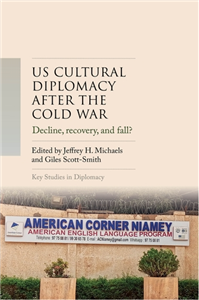
US cultural diplomacy after the Cold War
Decline, recovery, and fall
by Jeffrey H. Michaels, Giles Scott-Smith
In the decades following the USSR's collapse, the US has gone from unrivalled hegemon to a position of relative decline. With America 'triumphant' after 1991, its culture, like its diplomatic, military and economic power, remained unmatched. Such favourable circumstances seemed to undercut the need for cultural diplomacy. Why should the US government sell a product that was already selling so well? After 9/11, however, it was apparent the US image was less popular than previously assumed. To reverse this negative image, cultural diplomacy was revived. Despite being beset by internal and external challenges, US officials supported various cultural initiatives and partnerships to promote the American brand globally. Along the way, cultural diplomacy has made use of new forms of expression to promote American culture and build positive foreign relations. The arrival of the second Trump administration in 2025 has clearly signalled an end to using cultural diplomacy to further causes of empowerment and diversity, making the future uncertain for this field of activity.
-
Trusted Partner
 The ArtsOctober 2025
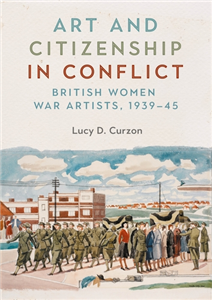
Art and citizenship in conflict
British women war artists, 1939–45
by Lucy Curzon
Art and Citizenship in Conflict examines the work of women war artists in order to highlight the complexity of citizenship and gender in Britain during the Second World War. Evelyn Dunbar, Mary Kessell, Ethel Gabain, Stella Schmolle, and Laura Knight, among others, were commissioned by the War Artists' Advisory Committee (WAAC) to document the millions of women who took up sometimes unconventional roles-in agriculture, the auxiliary services, and manufacturing, among others-to support the British war effort. Indeed, their prints, drawings, and paintings were part of a broader scheme to uphold morale and promote much-needed citizen involvement on the home front. While there is growing interest, the importance of their remit in the history of the Second World War and the quality of their artistry have nonetheless not yet secured them a significant place in scholarship. Art and Citizenship in Conflict seeks to amend this gap while also broadening approaches to the study of war itself.
-
Trusted Partner
 Military historyFebruary 2017
Serving the empire in the Great War
The Cypriot Mule Corps, imperial loyalty and silenced memory
by Andrekos Varnava. Series edited by Andrew S. Thompson
This book contributes to the growing literature on the role of the British non-settler empire in the Great War by exploring the service of the Cypriot Mule Corps on the Salonica Front, and after the war in Constantinople. Varnava encompasses all aspects of the story of the Mule Corps, from the role of the animals to the experiences of the men driving them both during and after the war, as well as how and why this significant story in the history of Cyprus and the British Empire has been forgotten. The book will be of great value to anyone interested in the impact of the Great War upon the British Empire in the Mediterranean, and vice- versa.
-
Trusted Partner
 Literature & Literary StudiesNovember 1995
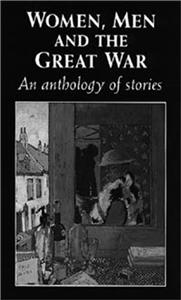
Women, men and the Great War
An anthology of story
by Trudi Tate
"A wide ranging, challenging and constantly surprising collection ... focusing on the divisions the war created between men and women." Pat Barker This is an anthology of short stories of World War I from 25 classic writers. Gertrude Stein, Virginia Woolf and Katherine Mansfield are among the women writers whose works account for half the volume. The stories are by turn poignant, violent, harsh, tender and desolating. ;
-
Trusted Partner
 20th century history: c 1900 to c 2000October 2013
Northern Ireland in the Second World War
Politics, economic mobilisation and society, 1939–45
by Philip Ollerenshaw
This original and distinctive book surveys the political, economic and social history of Northern Ireland in the Second World War. Since its creation in 1920, Northern Ireland has been a deeply divided society and the book explores these divisions before and during the war. It examines rearmament, the relatively slow wartime mobilisation, the 1941 Blitz, labour and industrial relations, politics and social policy. Northern Ireland was the only part of the UK with a devolved government and no military conscription during the war. The absence of military conscription made the process of mobilisation, and the experience of men and women, very different from that in Britain. The book's conclusion considers how the government faced the domestic and international challenges of the postwar world. This study draws on a wide range of primary sources and will appeal to those interested in modern Irish and British history and in the Second World War.
-
Trusted Partner
 FictionSeptember 2017
A Vision of Battlements
by Anthony Burgess
by Andrew Biswell, Paul Wake
A Vision of Battlements is the first novel by the writer and composer Anthony Burgess, who was born in Manchester in 1917. Set in Gibraltar during the Second World War, the book follows the fortunes of Richard Ennis, an army sergeant and incipient composer who dreams of composing great music and building a new cultural world after the end of the war. Following the example of his literary hero, James Joyce, Burgess takes the structure of his book from Virgil's Aeneid. The result is, like Joyce's Ulysses, a comic rewriting of a classical epic, whose critique of the Army and the postwar settlement is sharp and assured. The Irwell Edition is the first publication of Burgess's forgotten masterpiece since 1965. This new edition includes an introduction and notes by Andrew Biswell, author of a prize-winning biography of Anthony Burgess.
-
Trusted Partner
 Humanities & Social SciencesOctober 2024
Bulletin of the John Rylands Library 100/1
by Fred Schurink, Rachel Winchcombe
The John Rylands Library houses one of the finest collections of rare books, manuscripts and archives in the world. The collections span five millennia, have a global reach and cover a wide range of subjects, including art and archaeology; economic, social, political, religious and military history; literature, drama and music; science and medicine; theology and philosophy; travel and exploration. For over a century, the Bulletin of the John Rylands Library has published research that complements the Library's special collections.

