Your Search Results

      • Shanghai Century Publishing Group

        Founded in 1999, Shanghai Century Publishing (Group) Co., Ltd. was the first publishing group in China as well as one of the first pilot units for the reform of the national cultural system. The Group is a comprehensive large-scale publishing media group integrating publication of books and journals, digital publishing, copyright trade, import and export of books, printing, art business, and so on. The Group has been taking a statewide leading position in national key publishing projects, becoming one of the enterprises generating most influential publishing culture and providing most influential content in China.

        View Rights Portal
      • Trusted Partner
        Humanities & Social Sciences
        July 2025

        Empirical art

        Filmmaking for fieldwork in practice

        by Andy Lawrence, Martha-Cecilia Dietrich

        Empirical art: Filmmaking for fieldwork in practice is an insightful exploration of what the craft of filmmaking brings to social science research. Providing creative avenues on how to narrate encounters, relationships, and experiences during fieldwork, this comprehensive volume offers a rich tapestry of theoretical explorations and explorative methodologies. Skilfully connecting the worlds of ethnography, art and cinema, the contributors in this book act as a compass for filmmakers and researchers venturing to use a camera and microphone to relate and narrate their research collaborations and fieldsites. Drawing from the authors' extensive experience in disciplines like social anthropology, environmental humanities, and political science, "Empirical Art" breaks down the intricate process of crafting ethnographic films that departs from the researcher's subjectivity. Covering aspects of filmmaking from conceptualisation to production and distribution, readers are equipped with a treasure trove of collaborative techniques, innovative approaches, and ethical considerations necessary to generate and examine storytelling practices in contemporary fields of study. The authors discuss the significance of the multiple roles that technologies of filmmaking play in reflecting on cultural practices, social dynamics, and (beyond) human storytelling and their transformative potentials. Whether a seasoned filmmaker, an aspiring ethnographer, or an academic seeking new dimensions for their research, Empirical Art serves as a guide to integrating visual storytelling, cinema craft and empirical research.

      • The Arts
        March 1905

        Concerning the Spiritual in Art

        by Wassily Kandinsky

        A pioneering work in the movement to free art from its traditional bonds to material reality, this book is one of the most important documents in the history of modern art. Written by the famous nonobjective painter Wassily Kandinsky (1866–1944), it explains Kandinsky's own theory of painting and crystallizes the ideas that were influencing many other modern artists of the period. Along with his own groundbreaking paintings, this book had a tremendous impact on the development of modern art. Kandinsky's ideas are presented in two parts. The first part, called "About General Aesthetic," issues a call for a spiritual revolution in painting that will let artists express their own inner lives in abstract, non-material terms. Just as musicians do not depend upon the material world for their music, so artists should not have to depend upon the material world for their art. In the second part, "About Painting," Kandinsky discusses the psychology of colors, the language of form and color, and the responsibilities of the artist. An Introduction by the translator, Michael T. H. Sadler, offers additional explanation of Kandinsky's art and theories, while a new Preface by Richard Stratton discusses Kandinsky's career as a whole and the impact of the book. Making the book even more valuable are nine woodcuts by Kandinsky himself that appear at the chapter headings. This English translation of Über das Geistige in der Kunst was a significant contribution to the understanding of nonobjectivism in art. It continues to be a stimulating and necessary reading experience for every artist, art student, and art patron concerned with the direction of 20th-century painting.

      • Trusted Partner
        The Arts
        June 2026

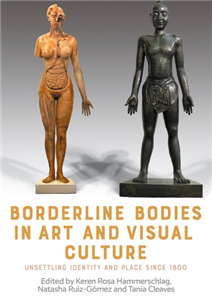
        Borderline bodies in art and visual culture

        Unsettling identity and place since 1800

        by Keren Hammerschlag, Natasha Ruiz-Gómez, Tania Anne Cleaves

        Borderline bodies offers original interpretations of visual representations of human bodies as bounded and unbounded, fortified and permeable, mobile and static-subject to borders and able to traverse and challenge them. It also takes as its focus images and objects that might be considered 'borderline' because they sit at the intersection of disciplines or sit outside accepted notions of what constitutes serious 'art.' By mapping the ways human bodies traverse borders and straddle-even dismantle-categories, this volume's essays approach afresh the relationship of bodies to traditional modes of representation, especially in art and medicine, and encourage us to think anew about how we understand the relationship between human corporeality, identity and place. Critical transdisciplinary and transnational analyses of objects and images from a range of geographies shed new light on the themes of: bodies and identity; typologies of the body; racialised bodies; 'normal' and 'abnormal' bodies; encounters between bodies; bodies in transition; bodies and mobility; and the bounded and unbounded human body. The outcome is a fresh approach to depictions of the human body produced for the purposes of artistic and medical education, aesthetic edification, and scientific and professional advancement, which disrupts assumptions about the normative human body perpetuated through Western image-making traditions.

      • Trusted Partner
        Literature & Literary Studies
        January 2013

        Eleventh-century Germany

        The Swabian chronicles

        by I. Robinson

        Three of the most important chronicles of eleventh-century Germany were composed in the south-western duchy of Swabia. The chronicles reveal how between 1049 and 1100 the centripetal attraction of the reform papacy became the dominant fact of intellectual life in German reformed monastic circles. In the abbey of Reichenau Herman 'the Lame' composed a chronicle of the reign of Emperor Henry III (1039-56). His pupil, Berthold of Reichenau, continued his master's work, composing a detailed account of 1076-1079 in Germany. Bernold, a clergyman of Constance, continued the work of Herman and Berthold in a text containing the fullest extant account of 1080-1100. Herman's waning enthusiasm for the monarchy and growing interest in the newly reformed papacy were intensified in Berthold's chronicle, and writing in the new context of the reformed monasteries of south-western Germany, Bernold preached total obedience to the Gregorian papacy. The Swabian chronicles are an indispensable resource to the student of the changing loyalties and conflicts of eleventh-century Germany.

      • Trusted Partner
        The Arts
        March 2026

        Contemporary art and ecological transformation in East and Southeast Asia

        by Meiqin Wang

        This anthology, presenting new research from fourteen scholars, delves into the interplay between contemporary art and ecological concerns in East and Southeast Asia. Focused on the concept of artistic remediation, the book unravels the diverse capacities of art to combat systemic anthropogenic destruction to the environment and ecology. At its core, the book articulates the ongoing ecological transformation in art and art history that embraces a paradigm shift in human-nature relationships, emphasizing interconnectedness of all life forms of the Earth. Bridging art studies, activism, and environmental studies, the book examines how artistic practices in the region have engaged with ecocritical reflection, biodiversity advocacy, sustainable practices, and environmental justice, among others. Providing a platform for critical and timely analysis of artistic interventions in the face of existential crises, the book acknowledges diverse voices of scholars who have situated their scholarship in the cultural and artistic specificities of various societies, locales, and communities in the region.

      • Trusted Partner
        Literature & Literary Studies
        June 2025

        The nineteenth-century present

        Literature, print culture and historicity

        by Koenraad Claes, Elizabeth Ludlow

        The Nineteenth-Century Present explores the multiple ways in which history was understood, structured, and reassessed in literary, theological, and political contexts across the nineteenth century. While the scope of the book is wide, ranging from the representations of geological time and ancient history to the writing of the recent past, and covering the work of writers from Walter Scott to G.K. Chesterton, each chapter reveals how present concerns intrude on and shape every view of history. Ultimately, the collection emphasises that issues raised regarding historicity in recent methodological debates were already concerns in the nineteenth century.

      • Trusted Partner
        The Arts
        February 2022

        "I am Jugoslovenka!"

        Feminist performance politics during and after Yugoslav Socialism

        by Jasmina Tumbas, Amelia Jones, Marsha Meskimmon

        "I am Jugoslovenka" argues that queer-feminist artistic and political resistance were paradoxically enabled by socialist Yugoslavia's unique history of patriarchy and women's emancipation. Spanning performance and conceptual art, video works, film and pop music, lesbian activism and press photos of female snipers in the Yugoslav wars, the book analyses feminist resistance in a range of performative actions that manifest the radical embodiment of Yugoslavia's anti-fascist, transnational and feminist legacies. It covers celebrated and lesser-known artists from the 1970s to today, including Marina Abramovic, Sanja Ivekovic, Vlasta Delimar, Tanja Ostojic, Selma Selman and Helena Janecic, along with music legends Lepa Brena and Esma Redzepova. "I am Jugoslovenka" tells a unique story of women's resistance through the intersection of feminism, socialism and nationalism in East European visual culture.

      • Trusted Partner
        Literature & Literary Studies
        April 2026

        Re-examining nineteenth-century Easts

        Gendered narratives of encounter

        by Claudia Capancioni, Julia Kuehn, Mariaconcetta Costantini

        Re-examining nineteenth-century Eastscontributes novel approaches to gendered and gendering fictions and travel writing in and of the cultural-geographical-ideological contexts surrounding nineteenth-century Easts. It examines underexplored stories of travel and narratives of encounter to reconsider the western allure of travelling to the Easts - from the Balkans to the Middle and Far East, through a range of diverse critical approaches. It discusses writers - travellers, novelists, and short-story writers - who authored texts based on their varied experiences in eastern lands. It also analyses how views of eastern places became a rich source of material for identity formations related to Empire but also discussions about masculinity and femininity at 'home'.

      • Trusted Partner
        The Arts
        December 2007

        The art of poverty

        Irony and ideal in sixteenth-century beggar imagery

        by Tom Nichols

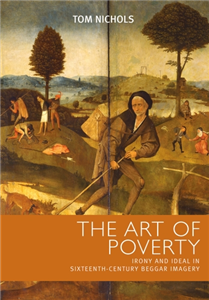
        The art of poverty is the first book in English to analyse depictions of beggars in sixteenth-century European art. Featuring works from Germany, the Low Countries, Britain, France and Italy, it discusses a diverse body of imagery in many different media, from crude woodcuts to monumental church altarpieces. It develops a striking thesis, arguing that these works largely conformed to two paradoxical, though mutually supportive, representational approaches. The earlier chapters follow the emergence of a trenchantly negative approach in Northern art, in which beggars are shown as vagabonds, whose idleness and thievery threatened the values of sixteenth-century society (especially its growing emphasis on the need to work). In the other predominant visual mode, beggars are exalted as examples of sacred purity. In many Italian religious paintings, beggars are morally exalted with reference to sacred texts, and made formally beautiful with reference to revered artistic models. Though these approaches reflect the impact of religious reform, it is shown that, by the end of the century, they happily co-existed within Protestant and Catholic cultures. The final part of the book is concerned with the issue of artistic style and with the growing tendency of the beggar image to mediate and dissolve the didactic traditions through which it had originally been defined. The art of poverty will be of special interest to scholars and students of Renaissance art history, and its progressive approach and cross-disciplinary theme and perspective will also make it vital reading for those concerned with the development of early modern European culture. ;

      • Trusted Partner
        Humanities & Social Sciences
        May 2020

        Spain in the nineteenth century

        New essays on experiences of culture and society

        by Andrew Ginger, Geraldine Lawless

        The nineteenth-century Hispanic world was shattered to its core by war, civil war, and revolution. At the same time, it confronted a new period of European and North-American expansion and development. In these essays, authors explore major, dynamic ways that people in Spain envisaged how they would adapt and change, or simply continue as they were. Each chapter title begins with the words "How to...", and examines the ways in which Spaniards conceived or undertook major activities that shaped their lives. These range from telling the time to being a man. Adaptability, paradox, and inconsistency come to the fore in many of the essays. We find before us a human quest for opportunity and survival in a complex and changing world. This wide-ranging book contains chapters by leading scholars from the United States, United Kingdom, and Spain.

      • Trusted Partner
      • Trusted Partner
      • Trusted Partner
        Literature & Literary Studies
        October 2025

        The emotions in liberal writing, c.1790–c.1920

        by Jock Macleod, Peter Denney, William Christie

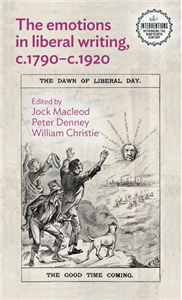
        This volume of essays from a selection of distinguished international scholars is the first of its kind to explore in depth the emotional dimensions of liberal writing in Britain over the long nineteenth century. Addressing liberal writing in the public sphere rather than high political or parliamentary liberalism, it comprises a clear, context-setting introduction and eleven substantive chapters. The chapters analyse key texts and figures from the 1790s through to the 1920s and offer several different approaches to the central concern with the emotions and liberalism. These include examining the place of the emotions in the 'good life'; the social and political function of the emotions; emotional rhetoric in liberal writing; and liberal theories of the emotions. Both individually and as a collection, the essays provide an essential foundation for further scholarly work in this emerging field.

      • Trusted Partner
      • Trusted Partner
      • Trusted Partner
        The Arts
        March 2013

        Women, the arts and globalization

        Eccentric experience

        by Marsha Meskimmon, Amelia Jones, Dorothy C. Rowe, Dorothy Rowe, Marsha Meskimmon

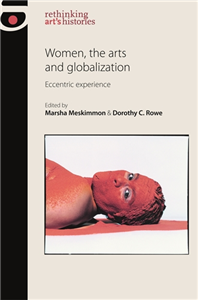
        Women, the arts and globalization: Eccentric experience is the first anthology to bring transnational feminist theory and criticism together with women's art practices to discuss the connections between aesthetics, gender and identity in a global world. The essays in Women, the Arts and Globalization demonstrate that women in the arts are rarely positioned at the centre of the art market, and the movement of women globally (as travelers or migrants, empowered artists/scholars or exiled practitioners), rarely corresponds with the dominant models of global exchange. Rather, contemporary women's art practices provide a fascinating instance of women's eccentric experiences of the myriad effects of globalization. Bringing scholarly essays on gender, art and globalization together with interviews and autobiographical accounts of personal experiences, the diversity of the book is relevant to artists, art historians, feminist theorists and humanities scholars interested in the impact of globalization on culture in the broadest sense. ;

      • Trusted Partner
        20th century history: c 1900 to c 2000
        December 2016

        The stadium century

        Sport, spectatorship and mass society in modern France

        by Robert W. Lewis. Series edited by Maire Cross, David Hopkin

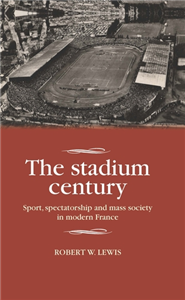
        The stadium century traces the history of stadia and mass spectatorship in modern France from the vélodromes of the late nineteenth century to the construction of the Stade de France before the 1998 soccer World Cup. As the book demonstrates, the stadium was at the centre of debates over public health and urban development and proved to be a key space for mobilising the urban crowd for political rallies and spectator sporting events alike. After 1945, the transformed French stadium constituted part of the process of postwar modernisation but also was increasingly connected to global transformations to the spaces and practices of sport. Drawing from a wide range of sources, the stadium century links the histories of French urbanism, mass politics and sport through the stadium in an innovative work that will appeal to historians, students of French history and the history of sport, and general readers alike.

      • Trusted Partner
        Humanities & Social Sciences
        April 2026

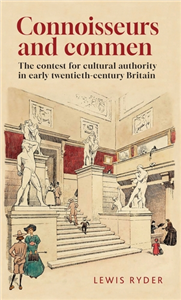
        Connoisseurs and conmen

        The contest for cultural authority in early twentieth-century Britain

        by Lewis Ryder

        This book examines John Hilditch (1872-1930), a notorious collector of Chinese art who lied, hoaxed and manipulated in his struggle against museum experts to become a cultural authority. Previously overlooked as a pest with a dubious collection, this book uses Hilditch to interrogate how far the monumental social, cultural and political changes of the early twentieth century unsettled social and cultural hierarchies and how these hierarchies were remade. It shows how the cultural elites were forced to engage with the public and re-draw the boundaries of citizenship, expertise and high and low culture in response to unprecedented social mobility, the democratisation of culture and politics, as well as the effects of British imperialism which brought ordinary Britons access to antiquities as well as confidence to claim expertise over foreign cultures. The book will interest social and cultural historians of Modern Britain, museum scholars and art historians.

      Subscribe to our

      newsletter