Your Search Results

      • Trusted Partner
      • Trusted Partner
        Humanities & Social Sciences
        January 2015

        Chronicles of the Investiture Contest

        by T. J. H. McCarthy

      • Trusted Partner
        Humanities & Social Sciences
        January 2014

        Roger II and the creation of the Kingdom of Sicily

        by Graham Loud

      • Trusted Partner
        Humanities & Social Sciences
        January 2018

        Noble society

        Five lives from twelfth-century Germany

        by Jonathan R. Lyon

        This book provides scholars and students alike with a set of texts that can deepen their understanding of the culture and society of the twelfth-century German kingdom. The sources translated here bring to life the activities of five noblemen and noblewomen from Rome to the Baltic coast and from the Rhine River to the Alpine valleys of Austria. To read these five sources together is to appreciate how interconnected political, military, economic, religious and spiritual interests could be for some of the leading members of medieval German society-and for the authors who wrote about them. Whether fighting for the emperor in Italy, bringing Christianity to pagans in what is today northern Poland, or founding, reforming and governing monastic communities in the heartland of the German kingdom, the subjects of these texts call attention to some of the many ways that noble life shaped the world of central medieval Europe.

      • Trusted Partner
        Humanities & Social Sciences
        February 2026

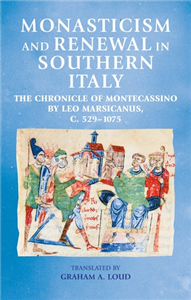
        Monasticism and renewal in southern Italy

        The Chronicle of Montecassino by Leo Marsicanus, c. 529–1075

        by Graham Loud

        The chronicle of Leo Marsicanus recounts the history of the abbey of Montecassino from its foundation by St. Benedict in the sixth-century up to 1075. It presents a detailed and compelling story of tribulation and renewal, with the abbey twice destroyed and abandoned in the early Middle Ages and then rebuilt. It concludes with an informative account of the building and dedication of the new abbey church by Abbot Desiderius in 1066-71. The chronicle is also a key source for the more general history of southern Italy in the early Middle Ages, and of the conquest of the region by the Normans during the eleventh century. In addition, Montecassino was one of the great intellectual centres of western Christendom and a major contributor to the reform movement within the Church during the later eleventh century. Leo's chronicle is a crucial witness to that role.

      Subscribe to our

      newsletter