
Mark Allen Group
The Mark Allen Group is a dynamic media company which delivers high-quality content through market-leading journals, magazines, books, events, exhibitions and websites.
View Rights Portal
The Mark Allen Group is a dynamic media company which delivers high-quality content through market-leading journals, magazines, books, events, exhibitions and websites.
View Rights Portal
Step & Step Alliance is a children’s book publisher under the Beijing Huirui Times Culture Group (established in January 2008), supporting children’s comprehensive development. Step & Step Alliance is positioned in the domestic high-end children’s book market and develops and produces high-quality board books and novelty books, sound books, puzzle books and games, non-fiction books, interactive books, pop-up books, picture books meant for international coproductions through a smart, young and efficient international sales Team. Love to play, love to read and following step by step childhood and development! An open door to knowledge connecting the world!
View Rights Portal



Advising patients, dispensing, preparing and checking drugs – that is the essence of pharmacy practice and – at the same time – a broad field. This workbook enables knowledge about legal and regulatory requirements concerning the dispensing of drugs, the use of particular dosage forms, specific risks of drugs as well as the handling of medical devices or hazardous substances to be deepened – and in an amusing and entertaining way, thanks to a varied range of exercises! It is the ideal complement to the textbook Pharmacy Practice of the Deutschen Apotheker Verlag and the perfect preparation for the final examination. But quite apart from that, it guarantees fun for all prospective and active pharmaceutical technicians, returnees and pharmacy interns when learning and revising. It provides valuable ideas and support for pharmaceutical technician schools and pharmacies with teaching and training.
 Trusted Partner


Lemon balm tea for competition anxiety, cottonwood bark for myositis, devil’s claw root for laminitis – yes, herbal preparations promote healing in horses too! An experienced veterinarian has gathered together the skills of his holistic treatment - Profiles of herbal drugs: Therapy-relevant characteristics of the medicinal plants - Veterinary practice: Examination, repertorisation (finding the suitable remedy), treatment plan, calculation of the dose for a horse, including examples of equine patients - Indications: Proven phytotherapeutic agents for the most common diseases This book shows that even chronic cases or those refractory to conventional medicine can be successfully treated with the healing power of plants.
Trusted Partner

After pharmacy studies have ended, the fascinating world of the pharmacy awaits – simultaneously varied and challenging. This is no problem with this well-established standard work to hand! The 7th edition, with a new editor and new structure, goes through the various stages of pharmacy operation. Beginning with the social mandate to supply medicines and then considering the organisational and economic orientation of a pharmacy, one delves ever deeper into its inner workings. In every area, the appropriate specific information can be found about pharmaceutical law and practice – whether this concerns the back office, over-the-counter medicines, dispensary and dispensing, or the supply of care homes, or preparation of cytotoxic drugs. In addition to the important topic “Dispensing of drugs and medical devices on prescription”, particular attention is paid to the principal activity in the pharmacy – giving advice on self-medication. The contents are based on the regulations for registration of pharmacists and the guidelines of the Federal Chamber of Pharmacists for the practical training of pharmacy interns in the pharmacy. The Practice of Pharmacy safely navigates the user through the practical training year and is the ideal preparation for the 3rd State Examination! Returnees, pharmacies that provide training and pharmacists of many years’ experience, will also benefit from this textbook and reference work.
Trusted Partner
 Trusted Partner


Acceptance and Commitment Therapy (ACT) is a psychotherapeutic intervention based on experimental evidence. Its goal is to help people implement concrete behaviors in accordance with their values even in the presence of diffcult or interfering events. The authors clearly describe how ACT works and provide useful guidance for clinical practice. Soon the concepts of fusion and defusion become familiar and the Hexafex a way of thinking rather than appearing as a mere scheme. Acceptance and commitment replace refusal and renunciation: this is the innovative therapeutic challenge of ACT. This manual, enriched with metaphors and exercises that can be used in a therapeutic session, is intended for reading by specialists by tackling the themes of this approach with rigor and depth, taking the reader step by step into the heart of ACT. The appendix contains seven ACT questionnaires for clinical assessment.
Trusted Partner
Trusted Partner

Acceptance and Commitment Therapy (ACT) aims to teach people to face emotional problems openly with mindfulness and compassion while pursuing what they truly care about in their lives. The book provides an introduction to the principles and methods of ACT and presents therapeutic strategies across disorders. ACT is not primarily about eliminating and controlling symptoms, but about developing greater psychological flexibility through learning mindful acceptance. Using numerous examples, the book describes how clients can learn to respond with greater kindness to their unwanted inner experience, to gently deal with their emotional and thought barriers, and to focus on committed life-goal-oriented action. Numerous experiential exercises, metaphors, mindfulness techniques, and behavioral activation methods are presented for this purpose. In addition, this new edition of the book provides information on current effectiveness evidence and developments in ACT, e.g. promoting self- compassion. For:• psychotherapists• psychiatrists• clinical psychologists• students and teachers in psychotherapeutictraining, furthertraining, and continuing education
Trusted Partner
 Trusted Partner
This book is a study of mobility, image and identity in colonial India and imperial Britain in the late nineteenth and early twentieth centuries. It is a model for studies of migrant figures like K.S. Ranjitsinhji who emerged during the imperial period. Ranjitsinhji is an important figure in the history of modern India and the British empire because he was recognized as a great athlete and described as such. The book focuses on four aspects of Ranjitsinhji's life as a colonial subject: race, money, loyalty and gender. It touches upon Ranjitsinhji's career as a cricketer in the race section. The issue of money gave Indian critics of Ranjitsinhji's regime the language they needed to condemn his personal and administrative priorities, and to portray him as self-indulgent. Ranjitsinhji lived his life as a player of multiple gender roles: sometimes serially, and on occasion simultaneously. His status as a "prince" - while not entirely fake - was fragile enough to be unreliable, and he worked hard to reinforce it even as he constructed his Englishness. Any Indian attempt to transcend race, culture, climate and political place by imitating an English institution and its product must be an unnatural act of insurgency. The disdain for colonial politics that was manifest in the "small rebellions" at the end of the world war converged with the colonized/Indian identity that was evident at the League of Nations. Between the war and his death, it is clear, Ranjitsinhji moved to maximize his autonomy in Nawanagar.
Trusted Partner

Cultural warfare and trust: fighting the Mafia in Palermo concentrates on a central issue in research on democratic processes: the development of generalised trust. The existence of generalised trust and confidence in a society is decisive for economic development and an effective democracy. Is it possible to fight persistent values of distrust and non-cooperation? Is it possible to support the development of generalised trust through public action and education? The book addresses these questions by examining political efforts to combat Palermo's Mafia-controlled heritage and to turn a tradition of non-cooperation and distrust into cooperation and trust. In particular, it focuses on the school program launched in Palermo during the mid-1990s, which was designed to break the Mafia's territorial and mental control. Combining theories on social capital and civic education, the author presents and analyses new quantitative and qualitative research carried out in seven public schools in Palermo. This book will be valuable to students, academics and researchers interested in social capital and trust, Italian politics, civic education, organised crime, local government and democratic practice. ;
Trusted Partner

Peacemaking in the Middle Ages explores the making of peace in the late-twelfth and early thirteenth centuries based on the experiences of the kings of England and the kings of Denmark. From dealing with owing allegiance to powerful neighbours to conquering the 'barbarians', this book offers a vision of how relationships between rulers were regulated and maintained, and how rulers negotiated, resolved, avoided and enforced matters in dispute in a period before nation states and international law. This is the first full-length study in English of the principles and practice of peacemaking in the medieval period. Its findings have wider significance and applications, and numerous comparisons are drawn with the peacemaking activities of other western European rulers, in the medieval period and beyond. This book will appeal to scholars and students of medieval Europe, but also those with a more general interest in kingship, warfare, diplomacy and international relations.
Trusted Partner

Peacemaking in the Middle Ages explores the making of peace in the late-twelfth and early thirteenth centuries based on the experiences of the kings of England and the kings of Denmark. From dealing with owing allegiance to powerful neighbours to conquering the 'barbarians', this book offers a vision of how relationships between rulers were regulated and maintained, and how rulers negotiated, resolved, avoided and enforced matters in dispute in a period before nation states and international law. This is the first full-length study in English of the principles and practice of peacemaking in the medieval period. Its findings have wider significance and applications, and numerous comparisons are drawn with the peacemaking activities of other western European rulers, in the medieval period and beyond. This book will appeal to scholars and students of medieval Europe, but also those with a more general interest in kingship, warfare, diplomacy and international relations.
Trusted Partner
This book examines the varied and fascinating ways that Westminster - traditionally home to the royal court, the fashionable West End and parliament - became the seat of the successive, non-monarchical regimes of the 1640s and 1650s. It first explores the town as the venue that helped to shape the breakdown of relations between the king and parliament in 1640-42. Subsequent chapters explore the role Westminster performed as both the ceremonial and administrative heart of shifting regimes, the hitherto unnoticed militarisation of local society through the 1640s and 1650s, and the fluctuating fortunes of the fashionable society of the West End in this revolutionary context. Analyses of religious life and patterns of local political allegiance and government unveil a complex and dynamic picture, in which the area not only witnessed major political and cultural change in these turbulent decades, but also the persistence of conservatism on the very doorstep of government.
Trusted Partner

Brink's provocative biography shows that Spenser was not the would-be court poet whom Karl Marx's described as 'Elizabeth's arse-kissing poet'. In this readable and informative account, Spenser is depicted as the protégé of a circle of London clergymen, who expected him to take holy orders. Brink shows that the young Spenser was known to Alexander Nowell, author of Nowell's Catechism and Dean of St. Paul's. Significantly revising the received biography, Brink argues that that it was Harvey alone who orchestrated Familiar Letters (1580). He used this correspondence to further his career and invented the portrait of Spenser as his admiring disciple. Contextualising Spenser's life by comparisons with Shakespeare and Sir Walter Ralegh, Brink shows that Spenser shared with Sir Philip Sidney an allegiance to the early modern chivalric code. His departure for Ireland was a high point, not an exile.
Trusted Partner

This book is concerned with the complexities of defining 'place', of observing and 'seeing' place, and how we might write a poetics of place. From Kathy Acker to indigenous Australian poet Jack Davis, the book touches on other writers and theorists, but in essence is a hands-on 'praxis' book of poetic practice. The work extends John Kinsella's theory of 'international regionalism' and posits new ways of reading the relationship between place and individual, between individual and the natural environment, and how place occupies the person as much as the person occupies place. It provides alternative readings of writers through place and space, especially Australian writers, but also non-Australian. Further, close consideration is given to being of 'famine-migrant' Irish heritage and the complexities of 'returning'. A close-up examination of 'belonging' and exclusion is made on a day-to-day basis. The book offers an approach to creating poems and literary texts constituted by experiencing multiple places, developing a model of polyvalent belonging known as 'polysituatedness'. It works as a companion volume to Kinsella's earlier Manchester University Press critical work, Disclosed Poetics: Beyond Landscape to Lyricism.
Trusted Partner

This is a reference book on the developmentof nursing practice in healthcarefacilities. The authors present person-centered nursing practice in itsbasic principles and with a model. Theydescribe paths, roles and examples of aperson-centered development culture.Using examples, they show how theconcept of person-centeredness canbe developed, planned, implemented,applied, evaluated, researched andtaught.
Trusted Partner

This volume in the book series Nutritional Practice sheds light on gender-specific aspects of the prevention and treatment of dietary deficiencies in women and men. Part I presents the principles, with an overview of the sociocultural influences on nutritional behaviour and differences in dietary practice between women and men, which lead to relevant consequences for gender-specific communication about nutrition. Part II explains in practical detail the wide range of topics concerning nutrition in pregnancy and lactation. Part III focusses on aspects of nutrition in life situations and on diseases that exclusively or predominantly occur in women. In addition to the menopause, these include various psychogenic eating disorders, breast cancer and polycystic ovary syndrome (PCOS).
Trusted Partner
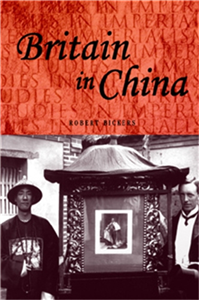
This is a study of Britain's presence in China both at its peak, and during its inter-war dissolution in the face of assertive Chinese nationalism and declining British diplomatic support. Using archival materials from China and records in Britain and the United States, the author paints a portrait of the traders, missionaries, businessmen, diplomats and settlers who constituted "Britain-in-China", challenging our understanding of British imperialism there. Bickers argues that the British presence in China was dominated by urban settlers whose primary allegiance lay not with any grand imperial design, but with their own communities and precarious livelihoods. This brought them into conflict not only with the Chinese population, but with the British imperial government. The book also analyzes the formation and maintenance of settler identities, and then investigates how the British state and its allies brought an end to the reign of freelance, settler imperialism on the China coast. At the same time, other British sectors, missionary and business, renegotiated their own relationship with their Chinese markets and the Chinese state and distanced themselves from the settler British. ;
Trusted Partner

Tears of laughter' examines the interactions of comedy and drama in three vital thematic strands of British cinema during the 1990s: comedies exploring issues of class, culture and community in British society, 'ethnic' comedy-dramas engaging with complex issues of identity and allegiance in modern Britain, and romantic comedies featuring characters searching (somewhat desperately or frantically) for a suitable and desirable long-term or short-term partner. Films to be discussed in detail include 'Brassed Off' (1996), 'The Full Monty' (1997), 'East is East' (1999), 'Four Weddings and a Funeral' (1994), 'Notting Hill' (1999) and a post-1990s romantic comedy, 'Love Actually' (2003). The study discusses these specific films and a range of other 1990s British comedy-drama films within the context of community-orientated Ealing comedy classics, contentious situation comedies treating race relations as both a laughing matter and a site of conflict ('Till Death Us Do Part' and 'Love Thy Neighbour'), and romantic comedies set and produced in Britain. It is aimed at film studies academics, students and film enthusiasts.


