
Teacher Created Materials
Teacher Created Materials publishes innovative, imaginative, and award-winning resources for teachers, parents, and students in all subjects for ages 4-18 worldwide.
View Rights Portal
Teacher Created Materials publishes innovative, imaginative, and award-winning resources for teachers, parents, and students in all subjects for ages 4-18 worldwide.
View Rights Portal
For over 40 years, Teacher Created Materials (TCM) has published innovative and imaginative resources for teachers and students, bringing exceptional curriculum content to classrooms worldwide. Our award-winning resources are sold and licensed in 89 countries. Everything we publish is created and approved by teachers. All our leveled reading books and curriculum kits are designed to engage students, improve literacy and reading comprehension, build content knowledge, and develop critical-thinking skills.
View Rights Portal

This book focuses on current policy discourse in Higher Education, with special reference to Europe. It discusses globalisation, Lifelong Learning, the EU's Higher Education discourse, this discourse's regional ramifications and alternative practices in Higher Education from both the minority and majority worlds with their different learning traditions and epistemologies. It argues that these alternative practices could well provide the germs for the shape of a public good oriented Higher Education for the future. It theoretically expounds on important elements to consider when engaging Higher Education and communities, discussing the nature of the term 'community' itself. Special reference is accorded to the difference that lies at the core of these ever-changing communities. It then provides an analysis of an 'on the ground project' in University community engagement, before suggesting signposts for further action at the level of policy and provision. This book is relevant to United Nations Sustainable Development Goal 4, Quality education
 Trusted Partner
 Trusted Partner
 Trusted Partner
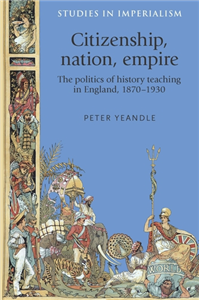
Citizenship, nation, empire investigates the extent to which popular imperialism influenced the teaching of history between 1870 and 1930. It is the first book-length study to trace the substantial impact of educational psychology on the teaching of history, probing its impact on textbooks, literacy primers and teacher-training manuals. Educationists identified 'enlightened patriotism' to be the core objective of historical education. This was neither tub-thumping jingoism, nor state-prescribed national-identity teaching, but rather a carefully crafted curriculum for all children which fused civic as well as imperial ambitions. The book will be of interest to those studying or researching aspects of English domestic imperial culture, especially those concerned with questions of childhood and schooling, citizenship, educational publishing and anglo-British relations. Given that vitriolic debates about the politics of history teaching have endured into the twenty-first century, Citizenship, nation, empire is a timely study of the formative influences that shaped the history curriculum in English schools
Trusted Partner

This book brings a new classroom approach for primary teachers to teach the explicit knowledge of scientific question-asking. This is an essential skill when children are involved in finding out about the world around them through science enquiry. Challenging the assumption that because children ask lots of questions in science, this automatically leads to meaningful learning of the enquiry curriculum, QuBuild is important for all children developing as scientific thinkers. It outlines an approach to explicitly plan for, practice and develop the craft of scientific question-asking. Unlock your children's science learning potential by exploring the QuBuild Process.
Trusted Partner
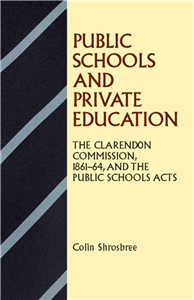
The great public schools are central to any discussion of English secondary education. Founded as public endowments, they are the basis of private education. Set apart from the other grammar schools by the Clarendon Commission of 1861, their influence on the state system has been enormous. Severed from the national provision of public education, they have put prestige and ancient endowments at the service of wealth and patronage. This book, available in paperback for the first time, shows how this came to pass. How the schools' attempts at reform, reliance on fees, the defence of the Classics, public criticism of Eton, European ideas and foreign economic competition led to the Carendon Commission. How Lord Clarendon himself, in conflict with Palmerston over foreign policy, came to lead the Commission and attempt curricular reform. How the Public Schools Acts created a separate school system for the benefit of Eton and how the Lords sought to establish that system for the upper classes. How the fee-paying, class-based principles of the Commission influenced the other grammar schools and all later English education. How the Public schools Acts reduced the influence of local parents and how new governors were appointed nationally. How Shrewsbury School, an example of an endowed grammar school with strong local connections, came to be part of the public school system. It is not the conflict between state education and private schools that makes so much discussion of English education bitter and controversial. It is the loss to state education of the public schools - the original political purpose of the Acts - and the impoverishment of national education by the class divisions of Victorian legislation. ;
Trusted Partner
 Trusted Partner
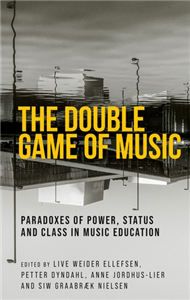
The double game of music imagines music education as a series of games - each with its own rules, play currency and players - to challenge readers to rethink the significance of music and musical upbringing in shaping social structures. Drawing on their own empirical research and a wide range of international contributions, the authors unravel the intertwining of social positioning and power hierarchies with players beliefs in the pure values and virtues of their games, whether these relate to parenting, children's play, schooling, academic pursuits, musical leisure activities or the television and music industries. In a world where music is often celebrated as an important tool for inclusion and democratisation, this groundbreaking book offers a timely critique, revealing complexities and contradictions that tend to be overlooked by teachers, researchers, politicians and others interested in the powers of music education.
Trusted Partner
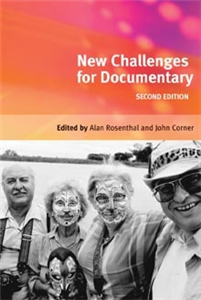
The first edition of New challenges for documentary provided a major stimulus for teaching about documentary film and television and fresh encouragement for critical thinking about practice. This second edition brings together many new contributions both from academics and filmmakers, reflecting shifts both in documentary production itself, and in ways of discussing it. Once again, the emphasis has been on clear and provocative writing, sympathetic to the practical challenges of documentary film-making but making connections with a range of work in media and communications analysis. With its wide range of contributors and the international scope of its agenda, New challenges for documentary will be essential reading for general filmmakers and documentary students both of academic and practical inclinations. ;
Trusted Partner


Scenes from the life of a pharmaceutical technician in her everyday life in a shared flat and the pharmacy are the gimmicks (and cliffhangers) in this book on pharmaceutical technician training. These develop into their connections to everyday life in a pharmacy and to the pharmaceutical knowledge that is conveyed at pharmaceutical technician school classes. The work combines different media forms and learning types as “Connecticum”. Podcasts, videos, and worksheets that can be accessed via QR code, as well as references to literature and information sources, supplement the content and make learning more varied and interesting. This innovative workbook for pharmaceutical technician training – each school year is accompanied by its own volume - is the ideal partner for subject-oriented and interdisciplinary teaching. It is also suitable for practically-oriented, independent work and a review of the entire training content – with a guaranteed fun factor!
Trusted Partner

This book is a study of the ambitions, activities and achievements of Methodist missionaries in northern Burma from 1887-1966 and the expulsion of the last missionaries by Ne Win. The story is told through painstaking original research in archives which contain thousands of hitherto unpublished documents and eyewitness accounts meticulously recorded by the Methodist missionaries. This accessible study constitutes a significant contribution to a very little-known area of missionary history. Leigh pulls together the themes of conflict, politics and proselytisation in to a fascinating study of great breadth. The historical nuances of the relationship between religion and governance in Burma are traced in an accessible style. This book will appeal to those teaching or studying colonial and postcolonial history, Burmese politics, and the history of missionary work.
Trusted Partner


Ein Buch für alle, die dringend mehr SEX EDUCATION brauchen! Maeves Bruder steckt mal wieder in Schwierigkeiten. Sie kann ihn natürlich nicht einfach hängen lassen - auch wenn Sean das mehr als verdient hätte! Zusammen mit Otis, Aimee und Eric macht sie sich auf den Weg zu ihm und plötzlich wird aus der halsbrecherischen Rettungsaktion ein abenteuerlicher Roadtrip. Sean wird von einer Gruppe reicher Jugendlicher beschuldigt, sie bestohlen zu haben. Kurzerhand schleichen sich die vier Freunde in die toxische Clique ein, um seinen Ruf wiederherzustellen. Gar nicht so einfach, denn dabei kommt Unausgesprochenes zwischen Maeve und Otis ans Licht und die Beweise gegen Sean sind mehr als erdrückend … Tauch noch tiefer ein in die Welt von SEX EDUCATION und erlebe mit Otis, Maeve, Aimee und Eric einen legendären Roadtrip! Dieser offizielle Roman zur Netflix-Erfolgsserie bietet Fans alles, was sie an SEX EDUCATION lieben: tolle Charaktere, viele Geheimnisse und intensive Emotionen, dazu jede Menge Humor und beste Unterhaltung. Ob LGBTQI+ oder Body Positivity, Feminismus oder Sextherapie - wie in der Serie gibt es auch im Roman ungeschönte Wahrheiten und Tabubrüche über alles, was wirklich wichtig ist in Sachen Liebe, Sex und Beziehungen. Mit einem Nachwort von Ilona Einwohlt. Empfohlen für alle, die die Serie auf Netflix gebinged haben und trotzdem nicht genug bekommen.
Trusted Partner

Alle tun es! Irgendwie, irgendwo, irgendwann. Sex. Und irgendwie, irgendwo und irgendwann stellen sich Fragen. Viele Fragen. Sieht das bei allen so aus? Muss sich das so anfühlen? Wie genau funktioniert das? Was stimmt nicht mit mir? Ganz im Stil der erfolgreichen Netflix-Serie SEX EDUCATION gibt es hier Antworten. Ehrlich, direkt, positiv, witzig, verständlich erklärt - und dabei nie peinlich. Otis, Maeve, Eric und andere Figuren der Serie schildern ihre Sicht der Dinge und klären auf über Anatomie, das eigene Körperbild, Beziehungen, Verhütung, Gender und helfen durch das Minenfeld namens Liebe. Unterhaltsam als Ergänzung zur Serie, aber auch voller praktischem Wissen für das echte Sexleben.
Trusted Partner
This book explores the ways in which the two leading sensation authors of the 1860s, Mary Elizabeth Braddon and Wilkie Collins, engaged with nineteenth-century ideas about personality formation and the extent to which it can be influenced either by the subject or by others. Innovative readings of seven sensation novels explore how they employ and challenge Victorian theories of heredity, degeneration, inherent constitution, education, upbringing and social circumstance. Far from presenting a reductive depiction of 'nature' versus 'nurture', Braddon and Collins show the creation of character to be a complex interplay of internal and external factors. Drawing on material ranging from medical textbooks, to sociological treatises, to popular periodicals, Creating character shows how sensation authors situated themselves at the intersections of established and developing, conservative and radical, learned and sensationalist thought about how identity could be made and modified.
Trusted Partner
Universities have a key role to play in contributing to environmental development and combating climate change. The chapters within this volume detail the challenges faced by higher education institutions in considering environmental sustainability, and provide both a broad view of university engagement and a detailed examination of various projects. As part of this series in association with the Place and Social Capital and Learning (PASCAL) International Observatory, the three key PASCAL themes of place management, lifelong learning and the development of social capital are considered throughout the book. While universities have historically generated knowledge outside of specific local contexts, this book argues that it is particularly important for them to engage with the local community and to consider diverse perspectives and assets when looking at issues within an ecological context. The chapters in this volume provide new perspectives and frames of reference for transforming universities by engaging in the development of resilient communities.
Trusted Partner
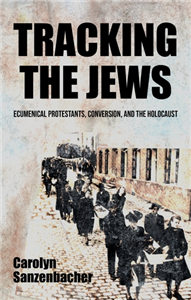
This book sheds light on an unprecedented Protestant conversion initiative for the global evangelisation of Jews. Founded in 1929, the International Committee on the Christian Approach to the Jews (ICCAJ) aimed to bring Jewish people to their 'spiritual destiny', a task it saw as both benevolent and essential for a harmonious society. By the time of Hitler's rise to power it was active in thirty-two countries, educating Protestant churches on the right Christian attitude towards Jews and antisemitism. Reconstructing the activities of the ICCAJ in the years before, during and immediately after the Holocaust, Tracking the Jews reveals how ideas disseminated through the organisation's discourse - 'Jewish problem', 'Jewish influence', 'Judaising threat', 'eternal Jew' - were used to rationalise, justify, explain or advance a number of deeply troubling policies. They were, for vastly different reasons, consciously used elements of argumentation in both Protestant conversionary discourse and Nazi antisemitic ideology.
Trusted Partner
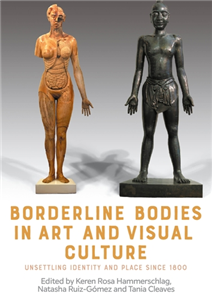
Borderline bodies offers original interpretations of visual representations of human bodies as bounded and unbounded, fortified and permeable, mobile and static-subject to borders and able to traverse and challenge them. It also takes as its focus images and objects that might be considered 'borderline' because they sit at the intersection of disciplines or sit outside accepted notions of what constitutes serious 'art.' By mapping the ways human bodies traverse borders and straddle-even dismantle-categories, this volume's essays approach afresh the relationship of bodies to traditional modes of representation, especially in art and medicine, and encourage us to think anew about how we understand the relationship between human corporeality, identity and place. Critical transdisciplinary and transnational analyses of objects and images from a range of geographies shed new light on the themes of: bodies and identity; typologies of the body; racialised bodies; 'normal' and 'abnormal' bodies; encounters between bodies; bodies in transition; bodies and mobility; and the bounded and unbounded human body. The outcome is a fresh approach to depictions of the human body produced for the purposes of artistic and medical education, aesthetic edification, and scientific and professional advancement, which disrupts assumptions about the normative human body perpetuated through Western image-making traditions.
Trusted Partner


The handbook explains theoretical approaches to nursing education, provides empirical findings on the concept of education in nursing, and shows possibilities for practical applications and implementation of nursing education using examples in vocational education, such as interdisciplinary learning, competence orientation, simulation testing, and inclusion, as well as professionalism and awareness of language registers of teachers.
Trusted Partner
This book focuses on current policy discourse in Higher Education, with special reference to Europe. It discusses globalisation, Lifelong Learning, the EU's Higher Education discourse, this discourse's regional ramifications and alternative practices in Higher Education from both the minority and majority worlds with their different learning traditions and epistemologies. It argues that these alternative practices could well provide the germs for the shape of a public good oriented Higher Education for the future. It theoretically expounds on important elements to consider when engaging Higher Education and communities, discussing the nature of the term 'community' itself. Special reference is accorded to the difference that lies at the core of these ever-changing communities. It then provides an analysis of an 'on the ground project' in University community engagement, before suggesting signposts for further action at the level of policy and provision.

