Your Search Results

      • Trusted Partner
        Care of the elderly
        December 2014

        The politics of old age

        Older people's interest organisations and collective action in Ireland

        by Martha Doyle

        The politics of old age in the twenty first century is contentious, encompassing ideological debates about the rights and welfare entitlements of individuals in later life. An important aspect is the manner in which older people and their representative groups are given the opportunity to articulate their interests in the policy-making process. Drawing upon key literature in political science, social gerontology and cultural sociology, The politics of old age explores the relationship between ageing, politics and representation. It reveals the complexity of older people's representation and how the power the organisations exercise, their legitimacy and existence remain highly contingent on government policy design, political opportunity structures and the prevailing cultural and socioeconomic milieu. This book is essential reading for policymakers and organisations interested in ageing, policy and the political process and for students of ageing, social policy and political sociology.

      • Trusted Partner
        Literature & Literary Studies
        June 2017

        Dissolute Characters

        by Bill McCormack

      • Trusted Partner
        Humanities & Social Sciences
        November 2010

        Devolution and the governance of Northern Ireland

        by Colin Knox

        This book offers the first account of what the First Minister, Peter Robinson, describes as the most settled period of devolution in Northern Ireland for almost forty years. It traces the tortuous path to devolved government, the political instability which constantly threatened the institutions, and since May 2007 the bedding down of devolution and its impact so far on the people of Northern Ireland. The book parallels accounts of devolved government in Scotland and Wales. For years Northern Ireland has been the subject of academic enquiry relating to political, constitutional and security issues. Now as a post-conflict society political parties which for years engaged in the politics of antagonism must now redirect their efforts to delivering public policies that will improve the quality of people's daily lives. This has not come easily to them. This book is therefore the first study which looks at devolved power sharing governance arrangements in Northern Ireland and a sequel to Derek Birrell's book Direct Rule and the Governance of Northern Ireland. Manchester: Manchester University Press (2009) The book contains chapters on the key governance institutions: the civil service, local government, non-departmental public bodies, and the vibrant third sector in Northern Ireland. It examines in some detail the major review of public administration ongoing since 2002 and the more recent public services modernising agenda. Importantly, given the sectarian divisions which have segregated every aspect of life in Northern Ireland, the book asks the key question whether it is possible to reconcile the two communities or are they destined to live 'separate but equal' lives. Finally, the book considers topical issues which are at the early stages of implementation: community planning and central-local relations. This book will be of interest to students of devolution across the UK and beyond. It will also be relevant for those researchers working in the area of post-conflict societies. ;

      • Trusted Partner
        Children's & YA

        Silver Flood (1). The Mystery of Ray´s Rock

        by Alex Falkner/ Torben Weit

        The seven children are completely cut off from civilisation, mobile phones don’t work anymore and there’s no sign of help. Strange things happen on the island. Plants and animals grow unnaturally fast, their supplies are raided ... And as other groups of school children emerge, a life and death race begins for Eddie, Milla and their classmates to be rescued from the island. The first instalment of the ‘Silver Flood’ duology: a dangerous adventure with exciting plot twists and scare-factor. For all readers of survival and adventure stories aged 10+. Fast-paced reading for boys and girls, for outdoor kids and all those on their way! The final volume 2, GONE MISSING ON RAY’S ROCK, will be published on 7th April 2020!

      • Trusted Partner
        Humanities & Social Sciences
        March 2017

        Sex, politics and empire

        A postcolonial geography

        by Richard Phillips

        Colonial governments, institutions and companies recognised that in many ways the effective operation of the Empire depended upon sexual arrangements. For example, nuclear families serving agricultural colonization, and prostitutes working for single men who powered armies and plantations, mines and bureaucracies. For this reason they devised elaborate systems of sexual governance, such as attending to marriage and the family. However, they also devoted disproportionate energy to marking and policing the sexual margins. In Sex, Politics and Empire, Richard Phillips investigates controversies surrounding prostitution, homosexuality and the age of consent in the British Empire, and revolutionises our notions about the importance of sex as a nexus of imperial power relations.

      • Trusted Partner
        Humanities & Social Sciences
        June 2024

        Politicising and gendering care for older people

        Multidisciplinary perspectives from Europe

        by Anca Dohotariu, Ana Paula Gil, Lubica Volanská

        This book offers a new critical framework for understanding the processes of politicising and gendering care for older people and their manifestations in several European contexts. It interrogates how care for older adults varies across time and place while searching for an in-depth comprehension of how it becomes an arena of political struggle and the object of public policy in different countries and at various societal and political levels. It brings together multidisciplinary contributions that examine the issue of care for older people as a political concern from many angles, such as problematising care needs, long-term care policies, home care services, institutional services and family care. The contributions reveal the diversity of situations in which the processes of politicising and gendering care for older adults overlap, contradict or reinforce each other while leading to increased gender (in)equalities on different levels.

      • Trusted Partner
        Humanities & Social Sciences
        April 2024

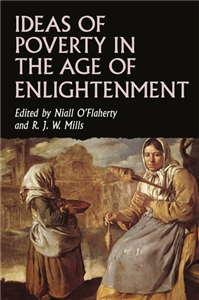
        Ideas of poverty in the Age of Enlightenment

        by Niall O’Flaherty, Robin Mills

        This collection of essays examines the ways in which poverty was conceptualised in the social, political, and religious discourses of eighteenth-century Europe. It brings together experts with a wide range of expertise to offer pathbreaking discussions of how eighteenth-century thinkers thought about the poor. Because the theme of poverty played important roles in many critical issues in European history, it was central to some of the key debates in Enlightenment political thought throughout the period, including the controversies about sovereignty and representation, public and private charity, as well as questions relating to crime and punishment. The book examines some of the most important contributions to these debates, while also ranging beyond the canonical Enlightenment thinkers, to investigate how poverty was conceptualised in the wider intellectual culture, as politicians, administrators and pamphlet writers grappled with the issue.

      • Trusted Partner
        Humanities & Social Sciences
        October 2006

        Devolution in Britain today

        Second edition

        by Russell Deacon, Bill Jones

        Devolution in Britain today provides a comprehensive analysis of both the historical development and the current state of devolved government. Devolution is now a key element in A-level syllabuses and on most undergraduate politics courses. This book is written in a clear and accessible style for students either encountering devolution for the first time or for those who need to explore the subject area in greater detail. All of the devolved bodies in England, Northern Ireland, Scotland and Wales are examined. This book is a thorough update of the first edition, written by Colin Pilkington and published by MUP in 2002. The book explains the concept and background of devolution, and indicates the constitutional implications of political devolution in the United Kingdom before providing a full and considered historical background to devolution, including an explanation of how the United Kingdom came to be united. It then examines the historical and political events that surrounded the preparation of devolution across Britain, before addressing each country in turn, assessing the relative success of devolution in that country. ;

      • Trusted Partner
        Political structure & processes
        May 2007

        Devolution and constitutional change in Northern Ireland

        by Edited by Paul Carmichael, Colin Knox and Robert Osborne

        This edited book, written by a collection of scholars with an interest in Northern Ireland, tracks its uneasy experience with devolution following the optimistic political period associated with the 1998 Belfast (Good Friday) Agreement. The volume brings together researchers from the Economic and Social Research Council's (ESRC) 'Devolution and Constitutional Change' Programme and other experts to record four key perspectives on Northern Ireland. First, it considers the inextricable link between devolution and constitutional developments. Second, it examines how the main political parties responded to devolution and the major challenges faced by society in moving beyond conflict (such as political symbolism, the role of women, equality and human rights issues). Third, it attempts to assess some of the workings of devolved government in its short-lived form or those seeded in devolution and carried on by direct rule ministers. Finally, Northern Irelands devolved government and associated institutions are located within the wider relationships with Westminster, the Republic of Ireland and Europe. This edited volume will be of interest to students of Irish politics and public policy, but more generally, from a comparative perspective, those with an interest in devolution and constitutional change. It may even assist politicians in Northern Ireland to reflect on the real potential to restore its devolved institutions and draw back from the brink of permanently copper-fastening 'direct rule' from Westminster.

      • Trusted Partner
        Medicine
        April 2021

        Leprosy and identity in the Middle Ages

        From England to the Mediterranean

        by Elma Brenner, François-Olivier Touati

        For the first time, this volume explores the identities of leprosy sufferers and other people affected by the disease in medieval Europe. The chapters, including contributions by leading voices such as Luke Demaitre, Carole Rawcliffe and Charlotte Roberts, challenge the view that people with leprosy were uniformly excluded and stigmatised. Instead, they reveal the complexity of responses to this disease and the fine line between segregation and integration. Ranging across disciplines, from history to bioarchaeology, Leprosy and identity in the Middle Ages encompasses post-medieval perspectives as well as the attitudes and responses of contemporaries. Subjects include hospital care, diet, sanctity, miraculous healing, diagnosis, iconography and public health regulation. This richly illustrated collection presents previously unpublished archival and material sources from England to the Mediterranean.

      • Trusted Partner
        Humanities & Social Sciences
        April 2009

        Devolution in the UK

        by James Mitchell

        This book explains devolution today in terms of the evolution of past structures of government in the component parts of the United Kingdom. It highlights the importance of the English dimension and the role that England's territorial politics played in constitutional debates. Similarities and differences between how the components of the UK were governed are described. It argues that the UK should be understood now, even more than pre-devolution, as a state of distinct unions, each with its own deeply rooted past and trajectory. Using previously unpublished primary material, as well as a wealth of secondary work, the book offers a comprehensive account of the territorial constitution of the UK from the early twentieth century through to the operation of the new devolved system of government. ;

      • Trusted Partner
        Humanities & Social Sciences
        August 1999

        British Politics in an Age of Reform

        by Michael J. Turner, Mark Greengrass

        This work is a detailed examination of principal themes in the political history of late 18th- and early 19th-century Britain. It evaluates much recent research, links the politics of the elite with the politics of the people and seeks to explain significant developments with reference to both their long- and short-term causes. Among the issues addressed are the relative powers of crown, cabinet and parliament between 1760 and 1832; the impact on domestic politics of revolution and war abroad; the growth of radicalism and popular political activity; agitation for reform and the responses of government; the rise of party; the connections between extra-parliamentary pressure and instability; at the centre of power. ;

      • Trusted Partner
        Humanities & Social Sciences
        January 2013

        Crime, Law and Society in the Later Middle Ages

        by Anthony Musson, Edward Powell

        This book provides an accessible collection of translated legal sources through which the exploits of criminals and developments in the English criminal justice system (c.1215-1485) can be studied. Drawing on the wealth of archival material and an array of contemporary literary texts, it guides readers towards an understanding of prevailing notions of law and justice and expectations of the law and legal institutions. Tensions are shown emerging between theoretical ideals of justice and the practical realities of administering the law during an era profoundly affected by periodic bouts of war, political in-fighting, social dislocation and economic disaster. Introductions and notes provide both the specific and wider legal, social and political contexts in addition to offering an overview of the existing secondary literature and historiographical trends. This collection affords a valuable insight into the character of medieval governance as well as revealing the complex nexus of interests, attitudes and relationships prevailing in society during the later Middle Ages.

      • Trusted Partner
        Literary theory
        July 2014

        Degeneration, decadence and disease in the Russian fin de siècle

        Neurasthenia in the life and work of Leonid Andreev

        by Frederick H. White

        Early in the twentieth century, Russia was experiencing a decadent period of cultural degeneration just as science was developing ways to identify medical conditions which supposedly reflected the health of the entire nation. Leonid Andreev, the leading literary figure of his time, stepped into the breach of this scientific discourse with literary works about degenerates. The spirited social debates on mental illness, morality and sexual deviance which resulted from these works became part of the ongoing battle over the definition and depiction of the irrational, complicated by Andreev's own publicised bouts with neurasthenia. This book examines the concept of pathology in Russia, the influence of European medical discourse, the development of Russian psychiatry, and the role that it had in popular culture, by investigating the life and works of Andreev. It engages the emergence of psychiatry and the role that art played in the development of this objective science.

      • Trusted Partner
        Humanities & Social Sciences
        March 2017

        From Jack Tar to Union Jack

        Representing naval manhood in the British Empire, 1870–1918

        by Mary A. Conley

        Jack Tar to Union Jack examines the intersection between empire, navy, and manhood in British society from 1870 to 1918. Through analysis of sources that include courts-martial cases, sailors' own writings, and the HMS Pinafore, Conley charts new depictions of naval manhood during the Age of Empire, a period which witnessed the radical transformation of the navy, the intensification of imperial competition, the democratisation of British society, and the advent of mass culture. Jack Tar to Union Jack argues that popular representations of naval men increasingly reflected and informed imperial masculine ideals in Victorian and Edwardian Britain. Conley shows how the British Bluejacket as both patriotic defender and dutiful husband and father stood in sharp contrast to the stereotypic image of the brave but bawdy tar of the Georgian navy. This book will be essential reading for students of British imperial history, naval and military history, and gender studies.

      • Trusted Partner
      • Trusted Partner
        2021

        Nutritional Practice Elderly People

        Concise advisory knowledge

        by Prof. Dr. Martin Smollich (ed.)

        The physiology and living conditions of people change as they grow old, whereas it is often more difficult to adapt eating habits to the new requirements. Psychological aspects come to the fore. The challenge for giving specific nutritional advice is therefore particularly great. This volume in the book series Nutritional Practice provides all the information needed for the competent care of elderly people. It deals with general aspects of nutrition in old age, as well as specific nutritional situations such as poor diet, dehydration, chewing and swallowing problems, dementia, mobility, oral and food hygiene or nutrition at the end of life. A further section is concerned with communal catering.

      • Trusted Partner
        Medicine

        Protection in In-home Care for the Elderly

        Preventing and Identifying Abusive Situations – Supporting Care Recipients and Caregivers

        by Barbara Baumeister, Trudi Beck (editors)

        Why and how are elderly people abused when they receive care in their own homes? How can this abuse be identified and prevented? The authors explains why the elderly are abused when they receive at-home care, differentiate between various forms of abuse, and demonstrate how it can be identified. They present interventions and provide tools for preventing and identifying abuse and for supporting care recipients and caregivers.   Target Group: Geriatric nurses, social workers, geriatricians

      Subscribe to our

      newsletter