
Bradt Travel Guides Ltd
Bradt Travel Guides have a reputation as the pioneering publisher for tackling ‘unusual’ destinations, and producing colourful guidebooks which are entertaining as well as useful.
View Rights Portal
Bradt Travel Guides have a reputation as the pioneering publisher for tackling ‘unusual’ destinations, and producing colourful guidebooks which are entertaining as well as useful.
View Rights Portal
Angelo Pontecorboli Editore - Florence – ItalyAcademic Contents, Professional Editing, Premium Design, Online Distribution and Marketing. Editore indipendente con sede a Firenze. Le riviste e gli articoli pubblicati riguardano principalmente l’Antropologia, l’Architettura, il Giardino e le Scienze Umane. Independent publisher based in Florence (Italy). The Journals and Articles it publishes are concentrated mainly in the areas of Anthropology, Architecture, Gardens, and Human Sciences.
View Rights Portal
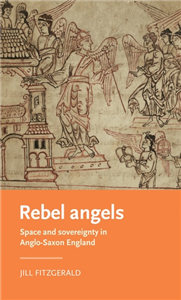
Over six hundred years before John Milton's Paradise Lost, Anglo-Saxon authors told their own version of the fall of the angels. This book brings together various cultural moments, literary genres and relevant comparanda to recover that version, from the legal and social world to the world of popular spiritual ritual and belief. The story of the fall of the angels in Anglo-Saxon England is the story of a successfully transmitted exegetical teaching turned rich literary tradition. It can be traced through a range of genres - sermons, saints' lives, royal charters, riddles, devotional and biblical poetry - each one offering a distinct window into the ancient myth's place within the Anglo-Saxon literary and cultural imagination.
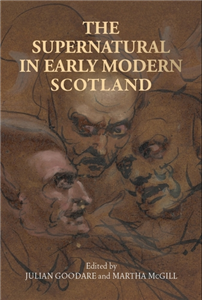
This book is about other worlds and the supernatural beings, from angels to fairies, that inhabited them. It is about divination, prophecy, visions and trances. And it is about the cultural, religious, political and social uses to which people in Scotland put these supernatural themes between 1500 and 1800. The supernatural consistently provided Scots with a way of understanding topics such as the natural environment, physical and emotional wellbeing, political events and visions of past and future. In exploring the early modern supernatural, the book has much to reveal about how men and women in this period thought about, debated and experienced the world around them. Comprising twelve chapters by an international range of scholars, The supernatural in early modern Scotland discusses both popular and elite understandings of the supernatural.
 Trusted Partner
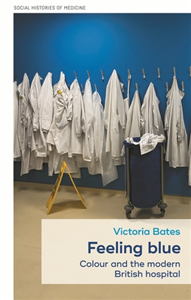
Feeling blue is the first book-length history of colour in modern hospitals. It examines colour in relation to six key themes - hygiene, emotion, humanisation, homeliness, play, consumerism - which are tied together by the idea of the 'modern' hospital. The book does not simply describe changes to the appearance of hospitals over time, but instead thinks expansively about the role of colour in shaping how hospitals felt. It uses colour to understand the layered meanings of modernity in twentieth-century Britain, and its relationship to the 'mundane' or everyday life of hospitals.
Trusted Partner


Consumers stand perplexed at the fish counter. Cod or salmon; mackerel or sea bass? Or perhaps rather carp and trout? How about flounder and dab? Dab what? A terrific flatfish, but sadly hardly anyone has heard of it. And what was it again about organic, aquaculture, wild-caught, and that little blue sustainability certificate? Is catching your own a way out? Before you start thinking it’s time to opt for a chop and fried potatoes instead, read this book. It provides readers with deep blue facts from the world’s waters and analyses the global and local habitat of the finned creature.
Trusted Partner

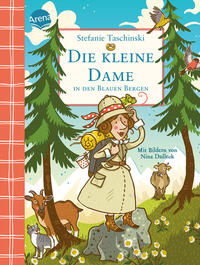
The Blue Mountains are calling! When Lilly’s grandma’s favourite cow falls ill, the Bear family immediately decide to pay them a visit – but without the Little Lady. Mother and Father Bear are worried that her chameleon-like behaviour might upset Grandma Annie. But Lilly, Charley and the Little Lady won’t accept such thinking. With a zip and a zoom the Little Lady opens her umbrella and up and away they go on the greatest mountain “salafari” of all time! But then something weird happens to the Little Lady: first her feet start to tickle, then her fine hiking boots start to pinch, and her jacket seems to be shrinking! She sees with horror that she is starting to grow. What can Lilly, Charley and she do to stop it?
Trusted Partner
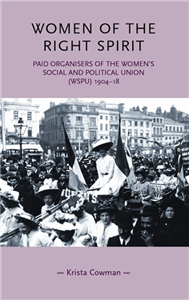
This book is the first investigation on how official organizers built and sustained the national militant campaign of the Women's Social and Political Union between 1903 and 1918. Whilst the overall policy of the Union was devised by an ever-decreasing circle of women, centred around the mother-daughter team of Emmeline and Christabel Pankhurst, much of its actual activity, including its more extreme militant actions such as arson, was devised and implemented by these organizers who worked in the provinces and in London. Women of the right spirit reveals organizers to be a diverse bunch of women, whose class backgrounds ranged from the aristocratic to the extremely impoverished. It describes the ways in which they were recruited and deployed, and the work they undertook throughout Britain. The exhausting pace of their itinerant life is revealed as well as the occasions when organizers fell out with their employers or their own branches. Taking the story of the WSPU's workers up to the end of the First World War, it considers what directions they took when votes for women became a reality. The book will appeal to academics, postgraduates and undergraduates with an interest in women's history, as well as a more general readership wishing to understand the extent of support for the votes for women campaign and the mechanisms through which it organized. ;
Trusted Partner
Trusted Partner
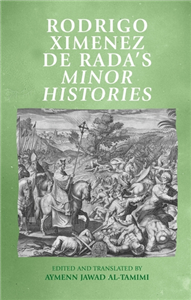
This work provides the first complete English translation of works by Toledan archbishop Rodrigo Ximénez de Rada (1170-1247 CE), whose 'Minor Histories' are sequels to his larger 'Gothic History' and thus round off his grand history of Spain project that he began at the request of King Ferdinand III. The 'Minor Histories' include Rodrigo's 'History of the Arabs' that can be considered the first surviving Western monograph focused on Arab and Islamic history and thus occupies a unique position in the medieval Latin corpus of writings. In addition to the translation, this book provides a thorough and accessible introduction to the life and works of Rodrigo, making sense of the context in which he wrote and his historical method. The translations are thoroughly annotated including cross-references to other Latin and Arabic sources for comparison.
Trusted Partner

This book charts the building of 1 Angel Square, the remarkable new head office for The Co-operative Group in Manchester's new NOMA district. Combining text and photographs to illustrate the building from commissioning to completion, Len Grant has interviewed the whole project team - clients, architects, engineers, project managers and builders - and has had unreserved access to document the creation of this already award-winning structure. The design of 1 Angel Square by the architects 3DReid, is currently the UK's highest BREEAM (Building Research Establishment's Environmental Assessment Method) rated office building to date, and it is set to be one of the most sustainable buildings in Europe. 1 Angel Square, the book, is an intimate record of this fascinating building. Some of the impressive facts include: 3,157 internal and external window panels make up the façade; there are 10,500 data and power outlets; it sits on 539 foundation piles, with an average depth of 18 metres below ground; and there are approximately 22km of power cables. This book will be required reading for students of architecture and construction, sustainability studies and urban planning, and for those with an interest in the history of one of the world's great businesses. ;
Trusted Partner

— Water as a reason for war and a political instrument of power — Unique overview of global water conflicts — Foreword by Wolfgang Ischinger Every year, droughts in African countries cause hundreds of thousands of deaths and much suffering. Europe also experienced drought in 2022's summer of record temperatures. Without water, there can be no life. More and more people are suffering from water shortages. Climate change is fuelling the distribution battles for water; violent conflicts over this precious resource are the order of the day. Whether the protests in Iraq, the war in Syria, in the Himalayas, the Nile conflict and in many other places, water is already a reason for war and is being misused as a political instrument of power. The construction of huge dams, the targeted closure of locks, river diversions, water and land grabbing bring wars over the "blue gold" with them. In a unique overview, journalist Jürgen Rahmig describes the struggle for water in the 21st century. Where do dangers lurk today; where will they be tomorrow, and how can we prevent wars over precious water?
Trusted Partner

In times of the coronavirus pandemic many people have certainly condemned them, but Professor Ernst-Ludwig Winnacker has dedicated his life to researching them and is intrigued by viruses – even if sometimes he is keenly aware of their fatal effects. To mark his 80th birthday the biochemist describes the co-evolution and co-existence as well as the eternal ‘battle’ between humans and viruses. Winnacker takes up the cause of these ‘biological elements between animate and inanimate nature’ because they play an important role in fundamental research and genetic technology, and without them human beings would not be what they are.
Trusted Partner
Trusted Partner

 Trusted Partner


Do you struggle with thoughts and feelings that make life difficult? Have you tried all sorts of ways of dealing with this without getting anywhere? Do you feel that life is passing you by? Acceptance and commitment therapy (ACT), which this book describes in a clear and entertaining way, provides new and very enlightening insights into the causes of human suffering. At the same time, ACT shows how we can improve the way we handle the difficult aspects of being human, while also developing our abilities and strengths. This title shows how using the described simple but effective methods can lead you to a happier, better life. Target Group: people who want to utilize their potential more fully, people interested in acceptance and commitment therapy, people practicing or interested in psychotherapy (psychologists, doctors, coaches, social workers)
Trusted Partner

In the middle of our lives, the cards are reshuffled: marriages are divorced, careers are questioned, friendships are ended, questions of meaning are asked, bodies change - and not just hormonally. At the same time, children leave home and parents become carers. From the age of 45, the majority of our population is at the centre of a second upheaval that affects all facets of our lives and leaves us at a loss in many ways. Not only in our daily lives, but also when it comes to planning for our own old age. This guide is designed to help us find our way. It presents the most important information from all areas relevant to a good life after 45. Leading experts from the fields of medicine, nutrition, philosophy, theology, psychology, care, law and finance give recommendations on what to look out for and what tools are needed to get through these challenging years unscathed. Useful checklists round off the articles. The book shows us the unique opportunity to see these challenges not as a crisis but as a source of strength. Not only can we come through this period of our lives healthy and happy, but we can also shape it so that the next age threshold is no longer frightening. During the second phase of adolescence, we lay the foundations for whether and how we will grow older. Be it in terms of health or living together with family and friends. With contributions from: Prof. Dr. Martin Gessmann (philosophy), Dipl. Psych. Claudia Kühner (psychology), Dr Suso Lederle (medicine), Dr Petra Forster (nutrition), Christian Hald, Anja Heine (law), Prof Dr Philipp Schreiber (finance), Prof Dr Thomas Klie (nursing care insurance), Georg Eberhardt (religion).
Trusted Partner
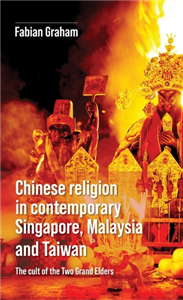
In Singapore and Malaysia, the inversion of Chinese Underworld traditions has meant that Underworld demons are now amongst the most commonly venerated deities in statue form, channelled through their spirit mediums, tang-ki. The Chinese Underworld and its sub-hells are populated by a bureaucracy drawn from the Buddhist, Taoist and vernacular pantheons. Under the watchful eye of Hell's 'enforcers', the lower echelons of demon soldiers impose post-mortal punishments on the souls of the recently deceased for moral transgressions committed during their prior incarnations. Chinese religion in contemporary Singapore, Malaysia and Taiwan offers an ethnography of contemporary Chinese Underworld traditions, where night-time cemetery rituals assist the souls of the dead, exorcised spirits are imprisoned in Guinness bottles, and malicious foetus ghosts are enlisted to strengthen a temple's spirit army. Understanding the religious divergences between Singapore and Malaysia (and their counterparts in Taiwan) through an analysis of socio-political and historical events, Fabian Graham challenges common assumptions about the nature and scope of Chinese vernacular religious beliefs and practices. Graham's innovative approach to alterity allows the reader to listen to first-person dialogues between the author and channelled Underworld deities. Through its alternative methodological and narrative stance, the book intervenes in debates on the interrelation between sociocultural and spiritual worlds, and promotes the destigmatisation of spirit possession and discarnate phenomena in the future study of mystical and religious traditions.
Trusted Partner

This book offers a unique and timely reading of the early Frankfurt School in response to the recent 'affective turn' within the arts and humanities. Resisting the overly rationalist tendencies of political philosophy, it argues that critical theory actively cultivates a powerful connection between thinking and feeling, and rediscovers a range of often neglected concepts that were of vital importance to the first generation of critical theorists, including melancholia, hope, (un)happiness, objects and mimesis. In doing so, it brings the dynamic work of Walter Benjamin, Theodor Adorno, Ernst Bloch and Siegfried Kracauer into conversation with more recent debates around politics and affect. An important intervention in the fields of affect studies and social and political thought, Critical theory and feeling shows that sensuous experience is at the heart of the Frankfurt School's affective politics.
Trusted Partner

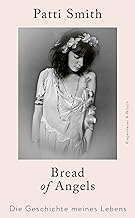
Patti Smiths persönlichstes Buch – poetisch, fesselnd und ein Muss für alle Fans Nach ihrem Welterfolg »Just Kids« gibt uns Patti Smith in diesem neuen Memoir einen zutiefst persönlichen Einblick in ein einzigartiges Leben, das von Anfang an der Kunst und Liebe gehörte. Beginnend mit ihrer Kindheit nach dem Zweiten Weltkrieg, betreten wir Patti Smiths ganz eigene Welt, beschrieben in poetischen, lebhaften Szenen und Details. Sie bietet uns intime Einblicke in ihre Teenagerjahre, in die Beziehung zu ihren Eltern, in die ersten Ausflüge in die Kunst und die verwirrende Intensität der Liebe. Im Schreiben findet sie schließlich Halt, getrieben von dem Bedürfnis, das Alltägliche in das Schöne, das Gewöhnliche in das Magische und den Schmerz in Hoffnung zu verwandeln. »Bread of Angels« ist das Zeugnis einer einzigartigen Künstlerin über ihre Lebensaufgabe, ihre Berufung und den Glauben an die unendliche Macht der Sprache.
Trusted Partner

The musician, doctor and philosopher Axel Braig considers philosophy a little like the weather: he looks for the right clothes for every situation. Braig is primarily concerned with practical, effective things from the two-and-a-half millennia fund of (Western) thinking, such as helpful approaches in existential crises. In this book, he introduces us to philosophical thinkers from Plato to Montaigne to Levinas and Feyerabend. Braig not only shares his own philosophical biography, but above all encourages us to philosophise ourselves.
Trusted Partner



