
Quasis
Quasis publishes books in the genres of imagination literature: fantasy, science fiction, supernatural thriller and magical realism.
View Rights Portal
Quasis publishes books in the genres of imagination literature: fantasy, science fiction, supernatural thriller and magical realism.
View Rights Portal


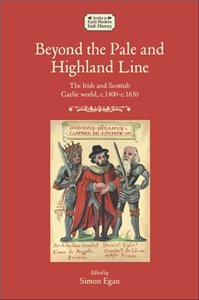
This book offers important new insights into the history and culture of the Gaelic-speaking world from the mid-fifteenth century through to the reign of James VI and I. Throughout this period, the reach of the English and Scottish crowns within these western regions was limited. The initiative lay with local communities and royal power was contingent upon negotiating with well-established and largely autonomous aristocratic lineages. Moreover, events within this western world could exert a powerful, often unpredictable, influence upon the affairs of the wider archipelago. Using a series of case studies, this collection examines the evolving relationship between Ireland and Scotland in rich detail. It demonstrates how this world interacted with the encroaching English and Scottish states and underlines the importance of paying closer attention to this neglected area of Irish and British history.
 Trusted Partner

In this book, the complexity and the significance of the foods we eat are analysed from a variety of perspectives, by sociologists, economists, geographers and anthropologists. Chapters address a number of intriguing questions: how do people make judgments about taste? How do such judgments come to be shared by groups of people?; what social and organisational processes result in foods being certified as of decent or proper quality? How has dissatisfaction with the food system been expressed? What alternatives are thought to be possible? The multi-disciplinary analysis of this book explores many different answers to such questions. The first part of the book focuses on theoretical and conceptual issues, the second part considers processes of formal and informal regulation, while the third part examines social and political responses to industrialised food production and mass consumption. Qualities of food will be of interest to researchers and students in all the social science disciplines that are concerned with food, whether marketing, sociology, cultural studies, anthropology, human nutrition or economics.
Trusted Partner

Do dogs belong with humans? Scientific accounts of dogs' 'species story,' in which contemporary dog-human relations are naturalised with reference to dogs' evolutionary becoming, suggest that they do. Dog politics dissects this story. This book offers a rich empirical analysis and critique of the development and consolidation of dogs' species story in science, asking what evidence exists to support it, and what practical consequences, for dogs, follow from it. It explores how this story is woven into broader scientific shifts in understandings of species, animals, and animal behaviours, and how such shifts were informed by and informed transformative political events, including slavery and colonialism, the Second World War and its aftermath, and the emergence of anti-racist movements in the twentieth and twenty-first centuries. The book pays particular attention to how species-thinking bears on 'race,' racism, and individuals.


A pioneering work in the movement to free art from its traditional bonds to material reality, this book is one of the most important documents in the history of modern art. Written by the famous nonobjective painter Wassily Kandinsky (1866–1944), it explains Kandinsky's own theory of painting and crystallizes the ideas that were influencing many other modern artists of the period. Along with his own groundbreaking paintings, this book had a tremendous impact on the development of modern art. Kandinsky's ideas are presented in two parts. The first part, called "About General Aesthetic," issues a call for a spiritual revolution in painting that will let artists express their own inner lives in abstract, non-material terms. Just as musicians do not depend upon the material world for their music, so artists should not have to depend upon the material world for their art. In the second part, "About Painting," Kandinsky discusses the psychology of colors, the language of form and color, and the responsibilities of the artist. An Introduction by the translator, Michael T. H. Sadler, offers additional explanation of Kandinsky's art and theories, while a new Preface by Richard Stratton discusses Kandinsky's career as a whole and the impact of the book. Making the book even more valuable are nine woodcuts by Kandinsky himself that appear at the chapter headings. This English translation of Über das Geistige in der Kunst was a significant contribution to the understanding of nonobjectivism in art. It continues to be a stimulating and necessary reading experience for every artist, art student, and art patron concerned with the direction of 20th-century painting.
Trusted Partner
 Trusted Partner
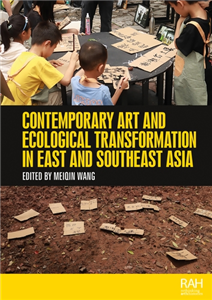
This anthology, presenting new research from fourteen scholars, delves into the interplay between contemporary art and ecological concerns in East and Southeast Asia. Focused on the concept of artistic remediation, the book unravels the diverse capacities of art to combat systemic anthropogenic destruction to the environment and ecology. At its core, the book articulates the ongoing ecological transformation in art and art history that embraces a paradigm shift in human-nature relationships, emphasizing interconnectedness of all life forms of the Earth. Bridging art studies, activism, and environmental studies, the book examines how artistic practices in the region have engaged with ecocritical reflection, biodiversity advocacy, sustainable practices, and environmental justice, among others. Providing a platform for critical and timely analysis of artistic interventions in the face of existential crises, the book acknowledges diverse voices of scholars who have situated their scholarship in the cultural and artistic specificities of various societies, locales, and communities in the region.
Trusted Partner
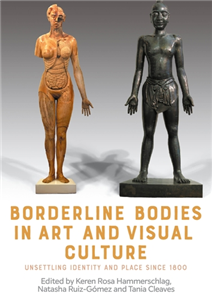
Borderline bodies offers original interpretations of visual representations of human bodies as bounded and unbounded, fortified and permeable, mobile and static-subject to borders and able to traverse and challenge them. It also takes as its focus images and objects that might be considered 'borderline' because they sit at the intersection of disciplines or sit outside accepted notions of what constitutes serious 'art.' By mapping the ways human bodies traverse borders and straddle-even dismantle-categories, this volume's essays approach afresh the relationship of bodies to traditional modes of representation, especially in art and medicine, and encourage us to think anew about how we understand the relationship between human corporeality, identity and place. Critical transdisciplinary and transnational analyses of objects and images from a range of geographies shed new light on the themes of: bodies and identity; typologies of the body; racialised bodies; 'normal' and 'abnormal' bodies; encounters between bodies; bodies in transition; bodies and mobility; and the bounded and unbounded human body. The outcome is a fresh approach to depictions of the human body produced for the purposes of artistic and medical education, aesthetic edification, and scientific and professional advancement, which disrupts assumptions about the normative human body perpetuated through Western image-making traditions.
Trusted Partner
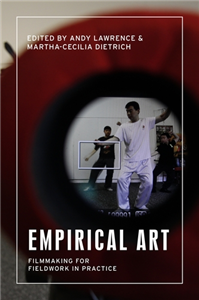
Empirical art: Filmmaking for fieldwork in practice is an insightful exploration of what the craft of filmmaking brings to social science research. Providing creative avenues on how to narrate encounters, relationships, and experiences during fieldwork, this comprehensive volume offers a rich tapestry of theoretical explorations and explorative methodologies. Skilfully connecting the worlds of ethnography, art and cinema, the contributors in this book act as a compass for filmmakers and researchers venturing to use a camera and microphone to relate and narrate their research collaborations and fieldsites. Drawing from the authors' extensive experience in disciplines like social anthropology, environmental humanities, and political science, "Empirical Art" breaks down the intricate process of crafting ethnographic films that departs from the researcher's subjectivity. Covering aspects of filmmaking from conceptualisation to production and distribution, readers are equipped with a treasure trove of collaborative techniques, innovative approaches, and ethical considerations necessary to generate and examine storytelling practices in contemporary fields of study. The authors discuss the significance of the multiple roles that technologies of filmmaking play in reflecting on cultural practices, social dynamics, and (beyond) human storytelling and their transformative potentials. Whether a seasoned filmmaker, an aspiring ethnographer, or an academic seeking new dimensions for their research, Empirical Art serves as a guide to integrating visual storytelling, cinema craft and empirical research.
Trusted Partner
You're nicked is the first comprehensive study of television police series in the UK. It reveals how British television's most popular genre has developed stylistically, politically and philosophically from 1955 to the present. Each chapter focuses on a particular decade, investigating how the most-watched series represent the inner workings of the police station, the civilian life of criminals and the private lives of police officers. This new approach unearths the complex ideology underpinning each series and discerns the key insights the genre can provide into the breakdown of the post-war settlement. Offering insightful readings of police series from Dixon of Dock Green to Happy Valley via The Sweeney, The Bill and Cracker, the book is a must-read for crime-drama enthusiasts worldwide. This new paperback edition features an extensive epilogue on Line of Duty and other Jed Mercurio creations.
Trusted Partner


The assessment of nursing and care needs and the organisation and quality assurance of nursing care are key tasks performed by nursing staff. This also includes administering medication, something which requires sound organisation, control, implementation and documentation. Nurses observe whether medication is taken consistently, has the desired effect, and whether undesirable side effects occur. The drug product as a „special commodity“ – whether in inpatient long-term care, in outpatient care, or in hospital – requires special knowledge concerning - correct storage, - the pharmacological effect, and - appropriate application. This book is geared towards the diseases and symptoms of people requiring nursing or care. All the important facts concerning the use of medicines are presented here in an understandable manner, focusing on the essentials. Numerous illustrations and practical tips provide the link to everyday nursing care. It is the ideal textbook and reference work for nursing and care assistants as well as nursing professionals.
Trusted Partner
In the 1920s and 1930s, anthropology and ethnography provided new and striking ways of rethinking what art could be and the forms which it could take. This book examines the impact of these emergent disciplines on the artistic avant-garde in Paris. The reception by European artists of objects arriving from colonial territories in the first half of the twentieth century is generally understood through the artistic appropriation of the forms of African or Oceanic sculpture. The author reveals how anthropological approaches to this intriguing material began to affect the ways in which artists, theorists, critics and curators thought about three-dimensional objects and their changing status as 'art', 'artefacts' or 'ethnographic evidence'. This book analyses texts, photographs and art works that cross disciplinary boundaries, through case studies including the Dakar to Djibouti expedition of 1931-33, the Trocadéro Ethnographic Museum, and the two art periodicals Documents and Minotaure. Through its interdisciplinary and contextual approach, it provides an important corrective to histories of modern art and the European avant-garde. ;
Trusted Partner

A considered investigation of a long-standing army base's impact on the British countryside. What is it like to live next door to a British Army base? Beyond the barracks provides an eye-opening account of the sprawling military presence on Salisbury Plain, drawing on a wide range of voices from both sides of the divide. Targeted for expansion under government plans to reorganise the UK's global defence estate, the Salisbury 'super garrison' offers a unique opportunity to explore the impact of the military footprint in a particular place. But this is no ordinary environment: as well as being the world-famous site of Stonehenge, the grasslands of Salisbury Plain are home to rare plants and wildlife. How does the army take responsibility for conserving this unique landscape as it trains young men and women to use lethal weapons? Are its claims that its presence is a positive for the environment anything more than propaganda? Beyond the barracks investigates these questions against the backdrop of a historic landscape inscribed with the legacy of perpetual war.
Trusted Partner
Art History: A critical introduction to its methods provides a lively and stimulating introduction to methodological debates within art history. Offering a lucid account of approaches from Hegel to post-colonialism, the book provides a sense of art history's own history as a discipline from its emergence in the late-eighteenth century to contemporary debates. By explaining the underlying philosophical and political assumptions behind each method, along with clear examples of how these are brought to bear on visual and historical analysis, the authors show that an adherence to a certain method is, in effect, a commitment to a set of beliefs and values. The book makes a strong case for the vitality of the discipline and its methodological centrality to new fields such as visual culture. This book will be of enormous value to undergraduate and graduate students, and also makes its own contributions to ongoing scholarly debates about theory and method. ;
Trusted Partner
Trusted Partner

Approximately 30 to 50 new active ingredients are approved in Germany each year. Keeping track and forming a well- informed opinion can be time-consuming and challenging in the daily routine of pharmacy practice. This resource provides comprehensive information on all 41 new pharmaceuticals introduced between December 2023 and November 2024, clearly organised and professionally evaluated. Active ingredient profiles give a clear overview, while detailed graphics illustrate complex modes of action and pathological mechanisms. The author also examines authorisation- relevant studies as well as economic aspects. Each article concludes with an assessment of the thera- peutic relevance and discusses the underlying disease, including its symptoms and previous treatment options, and compares the new active ingredient with its strongest competitors. This allows you to quickly determine whether the new medicinal product represents a groundbreaking innovation or merely an analogue preparation. Target group: Pharmacists in dispensaries and hospitals, physicians in hospitals and practices
Trusted Partner
Trusted Partner

Alternatives or supplements to conventional medicine for cats and dogs? Yes, homoeopathy provides holistic therapeutic approaches for our four-legged friends too! Whether they are suffering from anxiety, conjunctivitis, or a tick bite, this book describes the appropriate homoeopathic remedies. The author draws on her many years of experience as an animal healer and presents the most important symptoms and their treatment using homoeopathy.This handy paperback fits into a lab coat pocket and provides:- Basic information on homoeopathy for dogs and cats- Symptoms from A to Z- Characteristics of the most important single-remedy homoeopathic preparations
Trusted Partner
Art and Citizenship in Conflict examines the work of women war artists in order to highlight the complexity of citizenship and gender in Britain during the Second World War. Evelyn Dunbar, Mary Kessell, Ethel Gabain, Stella Schmolle, and Laura Knight, among others, were commissioned by the War Artists' Advisory Committee (WAAC) to document the millions of women who took up sometimes unconventional roles-in agriculture, the auxiliary services, and manufacturing, among others-to support the British war effort. Indeed, their prints, drawings, and paintings were part of a broader scheme to uphold morale and promote much-needed citizen involvement on the home front. While there is growing interest, the importance of their remit in the history of the Second World War and the quality of their artistry have nonetheless not yet secured them a significant place in scholarship. Art and Citizenship in Conflict seeks to amend this gap while also broadening approaches to the study of war itself.
Trusted Partner



