
Rachel Amphlett
USA Today bestselling author Rachel Amphlett is the creator of over 25 crime thrillers. Rachel’s titles are available for consideration to all parties interested in licensing IP.
View Rights Portal
USA Today bestselling author Rachel Amphlett is the creator of over 25 crime thrillers. Rachel’s titles are available for consideration to all parties interested in licensing IP.
View Rights Portal
Armin Lear Press is home to award-winning editorial and design talent.
View Rights Portal

This book explores how and why Scottish Highlanders, Punjabi Sikhs, and Nepalese Gurkhas became identified as the British Empire's fiercest, most manly soldiers in nineteenth century discourse. As 'martial races' these men were believed to possess a biological or cultural disposition to the racial and masculine qualities necessary for the arts of war. Because of this, they were used as icons to promote recruitment in British and Indian armies - a phenomenon with important social and political effects in India, in Britain, and in the armies of the Empire. Martial Races bridges regional studies of South Asia and Britain while straddling the fields of racial theory, masculinity, imperialism, identity politics, and military studies. Of particular importance is the way it exposes the historical instability of racial categories based on colour and its insistence that historically specific ideologies of masculinity helped form the logic of imperial defence, thus wedding gender theory with military studies in unique ways. Moreover, Martial Races challenges the marginalisation of the British Army in histories of Victorian popular culture, and demonstrates the army's enduring impact on the regional cultures of the Highlands, the Punjab and Nepal. This unique study will make fascinating reading for higher level students and experts in imperial history, military history and gender history.

As artificial intelligence continues to transform modern warfare, the rapid development of AI-driven weaponry presents profound ethical, legal, and security challenges. Artificial Intelligence and International Security: Redefining Arms Races and Contemporary Warfare offers a critical examination of this emerging arms race, exploring issues of arms control, international law, diplomacy, and long-term security. Bringing together expert perspectives, this volume assesses the risks and implications of autonomous weapon systems while proposing solutions to ensure ethical AI deployment. Through a comprehensive analysis of this urgent issue, it seeks to contribute to global debates and inform policies that foster peace, stability, and the responsible use of AI in warfare.
 Trusted Partner

What is it like to live next door to a British Army base? England's military heartland provides an eye-opening account of the sprawling military presence on Salisbury Plain, drawing on a wide range of voices from both sides of the divide. Targeted for expansion under government plans to reorganise the UK's global defence estate, the Salisbury 'super garrison' offers a unique opportunity to explore the impact of the military footprint in a particular place. But this is no ordinary environment: as well as being the world-famous site of Stonehenge, the grasslands of Salisbury Plain are home to rare plants and wildlife. How does the army take responsibility for conserving this unique landscape as it trains young men and women to use lethal weapons? Are its claims that its presence is a positive for the environment anything more than propaganda? This book investigates these questions against the backdrop of a historic landscape inscribed with the legacy of perpetual war.
Trusted Partner

A considered investigation of a long-standing army base's impact on the British countryside. What is it like to live next door to a British Army base? Beyond the barracks provides an eye-opening account of the sprawling military presence on Salisbury Plain, drawing on a wide range of voices from both sides of the divide. Targeted for expansion under government plans to reorganise the UK's global defence estate, the Salisbury 'super garrison' offers a unique opportunity to explore the impact of the military footprint in a particular place. But this is no ordinary environment: as well as being the world-famous site of Stonehenge, the grasslands of Salisbury Plain are home to rare plants and wildlife. How does the army take responsibility for conserving this unique landscape as it trains young men and women to use lethal weapons? Are its claims that its presence is a positive for the environment anything more than propaganda? Beyond the barracks investigates these questions against the backdrop of a historic landscape inscribed with the legacy of perpetual war.
Trusted Partner

The signing of the Good Friday Agreement in 1998 appeared to open up a new phase in the history of Northern Ireland and indeed world politics generally. Hailed from the outset as a model that would inspire peace processes in other countries, it sought through careful negotiation and delicate compromise to bring to a conclusion a conflict that had cost over 3600 lives, damaged Britain's international position and at times come very close to undermining relations between the UK and Ireland. While the peace has held it is obvious that serious divisions continue to make a final settlement of the Northern Irish question very difficult. This comprehensive and original study is the first to explain in detail how the Good Friday Agreement ran into trouble, why we are still some way from a final settlement, but why a return to war is most unlikely - even in an age where global terror now threatens world order more seriously than at any time in the past. This new edition of an established, authoritative text will be essential reading for students, researchers and academics of Irish politics, conflict and peace studies, and international relations. ;
Trusted Partner
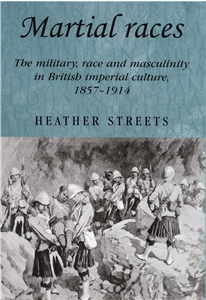
This book explores how and why Scottish Highlanders, Punjabi Sikhs, and Nepalese Gurkhas became identified as the British Empire's fiercest, most manly soldiers in nineteenth century discourse. As 'martial races' these men were believed to possess a biological or cultural disposition to the racial and masculine qualities necessary for the arts of war. Because of this, they were used as icons to promote recruitment in British and Indian armies - a phenomenon with important social and political effects in India, in Britain, and in the armies of the Empire. Martial races bridges regional studies of South Asia and Britain while straddling the fields of racial theory, masculinity, imperialism, identity politics, and military studies. It challenges the marginalisation of the British Army in histories of Victorian popular culture, and demonstrates the army's enduring impact on the regional cultures of the Highlands, the Punjab and Nepal. This unique study will make fascinating reading for higher level students and experts in imperial history, military history and gender history. ;
Trusted Partner

This book is a study of mobility, image and identity in colonial India and imperial Britain in the late nineteenth and early twentieth centuries. It is a model for studies of migrant figures like K.S. Ranjitsinhji who emerged during the imperial period. Ranjitsinhji is an important figure in the history of modern India and the British empire because he was recognized as a great athlete and described as such. The book focuses on four aspects of Ranjitsinhji's life as a colonial subject: race, money, loyalty and gender. It touches upon Ranjitsinhji's career as a cricketer in the race section. The issue of money gave Indian critics of Ranjitsinhji's regime the language they needed to condemn his personal and administrative priorities, and to portray him as self-indulgent. Ranjitsinhji lived his life as a player of multiple gender roles: sometimes serially, and on occasion simultaneously. His status as a "prince" - while not entirely fake - was fragile enough to be unreliable, and he worked hard to reinforce it even as he constructed his Englishness. Any Indian attempt to transcend race, culture, climate and political place by imitating an English institution and its product must be an unnatural act of insurgency. The disdain for colonial politics that was manifest in the "small rebellions" at the end of the world war converged with the colonized/Indian identity that was evident at the League of Nations. Between the war and his death, it is clear, Ranjitsinhji moved to maximize his autonomy in Nawanagar.
Trusted Partner
Colonial war played a vital part in transforming the reputation of the military and placing it on a standing equal to that of the navy. The book is concerned with the interactive culture of colonial warfare, with the representation of the military in popular media at home, and how these images affected attitudes towards war itself and wider intellectual and institutional forces. It sets out to relate the changing image of the military to these fundamental facts. For the dominant people they were an atavistic form of war, shorn of guilt by Social Darwinian and racial ideas, and rendered less dangerous by the increasing technological gap between Europe and the world. Attempts to justify and understand war were naturally important to dominant people, for the extension of imperial power was seldom a peaceful process. The entertainment value of war in the British imperial experience does seem to have taken new and more intensive forms from roughly the middle of the nineteenth century. Themes such as the delusive seduction of martial music, the sketch of the music hall song, powerful mythic texts of popular imperialism, and heroic myths of empire are discussed extensively. The first important British war correspondent was William Howard Russell (1820-1907) of The Times, in the Crimea. The 1870s saw a dramatic change in the representation of the officer in British battle painting. Up to that point it was the officer's courage, tactical wisdom and social prestige that were put on display.
Trusted Partner
Trusted Partner
Trusted Partner
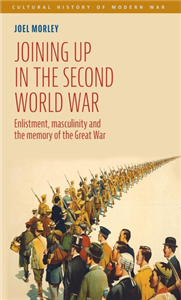
This book connects the First and Second World Wars. It uses oral histories and Mass Observation material to explore men's attitudes to Second World War enlistment and the relationship they perceived between military service and masculinity, and how these were influenced by understandings of the First World War. Locating the cultural legacy of First World War in the subjectivities of men who participated in the Second World War demonstrates the breadth of sources that informed men's understandings of the First World War in interwar Britain. Its cultural legacy was omnipresent and diverse, and informed young men's attitudes and service preferences, but it reinforced Edwardian conceptions of wartime masculinity as often as it undermined them. Two decades after the First World War ended, they remained resilient in the subjective understandings of men who grew up in the Great War's shadow.
Trusted Partner
 Trusted Partner


Kuscheln Tierkinder eigentlich auch gerne? Aber sicher. Und zwar genau da, wo es auch die Menschenkinder am liebsten tun: in Mamas und Papas Arm. Der kleine Braunbär schmiegt sich eng an seine Mutter, das Murmeltier-Kind drückt seinen Vater ganz fest und das kleine Faultier döst am allerliebsten den lieben langen Tag in Mamas Armen. Lustige Verwandlungsseiten laden zum gemeinsamen Entdecken ein und zeigen die Tierkinder an ihrem Lieblingsort. Pappbilderbuch ab 2 Jahren für extragemütlichen Vorlesespaß, optimal zum Kuscheln und Einschlafen. Hochwertig ausgestattet mit Formstanzungen und verkürzten Seiten.
Trusted Partner
This book provides a compelling analysis of proxy warfare and its far-reaching implications for statehood, focusing on the conflict in Afghanistan. Introducing the innovative concept of "state-wrecking," it bridges theory and practice to unravel how external support for insurgent actors fuels violence, undermines territorial control and sovereignty, intensifies violence, and dismantles political legitimacy. The work shifts the discourse on proxy wars from the strategies of global powers to the procedural and structural impacts within target states. Grounded in rigorous empirical research, including interviews, archival data, and conflict analysis, the book critically examines the Pakistan-Taliban nexus and the limitations of US-led interventions. By blending a robust theoretical framework with in-depth case studies, it reveals how proxy dynamics shape conflicts, disrupt governance, and challenge international security. This is an essential resource for those seeking to understand the entanglements of modern warfare and the fragility of states under external influence.
Trusted Partner
This volume explores the disruptive effects of militarism, war and social unrest in early modern drama. Engaging with Simon Barker's seminal work on dramatic representations of war and militarism, contributors highlight what often lies hidden beneath the surface of martial narratives, treating them as formative interventions in contemporary discourses, whether in justifying war, excluding dissident voices or shaping cultural identities. Discussions include new examinations of militarism, the figure of the soldier and early modern theories of war in Shakespearean tragedy, history and comedy, alongside antimasque and dramatic satire by lesser-known playwrights. The essays investigate how ideas of war underpin emerging concepts of gender, leadership, marriage and the family, as well as the continuing mobilisation of Shakespearean drama in the context of modern armed conflict. Together, they offer rich new contributions to the current lively critical debates on this topic.
Trusted Partner
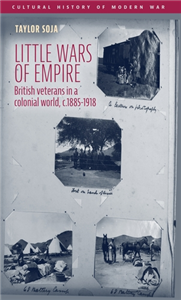
Little Wars of Empire is a group biography of British veterans who experienced multiple wars across the British empire. Throughout the nineteenth century, Britain was constantly at war in its colonies, defending against anti-colonial resistance or trying to expand its influence. The veterans of these wars did not disappear once they were over, and many of them went on to later experience World War I. By using personal sources such as letters, diaries, and photograph albums, this book works to show how colonial violence and British military history depend upon one another, and argues that colonial war fundamentally shaped the British experience of empire. This was true for all kinds of British veterans, from British Army soldiers and officers to nurses and military families, whose experiences demonstrate the central place of colonial violence to British life.
Trusted Partner

This book analyses the Syria crisis and the role of chemical weapons in relation to US foreign policy. The Syrian government's use of such weapons and their subsequent elimination has dominated the US response to the conflict, where these are viewed as particularly horrific arms - a repulsion known as the chemical taboo. On the surface, this would seem to be an appropriate reaction: these are nasty weapons and eradicating them would ostensibly comprise a 'good' move. But this book reveals two new aspects of the taboo that challenge this prevailing view. First, actors use the taboo strategically to advance their own self-interested policy objectives. Second, that applying the taboo to Syria has actually exacerbated the crisis. As such, this book not only provides a timely analysis of Syria, but also a major and original rethink of the chemical taboo, as well as international norms more widely.
Trusted Partner

Green's The contemporary law of armed conflict has been acclaimed as one of the most significant works on the law of armed conflict to appear in recent years. The first edition was adopted as a basic text by military institutions and educational establishments throughout the world and is among the most comprehensive and readable works on the subject. This new edition brings the work up to date, examining the significance of the World Court's Opinion on the legality of the nuclear weapon. It also considers the importance of such matters as the laser weapon agreement, the mines treaty and the jurisprudence of the two war crimes tribunals, that for the former Yugoslavia as well as for Rwanda, and assesses the role of the proposed International Criminal Court as it may affect the law of armed conflict. The book applies a practical as well as a theoretical approach, and draws on an extensive range of national and international practice. It is thus an indispensable reference for the armed forces and government defence organizations, as well as academics and students interested in the modern law of war.
Trusted Partner
 Trusted Partner
Green's The contemporary law of armed conflict has been acclaimed as one of the most significant works on the law of armed conflict to appear in recent years. The first edition was adopted as a basic text by military institutions and educational establishments throughout the world and is among the most comprehensive and readable works on the subject. This new edition brings the work up to date, examining the significance of the World Court's Opinion on the legality of the nuclear weapon. It also considers the importance of such matters as the laser weapon agreement, the mines treaty and the jurisprudence of the two war crimes tribunals, that for the former Yugoslavia as well as for Rwanda, and assesses the role of the proposed International Criminal Court as it may affect the law of armed conflict. The book applies a practical as well as a theoretical approach, and draws on an extensive range of national and international practice. It is thus an indispensable reference for the armed forces and government defence organizations, as well as academics and students interested in the modern law of war. ;

