
Your Search Results
-

-

Narrative Landscape Press Ltd
Narrative Landscape Press is an independent publisher and a provider of publishing services and independent authors in Nigeria.
View Rights Portal
-
Promoted Content

 Humanities & Social SciencesApril 2023
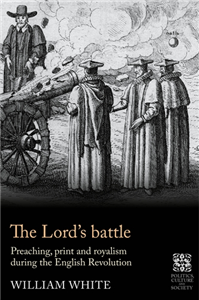
The Lord’s battle
Preaching, print and royalism during the English Revolution
by William White
This book explores the preaching and printing of sermons by royalists during the English Revolution. While scholars have long recognised the central role played by preachers in driving forward the parliamentarian war-effort, the use of the pulpit by the king's supporters has rarely been considered. The Lord's battle, however, argues that the pulpit offered an especially vital platform for clergymen who opposed the dramatic changes in Church and state that England experienced in the mid-seventeenth century. It shows that royalists after 1640 were moved to rethink earlier attitudes to preaching and print, as the unique potential for sermons to influence both popular and elite audiences became clear. As well as contributing to our understanding of preaching during the Civil Wars therefore, this book engages with recent debates about the nature of royalism in seventeenth-century England.
-
Promoted Content
 Humanities & Social SciencesAugust 2010
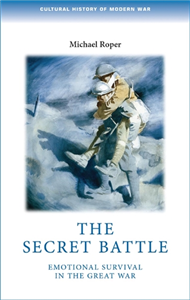
The secret battle
Emotional survival in the great war
by Michael Roper, Bertrand Taithe, Penny Summerfield, Peter Gatrell, Max Jones, Ana Carden-Coyne
What did home mean to British soldiers and how did it help them to cope with the psychological strains of the Great War? Family relationships lie at the heart of this book. It explores the contribution letters and parcels from home played in maintaining the morale of this largely young, amateur army. And it shows how soldiers, in their turn, sought to adapt domestic habits to the trenches. Pursuing the unconscious clues within a rich collection of letters and memoirs with the help of psychoanalytical ideas, including those formulated by the veteran tank commander Wilfred Bion, this study asks fundamental questions about the psychological resources of this generation of young men. It reveals how the extremities of battle exposed the deepest emotional ties of childhood, and went on marking the post-war domestic lives of those who returned. ;
-
 Trusted Partner
 Literature & Literary StudiesJanuary 2023
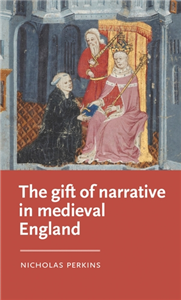
The gift of narrative in medieval England
by Nicholas Perkins
This invigorating study places medieval romance narrative in dialogue with theories and practices of gift and exchange, opening new approaches to questions of storytelling, agency, gender and materiality in some of the most engaging literature from the Middle Ages. It argues that the dynamics of the gift are powerfully at work in romances: through exchanges of objects and people; repeated patterns of love, loyalty and revenge; promises made or broken; and the complex effects that time works on such objects, exchanges and promises. Ranging from the twelfth century to the fifteenth, and including close discussions of poetry by Chaucer, the Gawain-Poet and romances in the Auchinleck Manuscript, this book will prompt new ideas and debate amongst students and scholars of medieval literature, as well as anyone curious about the pleasures that romance narratives bring.
-
Trusted Partner
 The ArtsMarch 2017
Images of the army
The military in British art, 1815-1914
by J. W. M. Hichberger
In an age when engraving and photography were making artistic images available to a much wider public, artists were able to influence public attitudes more powerfully than ever before. This book examines works of art on military themes in relation to ruling-class ideologies about the army, war and the empire. The first part of the book is devoted to a chronological survey of battle painting, integrated with a study of contemporary military and political history. The chapters link the debate over the status and importance of battle painting to contemporary debates over the role of the army and its function at home and abroad. The second part discusses the intersection of ideologies about the army and military art, but is concerned with an examination of genre representations of soldiers. Another important theme which runs through the book is the relation of English to French military art. During the first eighty years of the period under review France was the cynosure of military artists, the school against which British critics measured their own, and the place from which innovations were imported and modified. In every generation after Waterloo battle painters visited France and often trained there. The book shows that military art, or the 'absence' of it, was one of the ways in which nationalist commentators articulated Britain's moral superiority. The final theme which underlies much of the book is the shifts which took place in the perception of heroes and hero-worship.
-
Trusted Partner
The ArtsFebruary 2025
Tattoos in crime and detective narratives
Marking and remarking
by Kate Watson, Katharine Cox
Tattoos in crime and detective narratives examines representations of the tattoo and tattooing in literature, television and film, from two periods of tattoo renaissance (1851-1914, and c1955 to present). It makes an original contribution to understandings of crime and detective genre and the ways in which tattoos act as a mimetic device that marks and remarks these narratives in complex ways. With a focus on tattooing as a bodily narrative, the book incorporates the critical perspectives of posthumanism, spatiality, postcolonialism, embodiment and gender studies. The grouped essays examine the first tattoo renaissance, the rebirth of the tattoo in contemporary culture through literature, children's literature, film and television. The collection has a broad appeal, and will be of interest to all literature and media scholars, but in particular those with an interest in crime and detective narratives and skin studies.
-
Trusted Partner
 Humanities & Social SciencesJanuary 2021
Border images, border narratives
by Johan Schimanski, Jopi Nyman, Sarah Green, Hastings Donnan
-
Trusted Partner
 Humanities & Social SciencesApril 2016
University engagement and environmental sustainability
by Michael Osborne, Patricia Inman, Diana Robinson
Universities have a key role to play in contributing to environmental development and combating climate change. The chapters within this volume detail the challenges faced by higher education institutions in considering environmental sustainability, and provide both a broad view of university engagement and a detailed examination of various projects. As part of this series in association with the Place and Social Capital and Learning (PASCAL) International Observatory, the three key PASCAL themes of place management, lifelong learning and the development of social capital are considered throughout the book. While universities have historically generated knowledge outside of specific local contexts, this book argues that it is particularly important for them to engage with the local community and to consider diverse perspectives and assets when looking at issues within an ecological context. The chapters in this volume provide new perspectives and frames of reference for transforming universities by engaging in the development of resilient communities.
-
Trusted Partner
 Humanities & Social SciencesOctober 2016
Medicine, health and Irish experiences of conflict, 1914–45
by David Durnin, Ian Miller
-
Trusted Partner
-
Trusted Partner
 Humanities & Social SciencesApril 2026
Christ’s war
Holiness, heroism and horror in Carolingian poetry, c.730-c.900 CE
by Matthew Bryan Gillis
Christ's war examines Carolingian holy war from the forging of their empire in the eighth century to its dissolution in the late ninth century during the Northmen's attacks. It argues that the Franks understood their wars to be holy when their soldiers were without sin and, therefore, were holy themselves. God heard their prayers as they begged for divine aid, and he helped them overcome and slaughter their foes. Therefore, the Carolingian vision of holy war differed from the pious, apocalyptic military pilgrimages of the subsequent Crusades. Latin poetry serves as an important source in this study for understanding holy war, including how poets dramatized glorious victories or horrifying defeats for their audiences. The book offers important insights into the religious nature of Frankish warfare, while also contributing a fresh and innovative perspective on medieval holy war overall.
-
Trusted Partner
 Humanities & Social SciencesDecember 2012
The battle of Britishness
by Tony Kushner, Rebecca Mortimer
-
Trusted Partner
-
Trusted Partner
Humanities & Social SciencesMarch 2017
Popular imperialism and the military, 1850-1950
by John M. MacKenzie
Colonial war played a vital part in transforming the reputation of the military and placing it on a standing equal to that of the navy. The book is concerned with the interactive culture of colonial warfare, with the representation of the military in popular media at home, and how these images affected attitudes towards war itself and wider intellectual and institutional forces. It sets out to relate the changing image of the military to these fundamental facts. For the dominant people they were an atavistic form of war, shorn of guilt by Social Darwinian and racial ideas, and rendered less dangerous by the increasing technological gap between Europe and the world. Attempts to justify and understand war were naturally important to dominant people, for the extension of imperial power was seldom a peaceful process. The entertainment value of war in the British imperial experience does seem to have taken new and more intensive forms from roughly the middle of the nineteenth century. Themes such as the delusive seduction of martial music, the sketch of the music hall song, powerful mythic texts of popular imperialism, and heroic myths of empire are discussed extensively. The first important British war correspondent was William Howard Russell (1820-1907) of The Times, in the Crimea. The 1870s saw a dramatic change in the representation of the officer in British battle painting. Up to that point it was the officer's courage, tactical wisdom and social prestige that were put on display.
-
Trusted Partner
 Humanities & Social SciencesDecember 2025
Criminality, political power and conflict
Critical perspectives
by José Antonio Gutiérrez Danton, Francisco Gutiérrez Sanín
In the aftermath of the greed vs. grievance debate and the new wars paradigm, the focus of conflict studies shifted decisively to understanding "predatory" behaviours as the raison d'etre of contemporary conflict. Conflict was viewed as a continuum in which the more you engage in criminal behaviour, the less political you are.This approach has been robustly criticised over the past 15 years; however, in the process, we have been left with unsuitable concepts to handle the complex interactions between civil war, political power and criminality. The departure point here is the understanding of politics and criminality as two historically differentiated domains of human activity. Different, but interrelated, often co-constitutive and overlapping. Here, we empirically and theoretically explore their interactions, connections, and convergences, not focusing solely on irregular actors, thus bringing back the State and elites into this debate.
-
Trusted Partner
 Humanities & Social SciencesJuly 2016
The European Union's fight against terrorism
by Christopher Baker-Beall
-
Trusted Partner
-
Trusted Partner
Humanities & Social SciencesJune 2023
Border images, border narratives
The political aesthetics of boundaries and crossings
by Johan Schimanski, Jopi Nyman
This interdisciplinary volume explores the role of images and narratives in different borderscapes. Written by experienced scholars in the field, Border images, border narratives provides fresh insight into how borders, borderscapes, and migration are imagined and narrated in public and private spheres. Offering new ways to approach the political aesthetics of the border and its ambiguities, this volume makes a valuable contribution to the methodological renewal of border studies and presents ways of discussing cultural representations of borders and related processes. Influenced by the thinking of philosopher Jacques Rancière, this timely volume argues that narrated and mediated images of borders and borderscapes are central to the political process, as they contribute to the public negotiation of borders and address issues such as the in/visiblity of migrants and the formation of alternative borderscapes. The contributions analyse narratives and images in literary texts, political and popular imagery, surveillance data, border art, and documentaries, as well as problems related to borderland identities, migration, and trauma. The case studies provide a highly comparative range of geographical contexts ranging from Northern Europe and Britain, via Mediterranean and Mexican-USA borderlands, to Chinese borderlands from the perspectives of critical theory, literary studies, social anthropology, media studies, and political geography.
-
Trusted Partner

 April 2023
The Battle for Water
In the century of drought
by Jürgen Rahmig
— Water as a reason for war and a political instrument of power — Unique overview of global water conflicts — Foreword by Wolfgang Ischinger Every year, droughts in African countries cause hundreds of thousands of deaths and much suffering. Europe also experienced drought in 2022's summer of record temperatures. Without water, there can be no life. More and more people are suffering from water shortages. Climate change is fuelling the distribution battles for water; violent conflicts over this precious resource are the order of the day. Whether the protests in Iraq, the war in Syria, in the Himalayas, the Nile conflict and in many other places, water is already a reason for war and is being misused as a political instrument of power. The construction of huge dams, the targeted closure of locks, river diversions, water and land grabbing bring wars over the "blue gold" with them. In a unique overview, journalist Jürgen Rahmig describes the struggle for water in the 21st century. Where do dangers lurk today; where will they be tomorrow, and how can we prevent wars over precious water?
-
Trusted Partner
 Literature & Literary StudiesFebruary 2021
The gift of narrative in medieval England
by Nicholas Perkins, David Matthews, Anke Bernau, James Paz
-
Trusted Partner
 Humanities & Social SciencesSeptember 2016
Lifelong learning, the arts and community cultural engagement in the contemporary university
by Michael Osborne, Darlene Clover, Kathy Sanford



