Your Search Results

      • Trusted Partner
        Humanities & Social Sciences
        April 2016

        University engagement and environmental sustainability

        by Michael Osborne, Patricia Inman, Diana Robinson

        Universities have a key role to play in contributing to environmental development and combating climate change. The chapters within this volume detail the challenges faced by higher education institutions in considering environmental sustainability, and provide both a broad view of university engagement and a detailed examination of various projects. As part of this series in association with the Place and Social Capital and Learning (PASCAL) International Observatory, the three key PASCAL themes of place management, lifelong learning and the development of social capital are considered throughout the book. While universities have historically generated knowledge outside of specific local contexts, this book argues that it is particularly important for them to engage with the local community and to consider diverse perspectives and assets when looking at issues within an ecological context. The chapters in this volume provide new perspectives and frames of reference for transforming universities by engaging in the development of resilient communities.

      • Trusted Partner
        Humanities & Social Sciences
        April 2026

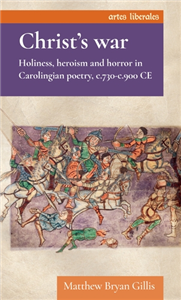
        Christ’s war

        Holiness, heroism and horror in Carolingian poetry, c.730-c.900 CE

        by Matthew Bryan Gillis

        Christ's war examines Carolingian holy war from the forging of their empire in the eighth century to its dissolution in the late ninth century during the Northmen's attacks. It argues that the Franks understood their wars to be holy when their soldiers were without sin and, therefore, were holy themselves. God heard their prayers as they begged for divine aid, and he helped them overcome and slaughter their foes. Therefore, the Carolingian vision of holy war differed from the pious, apocalyptic military pilgrimages of the subsequent Crusades. Latin poetry serves as an important source in this study for understanding holy war, including how poets dramatized glorious victories or horrifying defeats for their audiences. The book offers important insights into the religious nature of Frankish warfare, while also contributing a fresh and innovative perspective on medieval holy war overall.

      • Trusted Partner
        The Arts
        March 2017

        Images of the army

        The military in British art, 1815-1914

        by J. W. M. Hichberger

        In an age when engraving and photography were making artistic images available to a much wider public, artists were able to influence public attitudes more powerfully than ever before. This book examines works of art on military themes in relation to ruling-class ideologies about the army, war and the empire. The first part of the book is devoted to a chronological survey of battle painting, integrated with a study of contemporary military and political history. The chapters link the debate over the status and importance of battle painting to contemporary debates over the role of the army and its function at home and abroad. The second part discusses the intersection of ideologies about the army and military art, but is concerned with an examination of genre representations of soldiers. Another important theme which runs through the book is the relation of English to French military art. During the first eighty years of the period under review France was the cynosure of military artists, the school against which British critics measured their own, and the place from which innovations were imported and modified. In every generation after Waterloo battle painters visited France and often trained there. The book shows that military art, or the 'absence' of it, was one of the ways in which nationalist commentators articulated Britain's moral superiority. The final theme which underlies much of the book is the shifts which took place in the perception of heroes and hero-worship.

      • Trusted Partner
        Humanities & Social Sciences
        July 2018

        Half the battle

        by Robert Mackay

      • Trusted Partner
        Humanities & Social Sciences
        December 2012

        The battle of Britishness

        by Tony Kushner, Rebecca Mortimer

      • Trusted Partner
        Humanities & Social Sciences
        October 2017

        The battle of Britishness

        by Tony Kushner

      • Trusted Partner
        January 2021

        Kings of Chaos (2). Fit wie ein Faultier

        by Jakob M. Leonhardt, Sebastian Heidel

        Wer ist der größte Chaot? Garantiert zum Totlachen! Die Kings of Chaos! Direktor Kakadu hat Abdi nach seinem letzten Coup angedroht, ihn von der Schule zu schmeißen. Seitdem ist Abdi mit seiner Ghetto-Gang zahm wie eine Schafherde und Justus ist langweilig. Keine Streiche, keine Chaos-Aktionen, keine genialen Coups. Määhhhh! So geht das wirklich nicht weiter! Dabei hat Abdi letztens noch getönt, dass er jetzt unter die Freerunner gegangen ist und niemand ihn im Parkour schlagen kann. Vielleicht sollte Justus ihn ein bisschen herausfordern? Bei so einer Kletter-Challenge geht es dann mal richtig hoch hinaus! Weitere Bände der Reihe: Kings of Chaos (1). Zahm wie Schulhofhaie Kings of Chaos (3). Bleib locker, Stinktier! Außerdem vom Autor beim Arena Verlag erschienen: Knapp vorbei ist auch daneben. Ein genialer Chaot packt aus (1) In der Faulheit liegt die Kraft. Geniale Chaoten fallen nicht vom Himmel (2) Chaos ist das halbe Leben. Ein verkanntes Genie auf der Überholspur (3) Erst der Spaß, dass das Vergnügen. Geniale Chaoten bringt nichts auf die Palme (4) Chillen macht den Meister. Ein genialer Chaot startet durch (5)

      • Trusted Partner
      • Trusted Partner
      • Trusted Partner
      • Trusted Partner
        Humanities & Social Sciences
        March 2017

        Popular imperialism and the military, 1850-1950

        by John M. MacKenzie

        Colonial war played a vital part in transforming the reputation of the military and placing it on a standing equal to that of the navy. The book is concerned with the interactive culture of colonial warfare, with the representation of the military in popular media at home, and how these images affected attitudes towards war itself and wider intellectual and institutional forces. It sets out to relate the changing image of the military to these fundamental facts. For the dominant people they were an atavistic form of war, shorn of guilt by Social Darwinian and racial ideas, and rendered less dangerous by the increasing technological gap between Europe and the world. Attempts to justify and understand war were naturally important to dominant people, for the extension of imperial power was seldom a peaceful process. The entertainment value of war in the British imperial experience does seem to have taken new and more intensive forms from roughly the middle of the nineteenth century. Themes such as the delusive seduction of martial music, the sketch of the music hall song, powerful mythic texts of popular imperialism, and heroic myths of empire are discussed extensively. The first important British war correspondent was William Howard Russell (1820-1907) of The Times, in the Crimea. The 1870s saw a dramatic change in the representation of the officer in British battle painting. Up to that point it was the officer's courage, tactical wisdom and social prestige that were put on display.

      • Trusted Partner
      • Trusted Partner
      • Trusted Partner
      • Trusted Partner
        Humanities & Social Sciences
        December 2025

        Criminality, political power and conflict

        Critical perspectives

        by José Antonio Gutiérrez Danton, Francisco Gutiérrez Sanín

        In the aftermath of the greed vs. grievance debate and the new wars paradigm, the focus of conflict studies shifted decisively to understanding "predatory" behaviours as the raison d'etre of contemporary conflict. Conflict was viewed as a continuum in which the more you engage in criminal behaviour, the less political you are.This approach has been robustly criticised over the past 15 years; however, in the process, we have been left with unsuitable concepts to handle the complex interactions between civil war, political power and criminality. The departure point here is the understanding of politics and criminality as two historically differentiated domains of human activity. Different, but interrelated, often co-constitutive and overlapping. Here, we empirically and theoretically explore their interactions, connections, and convergences, not focusing solely on irregular actors, thus bringing back the State and elites into this debate.

      • Trusted Partner
      • Trusted Partner
      • Trusted Partner

      Subscribe to our

      newsletter