Your Search Results

      • Crimson Dragon Publishing

        Crimson Dragon Publishing carries books that encourage readers of all ages by sparking the imagination. While we focus on the fantasy and science fiction genres, we also carry illustrated books for young readers that focus on social-emotional skills development and fictionalized non-fiction.

        View Rights Portal
      • Editorial Drakul, S.L.

        Editorial Drakul is an independent, privately owned company, founded in June 2006 and dedicated mainly to the publication of novels and comics, but also children's literature.

        View Rights Portal
      • Trusted Partner
        Humanities & Social Sciences
        August 1999

        British Politics in an Age of Reform

        by Michael J. Turner, Mark Greengrass

        This work is a detailed examination of principal themes in the political history of late 18th- and early 19th-century Britain. It evaluates much recent research, links the politics of the elite with the politics of the people and seeks to explain significant developments with reference to both their long- and short-term causes. Among the issues addressed are the relative powers of crown, cabinet and parliament between 1760 and 1832; the impact on domestic politics of revolution and war abroad; the growth of radicalism and popular political activity; agitation for reform and the responses of government; the rise of party; the connections between extra-parliamentary pressure and instability; at the centre of power. ;

      • Trusted Partner
        Humanities & Social Sciences
        June 2018

        The Fourth Estate

        by Mark O'Brien

      • Trusted Partner
        Business, Economics & Law
        September 2020

        Neoliberal lives

        by Robert Chernomas, Ian Hudson, Mark Hudson

      • Trusted Partner
        Business, Economics & Law
        June 2025

        Decolonisation in the age of globalisation

        by Chi-kwan Mark

      • Trusted Partner
        Humanities & Social Sciences
        March 2026

        Negotiating identity conflicts in a fragmenting world order

        by Paul Willem Meerts, Mark Anstey

        At every level of human interaction new levels of identity-based tension are in evidence. Contributors to this book explore facets of fragmentation processes within systems of state and interstate organisation, how they influence the use of negotiation, and how negotiation might be used to effect renewed coherence. Following Anstey's (Ch1) introductory chapter framing the nature and shape of fragmentation dynamics, Zartman (Ch 2) argues that the use of negotiation as a process of conflict resolution is deeply shaped by identity groups whose internal coherence is dependent on sustaining a negative identity of others. International relations are no longer solely the realm of experienced diplomats but are shaped as Meerts (Ch3) points out by politicians seeking to be responsive to voting publics rather than wider concerns. Anstey digs into problems of fragmentation (Ch. 4) and Troitskiy (Ch 5) points out how a reluctant acceptance of the power of 'the other' can lead to a form of strategic stability in relations. Anstey and Meerts (Ch 6) point out in their analysis of the Israeli-Palestinian case as an identity conflict turned very bad. Guggenbuhl (Ch 7 ) reveals how structures and processes have been designed within the EU to prevent, contain and regulate conflicts to limit risks of confrontation and fragmentation. Schuessler (Ch 8) to advocates a shift away from a template or roadmap approach to EU membership to a cohesion based on non-dominance. There is still a strong desire on the part of some states, like Northern Macedonia, to become EU members, as reflected in Manton's (Ch 9). Paula Garzon and Frans Schram explain the success of the Colombia Peace Negotiations (Ch 10), while Odigie and da Rocha (Ch 11) analyse the struggle faced by ECOWAS to influence coup leaders in Mali to return to constitutional government and changes of government by constitutional means. Liang (Ch12) discusses how the internet as the modern vehicle of inter-state, inter-group and interpersonal communication has become weaponised. In Ch 13 Anstey draws some lessons from contributions to the compilation.

      • Trusted Partner
        Humanities & Social Sciences
        November 2024

        Culture is bad for you

        by Orian Brook, Dave O'Brien, Mark Taylor

      • Trusted Partner
        The Arts
        September 2025

        Do It Yourself

        Making political theatre

        by Common Wealth

        A unique guide to creating political theatre, produced by one of the UK's most exciting companies. Do It Yourself is a vital resource for anyone interested in exploring theatre culture grounded in and produced by working-class, multi-racial communities. Designed for artists, activists and community organisers, the book offers a step-by-step guide to creating political theatre that is relevant, impactful and rooted in the lives of everyday people. Common Wealth have spent fifteen years working at the cutting edge of political theatre. In Do It Yourself, they share their experimental and activist approach to performance-making, based on DIY principles and the belief that ground-breaking theatre can be made with anyone, anywhere, in ways that truly resonate with the communities it serves. Do It Yourself introduces Common Wealth's artistic and political ethos, provides unique insights into their most significant performances and offers practical exercises for creating your own work. But this is not just a manual. It is a celebration of culture as a collective endeavour, one that can challenge the status quo and inspire change.

      • Trusted Partner
        Humanities & Social Sciences
        January 2025

        The four dimensions of power

        Understanding domination, empowerment and democracy

        by Mark Haugaard

        In this accessible and sophisticated exploration of the nature and workings of social and political power, Haugaard examines the interrelation between domination and empowerment. Building upon the perspectives of Steven Lukes, Michel Foucault, Amy Allen, Hannah Arendt, Anthony Giddens, Pierre Bourdieu and others, he offers a clear theoretical framework, delineating power in four interrelated dimensions. The first and second dimensions of power entail two different types of social conflict. The third dimension concerns tacit knowledge, uses of truth and reification. Drawing upon genealogical theory and accounts of slavery as social death, the fourth dimension of power concerns the power to create social subjects. The book concludes with an original normative pragmatist power-based account of democracy. Offering lucid and entertaining illustrations of complex theoretical perspectives, this book is essential reading for scholars and activists.

      • Trusted Partner
        Business, Economics & Law
        October 2004

        Qualities of food

        by Mark Harvey, Andrew McMeekin, Alan Warde

        In this book, the complexity and the significance of the foods we eat are analysed from a variety of perspectives, by sociologists, economists, geographers and anthropologists. Chapters address a number of intriguing questions: how do people make judgments about taste? How do such judgments come to be shared by groups of people?; what social and organisational processes result in foods being certified as of decent or proper quality? How has dissatisfaction with the food system been expressed? What alternatives are thought to be possible? The multi-disciplinary analysis of this book explores many different answers to such questions. The first part of the book focuses on theoretical and conceptual issues, the second part considers processes of formal and informal regulation, while the third part examines social and political responses to industrialised food production and mass consumption. Qualities of food will be of interest to researchers and students in all the social science disciplines that are concerned with food, whether marketing, sociology, cultural studies, anthropology, human nutrition or economics.

      • Trusted Partner
        Humanities & Social Sciences
        July 2020

        The four dimensions of power

        by Mark Haugaard, Mark Haugaard

      • Trusted Partner
        Humanities & Social Sciences
        April 1999

        French society in revolution 1789–1799

        by David Andress, Mark Greengrass

        French society in revolution aims to retrieve the social history of the French Revolution from unjustified neglect. This study examines both the structural and cultural elements behind the breakdown of the eighteenth-century monarchic state and its aris. . . . ;

      • Trusted Partner
        Humanities & Social Sciences
        July 2022

        Bodies complexioned

        by Mark Dawson

      • Trusted Partner
      • Trusted Partner
        Humanities & Social Sciences
        July 2026

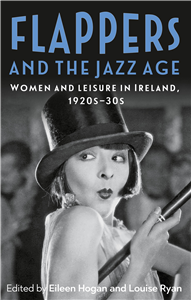
        Flappers and the Jazz Age

        Women and leisure in Ireland, 1920s–30s

        by Eileen Hogan, Louise Ryan

        People's ordinary, everyday lives - and more specifically, their leisure activities - are often obscured within existing academic research on 1920s-30s Ireland. This book seeks to redress that neglect by exploring the relationship between identity, recreation, and culture both North and South of the border, with particular attention to women's lived experiences. Leisurely pursuits during this period were commonly overshadowed by religious influence and the nation-building projects in post-partition Ireland. Nevertheless, there existed alternative spaces, where people enjoyed dancing, singing, listening to music, shopping, glamour, reading magazines, swimming, travelling, and going to the cinema. Such activities reflected international trends beyond national borders. This book documents those activities and spaces through a feminist lens and intersectional analysis of gender, class, religion and rural/urban identities. It brings together multi-disciplinary perspectives including cultural studies, architecture, geography, fashion, and musicology. In so doing, we present new insights and advance understanding of this under-researched aspect of Irish history.

      • Trusted Partner
        The Arts
        December 2024

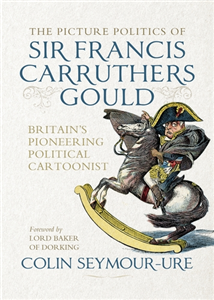
        The picture politics of Sir Francis Carruthers Gould

        Britain's pioneering political cartoonist

        by Mark Bryant

        This is the first major study of Britain's pioneering graphic satirist, Sir Francis Carruthers Gould (1844-1925), the first staff political cartoonist on a daily newspaper in Britain, and the first of his kind to be knighted. Written by the distinguished media historian, Colin Seymour-Ure, it is essential reading for anyone interested in cartoons, caricature and illustration and will also be welcomed by students of history, politics and the media. It examines Gould's career in Fleet Street until his retirement after the First World War. It also discusses his illustrations for magazines and books and there is an analysis of his use of symbolism and literary allusion to lampoon such eminent politicians as Gladstone and Joseph Chamberlain. As Lord Baker says in his Foreword, this book is 'a major contribution to our knowledge of British cartooning.'

      • Trusted Partner
        Literature & Literary Studies
        January 2013

        The English manor c.1200–c.1500

        by Mark Bailey

        Provides a comprehensive introduction and essential guide to one of the most important institutions in medieval England and to its substantial archive. This is the first book to offer a detailed explanation of the form, structure and evolution of the manor and its records. Offers translations of, and commentaries upon, each category of document to illustrate their main features. Examples of each category of record are provided in translation, followed by shorter extracts selected to illustrate interesting, commonly occurring, or complex features. A valuable source of reference for undergraduates wishing to understand the sources which underpin the majority of research on the medieval economy and society.

      • Trusted Partner
        Literature & Literary Studies
        September 2018

        The sense of early modern writing

        by Mark Robson

      • Trusted Partner
        Political parties
        November 2014

        The Conservative Party and the extreme right 1945–1975

        by Mark Pitchford

        This book, newly available in paperback, reveals the Conservative Party's relationship with the extreme right between 1945 and 1975. For the first time, this book shows how the Conservative Party, realising that its well known pre-Second World War connections with the extreme right were now embarrassing, used its bureaucracy to implement a policy of investigating extreme right groups and taking action to minimise their chances of success. The book focuses on the Conservative Party's investigation of right-wing groups, and shows how its perception of their nature determined the party bureaucracy's response. The book draws a comparison between the Conservative Party machine's negative attitude towards the extreme right and its support for progressive groups. It concludes that the Conservative Party acted as a persistent block to the external extreme right in a number of ways, and that the Party bureaucracy persistently denied the extreme right within the party assistance access to funds and representation within party organisations. It reaches a climax with the formulation of a 'plan' threatening its own candidate if he failed to remove the extreme right from the Conservative Monday Club.

      Subscribe to our

      newsletter