
Your Search Results

-
Promoted Content

 2022
2022Phytotherapy in Equine Practice
Pocket guide
by Dr. Herbert Konrad
Lemon balm tea for competition anxiety, cottonwood bark for myositis, devil’s claw root for laminitis – yes, herbal preparations promote healing in horses too! An experienced veterinarian has gathered together the skills of his holistic treatment - Profiles of herbal drugs: Therapy-relevant characteristics of the medicinal plants - Veterinary practice: Examination, repertorisation (finding the suitable remedy), treatment plan, calculation of the dose for a horse, including examples of equine patients - Indications: Proven phytotherapeutic agents for the most common diseases This book shows that even chronic cases or those refractory to conventional medicine can be successfully treated with the healing power of plants.
-
Promoted Content

 Literature & Literary StudiesOctober 2017
Botany, sexuality and women's writing, 1760–1830
From modest shoot to forward plant
by Sam George
In this fascinating study, Samantha George explores the cultivation of the female mind and the feminised discourse of botanical literature in eighteenth-century Britain. In particular, she discusses British women's engagement with the Swedish botanist, Carl Linnaeus, and his unsettling discovery of plant sexuality. Previously ignored primary texts of an extraordinary nature are rescued from obscurity and assigned a proper place in the histories of science, eighteenth-century literature, and women's writing. The result is groundbreaking: the author explores nationality and sexuality debates in relation to botany and charts the appearance of a new literary stereotype, the sexually precocious female botanist. She uncovers an anonymous poem on Linnaean botany, handwritten in the eighteenth century, and subsequently traces the development of a new genre of women's writing - the botanical poem with scientific notes. The book is indispensable reading for all scholars of the eighteenth century, especially those interested in Romantic women's writing, or the relationship between literature and science.
-
 Trusted Partner
 Biography & True StoriesJuly 2026
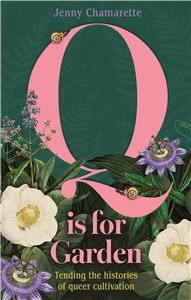
Q is for garden
Tending the histories of queer cultivation
by Jenny Chamarette
A bold, tender exploration of how queerness and nature entwine - and what happens when we step beyond the binaries that fence us in. There is a Q in garden, but you can't always see it. When Jenny Chamarette faced a devastating health crisis, they found themselves unmoored from the rules of gender, sexuality and productivity. In a small South London garden, Jenny began to imagine another way of living: porous, unruly, rooted in the lessons of soil and plant life. Gardens, like identities, are usually bounded - but what if those limits can be re-drawn? Blending memoir and cultural criticism, this book asks whether the categories we inherit - colonial, patriarchal, conventions of sexuality and gender - still serve us, or whether they confine us. From illness and recovery to queer love and ecological wonder, Q is for garden invites readers to reimagine how we inhabit land, culture and each other. An eloquent work of nature writing and queer thought, Q is for garden digs into the rich history of queer gardeners, botanists, artists and agriculturalists. It offers a hopeful vision of belonging, if we are curious enough to unearth it.
-
Trusted Partner

 Health & Personal Development
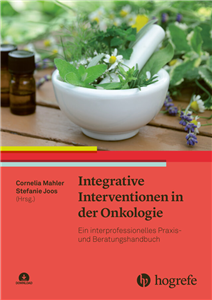
Integrative Interventions in Oncology
An Interprofessional Practice and Counselling Manual
by Cornelia Mahler / Stefanie Joos (Eds.)
Relief for body and mind – this handbook brings together proven, non-pharmacological interventions to support people living with cancer. From phytotherapy to compresses and lifestyle advice, it offers evidence-based tools for managing 21 symptoms and includes 88 illustrated “Infozepte” to guide patient care and communication. • Integrative treatments from acupressure to herbal teas • Practical support for 21 cancer-related symptoms • 88 illustrated guides for patient counseling and care
-
Trusted Partner
 2020
2020Veterinary Diseases and their Treatment
Dogs, cats, horses, pigs, cattle
by Dr. Wolfgang Daubenmerkl
Flea dermatitis in dogs, runny noses in cats, colic in horses – when our four-legged friends suffer, the owners suffer with them and want to find the best possible treatment. Alongside conventional medicine, natural remedies and homoeopathic treatments also offer opportunities for treating animals – but which of them have proved effective? An experienced veterinarian and alternative practitioner draws on his wealth of knowledge and explains ■ Typical clinical pictures with causes, symptoms and their diagnosis ■ Tried and tested proposed treatments from conventional medicine, homoeopathy, phytotherapy and other procedures ■ Basic principles, such as structure and function of organs, nerve and hormone systems, blood circulation Here the reader can quickly find the most effective method of treatment!
-
Trusted Partner

 June 2025
Complementary Medicine
from pregnancy to breastfeeding
by Ingeborg Stadelmann, Dietmar Wolz, Jessica Glenc, Natalie Stadelmann
Many expectant mothers seek natural treatments for their complaints. This pocket guide explores the possibilities of complementary medicine, including their mechanisms of action. It serves as a practical, indication-orientated reference for pharmaceutical professionals, midwives, and physicians – supporting the safe use of these treatments during this vulnerable life stage. The second edition has been completely updated to include nutrition during pregnancy and breastfeeding, and is now divided into three sections: • Part 1 – Treatment forms: aromatherapy, Bach flower therapy, homeopathy, phytotherapy, allopathy • Part 2 – General, helpful information for pregnancy, post- partum and breastfeeding • Part 3 – Indications presented in colour-coded chapters across the various sections The wide range of complementary treatments helps identify the most suitable treatment option for each patient. Target group: Pharmaceutical technicians, pharmacy interns, pharmacists, midwives, physicians, laymen
-
Trusted Partner
Humanities & Social SciencesApril 2025
The Derby philosophers
Science and culture in British urban society, 1700–1850
by Paul A. Elliott
The Derby Philosophers focuses upon the activities of a group of Midland intellectuals that included the evolutionist and physician Erasmus Darwin, Rev. Thomas Gisborne the evangelical philosopher and poet, Robert Bage the novelist, Charles Sylvester the chemist and engineer, William George and his son Herbert Spencer, the internationally renowned evolutionist philosopher who coined the phrase 'survival of the fittest', and members of the Wedgwood and Strutt families. The book explores how, inspired by science and through educational activities, publications and institutions including the famous Derbyshire General Infirmary (1810) and Derby Arboretum (1840), the Derby philosophers strove to promote social, political and urban improvements with national and international consequences. Much more than a parochial history of one intellectual group or town, this book examines science, politics and culture during one of the most turbulent periods of British history.
-
Trusted Partner
 February 2025
Complementary Medicine
Advice recommendations for self-medication
by Margit Schlenk, Gerald Bauer, Helen Blaschke, Birgit Emde, Michaela Glöckler, Margit Müller-Frahling, Nicole Schlesinger
Self-medication offers a wide range of therapy options that can be used in a targeted manner. This volume contains therapy recommendations for a specific clinical picture from the areas of • Phytotherapy • Homeopathy (single and complex remedies) • Anthroposophic medicine • Aromatherapy • Schuessler salts • Spagyrics • Bach flower therapy as well as recommendations on food supplements and the microbiome. For over 100 self-medication indications, suggested preparations for all the above-mentioned therapeutic approaches have been compiled in a compact, pocket-sized format. The 3rd edition has been greatly expanded and updated to include advice options. The highlight: In addition to the recommendations from complementary medicine, the reader is also always told how to treat according to the allopathic approach. This guarantees that users will always find the right medicine for the purpose. Readership: Pharmacists, pharmaceutical technicians, pharmacy interns, physicians, alternative practitioners
-
Trusted Partner
 Humanities & Social SciencesAugust 2009
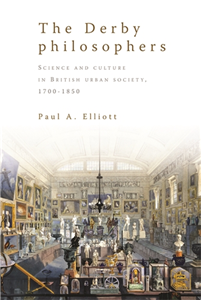
The Derby philosophers
Science and culture in British urban society, 1700–1850
by Paul Elliot
The Derby Philosophers focuses upon the activities of a group of Midland intellectuals that included the evolutionist and physician Erasmus Darwin, Rev. Thomas Gisborne the evangelical philosopher and poet, Robert Bage the novelist, Charles Sylvester the chemist and engineer, William George and his son Herbert Spencer, the internationally renowned evolutionist philosopher who coined the phrase 'survival of the fittest', and members of the Wedgwood and Strutt families. The book explores how, inspired by science and through educational activities, publications and institutions including the famous Derbyshire General Infirmary (1810) and Derby Arboretum (1840), the Derby philosophers strove to promote social, political and urban improvements with national and international consequences. Much more than a parochial history of one intellectual group or town, this book examines science, politics and culture during one of the most turbulent periods of British history, an age of political and industrial revolutions in which the Derby philosophers were closely involved. ;
-
Trusted Partner
 2022
2022Pharmacology for Midwives
Principles, theory and practice
by Dr. Philipp Kircher, Elisabeth Remplik and Dr. Peter Killian
Midwives use drugs on their own authority, or guide and support pregnant and breastfeeding women in their therapy. At the same time, the giving of drugs during pregnancy and lactation frequently entails a balancing act between medical need and experience on the one hand and often the absence of studies with evidence of harmlessness and safety on the other. Anyone who wants to make the correct decisions and deal responsibly with this dilemma can only do so on the basis of solid knowledge. This new reference book provides ideal preparation and imparts the necessary information: - General advice on the handling of drugs and the principles of pharmacology - Description of common drug substances and particular aspects of their use in pregnancy, childbirth and lactation - Treatment options from complementary medicine and phytotherapy - Advice about correct diet The clear and concise presentation of facts as well as numerous illustrations make it easier to understand and grasp the content. Text boxes highlight important elements or refer the reader to interesting additional information: The textbook and reference work for students, practical training and everyday work!

