
Breakwater Books
Livres Canada Books
View Rights Portal

Founded in Washington State, USA, Bregdan Publishing is run by author/publisher Ginny Dye.
View Rights Portal

Mr. Max and the Clever MouseMaximilian Max loves cheese more than anything. He is just making himself comfortable for Sunday breakfast, with lots of cheese of course - when a cheeky little mouse steals a piece! Mr. Max immediately takes up the chase. But he didn’t expect the mouse to be this clever, always finding new escape routes through hidden doors, over forgotten staircases, old clock cases, drainpipes and through the enchanted garden.A funny Picture Board Book with many flaps that playfully promotes spatial awareness and an understanding of the logical connection between cause and effect. Toddlers have the opportunity to help the little mouse escape by opening the flaps and thus actively participate in the story.
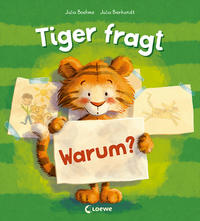
Tiger Asks Why?Theo and his cuddly toy Tiger are the very best of friends. They do everything together: Eating breakfast, getting dressed, going to kindergarten, playing, and reading. And Tiger has a question about everything: Why do we have to get up? Why are the other children allowed to play, too? And why does Theo have to brush his teeth? How good that Theo knows so much! And why do Theo and Tiger actually love each other so much? That's why!Julia Boehme lovingly narrates a story that humorously plays with children’s curiosity, atmospherically illustrated in a funny picture book that is very close to children's everyday lives,. About the special relationship between child and cuddly toy, Theo’s thirst for knowledge and questions children think about.
 Trusted Partner


Not a single soul as far as the eye can see. Just sea, cliffs and the beach. And a lighthouse. It’s a wondrously beautiful place – not that Airin has a chance to enjoy it. The lighthouse has been converted into a cosy living space available for rent, and 24-year-old Airin has to look after the property while at the same time running her own bed and breakfast in Castledunn. It’s a lot of work for one person, but normally everything runs smoothly. Until Joshua, the nephew of the lighthouse owner, moves in. Arrogant and priggish, he complains ceaselessly about everything. Airin feels like strangling him. Or kissing him. Who cares, just as long as he stops talking! 16+ years The third volume of a unique romance trilogy about three young women, a lighthouse and love. All titles can be read separately! Rousing characters and a fine dry humor For all fans of Mona Kasten, Laura Kneidl and Colleen Hoover! More than 60.000 copies of this series were sold!
Trusted Partner


Ein englisches Pub ist alles andere als eine beliebige Kneipe. Das Public House ist eine kulturhistorisch geprägte, hochgeschätzte nationale Instutition mit Eigentümlichkeiten, wie sie sich nur auf einer Insel entfalten können. Ganz zu schweigen vom englischen Bier. Bitter, ale oder stout, selbst das helle englische lager schmecken zweifellos anders als die Biere kontinentaler Herkunft. Dieser Pub-Führer vermittelt einen ungewöhnlichen Zugang zur Metropole London und zu den Grafschaften im Südosten Englands. Literarisch interessierte Leser begegnen bei ihren Pub-Besuchen und den angeschlossenen walks vielen Autoren; Garten und Naturliebhaber werden zu den schönsten Gärten und Landschaften Südenglands geführt; Antiquitätensammler kommen an vielen interessanten Lädeb vorbei; Wanderlustigen bieten die zahlreichen pubwalks eine gute Einstimmung auf den anschließenden Kneipenbesuch. Ein richtiges, das heißt ein einladendes, gemütliches und natürlich real ale ausschenkendes Pub mit gastfreundlichem Wirt ist keine Selbstverständlichkeit. Dieses Buch unterstützt Englandreisende bei der Suche nach altehrwüridgen oder auch ungewöhnlichen Gasthäusern - nebenbei nach solchen, die auch bed & breakfast anbieten. Das Public House ist nach britischen Verständnis eine öffentliche Angelegenheit und geschätzter Bewahrer der nationalen Identität - ein Besuch lohnt immer.
Trusted Partner
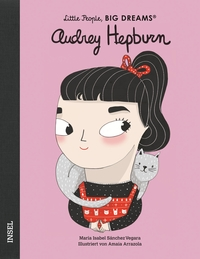
Audrey wuchs in den Niederlanden auf und wollte Ballerina werden. Dann brach der Krieg aus, und sie hatte wenig zu essen und war sehr schwach. Kaum war der Krieg vorbei, ging sie nach London und tanzte in Musicals. Im Handumdrehen wurde sie zum Hollywood-Star, bekam viele Preise und wurde von allen geliebt und verehrt. Aber am allerwichtigsten war ihr immer das Wohl der Kinder dieser Welt, für die sie sich ihr Leben lang einsetzte. Little People, Big Dreams erzählt von den beeindruckenden Lebensgeschichten großer Menschen: Jede dieser Persönlichkeiten, ob Schauspielerin, Fußballer oder Bürgerrechtsaktivistin, hat Unvorstellbares erreicht. Dabei begann alles, als sie noch klein waren: mit großen Träumen. Für welches Alter sind diese Bücher gedacht? Für Babys das perfekte Geschenk zur Begrüßung in eine Welt voller Träume! Und Eltern werden in schlaflosen Nächten von diesen Büchern dazu ermutigt, das Vorlesen zu einem selbstverständlichen Teil des Lebens zu machen. Kleinkinder werden von den Illustrationen verzaubert sein – sie werden zahlreiche Dinge entdecken. Auch sind die Bücher großartige „Vokabeltrainer“! 3- bis 5-Jährige werden alles, Illustrationen und Texte, geradezu in sich aufsaugen! 6-, 8- und 10-Jährige haben ein ausgeprägteres Verständnis für die Illustrationen und die Bedeutung der Geschichte – es geht nicht nur darum, sich selbst zu akzeptieren und die eigenen Zukunftsträume zu verwirklichen, sondern auch darum, andere so zu akzeptieren, wie sie sind. Später: Die Bücher sind gute Geschenke zu jedem Anlass, denn die Träume der Kindheit können das ganze Leben lang Wirklichkeit werden.
Trusted Partner


The book reinterprets the role of the UN during the Congo crisis from 1960 to 1964, presenting a multidimensional view of the organisation. Through an examination of the Anglo-American relationship, the book reveals how the UN helped position this event as a lightning rod in debates about how decolonisation interacted with the Cold War. By examining the ways in which the various dimensions of the UN came into play in Anglo-American considerations of how to handle the Congo crisis, the book reveals how the Congo debate reverberated in wider ideological struggles about how decolonisation evolved and what the role of the UN would be in managing this process. The UN became a central battle ground for ideas and visions of world order; as the newly-independent African and Asian states sought to redress the inequalities created by colonialism, the US and UK sought to maintain the status quo, while the Secretary-General Dag Hammarskjöld tried to reconcile these two contrasting views.
Trusted Partner
Trusted Partner

This is the first book to survey in comparative form the transmission of imperial ideas to the public in six European countries in the nineteenth and twentieth centuries. The chapters, focusing on France, Britain, the Netherlands, Belgium, Germany and Italy, provide parallel studies of the manner in which colonial ambitions and events in the respective European empires were given wider popular visibility. The international group of contributors, who are all scholars working at the cutting edge of these fields, place their work in the context of governmental policies, the economic bases of imperial expansion, major events such as wars of conquest, the emergence of myths of heroic action in exotic contexts, religious and missionary impulses, as well as the new media which facilitated such popular dissemination. Among these media were the press, international exhibitions, popular literature, educational institutions and methods, ceremonies, church sermons and lectures, monuments, paintings and much else.


Heart of Darkness (1899) is a novella by Polish-British novelist Joseph Conrad, about a voyage up the Congo River into the Congo Free State, in the heart of Africa, by the story's narrator Charles Marlow. Marlow tells his story to friends aboard a boat anchored on the River Thames, London, England. This setting provides the frame for Marlow's story of his obsession with the ivory trader Kurtz, which enables Conrad to create a parallel between London and Africa as places of darkness.
Trusted Partner


Joachim Gardemann outlines his encounters and experiences as a pediatrician in crisis zones while working for the Red Cross all over the world. He describes people in existential emergency situations, who have been traumatized but survived a genocide on the border with Rwanda. People who have fled from civil wars in Congo or escaped from the Kosovo war. He traces the suffering of people in Iran, China and Haiti after losing their relatives and all their possessions in severe earthquakes. At their moments of greatest vulnerability, in the shelters and dirt of a refugee camp in Jordan, he meets people who have fled from the turmoil of the civil wars in Sudan and Syria. He sketches poignant portraits of the victims of the tsunami disaster in Sri Lanka. He gives a striking account of the devastation wrought by the Ebola epidemic in Sierra Leone. He creates a worthy memorial to those who died of Ebola, who lost their lives as doctors and nurses in the fight against Ebola as well as to those who survived.
Trusted Partner
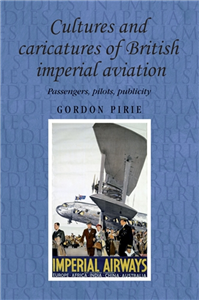
The new activity of trans-continental civil flying in the 1930s is a useful vantage point for viewing the extension of British imperial attitudes and practices. Cultures and caricatures of British imperial aviation examines the experiences of those (mostly men) who flew solo or with a companion (racing or for leisure), who were airline passengers (doing colonial administration, business or research), or who flew as civilian air and ground crews. For airborne elites, flying was a modern and often enviable way of managing, using and experiencing empire. On the ground, aviation was a device for asserting old empire: adventure and modernity were accompanied by supremacism. At the time, however, British civil imperial flying was presented romantically in books, magazines and exhibitions. Eighty years on, imperial flying is still remembered, reproduced and re-enacted in caricature. ;

