Your Search Results

      • Nikkei Business Publications

        Every year, we publish more than 500 books, mooks and special editions, and over 600 books published by Nikkei BP and its group companies have already crossed borders. Around the world, "Nikkei" is the brand of solid trust associated with business, technology and lifestyle.

        View Rights Portal
      • Bushel & Peck Books

        Bushel & Peck Books is the revolutionary children's book publisher with the Book-for-Book Promise: for every book they sell, the donate one to kids in need. Started in 2018 by couple David and Stephanie Miles, they publish beautifully illustrated, inspiring children's and novelty books that reimagine what a book can be.

        View Rights Portal
      • Trusted Partner
        Humanities & Social Sciences
        November 2009

        Has devolution worked?

        The verdict from policy-makers and the public

        by John Curtice, Bed Seyd

        Devolution to Scotland and Wales represented the most fundamental reform of the British state for almost a century. Ten years on, how successful has the reform been? Drawing on the views of citizens, elected representatives and interest groups in Scotland and Wales, this book provides an answer. The book is based on a wide ranging programme of research, involving dedicated surveys and interviews across Scotland, Wales and England. The results provide important new evidence on how devolution has been seen to have performed. What are its perceived achievements? What are its shortcomings? Is the new devolution 'settlement' stable, or is there a demand for further reform? By bringing together perspectives from the public, members of the devolved legislatures and representatives of civil society, the book establishes a unique picture of where devolution in Britain stands today. The book is accessibly written, and contains a wide range of useful primary data. It is ideal for undergraduate and postgraduate students studying devolution in Britain, as well as for general readers with an interest in constitutional reform and territorial politics. ;

      • Trusted Partner
        Business, Economics & Law
        July 2024

        The business of time

        A global history of the watch industry

        by Pierre-Yves Donzé

        The business of time presents a comprehensive history of the global watch industry from the mid-nineteenth century to the present. Watch production in the twenty-first century is concentrated in three countries: Switzerland, Japan and China. The industry is dominated by a dozen or so large companies, including the Swatch Group, Richemont, LVMH, Seiko and Fossil. But a hundred years ago the picture was dramatically different. Over the course of a century, Great Britain, France, the United States and Russia saw the manufacture of watches disappear from their territory. At the same time, Hong Kong went from being a subcontractor of watch components to an intermediary between Chinese factories and the world market. Revealing the conditions that drove the spread of watch production around the globe, The business of time explains how multinationals emerged to dominate the industry and highlights how Swiss companies were able to establish themselves as the undisputed leader in luxury watches.

      • Trusted Partner
        Political structure & processes
        May 2007

        Devolution and constitutional change in Northern Ireland

        by Edited by Paul Carmichael, Colin Knox and Robert Osborne

        This edited book, written by a collection of scholars with an interest in Northern Ireland, tracks its uneasy experience with devolution following the optimistic political period associated with the 1998 Belfast (Good Friday) Agreement. The volume brings together researchers from the Economic and Social Research Council's (ESRC) 'Devolution and Constitutional Change' Programme and other experts to record four key perspectives on Northern Ireland. First, it considers the inextricable link between devolution and constitutional developments. Second, it examines how the main political parties responded to devolution and the major challenges faced by society in moving beyond conflict (such as political symbolism, the role of women, equality and human rights issues). Third, it attempts to assess some of the workings of devolved government in its short-lived form or those seeded in devolution and carried on by direct rule ministers. Finally, Northern Irelands devolved government and associated institutions are located within the wider relationships with Westminster, the Republic of Ireland and Europe. This edited volume will be of interest to students of Irish politics and public policy, but more generally, from a comparative perspective, those with an interest in devolution and constitutional change. It may even assist politicians in Northern Ireland to reflect on the real potential to restore its devolved institutions and draw back from the brink of permanently copper-fastening 'direct rule' from Westminster.

      • Trusted Partner
        September 2023

        My Bank Washes Greener

        Eco lies told by the finance sector

        by Bernd Villhauer

        — By the expert in ethical business — Once you have finished this, you will never fall for green financial lies again — Global Ethic Institute (Weltethos- Institut) network And suddenly every bank is sustainable. This truly necessary "debate book" explains in a wellfounded way what green-washing means in the financial sector, and why banks, insurance companies, asset managers, stockbrokers and other financial players clothe themselves in their allegedly so green-and-friendly cloak. It provides an easy-to-understand explanation of the various forms of greenwashing, how we can recognise the different "varieties" and – above all – how we can avoid them. This is also important because the entire financial and capital system is an important part of a sustainable future – and this can only succeed if it is honest, transparent and impact-orientated.

      • Trusted Partner
        Humanities & Social Sciences
        November 2010

        Devolution and the governance of Northern Ireland

        by Colin Knox

        This book offers the first account of what the First Minister, Peter Robinson, describes as the most settled period of devolution in Northern Ireland for almost forty years. It traces the tortuous path to devolved government, the political instability which constantly threatened the institutions, and since May 2007 the bedding down of devolution and its impact so far on the people of Northern Ireland. The book parallels accounts of devolved government in Scotland and Wales. For years Northern Ireland has been the subject of academic enquiry relating to political, constitutional and security issues. Now as a post-conflict society political parties which for years engaged in the politics of antagonism must now redirect their efforts to delivering public policies that will improve the quality of people's daily lives. This has not come easily to them. This book is therefore the first study which looks at devolved power sharing governance arrangements in Northern Ireland and a sequel to Derek Birrell's book Direct Rule and the Governance of Northern Ireland. Manchester: Manchester University Press (2009) The book contains chapters on the key governance institutions: the civil service, local government, non-departmental public bodies, and the vibrant third sector in Northern Ireland. It examines in some detail the major review of public administration ongoing since 2002 and the more recent public services modernising agenda. Importantly, given the sectarian divisions which have segregated every aspect of life in Northern Ireland, the book asks the key question whether it is possible to reconcile the two communities or are they destined to live 'separate but equal' lives. Finally, the book considers topical issues which are at the early stages of implementation: community planning and central-local relations. This book will be of interest to students of devolution across the UK and beyond. It will also be relevant for those researchers working in the area of post-conflict societies. ;

      • Trusted Partner
        Humanities & Social Sciences
        January 2012

        The business of everyday life

        Gender, practice and social politics in England, c.1600–1900

        by Beverly Lemire, Pamela Sharpe, Penny Summerfield, Lynn Abrams, Cordelia Beattie, Kim Latham

        From 1600 to 1900 a growing consumerism fired the English economy, shaping the priorities of individuals, and determining the allocation of resources within families. Everyday business might mean making a trip to the pawnbroker, giving a loan to a trusted friend of selling off a coat, all to make ends meet. Both women and men engaged in this daily budgeting, but women's roles were especially important in achieving some level of comfort and avoiding penury. In some communities, the daily practices in place in the seventeenth century persisted into the twentieth, whilst other groups adopted new ways, such as using numbers to chart domestic affairs and turning to the savings banks that appeared in the nineteenth century. In the material world of the past and in the changing habits of earlier generations lie crucial turning points. This book explores these previously under-researched patterns and practices that gave shape to modern consumer society. ;

      • Trusted Partner
      • Trusted Partner
        Humanities & Social Sciences
        April 2025

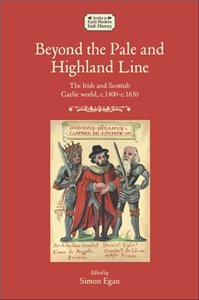
        Beyond the Pale and Highland Line

        The Irish and Scottish Gaelic world

        by Simon Egan

        This book offers important new insights into the history and culture of the Gaelic-speaking world from the mid-fifteenth century through to the reign of James VI and I. Throughout this period, the reach of the English and Scottish crowns within these western regions was limited. The initiative lay with local communities and royal power was contingent upon negotiating with well-established and largely autonomous aristocratic lineages. Moreover, events within this western world could exert a powerful, often unpredictable, influence upon the affairs of the wider archipelago. Using a series of case studies, this collection examines the evolving relationship between Ireland and Scotland in rich detail. It demonstrates how this world interacted with the encroaching English and Scottish states and underlines the importance of paying closer attention to this neglected area of Irish and British history.

      • Trusted Partner
        Humanities & Social Sciences
        March 2017

        Silk and empire

        by Brenda King

        In this book, Brenda M. King challenges the notion that Britain always exploited its empire. Creativity, innovation and entrepreneurship were all part of the Anglo-Indian silk trade and were nurtured in the era of empire through mutually beneficial collaboration. The trade operated within and without the empire, according to its own dictates and prospered in the face of increasing competition from China and Japan. King presents a new picture of the trade, where the strong links between Indian designs, the English silk industry and prominent members of the English the arts and crafts movement led to the production of beautiful and luxurious textiles. Lavishly illustrated, this book will be of interest to those interested in the relationship between the British Empire and the Indian subcontinent, as well as by historians of textiles and fashion.

      • Trusted Partner
        Humanities & Social Sciences
        March 2017

        Imperialism and the natural world

        by John M. MacKenzie

        Imperial power, both formal and informal, and research in the natural sciences were closely dependent in the nineteenth century. This book examines a portion of the mass-produced juvenile literature, focusing on the cluster of ideas connected with Britain's role in the maintenance of order and the spread of civilization. It discusses the political economy of Western ecological systems, and the consequences of their extension to the colonial periphery, particularly in forms of forest conservation. Progress and consumerism were major constituents of the consensus that helped stabilise the late Victorian society, but consumerism only works if it can deliver the goods. From 1842 onwards, almost all major episodes of coordinated popular resistance to colonial rule in India were preceded by phases of vigorous resistance to colonial forest control. By the late 1840s, a limited number of professional positions were available for geologists in British imperial service, but imperial geology had a longer pedigree. Modern imperialism or 'municipal imperialism' offers a broader framework for understanding the origins, long duration and persistent support for overseas expansion which transcended the rise and fall of cabinets or international realignments in the 1800s. Although medical scientists began to discern and control the microbiological causes of tropical ills after the mid-nineteenth century, the claims for climatic causation did not undergo a corresponding decline. Arthur Pearson's Pearson's Magazine was patriotic, militaristic and devoted to royalty. The book explores how science emerged as an important feature of the development policies of the Colonial Office (CO) of the colonial empire.

      • Trusted Partner
        Humanities & Social Sciences
        October 2006

        Devolution in Britain today

        Second edition

        by Russell Deacon, Bill Jones

        Devolution in Britain today provides a comprehensive analysis of both the historical development and the current state of devolved government. Devolution is now a key element in A-level syllabuses and on most undergraduate politics courses. This book is written in a clear and accessible style for students either encountering devolution for the first time or for those who need to explore the subject area in greater detail. All of the devolved bodies in England, Northern Ireland, Scotland and Wales are examined. This book is a thorough update of the first edition, written by Colin Pilkington and published by MUP in 2002. The book explains the concept and background of devolution, and indicates the constitutional implications of political devolution in the United Kingdom before providing a full and considered historical background to devolution, including an explanation of how the United Kingdom came to be united. It then examines the historical and political events that surrounded the preparation of devolution across Britain, before addressing each country in turn, assessing the relative success of devolution in that country. ;

      • Trusted Partner
        Humanities & Social Sciences
        September 2024

        The business of birth control

        by Claire L. Jones

      • Trusted Partner
        Humanities & Social Sciences
        April 2009

        Devolution in the UK

        by James Mitchell

        This book explains devolution today in terms of the evolution of past structures of government in the component parts of the United Kingdom. It highlights the importance of the English dimension and the role that England's territorial politics played in constitutional debates. Similarities and differences between how the components of the UK were governed are described. It argues that the UK should be understood now, even more than pre-devolution, as a state of distinct unions, each with its own deeply rooted past and trajectory. Using previously unpublished primary material, as well as a wealth of secondary work, the book offers a comprehensive account of the territorial constitution of the UK from the early twentieth century through to the operation of the new devolved system of government. ;

      • Trusted Partner
        Humanities & Social Sciences
        June 1999

        The rise and fall of world orders

        by Torbjorn Knutsen

        Drawing in lessons from 400 years of Great-Power politics, this volume challenges both the "declinist" arguments and the overstretched hypothesis of Paul Kennedy to develop an alternative approach to the debate on the rise and fall of the Great Powers. The first half of the book compares the Spanish, Dutch and the First and Second British world orders. It identifies their common features in order to find the most salient causes for their rise as world powers, and the most probable reasons for their decline. The second half of the book addresses the American world order in the 20th century, from Pax Americana to the End of US Hegemony. The author sees the dissolution of the Soviet Union and the resurgence of the US as evidence of the role played by normative dimensions, commonly underestimated in International Relations analysis. Theoretically challenging, Knutsen's volume provides a fresh approach to debates in international relations aimed at both students and scholars.

      • Trusted Partner
        Humanities & Social Sciences
        August 1995

        British Business History, 1720–1994

        by J. F. Wilson

        This textbook covers over three centuries of British business history from 1720 to the present day. Wilson argues that company culture has been the most important component in the evolution of business organisations and management practices. The influence of business culture on firms' structure, sources of finance, and the background and training of senior managers are investigated to show its pivotal importance in determining business performance. The book also examines how British business adapted to changing economic, institutional and socio-cultural environments yet failed to develop the kind of managerial hierarchies typified by American and German corporations. Wilson uses an extensive number of case studies to support his conclusions. The book covers the subject chronologically with an extra chapter comparing Britain's experience with the USA, Germany and Japan. ;

      • Trusted Partner
        Humanities & Social Sciences
        September 2025

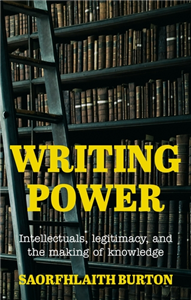
        Writing power

        Intellectuals, legitimacy, and the making of knowledge

        by Sarah Victoria Alexandra Burton

        Writing power radically rethinks the place of the canon and canonicity as objects and concepts in contemporary academia and the everyday intellectual practices of academics. It is distinctive in its demonstration of how academics' engagements with canons shape their writing practices but also how scholars' writing practices, spaces, proclivities, and desires shape the canon and changing ideas of value in canonicity. The book thinks through frequently discussed problems of legitimacy and knowledge production from fresh perspectives of lived experience and the everyday to offer new insights into the politics of knowledge in contemporary social sciences.

      • Trusted Partner
        Humanities & Social Sciences
        May 2009

        Direct rule and the governance of Northern Ireland

        by Derek Birrell

        This is the first comprehensive study of direct rule as the system of governance which operated in Northern Ireland for most of the period between 1972 and 2007. The major institutions of governance are described and examined in detail, including the often neglected sectors of the role of the Westminster parliament, the civil service, local government, quangos, ombudsmen offices, cross-border structures and the public expenditure process. The book explains how the complex system covering transferred, reserved and excepted functions worked and provided viable governance despite political violence, constitutional conflict and political party disagreements. In addition, a comparison is drawn between direct rule and devolution, analysing both the positive and negative impact of direct rule, as well as identifying where there has been minimal divergence in processes and outcomes. It will prove an invaluable reference source on direct rule and provide a comparative basis for assessing devolution for students of public administration, government, politics, public policy and devolution. ;

      • Trusted Partner
        Humanities & Social Sciences
        May 2016

        Working men’s bodies

        by John Field

      Subscribe to our

      newsletter