Your Search Results

      • Nikkei Business Publications

        Every year, we publish more than 500 books, mooks and special editions, and over 600 books published by Nikkei BP and its group companies have already crossed borders. Around the world, "Nikkei" is the brand of solid trust associated with business, technology and lifestyle.

        View Rights Portal
      • Arkan for Studies, Research and Publishing

        Arkan is an independent research center established in Egypt in February 2017, aiming to drive scientific research movement forward, promote its various tools in Social Science and Humanities, and support their active individuals and institutions.Arkan is one of the most promising emerging research centers and publishers in Egypt and the Middle East and has a staff of nearly 100 people. It cooperates with individuals, institutions and entities as a scientific, cultural, awareness-raising research center in a way that never exceeds the center's vision, mission, work fields and general objectives.Arkan entered into many interactions with eminent thinkers and academics not to mention international business partners. Further, it is a member of the Egyptian Publishers’ Association and Arab Publishers’ Association and it is to become one of the main actors in the various cultural and scientific forums and book fairs throughout the world in the years to come.To find out more, visit our website: https://www.arkan-srp.com/?lang=en

        View Rights Portal
      • Trusted Partner
        Teaching, Language & Reference
        April 2025

        Anti-colonial research praxis

        Methods for knowledge justice

        by Caroline Lenette

        How can anti-colonial research methodologies be transformative and achieve knowledge justice? This book brings together an eclectic group of leading scholars from around the world to share methodological knowledge grounded in First Nations and majority-world expertise and wisdom. The authors challenge western-centric and colonial approaches to knowledge production and redefine the possibilities of what we can achieve through social research. First Nations and majority-world perspectives are contextual and unique. They share a common aim of disrupting established beliefs on research methodologies and the unquestioned norms that dictate whose knowledge the academy values. The ten chapters in this edited collection describe how the authors draw on Indigenous knowledge systems, feminist frameworks, and creative methodologies as anti-colonial research praxis. The examples span several disciplines such as development studies, geography, education, sexual and reproductive health, humanitarian studies, and social work. Authors use a reflexive approach to discuss specific factors that shape how they engage in research ethically, to lead readers through a reflection on their own practices and values. The book reimagines social research using an anti-colonial lens and concludes with a collaboratively developed and co-written set of provocations for anti-colonial research praxis that situate this important work in the context of ongoing colonial violence and institutional constraints. This book is an essential guide for researchers and scholars within and beyond the academy on how anti-colonial research praxis can produce meaningful outcomes, especially in violent and troubled times. Cover art courtesy of Tawny Chatmon

      • Trusted Partner
        Business, Economics & Law
        July 2024

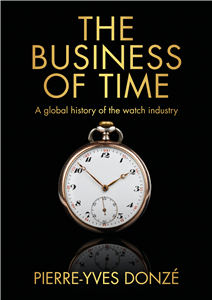
        The business of time

        A global history of the watch industry

        by Pierre-Yves Donzé

        The business of time presents a comprehensive history of the global watch industry from the mid-nineteenth century to the present. Watch production in the twenty-first century is concentrated in three countries: Switzerland, Japan and China. The industry is dominated by a dozen or so large companies, including the Swatch Group, Richemont, LVMH, Seiko and Fossil. But a hundred years ago the picture was dramatically different. Over the course of a century, Great Britain, France, the United States and Russia saw the manufacture of watches disappear from their territory. At the same time, Hong Kong went from being a subcontractor of watch components to an intermediary between Chinese factories and the world market. Revealing the conditions that drove the spread of watch production around the globe, The business of time explains how multinationals emerged to dominate the industry and highlights how Swiss companies were able to establish themselves as the undisputed leader in luxury watches.

      • Trusted Partner
        Humanities & Social Sciences
        July 2023

        Leaving the field

        by Robin James Smith, Sara Delamont

      • Trusted Partner
        Humanities & Social Sciences
        January 2012

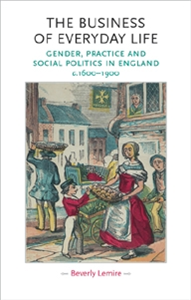
        The business of everyday life

        Gender, practice and social politics in England, c.1600–1900

        by Beverly Lemire, Pamela Sharpe, Penny Summerfield, Lynn Abrams, Cordelia Beattie, Kim Latham

        From 1600 to 1900 a growing consumerism fired the English economy, shaping the priorities of individuals, and determining the allocation of resources within families. Everyday business might mean making a trip to the pawnbroker, giving a loan to a trusted friend of selling off a coat, all to make ends meet. Both women and men engaged in this daily budgeting, but women's roles were especially important in achieving some level of comfort and avoiding penury. In some communities, the daily practices in place in the seventeenth century persisted into the twentieth, whilst other groups adopted new ways, such as using numbers to chart domestic affairs and turning to the savings banks that appeared in the nineteenth century. In the material world of the past and in the changing habits of earlier generations lie crucial turning points. This book explores these previously under-researched patterns and practices that gave shape to modern consumer society. ;

      • Trusted Partner
      • Trusted Partner
        September 2023

        My Bank Washes Greener

        Eco lies told by the finance sector

        by Bernd Villhauer

        — By the expert in ethical business — Once you have finished this, you will never fall for green financial lies again — Global Ethic Institute (Weltethos- Institut) network And suddenly every bank is sustainable. This truly necessary "debate book" explains in a wellfounded way what green-washing means in the financial sector, and why banks, insurance companies, asset managers, stockbrokers and other financial players clothe themselves in their allegedly so green-and-friendly cloak. It provides an easy-to-understand explanation of the various forms of greenwashing, how we can recognise the different "varieties" and – above all – how we can avoid them. This is also important because the entire financial and capital system is an important part of a sustainable future – and this can only succeed if it is honest, transparent and impact-orientated.

      • Trusted Partner
      • Trusted Partner
        Humanities & Social Sciences
        September 2024

        The business of birth control

        by Claire L. Jones

      • Trusted Partner
        Humanities & Social Sciences
        April 2025

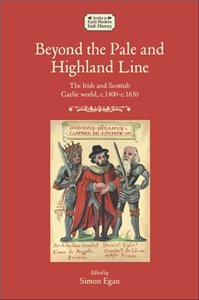
        Beyond the Pale and Highland Line

        The Irish and Scottish Gaelic world

        by Simon Egan

        This book offers important new insights into the history and culture of the Gaelic-speaking world from the mid-fifteenth century through to the reign of James VI and I. Throughout this period, the reach of the English and Scottish crowns within these western regions was limited. The initiative lay with local communities and royal power was contingent upon negotiating with well-established and largely autonomous aristocratic lineages. Moreover, events within this western world could exert a powerful, often unpredictable, influence upon the affairs of the wider archipelago. Using a series of case studies, this collection examines the evolving relationship between Ireland and Scotland in rich detail. It demonstrates how this world interacted with the encroaching English and Scottish states and underlines the importance of paying closer attention to this neglected area of Irish and British history.

      • Business, Economics & Law
        April 1905

        Creating Capital

        Money-making as an aim in business

        by Fredrick L. Lipman

        The object of this paper is to discuss money-making; to examine its prevalence as an aim among people generally and the moral standards which obtain among those who consciously seek to make money.

      • Trusted Partner
        Humanities & Social Sciences
        March 2017

        Imperialism and the natural world

        by John M. MacKenzie

        Imperial power, both formal and informal, and research in the natural sciences were closely dependent in the nineteenth century. This book examines a portion of the mass-produced juvenile literature, focusing on the cluster of ideas connected with Britain's role in the maintenance of order and the spread of civilization. It discusses the political economy of Western ecological systems, and the consequences of their extension to the colonial periphery, particularly in forms of forest conservation. Progress and consumerism were major constituents of the consensus that helped stabilise the late Victorian society, but consumerism only works if it can deliver the goods. From 1842 onwards, almost all major episodes of coordinated popular resistance to colonial rule in India were preceded by phases of vigorous resistance to colonial forest control. By the late 1840s, a limited number of professional positions were available for geologists in British imperial service, but imperial geology had a longer pedigree. Modern imperialism or 'municipal imperialism' offers a broader framework for understanding the origins, long duration and persistent support for overseas expansion which transcended the rise and fall of cabinets or international realignments in the 1800s. Although medical scientists began to discern and control the microbiological causes of tropical ills after the mid-nineteenth century, the claims for climatic causation did not undergo a corresponding decline. Arthur Pearson's Pearson's Magazine was patriotic, militaristic and devoted to royalty. The book explores how science emerged as an important feature of the development policies of the Colonial Office (CO) of the colonial empire.

      • Trusted Partner
        Humanities & Social Sciences
        August 1995

        British Business History, 1720–1994

        by J. F. Wilson

        This textbook covers over three centuries of British business history from 1720 to the present day. Wilson argues that company culture has been the most important component in the evolution of business organisations and management practices. The influence of business culture on firms' structure, sources of finance, and the background and training of senior managers are investigated to show its pivotal importance in determining business performance. The book also examines how British business adapted to changing economic, institutional and socio-cultural environments yet failed to develop the kind of managerial hierarchies typified by American and German corporations. Wilson uses an extensive number of case studies to support his conclusions. The book covers the subject chronologically with an extra chapter comparing Britain's experience with the USA, Germany and Japan. ;

      • Trusted Partner
        Humanities & Social Sciences
        May 2016

        Working men’s bodies

        by John Field

      • Trusted Partner
      • Trusted Partner
        Humanities & Social Sciences
        March 2017

        Silk and empire

        by Brenda King

        In this book, Brenda M. King challenges the notion that Britain always exploited its empire. Creativity, innovation and entrepreneurship were all part of the Anglo-Indian silk trade and were nurtured in the era of empire through mutually beneficial collaboration. The trade operated within and without the empire, according to its own dictates and prospered in the face of increasing competition from China and Japan. King presents a new picture of the trade, where the strong links between Indian designs, the English silk industry and prominent members of the English the arts and crafts movement led to the production of beautiful and luxurious textiles. Lavishly illustrated, this book will be of interest to those interested in the relationship between the British Empire and the Indian subcontinent, as well as by historians of textiles and fashion.

      • Trusted Partner
        Humanities & Social Sciences
        January 2025

        The four dimensions of power

        Understanding domination, empowerment and democracy

        by Mark Haugaard

        In this accessible and sophisticated exploration of the nature and workings of social and political power, Haugaard examines the interrelation between domination and empowerment. Building upon the perspectives of Steven Lukes, Michel Foucault, Amy Allen, Hannah Arendt, Anthony Giddens, Pierre Bourdieu and others, he offers a clear theoretical framework, delineating power in four interrelated dimensions. The first and second dimensions of power entail two different types of social conflict. The third dimension concerns tacit knowledge, uses of truth and reification. Drawing upon genealogical theory and accounts of slavery as social death, the fourth dimension of power concerns the power to create social subjects. The book concludes with an original normative pragmatist power-based account of democracy. Offering lucid and entertaining illustrations of complex theoretical perspectives, this book is essential reading for scholars and activists.

      • Trusted Partner
        Health & Personal Development
        May 2016

        How to Deal with Anxiety and Panic

        by Michael Rufer, Heike Alsleben, Angela Weiss

        Are you or a loved one suffering from anxiety and panic and you are wondering what you can do? To whom you can turn? What the options for treatment are? And how relatives can help? This self-help book gives affected people and their relatives: • clear and comprehensive information based on up-to-date research findings • concrete self-help strategies and exercises with worksheets • descriptions of recognized treatment methods • instructions on coping with stress and using relaxation techniques • detailed answers to frequently asked questions • a helpful list of useful contacts and websites • an idea of how mindfulness can be incorporated. The authors have first-hand knowledge of these problems from their extensive experience of counseling and treating people with anxiety disorders and their relatives. This book summarizes their knowledge in clear and comprehensible form. It is ideal both for self-help and to complement ongoing treatment. Target Group: affected people and their relatives and friends; psychologists, therapists, doctors, counseling centers.

      • Trusted Partner
        Humanities & Social Sciences
        September 2025

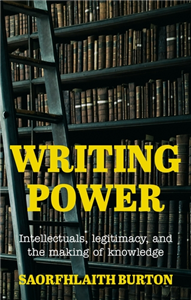
        Writing power

        Intellectuals, legitimacy, and the making of knowledge

        by Sarah Victoria Alexandra Burton

        Writing power radically rethinks the place of the canon and canonicity as objects and concepts in contemporary academia and the everyday intellectual practices of academics. It is distinctive in its demonstration of how academics' engagements with canons shape their writing practices but also how scholars' writing practices, spaces, proclivities, and desires shape the canon and changing ideas of value in canonicity. The book thinks through frequently discussed problems of legitimacy and knowledge production from fresh perspectives of lived experience and the everyday to offer new insights into the politics of knowledge in contemporary social sciences.

      Subscribe to our

      newsletter