Your Search Results

      • Reading Luxembourg

        Reading Luxembourg is Luxembourg's export programme. Beyond the annual national stand at Frankfurt Book Fair, Reading Luxembourg is in charge of various missions, such as the presence at other fairs, festivals and literary events, a training offer for professionals of the book and publishing sector and strategic support to foreign rights sales. Reading Luxembourg is linking up publishers and authors from Luxembourg with stakeholders on an international level and providing information on available translation and publication grants.

        View Rights Portal
      • Trusted Partner
        July 2019

        Show me the Stars

        by Kira Mohn

        Take Some Time Out! The headline grabs Liv’s attention as she browses, depressed, through the job ads. Although she’s only 22 and just starting out in journalism, a recent disastrous interview cost her a new job. The ad sounds like a dream come true: someone needs a house-sitter to mind a lighthouse on the Irish coast for six months!    Taking time out is exactly what Liv needs to clear her head and recharge her batteries. She sends off her application and a few weeks later finds herself standing in front of her new home. Next to a good-looking Irishman who makes her heart beat faster. She doesn’t know it yet, but he’ll break her heart, too…   16+ years The beginning of a unique romance trilogy about three young women, a lighthouse and love. All titles can be read separately. Rousing characters and a fine dry humor For all fans of Mona Kasten, Laura Kneidl and Colleen Hoover! More than 60.000 copies of this series were sold!

      • Trusted Partner
        Humanities & Social Sciences
        August 2017

        The Trump revolt

        by Edward Ashbee, Bill Jones

      • Trusted Partner
        January 2018

        100 Cards for Coaching with Resource Activation

        by Deppe-Schmitz, Uta; Deubner-Böhme, Miriam

        This set of cards includes 70 color photos and 30 question cards. The combination of pictures and questions allows for the use in a wide range of activities in coaching, which are presented in the enclosed booklet. The card set is also the ideal complement to the book “Coaching with Resource Activation”, which explains the possibilities of using the cards in more detail. In addition, the card set can also be used for resource activation in the context of therapy. For:• coaches• therapists• counselors• trainers

      • Trusted Partner
        Literature & Literary Studies
        August 2013

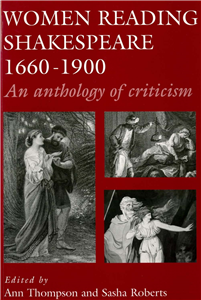
        Women reading Shakespeare 1660–1900

        An anthology of criticism

        by Ann Thompson, Sasha Roberts

        Women reading Shakespeare, 1660-1900 comprehensively rediscovers a lost tradition of women's writing on Shakespeare. Since Margaret Cavendish published the first critical essay on Shakespeare in 1664, women have written as scholars, critics, editors, performers and popularisers of Shakespeare. Many found in Shakespeare criticism the opportunity to raise a wide variety of issues, ranging from the use of women in society, family life, social relations and ethnic difference. In their different ways, women appropriated Shakespeare to their own ends - not always in step with their male contemporaries. Virtually none of this work is available today; it is unread and unknown. This fascinating anthology draws upon extensive new research to collect for the first time in one volume the Shakespeare criticism of some fifty British and American women writing before 1900. It includes the work of both familiar and unknown names and represents the diversity of literary genres used by women: the scholarly article, the periodical essay, book-length studies, personal memoirs, books for children, school editions. The volume also includes previously unknown Shakespeare illustrations by women, and a general introduction to the development of women's criticism of Shakespeare before 1900. ;

      • Trusted Partner
        Psychology

        80 Picture Cards for Coaching, Training, and Psychotherapie

        Initiating Learning- and Change Processes

        by Evelin Fräntzel, Dieter Johannsen

        People think and remember in images, images influence our feelings and our perception, they shape our interpersonal communication and interaction. Coaches, supervisors,trainers, consultants, and therapists can use picture cards as a creative method to initiate learning and change processes among their clients. The card set can be used when working with groups and teams as well as in individual settings. Using the picture cards and the detailed exercise descriptions, processes ofprofessional and personal reorientation and further development of clients can be effectively supported. The enclosed booklet gives numerous suggestions for the use of the picture cards in practice.   For: • coaches• supervisors• consultants• group leaders• psychotherapists• psychologists• teachers, educators, personnel developers

      • Trusted Partner
        Humanities & Social Sciences
        June 2010

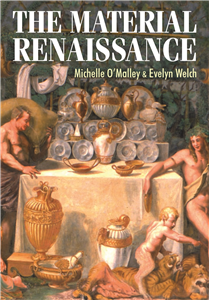
        The Material Renaissance

        None

        by Michelle O'Malley, Christopher Breward, Evelyn Welch, Bill Sherman

        Despite the recent interests of economic and art historians in the workings of the market, we still know remarkably little about the everyday context for the exchange of objects and the meaning of demand in the lives of individuals in the Renaissance. Nor do we have much sense of the relationship between the creation and purchase of works of art and the production, buying and selling of other types of objects in Italy in the period. The material Renaissance addresses these issues of economic and social life. It develops the analysis of demand, supply and exchange first proposed by Richard Goldthwaite in his ground-breaking Wealth and the demand for art in Renaissance Italy, and expands our understanding of the particularities of exchange in this consumer-led period. Considering food, clothing and every-day furnishings, as well as books, goldsmiths' work, altarpieces and other luxury goods, the book draws on contemporary archival material to explore pricing, to investigate production from the point of view of demand, and to look at networks of exchange that relied not only on money but also on credit, payment in kind and gift giving. The material Renaissance establishes the dynamic social character of exchange. It demonstrates that the cost of goods, including the price of the most basic items, was largely contingent upon on the relationship between buyer and seller, shows that communities actively sought new goods and novel means of production long before Colbert encouraged such industrial enterprise in France and reveals the wide ownership of objects, even among the economically disadvantaged. ;

      • Trusted Partner
        October 1989

        Dylan Thomas

        by Read, Bill

      • Trusted Partner
        Humanities & Social Sciences
        March 2026

        The love of books

        Attachment to a changing cultural object

        by María Angélica Thumala Olave

        The Love of Books examines the affective bond between people and books in the UK. In the context of the unprecedented abundance of media offering information, storytelling and entertainment, it investigates the attachment to print and digital books amongst readers from a range of backgrounds who read for pleasure, wish to be surrounded by print copies of books, and have trouble discarding books. Unlike existing research, which focuses on prestige, social status, and cultural capital, this study centres on meaning, materiality and emotion. Drawing on interviews and archive material, it shows how attachment emerges from the practical fusion of three elements that have so far been examined separately: the material, surface properties of books, the act of reading, and books' symbolic power.

      • Trusted Partner
        Literature & Literary Studies
        March 2007

        Robert Louis Stevenson and theories of reading

        The reader as vagabond

        by Glenda Norquay

        Robert Louis Stevenson and theories of reading is both an exceptionally well researched study of the novelist, and well as an intriguing exploration of 'literary consumption'. Glenda Norquay presents fresh interpretations of Stevenson's literary essays, of major works including The Master of Ballantrae, and some of his more neglected fiction such as St Ives and The Wrecker, as well as illuminating our understanding of his role within debates over popular fiction, romance and reading pleasure. She offers an unusual combination of literary history and reception theory and argues that Stevenson both exemplified tensions within the literary market of his time and anticipated later developments in reading theory. By combining the study of nineteenth-century cultural politics with detailed analysis of his Scottish Calvinism, Stevenson is reassessed as both a Victorian and Scottish writer. The book is aimed at scholars, postgraduates and undergraduates with an interest in the nineteenth-century literary marketplace, in Scottish culture, and in reading /reception theory as well as Stevenson enthusiasts. ;

      • Trusted Partner
        Humanities & Social Sciences
        July 2022

        Crossing borders and queering citizenship

        Civic reading practice in contemporary American and Canadian writing

        by Zalfa Feghali

        Can reading make us better citizens? In Crossing borders and queering citizenship, Feghali crafts a sophisticated theoretical framework to theorise how the act of reading can contribute to the queering of contemporary citizenship in North America. Providing sensitive and convincing readings of work by both popular and niche authors, including Gloria Anzaldúa, Dorothy Allison, Gregory Scofield, Guillermo Gómez-Peña, Erín Moure, Junot Díaz, and Yann Martel, this book is the first to not only read these authors together, but also to discuss how each powerfully resists the exclusionary work of state-sanctioned citizenship in the U.S. and Canada. This book convincingly draws connections between queer theory, citizenship studies, and border studies and sheds light on how these connections can reframe our understanding of American Studies.

      • Trusted Partner
        Humanities & Social Sciences
        July 2021

        Post-everything

        An intellectual history of post-concepts

        by Herman Paul, Adriaan van Veldhuizen

        Postmodern, postcolonial and post-truth are broadly used terms. But where do they come from? When and why did the habit of interpreting the world in post-terms emerge? And who exactly were the 'post boys' responsible for this? Post-everything examines why post-Christian, post-industrial and post-bourgeois were terms that resonated, not only among academics, but also in the popular press. It delves into the historical roots of postmodern and poststructuralist, while also subjecting more recent post-constructions (posthumanist, postfeminist) to critical scrutiny. This study is the first to offer a comprehensive history of post-concepts. In tracing how these concepts found their way into a broad range of genres and disciplines, Post-everything contributes to a rapprochement between the history of the humanities and the history of the social sciences.

      • Trusted Partner
        Humanities & Social Sciences
        September 2025

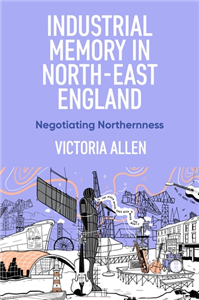
        Industrial memory in North East England

        Negotiating northernness

        by Victoria Allen

        Industrial memory in North East England examines how the region's industrial myth and memory have been articulated in the renegotiation of northernness. The book offers a critical contextualisation of the concept of northernness and the English North, and an introduction to the concept of the PopCultural Portfolio, a mixed-methods approach to conjunctural analysis in cultural and memory studies. The book provides six richly illustrated case studies to demonstrate the practical application of cultural studies' expansive and inclusive understanding of texts, bringing together materials from North East football, folk, indie and exhibition culture to establish how the North East's industrial past continues to be remembered and functionalised as industrial memory. In turn, the conjunctural analysis demonstrates how industrial memory is articulated and mythologised as north(east)ernes in contemporary popular culture.

      • Trusted Partner

        Character Strengths Intervention Cards

        50 cards with instruction booklet

        by Matthijs Steeneveld, Anouk van den Berg

        Would you like to teach your clients what their character strengths are and how they can use them more? This set of cards helps you do just that. Endorsed with a foreword by Ryan M. Niemiec, VIA Institute 50 full color cards Individual cards for the VIA 24 character strengths and 6 virtues 16 intervention cards 16-page booklet provides practice tips The VIA character strengths look at what positive character traits help us lead fulfilling and happy lives, rather than looking at what is wrong with us. Research has shown that knowing your strengths and using them more often leads to greater well-being, better performance, and more resilience. With these cards, you can help clients learn about their character strengths.   For: • psychotherapists• clinical psychologists• counselors

      • Trusted Partner
        Humanities & Social Sciences
        June 2024

        Peace and the politics of memory

        by Annika Björkdahl, Susanne Buckley-Zistel, Stefanie Kappler, Johanna Mannergren Selimovic, Timothy Williams

        This important book provides new understandings of how the politics of memory impacts peace in societies transitioning from a violent past. It does so by developing a theoretical approach focusing on the intersection of sites, agency, narratives, and events in memory-making. Drawing on rich empirical studies of mnemonic formations in Cyprus, Bosnia and Herzegovina, Rwanda, South Africa and Cambodia, the book speaks to a broad audience. The in-depth, cross-case analysis shows that inclusivity, pluralism, and dignity in memory politics are key to the construction of a just peace. The book contributes crucial and timely knowledge about societies that grapple with the painful legacies of the past and advances the study of memory and peace.

      • Trusted Partner
        Media studies
        June 2014

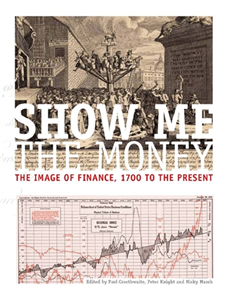
        Show me the money

        The image of finance, 1700 to the present

        by Edited by Paul Crosthwaite, Peter Knight and Nicky Marsh

        What does money really stand for? How can the abstractions of high finance be made visible? Show me the money documents how the financial world has been imagined in art, illustration, photography and other visual media over the last three centuries in Britain and the United States. It tells the story of how artists have grappled with the increasingly intangible and self-referential nature of money, from the South Sea Bubble to our current crisis. Show me the money sets out the history and politics of representations of finance through five essays by academic experts and curators, and is interspersed with provocative think pieces by notable public commentators on finance and art. The book, and the exhibition on which it is based, explore a wide range of images, from satirical eighteenth-century prints by William Hogarth and James Gillray to works by celebrated contemporary artists such as Andreas Gursky and Molly Crabapple. It also charts the development of an array of financial visualisations, including stock tickers and charts, newspaper illustrations, bank adverts and electronic trading systems.

      • Trusted Partner
        Literature & Literary Studies
        October 2009

        Euphues: The Anatomy of Wit and Euphues and His England John Lyly

        An annotated, modern-spelling edition

        by Paul Edmondson, Martin White

        John Lyly's Euphues: The Anatomy of Wit and Euphues and his England, created a literary sensation in their own age, and had a profound influence on Elizabethan prose. This modern-spelling edition of the two works, the first for nearly a century, is designed to allow the twenty-first century reader access to this culturally significant text and to explore the fascination that it exerted. Attuned to the needs of both students and specialists, the text is edited from the earliest complete witnesses, is richly annotated, and facilitates an understanding of Lyly's narrative technique by distinguishing typographically between narrative levels. The introduction explores the relationship between the dramatic and non-dramatic work, locating Lyly's highly influential plays in a wider context and Euphues' Latin poem in praise of Elizabeth I, translated for the first time, is discussed in an Appendix. A work of primary importance for students of Renaissance prose, this edition complements the on-going publication of Lyly's dramatic works in The Revels Plays. ;

      • Trusted Partner
        Humanities & Social Sciences
        October 2002

        American society today

        by Edward Ashbee, Bill Jones

        American society today provides a balanced introduction to the defining features of contemporary American society. Includes the ways in which the US can be considered 'exceptional' - the character of the 'American dream', the role of ethnicity and race, and the differences between the regions. Considers in depth a number of contemporary debates including the claim that the US economy has lost its capacity to generate wealth and stimulate mobility, that there has been a process of civic disengagement as voluntary organisations have lost members, and that the traditional family is in decline. Includes a thorough investigation of the effects of the terrorist attacks of September 11 and their aftermath. Looks at the arguments put forward by those who assert that a common American identity has given way to a multitude of conflicting identities structured around factors such as race, ethnicity, gender and sexuality. ;

      • Trusted Partner
        September 2022

        Identity or Not?

        by Jean-Pierre Wils (ed.)

        Questions of identity trigger controversial and highly emotional discussions in the political and social debate. The positions range from radically emancipatory perspectives to authoritarian and restorative efforts on the far right wing of politics. Liberal democracies are now opening up – slowly – as identity- and gender-sensitive forums. Opposite them are the 'new ethics' of illiberal democracies and totalitarian states that are aimed at ethnic homogeneity and gender uniformity. But that's not to say that there is unity in the liberal settings on the necessary degree of identity politics. Both language and gender politics are deeply controversial. Do we need an 'identity' and, if so, which one or how many? Can the identity debate be extended by means of other concepts?

      Subscribe to our

      newsletter