
Serpentine Books
Independent publisher of crime, thrillers, sci-fi, mysteries, romantic comedies and mash-ups.
View Rights Portal
Independent publisher of crime, thrillers, sci-fi, mysteries, romantic comedies and mash-ups.
View Rights Portal
Seren Books is proud to be the leading independent publisher of English-language writing from Wales publishing fiction, non-fiction and poetry.
View Rights Portal
Throughout the 1990s, Médecins Sans Frontières (MSF) was forced to face the challenges posed by the genocide of Rwandan Tutsis and a succession of outbreaks of political violence in Rwanda and its neighbouring countries. Humanitarian workers were confronted with the execution of almost one million people, tens of thousands of casualties pouring into health centres, the flight of millions of people who had sought refuge in camps and a series of deadly epidemics. Drawing on various hitherto unpublished private and public archives, this book recounts the experiences of the MSF teams working in the field. It is intended for humanitarian aid practitioners, students, journalists and researchers with an interest in genocide and humanitarian studies and the political sociology of international organisations.

This volume in the Critical Theory and Contemporary Society series explores the arguments between critical theory and epistemology in the twentieth and twenty-first centuries. Focusing on the first and second generations of critical theorists and Luhmann's systems theory, the book examines how each approaches epistemology. It opens by looking at twentieth-century epistemology, particularly the concept of lifeworld (Lebenswelt). It then moves on to discuss structuralism, poststructuralism, critical realism, the epistemological problematics of Foucault's writings and the dialectics of systems theory. This unique work takes a comparative look at structuralism and post-structuralism's epistemological theory with special reference to scientific reason. It also investigates Luhmann's works in epistemology. The aim is to explore whether the focal point for epistemology and the sciences remain that social and political interests actually form a concrete point of concern for the sciences as well.
 Trusted Partner
Trusted Partner
Trusted Partner

This book examines the links between major contemporary public sector reforms and neoliberal thinking. The key contribution of the book is to enhance our understanding of contemporary neoliberalism as it plays out in the public administration and to provide a critical analysis of generally overlooked aspects of administrative power. The book examines the quest for accountability, credibility and evidence in the public sector. It asks whether this quest may be understood in terms of neoliberal thinking and, if so, how? The book makes the argument that while current administrative reforms are informed by several distinct political rationalities, they evolve above all around a particular form of neoliberalism: constructivist neoliberalism. The book analyses the dangers of the kinds of administrative power seeking to invoke the self-steering capacities of society and administration itself.
Trusted Partner

Recent decades have witnessed major changes in gender roles and family patterns, as well as a falling birth rate in Ireland and the rest of Europe. While the traditional family is now being replaced in many cases by new family forms, we do not know the reasons why people are making the choices they are and whether or not these choices are leading to greater well-being. While demographic research has attempted to explain the new trends in family formation and fertility, there has been little research on people's attitudes to family formation and having children. This book presents the results of the first major study to examine people's attitudes to family formation and childbearing in Ireland. Based on a nationwide representative sample of 1,404 men and women in the childbearing age group, the study was carried out against a backdrop of changing gender role attitudes and behaviour as well as significant demographic change.
Trusted Partner
What is autism and where has it come from? Increased diagnostic rates, the rise of the 'neurodiversity' movement, and growing autism journalism, have recently fuelled autism's fame and controversy. The metamorphosis of autism is the first book to explain our current fascination with autism by linking it to a longer history of childhood development. Drawing from a staggering array of primary sources, Bonnie Evans traces autism back to its origins in the early twentieth century and explains why the idea of autism has always been controversial and why it experienced a 'metamorphosis' in the 1960s and 1970s. Evans takes the reader on a journey of discovery from the ill-managed wards of 'mental deficiency' hospitals, to high-powered debates in the houses of parliament, and beyond. The book will appeal to a wide market of scholars and others interested in autism, neurodiversity and how this relates to wider theories of children's psychological development.
Trusted Partner
 Trusted Partner
You're nicked is the first comprehensive study of television police series in the UK. It reveals how British television's most popular genre has developed stylistically, politically and philosophically from 1955 to the present. Each chapter focuses on a particular decade, investigating how the most-watched series represent the inner workings of the police station, the civilian life of criminals and the private lives of police officers. This new approach unearths the complex ideology underpinning each series and discerns the key insights the genre can provide into the breakdown of the post-war settlement. Offering insightful readings of police series from Dixon of Dock Green to Happy Valley via The Sweeney, The Bill and Cracker, the book is a must-read for crime-drama enthusiasts worldwide. This new paperback edition features an extensive epilogue on Line of Duty and other Jed Mercurio creations.
Trusted Partner
 Trusted Partner


Anyone giving responsible advice about questions on nutrition must have sound expert knowledge. This must not only be scientifically reliable, but must at the same time be relevant and practicable in the individual context. The concept behind the book series Nutritional Practice is to provide the necessary translation of current research results and guidelines into recommendations suitable for everyday use. In accordance with this consistent, practical approach, the focus is on the individual person in his or her particular stage in their life. The present volume is based on the various stages in life between infancy and adolescence. It therefore covers all questions about nutrition in health and disease from the first day of life to young adulthood
Trusted Partner

This book outlines the ways sport helps to create transnational social fields that interconnect migrants dispersed across a region known as the Black Atlantic: England, North America and the Caribbean. Many Caribbean men's stories about their experiences migrating to Canada, settling in Toronto, finding jobs and travelling involved some contact with a cricket and social club. This book offers a unique contribution to black diaspora studies through showing sport as a means of allaying the pain of ageing in the diaspora, creating transnational social networks and marking ethnic boundaries on a local scale. The book also brings black diaspora analysis to sport research, and through a close look at what goes on before, during and after cricket matches provides insights into the dis-unities, contradictions and complexities of Afro-diasporic identity in multicultural Canada. It will be of interest to students and scholars in sociology, sport studies and black diaspora studies.
Trusted Partner

Early modern dietaries are prose texts recommending the best way to maintain physical and psychological well-being. Three sixteenth-century dietaries contains Thomas Elyot's Castle of Health, Andrew Boorde's Compendious Regiment and William Bullein's Government of Health, all popular and influential works that were typical of a genre advising the reader on how best to maintain physical and psychological health. They are here introduced, contextualized and edited for the first time in a modern spelling edition. Introductory material explores the dietary genre, its relationship to humanism, humoral theory, and the wide range of authorities with which the dietary authors engaged. The volume includes an examination of the bibliographical and publication history of each work, comprehensive explanatory notes and appendices that provide prefaces to earlier editions, a glossary, and a list of authorities and works cited or alluded to in the dietaries.
Trusted Partner

This book is the first ever English-language study of Julien Duvivier (1896-1967), once considered one of the world's great film filmmakers. It provides new contextual and analytical readings of his films that identify his key themes and techniques, trace patterns of continuity and change, and explore critical assessments of his work over time. His career began in the silent era and ended as the French New Wave was winding down. In between, Duvivier made over sixty films in a long and at times difficult career. He was adept at literary adaptation, biblical epic, and film noir, and this groundbreaking volume illustrates in great detail Duvivier's eclecticism, technical efficiency and visual fluency in works such as Panique (1946) and Voici le temps des assassins (1956). It will particularly appeal to scholars and students of French cinema looking for examples of a director who could straddle the realms of the popular and the auteur.
Trusted Partner

This book explores the commemorative afterlives of the Algerian War of Independence (1954-62), one of the world's most iconic wars of decolonisation. It focuses on the million French settlers - pieds-noirs - and the tens of thousands of harkis - the French army's native auxiliaries - who felt compelled to migrate to France when colonial rule ended. Challenging the idea that Algeria was a 'forgotten' war that only returned to French public attention in the 1990s, this study reveals a dynamic picture of memory activism undertaken continuously since 1962 by grassroots communities connected to this conflict. Reconceptualising the ways in which the Algerian War has been debated, evaluated and commemorated in the subsequent five decades, From empire to exile makes an original contribution to important discussions surrounding the contentious issues of memory, migration and empire in contemporary France that will appeal to students and scholars of history and cultural studies.
Trusted Partner
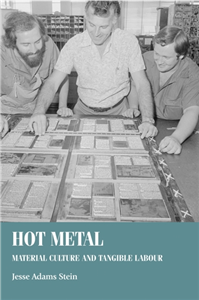
The world of work is tightly entwined with the world of things. Hot metal illuminates connections between design, material culture and labour between the 1960s and the 1980s, when the traditional crafts of hot-metal typesetting and letterpress were finally made obsolete with the introduction of computerised technologies. This multidisciplinary history provides an evocative rendering of design culture by exploring an intriguing case: a doggedly traditional Government Printing Office in Australia. It explores the struggles experienced by printers as they engaged in technological retraining, shortly before facing factory closure. Topics explored include spatial memory within oral history, gender-labour tensions, the rise of neoliberalism and the secret making of objects 'on the side'. This book will appeal to researchers in design and social history, labour history, material culture and gender studies. It is an accessible, richly argued text that will benefit students seeking to learn about the nature and erosion of blue-collar work and the history of printing as a craft.
Trusted Partner
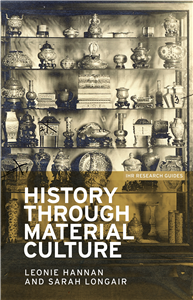
History through material culture is a unique, step-by-step guide for students and researchers who wish to use objects as historical sources. Responding to the significant, scholarly interest in historical material culture studies, this book makes clear how students and researchers ready to use these rich material sources can make important, valuable and original contributions to history. Written by two experienced museum practitioners and historians, the book recognises the theoretical and practical challenges of this approach and offers clear advice on methods to get the best out of material culture research. With a focus on the early modern and modern periods, this volume draws on examples from across the world and demonstrates how to use material culture to answer a range of enquiries, including social, economic, gender, cultural and global history.
Trusted Partner
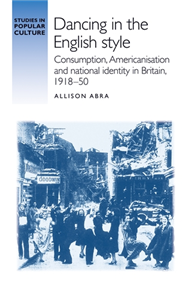
Dancing in the English style explores the development, experience, and cultural representation of popular dance in Britain from the end of the First World War to the early 1950s. It describes the rise of modern ballroom dancing as Britain's predominant popular style, as well as the opening of hundreds of affordable dancing schools and purpose-built dance halls. It focuses in particular on the relationship between the dance profession and dance hall industry and the consumers who formed the dancing public. Together these groups negotiated the creation of a 'national' dancing style, which constructed, circulated, and commodified ideas about national identity. At the same time, the book emphasizes the global, exploring the impact of international cultural products on national identity construction, the complexities of Americanisation, and Britain's place in a transnational system of production and consumption that forged the dances of the Jazz Age.
Trusted Partner

Fred Flintstone lived in a sunny Stone Age American suburb, but his ancestors were respectable, middle-class Victorians. They were very amused to think that prehistory was an archaic version of their own world because it suggested that British ideals were eternal. In the 1850s, our prehistoric ancestors were portrayed in satirical cartoons, songs, sketches and plays as ape-like, reflecting the threat posed by evolutionary ideas. By the end of the century, recognisably human cave men inhabited a Stone Age version of late-imperial Britain, sending-up its ideals and institutions. Cave men appeared constantly in parades, civic pageants and costume parties. In the early 1900s American cartoonists and early Hollywood stars like Charlie Chaplin and Buster Keaton adopted and reimagined this very British character, cementing it in global popular culture. Cave men are an appealing way to explore and understand Victorian and Edwardian Britain.
Trusted Partner
England and the 1966 World Cup presents a cultural analysis of what is considered a key 'moment of modernity' in the nation's post-war history. Regarded as having an importance beyond its primary sporting purpose, the World Cup in England is examined within the complexity of the cultural, social and political changes that characterised the mid-1960s. Yet, although addressing the importance of non-sport related connections, the book maintains a focus on football, discussing it as a 'cultural form' and presenting an original perspective on the aesthetic accomplishment in football tactics by England's manager, Alf Ramsey. The study considers the World Cup in relation to the cup tradition, England as the World Cup host nation, the England squad and masculinity, the modernism of England's manager Alf Ramsey, design and commercial aspects of the World Cup, a critical engagement within existing academic accounts, and an examination of how England's victory has been remembered and commemorated.
Trusted Partner
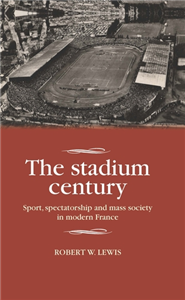
The stadium century traces the history of stadia and mass spectatorship in modern France from the vélodromes of the late nineteenth century to the construction of the Stade de France before the 1998 soccer World Cup. As the book demonstrates, the stadium was at the centre of debates over public health and urban development and proved to be a key space for mobilising the urban crowd for political rallies and spectator sporting events alike. After 1945, the transformed French stadium constituted part of the process of postwar modernisation but also was increasingly connected to global transformations to the spaces and practices of sport. Drawing from a wide range of sources, the stadium century links the histories of French urbanism, mass politics and sport through the stadium in an innovative work that will appeal to historians, students of French history and the history of sport, and general readers alike.


